A roof leak over a warehouse aisle is rarely just a roof leak. It can shut down loading activity, damage stock, create slip hazards, stain insulated panels, and keep returning after two or three failed patch jobs. That is why choosing among waterproofing companies in KSA should be treated as an engineering decision, not a price-only procurement exercise.
In Saudi Arabia, waterproofing performance is tied directly to heat, UV exposure, thermal movement, dust loading, stormwater behavior, and the condition of the existing structure. Industrial roofs, gutters, penetrations, skylights, drain points, and wall-to-roof junctions fail for different reasons. A contractor that understands those failure points will inspect differently, specify differently, and execute differently.
What separates strong waterproofing companies in KSA
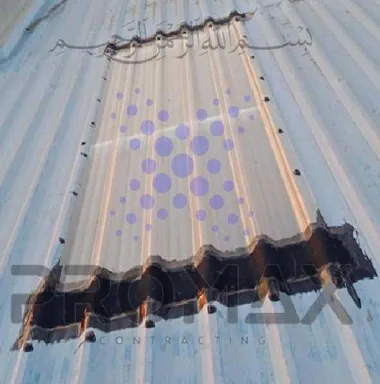
The strongest contractors do more than apply a coating and leave site. They diagnose where water is entering, why the system failed, how the substrate is behaving, and whether the problem is isolated or systemic. That distinction matters most on warehouses, factories, sheds, storage buildings, and aging metal roofs where leaks often travel before they become visible inside.
A capable waterproofing contractor should be able to inspect and report on roof sheets, laps, fasteners, gutters, flashing details, curbs, upstands, pipe penetrations, AC supports, skylight edges, expansion areas, and drain connections. If the conversation starts and ends with square meter pricing, the technical risk is already high.
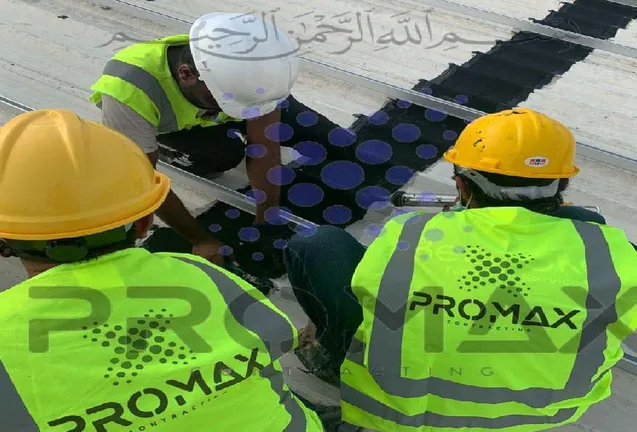
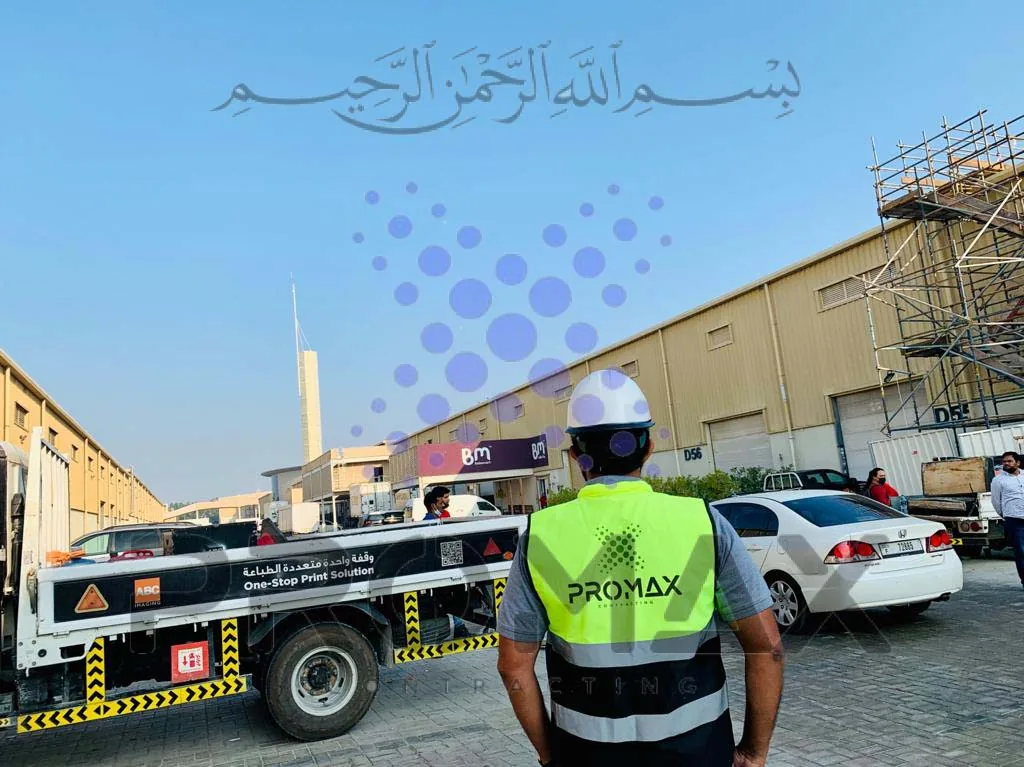
You also want a company that can work around active operations. Industrial sites do not have the luxury of open-ended repair windows. Access planning, safety controls, crew size, material staging, and response time all affect whether a leak repair turns into a manageable maintenance job or an operational disruption.
Start with failure diagnosis, not product selection
One of the most common mistakes in the market is choosing a waterproofing material before understanding the mode of failure. The right system depends on the substrate, the geometry, the age of the roof, the amount of movement, exposure conditions, and the number of difficult details.
For example, a wide open concrete slab and an aging metal roof are not the same waterproofing problem. A roof with repeated leakage at penetrations and gutters may need a detail-focused membrane strategy rather than another surface treatment across the full roof. A contractor that cannot explain this clearly is likely to oversimplify the job.
This is where a detailed site inspection becomes valuable. Serious contractors document leak points, damaged areas, previous repair attempts, drainage issues, rusting components, and substrate conditions before recommending a scope. That process saves money later because it reduces guesswork, callbacks, and partial fixes.
What industrial clients should ask before awarding work
Commercial and industrial buyers should press for method, not just price. Ask how the contractor will identify concealed water paths, how they will prepare the surface, what happens at penetrations and edge conditions, and how the proposed system handles thermal expansion.
It is also reasonable to ask whether the team can handle related works that affect waterproofing performance. Roof leaks are often tied to corroded metal, failed gutters, damaged flashing, blocked drains, poor slope behavior, or unsafe access that prevents proper maintenance. A contractor with fabrication, repair, and maintenance capability under one umbrella usually has more control over the final result.
Another good test is responsiveness. Water ingress is a live-site issue. If a contractor is slow to inspect, slow to submit findings, and vague about mobilization, that pattern usually continues after award. Fast reporting and clear technical communication are often signs of a team used to industrial service demands.
Systems matter, but detailing matters more
There is no single best waterproofing system for every building in KSA. The better question is whether the proposed system matches the building condition and the actual leak points. Many failures occur not because the material was inherently poor, but because transitions, terminations, seams, and penetrations were not treated properly.
This is especially true on metal roofs and complex industrial buildings. Roof-mounted equipment, smoke vents, skylights, drain bowls, gutter joints, and service penetrations create weak points. These details move, expand, vibrate, and collect water differently than the main roof field.
EPDM-based waterproofing is often a strong option for difficult details and aging metal structures because it can accommodate movement and provide reliable sealing at leak-prone areas when installed correctly. But even a strong material can underperform if the substrate is not prepared, the geometry is ignored, or adjacent deterioration is left untreated.
That is why execution standards matter as much as specification. The contractor should have a practical installation sequence, a method for treating critical points, and a clear plan for quality checks before handover.
Why one-contractor capability changes project outcomes
For industrial facilities, waterproofing rarely exists in isolation. The same building may also need floor repairs, epoxy works, line marking, gutter replacement, handrails, ladder access, sheet metal fabrication, industrial painting, or roof rehabilitation. When multiple defects interact, splitting the work across separate vendors can slow progress and blur responsibility.
A contractor with combined capability in waterproofing, repair, fabrication, and maintenance can often solve root causes faster. If a roof leak is connected to failed gutter sections, loose flashing, corroded supports, or damaged roof accessories, the right team can inspect, fabricate, install, and close out the issue with fewer handoffs.
That integrated model also helps after project completion. Facilities teams do not just need installation. They need a partner who can return for maintenance, inspect adjacent risk areas, and respond quickly when new issues appear. For many industrial clients, that ongoing support is worth more than a lower initial rate from a narrower subcontractor.
Red flags when reviewing waterproofing companies in KSA
Some warning signs show up early. One is a generic proposal that looks identical regardless of roof type or defect history. Another is a recommendation that skips surface preparation details, substrate repair requirements, or treatment of penetrations and joints.
Be cautious if the contractor avoids discussing existing roof condition. A waterproofing layer cannot compensate for every structural or corrosion issue underneath. If the base condition is compromised, that should be identified honestly. Good contractors do not hide this to win a fast order.
You should also watch for teams that lack industrial safety discipline. Roof work on active facilities involves access control, weather judgment, coordination with operations, and care around equipment and circulation zones. Poor site control can turn a maintenance project into a safety incident.
Finally, beware of repair approaches that rely on repeated patching without a diagnosis of why the same points keep failing. Temporary stopping measures may be necessary in an emergency, but they are not the same as a durable waterproofing strategy.
What good reporting and after-sales support look like
The best waterproofing jobs begin with a clear report and end with a support plan. A useful report should identify affected areas, likely causes, substrate concerns, recommended treatment zones, and any related repair work needed to protect the system. It should help the client make a maintenance decision, not just approve a bill.
After installation, support should not disappear. Industrial roofs and wet areas need monitoring, especially where structures are older or heavily exposed. Follow-up inspections, practical maintenance advice, and quick response for isolated defects all strengthen long-term performance.
This is where contractor depth shows. ETCE KSA, for example, positions its service around diagnosis, engineered repair, installation, and ongoing support rather than one-time application. That approach fits the reality of industrial assets, where leaks are usually part of a broader building performance issue.
The commercial decision is about downtime, not only cost
Procurement teams still need competitive pricing, but the true cost sits in disruption, damaged inventory, repeated callouts, safety exposure, and accelerated deterioration of the building envelope. A cheaper waterproofing scope can become expensive very quickly if it misses the actual source of failure.
For warehouses and factories, the better commercial decision is often the contractor that reduces repeat intervention. That means accurate inspection, a system matched to the substrate, proper treatment of difficult details, and the ability to handle related repairs without delay.
When evaluating contractors, ask a simple question: will this company only apply a product, or will it take responsibility for solving the water ingress problem in operating conditions? The answer usually tells you which bidder understands industrial waterproofing and which one is only selling material.
A reliable waterproofing partner should leave you with fewer emergency calls, fewer recurring leak points, and a building that performs the way it is supposed to when the next storm hits.
Related ETCE services
Need this checked on your own roof?
ETCE carries out industrial roof inspections, leak diagnosis, metal roof rehabilitation and EPDM waterproofing across Dammam, Al Khobar, Dhahran, Jubail, Riyadh and Jeddah.
Request a Roof Inspection WhatsApp Us