A leaking warehouse roof rarely fails all at once. It starts at fasteners, laps, gutters, skylight curbs, pipe penetrations, drain points, and old repair patches that no longer hold under heat and movement. If you are searching for the best waterproofing company in KSA, the real question is not who makes the loudest claim. It is who can diagnose the actual failure points, stop repeat leakage, and keep an industrial roof operating under Saudi conditions.
For factories, logistics buildings, sheds, and large storage facilities, waterproofing is not a cosmetic service. It is part of asset protection. Water entry accelerates rust, damages insulation, disrupts operations, threatens stock, and creates avoidable maintenance costs. On aging metal roofs, delayed action usually means a wider repair scope later.
What defines the best waterproofing company in KSA
The best waterproofing company in KSA for an industrial client is usually not the cheapest bidder and not the contractor offering a generic coating for every roof type. Industrial waterproofing demands site diagnosis, material compatibility, execution control, and after-service support. A warehouse roof in Dammam with corrosion around gutters does not need the same treatment as a logistics facility in Riyadh with failed roof penetrations and leaking skylights.
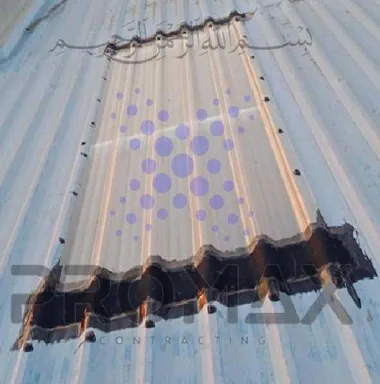
A capable contractor starts with the roof system itself. Is it a sandwich panel roof, single skin sheet, corrugated metal sheet, or a mixed assembly with several historical repairs? Has the leak come from open laps, failed sealants, thermal movement, ponding around drains, damaged flashing, or sheet deterioration? Without these answers, even a fast repair can become a temporary patch.
This is where many projects go wrong. A client asks for waterproofing, but the building actually needs diagnosis, local metal rehabilitation, detail treatment, waterproofing design, and a maintenance plan. One umbrella contractor can manage that sequence more effectively than multiple vendors working in isolation.
Why industrial roofs in KSA need specialized waterproofing
Industrial facilities in Saudi Arabia put roofs under constant stress. Heat cycles expand and contract metal sheets. UV exposure weakens poor-quality sealants. Dust and sand affect drainage paths and detail joints. Any trapped moisture near laps or fasteners can lead to corrosion, especially on older roof structures.
The most common mistake is to treat industrial waterproofing as a simple surface application. On active warehouses and factories, the weak points are often the details, not the field area alone. Gutters, curbs, roof penetrations, drain outlets, skylight frames, smoke vents, and joint transitions are where experienced waterproofing teams earn their value.
This is also why material selection matters. Some systems work well on broad surfaces but struggle around irregular details. Others perform better at difficult leak points and moving joints. EPDM-based waterproofing, for example, is often selected for industrial roofs because it can handle challenging areas where standard patchwork repeatedly fails. But even then, the result depends on preparation, detailing, and installation quality.
What to check before hiring a waterproofing contractor
A serious contractor should inspect before quoting. If a company prices a large industrial roof without a proper site visit, leak mapping, and condition review, that is a warning sign. Good waterproofing starts with identifying where water enters, how it travels, and what substrate condition exists below the visible leak.
Ask how the contractor handles metal roof rehabilitation, not just waterproofing. On many facilities, the roof problem is a combination of leakage and rusting. If the contractor cannot address corroded sheets, flashing deterioration, fastening issues, and detail failures, you may still have recurring problems after the waterproofing layer is installed.
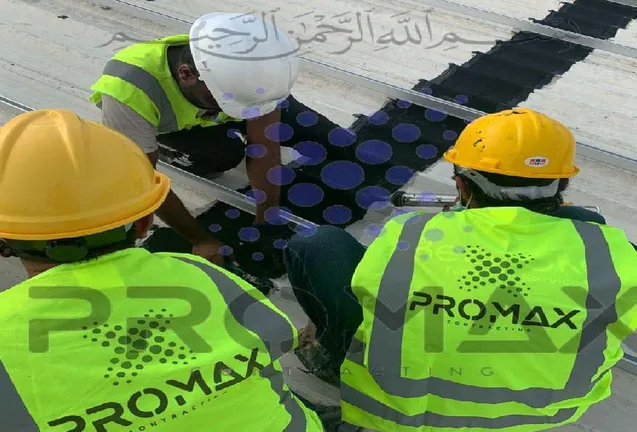
You should also check whether the contractor has technical capability across diagnosis, fabrication, installation, and maintenance. Industrial buildings do not always fail in clean, standard ways. A project may require custom flashing, gutter modifications, penetration treatment, or localized sheet replacement before waterproofing can perform as intended.
Speed matters, but speed without method is expensive. Fast-response teams are valuable when stock, production, or tenant operations are exposed. Still, emergency work should lead into a structured repair approach, not endless temporary sealing.
The difference between patching and engineered waterproofing
There is a place for urgent patching when a leak is actively affecting operations. But facility managers know the pattern – one repair this month, another repair next month, then the same complaint returns after the next rain. That cycle usually points to incomplete diagnosis or the wrong system for the roof condition.
Engineered waterproofing takes a broader view. It looks at roof geometry, drainage behavior, substrate movement, exposed details, corrosion levels, and service life expectations. It also matches the repair scope to the building’s actual operating needs. A short-term tenancy may justify one type of intervention. A long-life owner-operated factory may need a more durable rehabilitation strategy.
Trade-offs are real. Full rehabilitation can cost more upfront than localized treatment, but repeated downtime, damaged inventory, and emergency maintenance often cost more over time. On the other hand, not every roof needs full replacement or a major system overhaul. A skilled contractor should be able to tell you when targeted detail waterproofing is enough and when it is not.
Best waterproofing company in KSA for warehouses and factories
For warehouses and factories, the best waterproofing company in KSA is one that understands industrial roof behavior in service, not only in specification sheets. That means experience with sandwich panels, corrugated metal roofs, single skin sheet roofs, aging fastener lines, gutter leaks, expansion issues, and roof-mounted service penetrations.
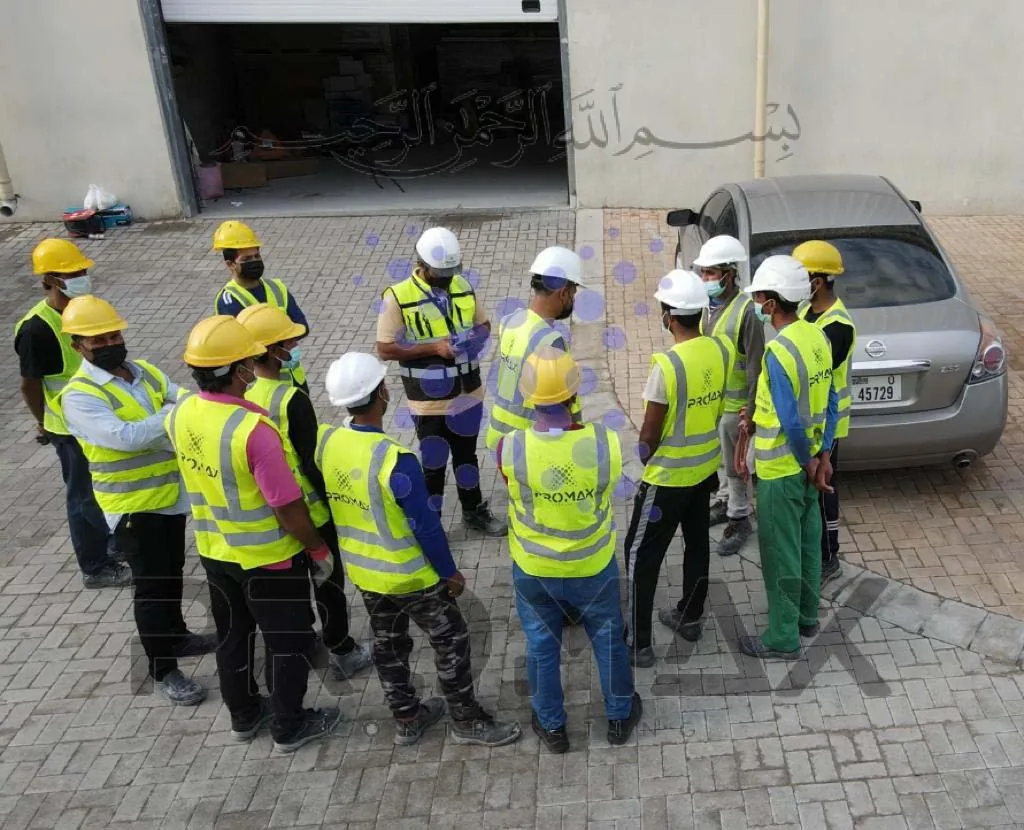
It also means the contractor can work around live operations. Industrial clients do not want broad promises. They want practical answers. Can the team inspect quickly? Can they issue a clear report? Can they isolate failure points? Can they fabricate required components? Can they execute with minimal disruption? Can they support the roof after handover if new issues appear in adjacent areas?
That service model is often more valuable than a low initial price. Procurement teams may compare line items, but operations teams live with the outcome. A waterproofing contractor that reduces repeat callouts and extends roof life delivers measurable value beyond the first invoice.
Why EPDM solutions matter on difficult leak points
Not every roof detail fails in the same way, and not every waterproofing material responds equally well under movement, heat, and aging metal conditions. EPDM-based systems are often preferred on industrial projects because they are effective around joints, penetrations, gutters, skylights, and other difficult interfaces where standard sealants or simple coatings tend to break down.
The key point is not to treat EPDM as a magic fix. Surface preparation, detail design, adhesion, edge treatment, and compatibility with the existing roof all matter. A qualified industrial contractor should be able to explain where EPDM fits, where it does not, and how it will perform on your specific roof type.
This is where an experienced specialist such as ETCE KSA stands apart – not by claiming one product solves every leak, but by applying the right waterproofing method to the actual failure condition of the roof.
What good site reporting should look like
Industrial clients should expect more than a verbal opinion after inspection. A proper site review should identify visible leak points, probable hidden entry routes, substrate condition, rusted areas, drainage issues, failed details, and the proposed repair logic. That report helps owners, consultants, and procurement teams make decisions based on roof condition, not guesswork.
It should also distinguish between urgent actions and long-range actions. Some failures require immediate intervention to protect operations. Others can be scheduled into a planned maintenance window. When a contractor can separate those priorities clearly, the client gains control over budget, downtime, and risk.
Choosing for durability, not just for price
When evaluating waterproofing contractors, decision-makers should look past broad marketing claims and ask a simpler question: who is most likely to solve this roof problem once, correctly, and with support after the job? That usually leads to contractors with industrial specialization, technical reporting, material knowledge, trained site teams, and the ability to handle both repair and rehabilitation.
The best waterproofing company in KSA is the one that understands your roof as an operating asset. Not just a surface to coat, but a building system that protects inventory, equipment, workflow, and long-term property value. If a contractor can inspect accurately, explain failure points clearly, execute under site realities, and stay accountable after installation, you are looking at the right partner.
A dry roof is not just maintenance completed. It is one less source of downtime, corrosion, and operational risk hanging over your facility.
Related ETCE services
Need this checked on your own roof?
ETCE carries out industrial roof inspections, leak diagnosis, metal roof rehabilitation and EPDM waterproofing across Dammam, Al Khobar, Dhahran, Jubail, Riyadh and Jeddah.
Request a Roof Inspection WhatsApp Us