A warehouse roof usually does not fail all at once. It starts at the gutter joint that was patched twice, the roof penetration that moves under heat, the skylight curb with a hairline gap, or the rusting fastener line that keeps staining the insulation below. That is why finding the best waterproofing company in Saudi Arabia is rarely about picking the cheapest quote. For industrial and commercial facilities, it is about choosing a contractor that can diagnose the real source of failure, stop active leakage, and build a repair strategy that holds under heat, UV, dust, movement, and age.
For factory managers, developers, procurement teams, and warehouse operators, the stakes are straightforward. Water intrusion damages stock, interrupts operations, accelerates corrosion, and turns minor roof defects into structural maintenance problems. A waterproofing contractor should not just install a membrane and leave. The right company needs to understand metal roof behavior, leak pathways, drainage failures, weak penetrations, and the realities of working on active industrial sites.
How to identify the best waterproofing company in Saudi Arabia
The first filter is technical fit. A contractor may be strong in residential coatings or small concrete applications and still be the wrong choice for a large metal-roof warehouse. Industrial roofs behave differently. They expand and contract aggressively, carry multiple penetrations, include gutters and valleys that trap water, and often have years of patch repairs hiding the actual defect. If the company cannot explain failure patterns for sandwich panel roofs, single-skin sheet roofs, corrugated metal roofing, and aging warehouse structures, that is a warning sign.
The second filter is inspection quality. A serious waterproofing company should not lead with a generic rate per square foot before understanding the roof condition. It should inspect leak points, review rust progression, assess drainage, examine flashing details, and identify whether the problem is localized or systemic. Good waterproofing starts with accurate diagnosis. Without that, even expensive work can become another temporary patch.
The third filter is execution range. Large industrial clients usually do not need one isolated service. They need inspection, repair design, fabrication support, installation, maintenance, and after-sales response from one accountable team. A contractor with narrow scope often pushes coordination risk back to the client. A contractor with broad in-house capability can move faster and control workmanship more tightly.
What separates a serious contractor from a general applicator
The phrase best waterproofing company in Saudi Arabia gets used loosely, but industrial buyers should be more demanding. A serious contractor is measured less by advertising and more by how it handles difficult roof conditions.
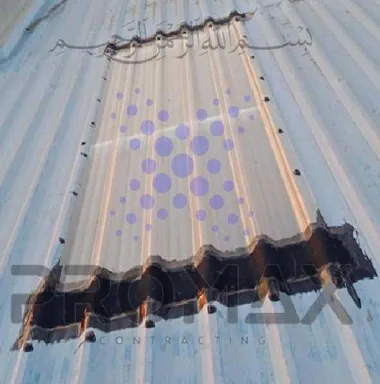
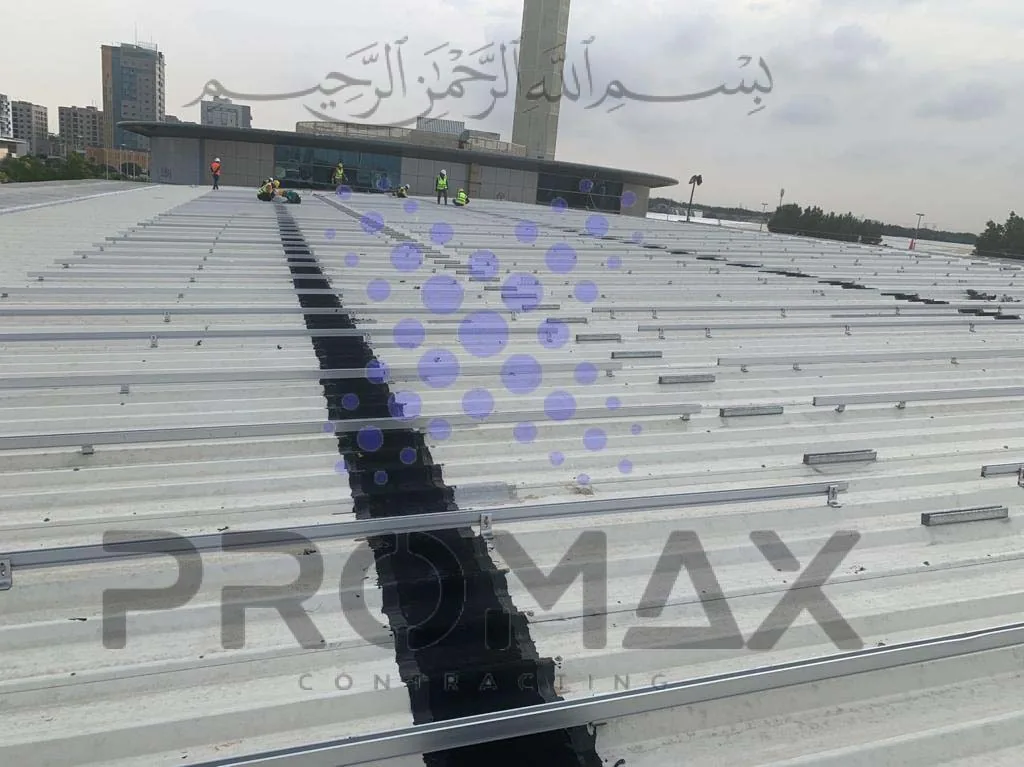
Start with materials knowledge. Not every waterproofing system suits every roof type. On industrial metal roofs, difficult leak points often need more than a brush-applied coating. Penetrations, skylights, smoke vents, drain points, and gutter transitions require a system that tolerates movement while maintaining adhesion and weather resistance. This is where EPDM-based waterproofing has practical value, especially on aging metal roof assemblies and high-risk detailing zones.
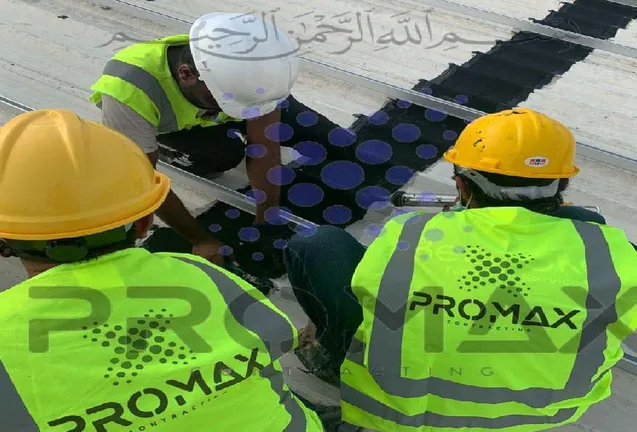
Then look at site behavior. Can the company work safely on active facilities without disrupting operations more than necessary? Does it understand phased execution? Can it address urgent leak containment while developing a permanent repair package? Industrial clients do not have the luxury of long delays while different vendors debate responsibility.
Finally, assess whether the contractor talks in engineering terms or sales terms. If the proposal focuses only on area coverage and product names, it is incomplete. If it discusses substrate condition, movement zones, detail treatment, corrosion control, drainage correction, access constraints, and expected life cycle, you are likely dealing with a more capable operator.
Why industrial roofs need a different waterproofing approach
Industrial buildings in Saudi Arabia face a hard operating environment. Heat cycles stress joints and fasteners. UV exposure degrades weak repair materials. Dust and sand affect surface preparation. Standing water at low points accelerates failure. Add rusting steel, aging roof sheets, poor historical repairs, and unsealed penetrations, and leaks become recurring rather than isolated.
That is why product-only thinking does not work. Waterproofing for warehouses and factories has to be system-led. The contractor should inspect the roof deck condition, identify vulnerable connections, determine whether rusting components require rehabilitation, and design the repair around known failure points rather than treating the roof as a flat uniform surface.
For example, a roof with repeated leakage around ducting and skylights may not need full replacement, but it does need proper detail waterproofing with compatible materials and disciplined installation. A corroded gutter line may need cleaning, treatment, reinforcement, and resealing rather than another superficial coat. A warehouse with multiple patch histories may require selective rehabilitation across key zones rather than one broad but shallow intervention.
Where strong waterproofing companies add real value
The biggest value often appears before installation starts. A detailed site inspection can save a client from overspending in the wrong area or under-scoping a larger defect. If a contractor can show exactly where water is entering, how it is traveling, and which components are failing, facility teams can make better maintenance and budget decisions.
The next value is speed with control. Leak complaints in logistics warehouses, factories, and storage units cannot sit in a queue while stock gets exposed and corrosion spreads. Fast response matters, but not at the expense of technical discipline. The right contractor mobilizes quickly, documents conditions clearly, and separates emergency containment from permanent corrective work.
After that comes continuity. Many clients are tired of hiring one team to inspect, another to fabricate replacement components, another to install, and a fourth to return for service calls. A contractor that manages diagnosis, design, fabrication, installation, maintenance, and after-sales support under one umbrella reduces coordination delays and finger-pointing.
What to ask before awarding the work
Before signing any waterproofing contract, ask direct questions. What roof types does the company handle most often? How does it diagnose leaks that are not directly above the visible damage? What is its plan for penetrations, drains, gutters, skylights, and movement-prone details? What preparation is required before application? How will it address rusted areas and failed historical patches? What support is available after handover if a defect reappears?
The answers should be specific. A reliable contractor will discuss inspection findings, not just offer broad promises. It will explain where EPDM systems make sense, where rehabilitation is sufficient, and where more extensive repair may be necessary. It will also be clear about trade-offs. In some cases, a targeted repair is cost-effective and durable. In others, repeated leak points across an aging roof indicate that section-by-section patching is no longer the smart use of maintenance budget.
A practical standard for choosing the right partner
If your building is a warehouse, factory, shed, or large commercial asset, the best waterproofing company is the one that treats the roof as an operating system, not a product surface. It should understand leak behavior, detail complexity, corrosion risk, and the pressure facility teams face when operations cannot stop.
This is where a specialist like ETCE KSA stands apart. The strength is not only in waterproofing application. It is in handling metal roof rehabilitation, difficult leak points, EPDM roof waterproofing, gutters, penetrations, skylights, drain points, and maintenance support as one coordinated service. For industrial clients in Dammam, Riyadh, Jubail, and across the Kingdom, that kind of capability matters because roof failures rarely stay confined to one trade.
A good contractor can stop a leak. A better one can explain why it happened, repair it correctly, and reduce the chance of the next failure. When you are evaluating the best waterproofing company in Saudi Arabia, that is the standard worth using. Choose the team that can inspect hard, execute fast, and stand behind the work when the next storm tests the roof.
Related ETCE services
Need this checked on your own roof?
ETCE carries out industrial roof inspections, leak diagnosis, metal roof rehabilitation and EPDM waterproofing across Dammam, Al Khobar, Dhahran, Jubail, Riyadh and Jeddah.
Request a Roof Inspection WhatsApp Us