A leaking warehouse roof rarely stays a roof problem for long. It turns into damaged stock, unsafe walkways, production disruption, corrosion around fasteners and supports, and repeated patchwork that costs more each season. That is why evaluating waterproofing companies in Saudi Arabia should start with one question: can the contractor solve the actual failure mechanism, or are they only offering surface-level repair?
For industrial and commercial buildings, waterproofing is not a cosmetic scope. It is a building protection decision tied to uptime, asset life, and maintenance planning. In Saudi Arabia, that decision is even more technical because roofs are exposed to extreme heat, UV, dust, thermal movement, occasional heavy rain, and long-term metal deterioration. A system that looks acceptable on paper can fail quickly if it is not matched to the roof type, leak source, and operating conditions.
What separates good waterproofing companies in Saudi Arabia
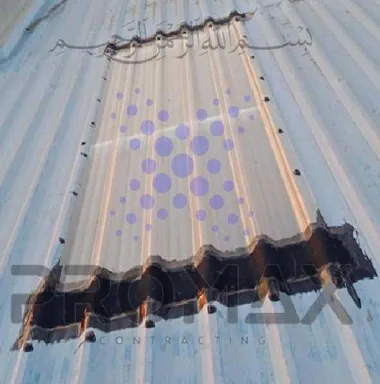
The strongest contractors do more than apply a coating and leave. They inspect the roof as a working system. That includes sheet laps, fasteners, gutters, roof penetrations, skylights, smoke vents, curb details, drain points, duct interfaces, and signs of structural movement or rust. On industrial buildings, leaks often travel far from the visible drip point, so a contractor that only reacts to symptoms will miss the real entry path.
This is where experience with metal roofs, sandwich panel roofs, single skin sheets, and corrugated sheet assemblies matters. These roofs behave differently from concrete decks. They expand, contract, vibrate, and open up at joints over time. Waterproofing methods must account for that movement. Rigid repair concepts may hold briefly, then crack, separate, or fail around details.
A capable waterproofing contractor should also be able to explain why a leak is happening. If the answer is vague, or every problem is treated with the same material, that is usually a warning sign. Warehouses and factories need engineered judgment, not a one-size-fits-all sales pitch.
Why industrial roofs need a different approach
Industrial roofs are full of difficult leak points. Penetrations for services, aging gutters, poorly sealed overlaps, screw lines, old patch areas, and corroded sections all create risk. Add roof traffic, equipment servicing, and years of weather exposure, and the waterproofing scope becomes more than a simple membrane application.
For many facilities, the challenge is not just stopping water entry. It is doing so without interrupting operations and without creating a maintenance burden that returns every few months. That is why the best contractors work from diagnosis to detailing to execution. They look at material compatibility, substrate condition, drainage behavior, and the realistic service life of the repair.
EPDM-based waterproofing is often a strong option for aging metal roofs and complex roof details because it can handle movement better than brittle approaches. But even then, suitability depends on the substrate, detail condition, and how the system is installed. Material quality matters, but detailing and workmanship matter just as much.
How to evaluate a contractor before you award the job
Start with inspection depth. A serious contractor should be willing to assess the roof thoroughly and document conditions with a practical report, not just a quotation. The report should identify leak-prone zones, failed details, corrosion areas, drainage issues, and recommended repair methodology. If the inspection is rushed, the proposal will likely be rushed too.
Next, review whether the company can manage the full job cycle. Industrial clients benefit from working with one contractor that can inspect, diagnose, design the repair, fabricate required metal components if needed, install the waterproofing system, and provide maintenance support after handover. Splitting those tasks across multiple vendors usually creates delays and finger-pointing.
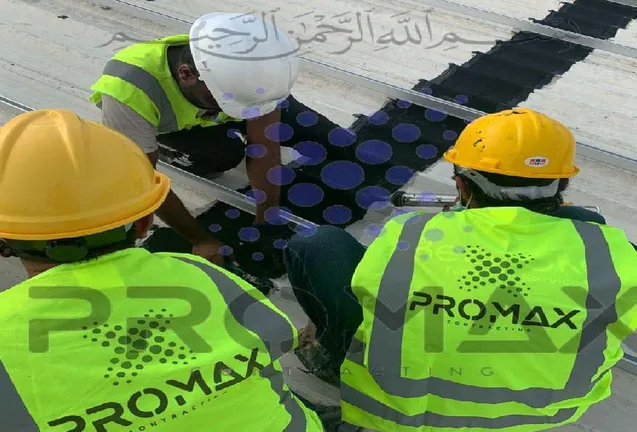
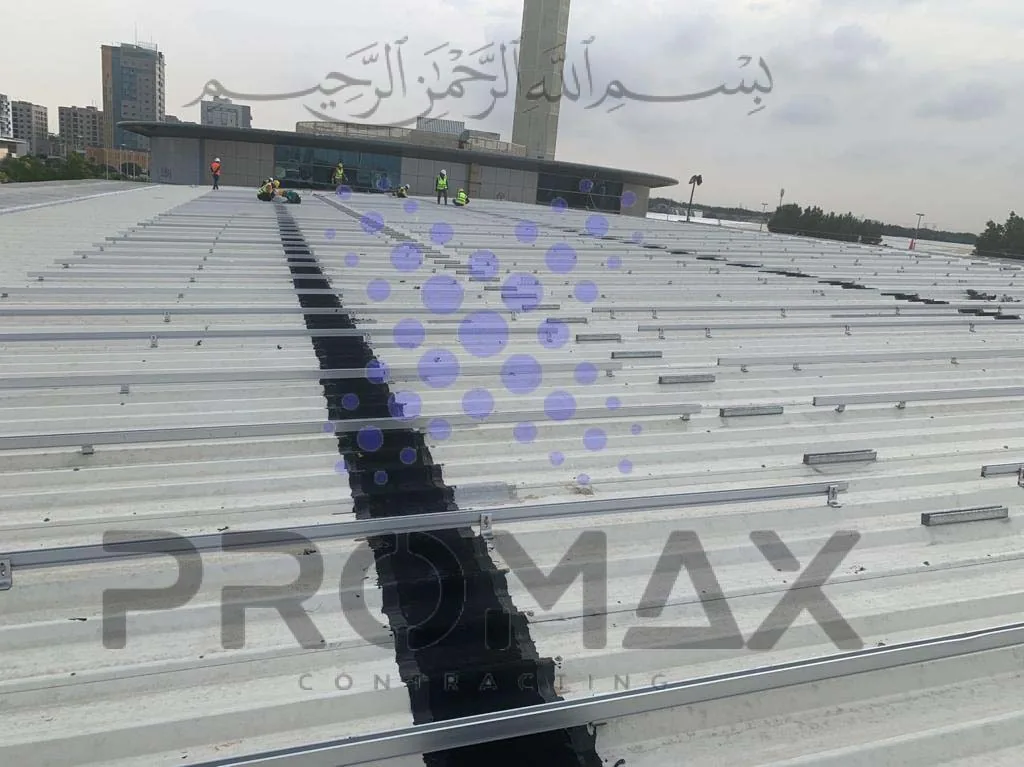
You should also ask what roof types the contractor handles regularly. A company that mainly works on small residential projects may not be equipped for active industrial facilities, high roofs, wide-span warehouses, or leak tracing across large metal surfaces. Scale changes execution requirements. Access planning, crew safety, material handling, sequencing, and quality control all become more demanding.
Finally, test responsiveness. When a roof leak threatens operations, you do not need a contractor who takes days to react. You need a team that understands urgency, can inspect quickly, and can separate temporary stabilization from permanent corrective work.
Red flags when comparing waterproofing companies
Low pricing alone is not an advantage if the scope is incomplete. Many failures happen because the contractor priced only what was visible from ground level or proposed a generic coating over an unstable substrate. That may look economical at tender stage and expensive six months later.
Another red flag is poor attention to details. Most industrial roof leaks happen at transitions and penetrations, not across open sheet areas. If a proposal talks broadly about roof treatment but says little about skylights, drains, joints, vent bases, gutter interfaces, and fastener lines, the risk remains high.
Watch for companies that avoid discussing rust and substrate preparation. Waterproofing over deteriorated metal without addressing corrosion, loose fixings, damaged sheets, or failed sealant zones is not a durable repair. Good contractors are direct about condition limits. Sometimes the right answer is rehabilitation of selected sections before waterproofing, not simply adding another layer on top.
The role of site conditions in Saudi Arabia
Saudi Arabia creates a tough operating environment for roofing systems. Heat and UV exposure accelerate aging. Thermal expansion stresses laps and penetrations. Dust and sand affect surface preparation and adhesion if work is not controlled properly. Short periods of intense rain can expose weaknesses that remained hidden during dry months.
This means contractor selection should account for local execution reality, not just product brochures. A waterproofing system must survive actual roof movement, actual weather, and actual maintenance traffic. That is why practical field experience on warehouses, factories, and logistics buildings is more valuable than broad claims without project depth.
In cities with heavy industrial concentration such as Dammam and Riyadh, many facilities are dealing with aging roof assets that were repaired multiple times by different teams. In these cases, the contractor needs to identify what is already on the roof, what has failed, and what can still be integrated into a long-term solution. That takes hands-on technical judgment.
What a strong waterproofing scope should include
The right scope depends on the roof condition, but it should never stop at visible crack filling. For industrial roofs, a proper solution often includes leak investigation, substrate preparation, treatment of joints and penetrations, repair of gutters and drain areas, sealing of vulnerable laps, correction of failed detail points, and protection of sections affected by corrosion or water entry.
Where metal roofs are involved, rehabilitation may be part of the waterproofing strategy. That can mean replacing damaged sections, improving detail execution around openings, and applying EPDM-based systems at movement-prone areas where standard patching repeatedly fails. The trade-off is straightforward: more detailed corrective work costs more upfront, but it usually reduces repeat callouts and unplanned shutdowns.
A contractor with broad building-envelope capability has an advantage here because leaks are often tied to adjacent details, not only the main roof field. If the same team can address roof sheet issues, penetration sealing, gutter defects, and related metal detailing, the result is usually more consistent.
Why after-sales support matters
Waterproofing should not end at application day. Industrial roofs continue to move and age, and maintenance teams need a contractor that remains available for follow-up, periodic checks, and additional detail work when the facility changes. New equipment, added penetrations, and expansion works can create new risk points if they are not integrated correctly.
That is why dependable waterproofing companies treat the job as a service relationship, not a one-time sale. For many clients, this matters as much as the initial installation. A contractor that understands the building history, previous repair zones, and operational constraints can respond faster and make better decisions over time.
This service model is where a specialist such as ETCE KSA stands out – especially for factories, warehouses, and logistics facilities that need inspection, diagnosis, fabrication, installation, and maintenance support under one contractor.
Making the right decision for your facility
If you are comparing waterproofing companies in Saudi Arabia, do not start with product names. Start with the roof condition, the leak pattern, the building use, and the cost of failure. A warehouse with sensitive inventory, a factory with active production lines, and a logistics facility with constant movement do not have the same tolerance for risk or repeat repairs.
Choose the contractor that can explain the problem clearly, inspect thoroughly, address difficult details, and execute with the speed industrial sites demand. Waterproofing is not just about keeping water out. It is about protecting steel, preserving operations, and getting ahead of failures before the next storm or shutdown window decides the schedule for you.
The best time to assess a roof is when the leak seems manageable, not when water is already inside the building.
Related ETCE services
Need this checked on your own roof?
ETCE carries out industrial roof inspections, leak diagnosis, metal roof rehabilitation and EPDM waterproofing across Dammam, Al Khobar, Dhahran, Jubail, Riyadh and Jeddah.
Request a Roof Inspection WhatsApp Us