A roof leak in a warehouse rarely stays a roof problem for long. It reaches insulation, steel, stock areas, electrical runs, and operations. That is why waterproofing experts in Saudi Arabia are not just repair contractors for industrial facilities – they are a critical line of defense against corrosion, shutdowns, repeated patching, and rising maintenance costs.
For commercial and industrial buildings, especially metal-roofed warehouses, factories, sheds, and logistics assets, waterproofing has to be treated as an engineered service. Heat, UV exposure, wind-driven rain, dust buildup, failed fasteners, roof penetrations, aging sealants, and movement in metal sheets all work together to create leak paths that are easy to underestimate. A basic sealant application may slow water entry for a short period, but it often does not resolve the actual failure point.
What waterproofing experts in Saudi Arabia actually solve
The difference between a general repair crew and a specialist is diagnosis. Industrial leaks rarely come from one visible opening. Water may enter at laps, penetrations, skylight curbs, gutter joints, drain points, wall-to-roof transitions, or corroded fastener lines, then travel far from the original defect. If the inspection stops at the stain, the repair usually fails.
Experienced specialists start by reading the roof as a working system. They check the metal profile, roof slope, drainage behavior, thermal movement, rust level, previous patch history, and vulnerable details such as smoke vents, ducts, and pipe penetrations. On older warehouse roofs, one weak point is often tied to several others. A failed gutter outlet may back up water into laps. Loose fasteners may open paths around penetrations. Corrosion around sheet overlaps may make surface-level patching ineffective.
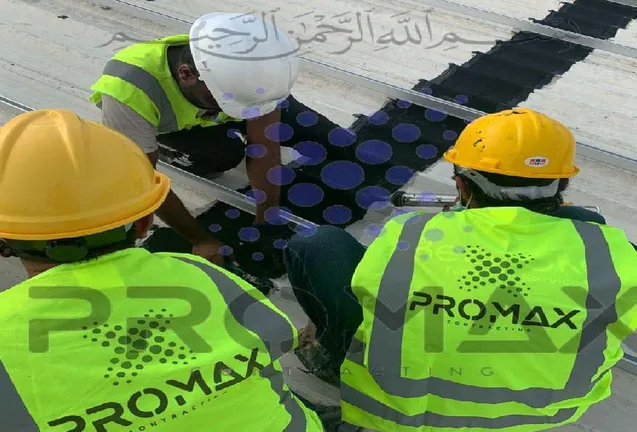
This is why the strongest contractors do more than apply materials. They inspect, document, recommend, fabricate where needed, install, and support the roof after handover. For facility teams, that matters because managing five vendors for one leak problem wastes time and creates accountability gaps.
Why industrial roofs need a different waterproofing approach
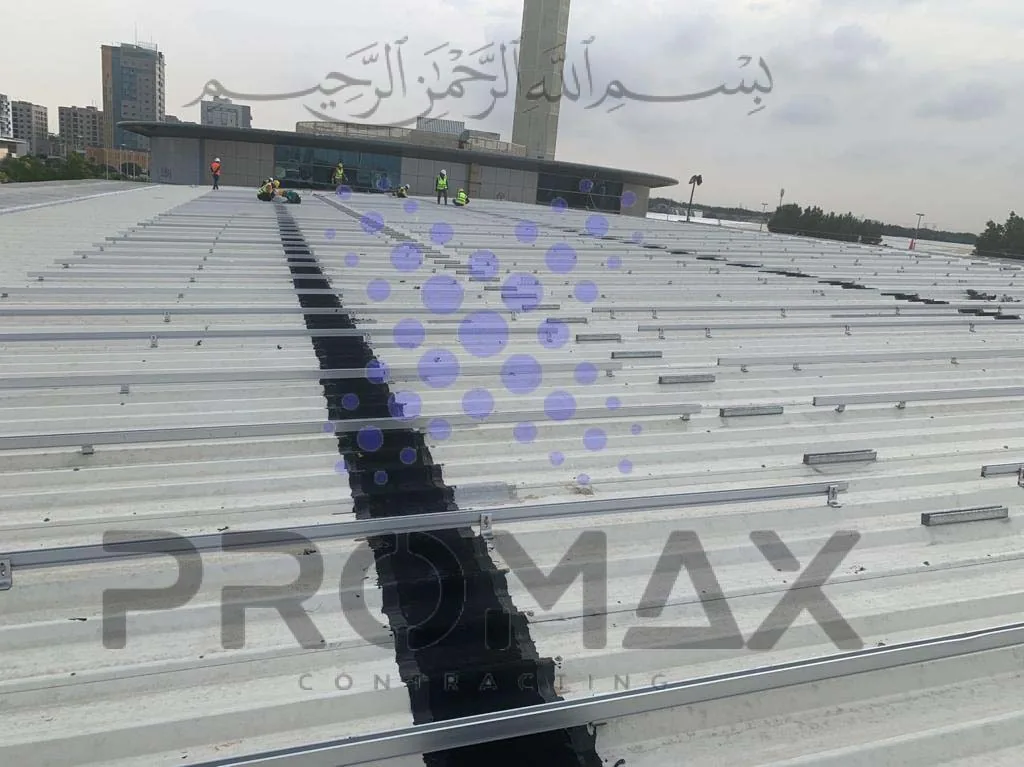
Industrial buildings are not small residential structures scaled up. Their roof geometry, operating conditions, and service demands are different. A logistics warehouse may have long-span metal roofing with multiple penetrations, active loading schedules, internal humidity variation, and limited shutdown windows. A factory may deal with heat load, process-related moisture, and equipment sensitivity below the roof line.
In these settings, waterproofing has to do three things at once. It has to stop active leakage, resist future deterioration, and fit the building's operating reality. That means the best repair is not always the cheapest immediate option. A low-cost patch can appear efficient until the same zone leaks again during the next rain event, forcing emergency access, production disruption, and more hidden damage.
The trade-off is straightforward. Spot repairs make sense when the defect is isolated and the surrounding roof is still sound. Once failure points are repeating across laps, penetrations, gutters, and corroded sections, a broader rehabilitation approach is usually the smarter decision. Good waterproofing experts will say that clearly instead of selling the same treatment for every roof.
Where leaks usually start on metal and warehouse roofs
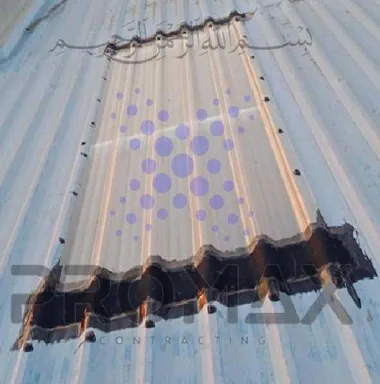
Most industrial roof leaks follow familiar patterns. Fastener failure is common, especially where washers have aged, loosened, or cracked under thermal movement. Sheet laps can open over time, particularly on roofs exposed to long-term expansion and contraction. Roof penetrations are another high-risk area because pipes, ducts, supports, and vents interrupt the roof skin and create multiple sealing interfaces.
Gutters and drain points also deserve close attention. If water discharge is restricted or joints are failing, the resulting ponding or overflow can push water into adjacent roof details. Skylights and smoke vents are frequent problem zones as well, especially where old sealants have become brittle or where movement has stressed the perimeter detailing.
Then there is corrosion. Rust is not only a surface issue. Once metal deterioration advances around laps, fasteners, or edge details, the substrate itself may no longer be suitable for simple coating-only repairs. This is where technical judgment matters. The right fix may involve localized metal replacement, reinforcement, EPDM-based detailing, or a staged rehabilitation plan rather than a cosmetic seal.
Why EPDM systems are often the right answer
For difficult industrial leak points, EPDM-based waterproofing is often one of the most reliable options available. That is especially true on aging metal roofs, gutters, penetrations, skylight details, and irregular transitions where conventional patching tends to fail. EPDM performs well because it combines weather resistance, flexibility, and long-term stability in areas subject to movement and exposure.
On metal roof systems, movement is constant. Daily temperature swings expand and contract the sheets, stressing joints and weak seals. A brittle repair material may crack again. EPDM is more forgiving in those conditions. It can accommodate movement better and create a more dependable waterproofing layer around complex details.
That said, material selection still depends on the roof condition. EPDM is highly effective, but it is not a shortcut around bad preparation or poor substrate assessment. Contaminated surfaces, severe corrosion, trapped moisture, or unstable components have to be addressed first. Waterproofing only works when the installation method matches the roof's actual condition.
What to look for in waterproofing experts in Saudi Arabia
For industrial clients, contractor selection should start with field capability, not brochure language. You want a team that understands warehouse roofs, metal systems, gutter failures, penetration sealing, and rehabilitation of aging assets. The right contractor should be comfortable with inspection, problem mapping, detail treatment, fabrication support where required, installation, and maintenance follow-up.
Speed matters too, but speed without technical control creates repeat work. A responsive team should still provide a site inspection, identify likely root causes, and explain whether the roof needs emergency repair, planned rehabilitation, or a phased approach. The quality of that diagnosis tells you far more than a low quote.
Look closely at how the contractor talks about failure points. If every leak is treated as a simple top-surface issue, that is a warning sign. Industrial waterproofing requires detail awareness. Penetrations, side laps, end laps, gutters, curbs, and corroded junctions all behave differently and should not be handled with one generic method.
It also helps to work with a single contractor that can support the roof beyond the first repair. In active facilities, conditions change. New penetrations are added. Drainage performance shifts. Maintenance teams need someone who can return, inspect, and act without restarting the learning curve every time.
The value of an engineered inspection before repair
A free inspection only has value if it produces useful technical direction. The best reports do more than point to visible leaks. They identify probable entry points, system weaknesses, risk zones, and the consequences of delaying intervention. For asset managers and procurement teams, this is what turns maintenance into a planned decision instead of a recurring emergency.
In many cases, a proper inspection also shows where money should not be spent. Some roofs do not need full replacement. Others are too deteriorated for repeated patching to make sense. A contractor with real site experience will separate those cases quickly.
This practical, diagnosis-first approach is where experienced industrial specialists stand apart. Companies such as ETCE KSA are built around this model – inspection, engineering judgment, site execution, and after-sales support under one service structure. For warehouse and factory operators, that reduces coordination delays and improves accountability.
When waterproofing is handled correctly, the result is not just a dry roof. It is lower corrosion risk, fewer emergency callouts, better protection of operations, and a longer service life from an existing asset. For any facility carrying stock, machinery, or uninterrupted production targets, that is the outcome that matters.
If your roof is already showing leak stains, fastener issues, failed gutter joints, or recurring sealant breakdown, the question is usually not whether action is needed. It is whether the next contractor will patch the symptom or solve the system.
Related ETCE services
Need this checked on your own roof?
ETCE carries out industrial roof inspections, leak diagnosis, metal roof rehabilitation and EPDM waterproofing across Dammam, Al Khobar, Dhahran, Jubail, Riyadh and Jeddah.
Request a Roof Inspection WhatsApp Us