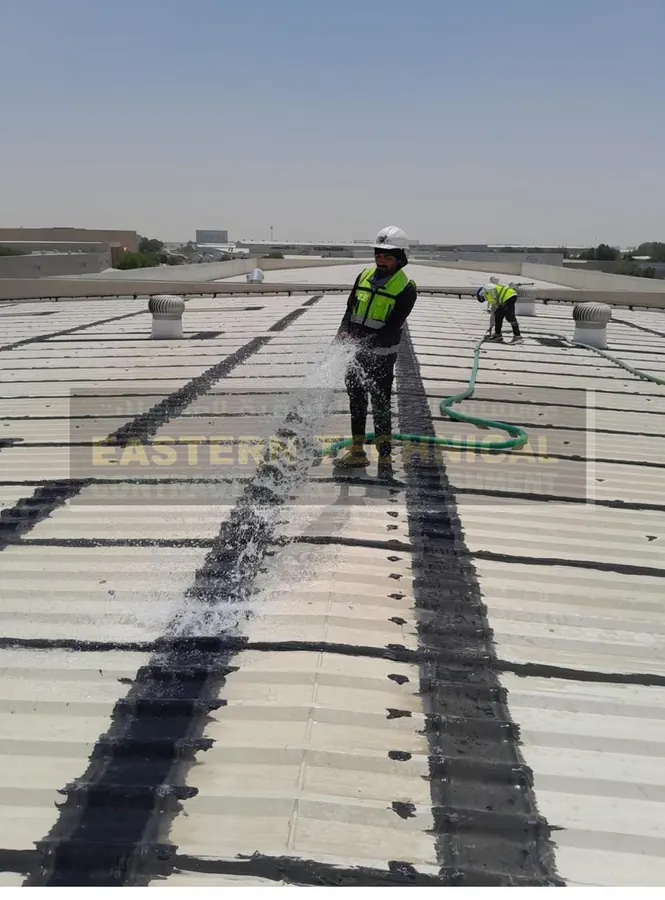
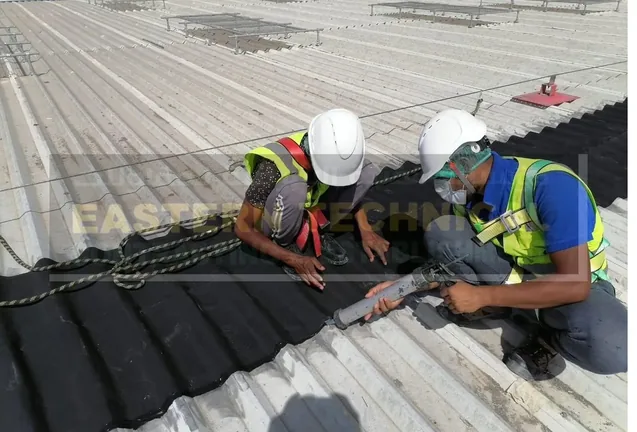
A metal roof can look structurally sound from the ground and still be letting water into insulation, purlins, wall lines, or production space. That is usually why facility teams ask the same question after the second or third callback: why do metal roofs leak if the sheets themselves still appear intact? In industrial buildings, the leak rarely comes from one simple hole. It usually comes from movement, failed detailing, aging components, or repairs that treated the symptom instead of the leak path.
For warehouses, factories, and large utility structures, that distinction matters. A small water entry point can travel across laps, run along steel members, and show up far from the actual failure. If the diagnosis is weak, the repair fails early. If the diagnosis is engineering-based, the roof can often be stabilized and waterproofed without unnecessary replacement.
Why do metal roofs leak on industrial buildings?
Metal roofing systems are not static surfaces. They expand under heat, contract at night, vibrate under wind loads, and age under UV exposure. In industrial environments, they also deal with dust, thermal cycling, standing water around gutters, foot traffic, and repeated service access around equipment.
That movement is the core issue. Metal sheets, flashings, sealants, fasteners, and penetrations all move differently. Once those components stop working together, water finds a path. On a warehouse or factory roof, the leak may not come through the field of the sheet at all. It often enters at side laps, end laps, penetrations, ridge details, gutter interfaces, skylights, smoke vents, or old repair zones.
A metal roof can still be recoverable even when leaks are active. But the reason for the leak has to be identified correctly. The wrong repair method, especially broad patching with generic mastics, often creates more trapped moisture and more callbacks.
The most common reasons metal roofs leak
Failed fasteners and washer breakdown
Exposed-fastener metal roofs depend heavily on screw integrity. Over time, screws can back out, loosen under thermal movement, or corrode. The neoprene or rubber washer under the fastener head can harden, crack, or compress unevenly. Once that seal is compromised, water enters around the fastener shank.
This is one of the most common leak sources on older corrugated sheets and single-skin metal roofs. It is also one of the most misread problems. Replacing a few visible screws may stop one leak point, but if the roof has widespread fastener fatigue, isolated replacement will not solve the system-wide issue.
Open laps and failed joint sealant
Side laps and end laps are frequent failure zones, especially where original sealant has dried out or lost adhesion. On long roof runs, even a small opening at a lap can pull in wind-driven rain or allow capillary action. Water can then travel under the sheet and appear inside the building several meters away.
Industrial roofs with poor slope design or aged panel alignment are especially vulnerable here. If water ponds near laps, the pressure on the joint increases, and minor imperfections become active leak points.
Roof penetrations done without proper detailing
Every pipe, duct support, cable tray, vent, curb, or equipment base interrupts the roof plane. These are high-risk areas because the roof moves, while the penetration detail is expected to stay sealed. Many leaks start where a roof-mounted service was installed by another trade without proper metal roof detailing.
Improvised sealants, rigid flashings, and poorly fitted collars fail quickly in heat and movement. On active industrial sites, penetrations are often added after the roof was installed, which means the original weathering system has already been disturbed.
Skylights, smoke vents, and curb flashings
Skylights and smoke vents create multiple interfaces – sheet to curb, curb to flashing, flashing to fasteners, and often aging sealant lines around all of them. If one point fails, water can track around the assembly and present as a general roof leak.
These areas also face concentrated UV exposure and maintenance traffic. Cracked sealant, separated flashing, corroded curb bases, and loose fixings are common. On older industrial roofs, repeated surface patching around these units often hides the real extent of deterioration.
Gutter and drain transition failures
Many facility teams focus on the roof sheets first, but internal gutters, valley gutters, and drain points are often the true source. Gutters hold water longer than the roof field. That means corrosion accelerates there, lap joints weaken faster, and blockages create overflow conditions.
Once water backs up at a gutter transition, it can enter beneath sheets, behind wall flashings, or through weakened seams. If the roof has any low spots near outlets, the problem gets worse during heavy rainfall.
Rust, corrosion, and coating loss
Metal roofs leak not only because joints fail, but because the substrate eventually deteriorates. Once protective coatings wear off, corrosion starts attacking exposed steel. In industrial environments, this is often faster near gutters, coastal air, condensate discharge areas, and zones with trapped debris.
Corrosion can begin as a surface issue and progress into pinholes, edge thinning, and structural weakness around fastener lines or sheet overlaps. If the roof has been patched repeatedly without treating the rusted substrate, the waterproofing layer may not stay bonded for long.
Thermal movement and fatigue cracking
Large metal roofs move every day. On long-span warehouse and factory roofs, this movement is significant. If the system lacks flexible detailing at transitions and penetrations, stress concentrates at predictable points. Over time, flashings crack, sealants split, screw holes enlarge, and metal fatigue develops near fixed points.
This is why some roofs leak only at certain times – after a hot afternoon, during wind-driven rain, or when temperatures shift sharply. The leak is movement-related, not just weather-related.
Why leak locations are often misleading
On metal roofs, the internal water stain is often not the leak source. Water can run along insulation facings, purlins, roof sheets, or structural members before dripping into the building. A stain above one aisle may actually originate from a penetration or lap much higher upslope.
That is why proper inspection matters. Leak diagnosis should include roof slope reading, penetration review, joint condition checks, gutter inspection, fastener assessment, and evidence of movement or corrosion. A quick visual walkover is rarely enough on a large industrial asset.
Why temporary repairs keep failing
Most repeat failures come from using the wrong repair philosophy. A general-purpose sealant applied over dirt, rust, wet surfaces, or moving joints will not perform for long. Neither will patching one visible crack when the surrounding fasteners, laps, and substrate are already degraded.
Temporary repairs have a place during emergency response, especially when operations must continue. But they should lead to a defined corrective scope, not become the permanent strategy. On aging metal roofs, durable repair usually requires system-level work at leak-prone details, not random spot treatment.
What a durable repair approach looks like
The right repair depends on the roof type, age, leak pattern, and remaining structural condition. Some roofs need targeted fastener replacement and joint resealing. Others need rehabilitation around penetrations, gutters, skylights, and drain points. On difficult leak areas, EPDM-based waterproofing can be highly effective because it handles movement better than many rigid patch materials and provides reliable sealing around irregular details.
For industrial buildings, this matters more than cosmetic appearance. The goal is to stop water ingress, protect the steel below, reduce downtime, and extend service life without creating another maintenance cycle in six months.
A proper scope also considers access, safety, operational continuity, and weather exposure. On live facilities, the repair method has to work in real site conditions, not just in a product data sheet. That is where a contractor with inspection, fabrication, waterproofing, and maintenance capability under one roof brings real value. ETCE KSA typically approaches these projects from that practical angle – identify the true leak path, repair the detail correctly, and protect the surrounding roof before the problem spreads.
When repair is enough and when rehabilitation is smarter
Not every leaking metal roof needs full replacement. If the sheets retain structural integrity and corrosion is still manageable, a well-designed rehabilitation plan can restore weatherproofing and significantly extend service life. This is often the better financial decision for warehouses and factories that cannot afford long shutdowns.
But there are limits. If widespread corrosion has weakened sheet sections, if fastener lines are failing across the entire roof, or if the roof geometry creates chronic drainage problems, then deeper intervention may be necessary. The key is to make that call based on inspection data, not guesswork.
A metal roof usually leaks for understandable reasons – movement, failed joints, bad detailing, corrosion, and aging components working against each other. Once those reasons are isolated, the path forward becomes much clearer. The smartest move is not to wait for the next rain event. It is to inspect the roof while the failure pattern is still small enough to control.
Related ETCE services
Need this checked on your own roof?
ETCE carries out industrial roof inspections, leak diagnosis, metal roof rehabilitation and EPDM waterproofing across Dammam, Al Khobar, Dhahran, Jubail, Riyadh and Jeddah.
Request a Roof Inspection WhatsApp UsMetal roof waterproofing across Saudi Arabia
ETCE is a metal roof waterproofing company in Saudi Arabia with its head office in Dammam. See our warehouse & factory roof waterproofing service or find your area: