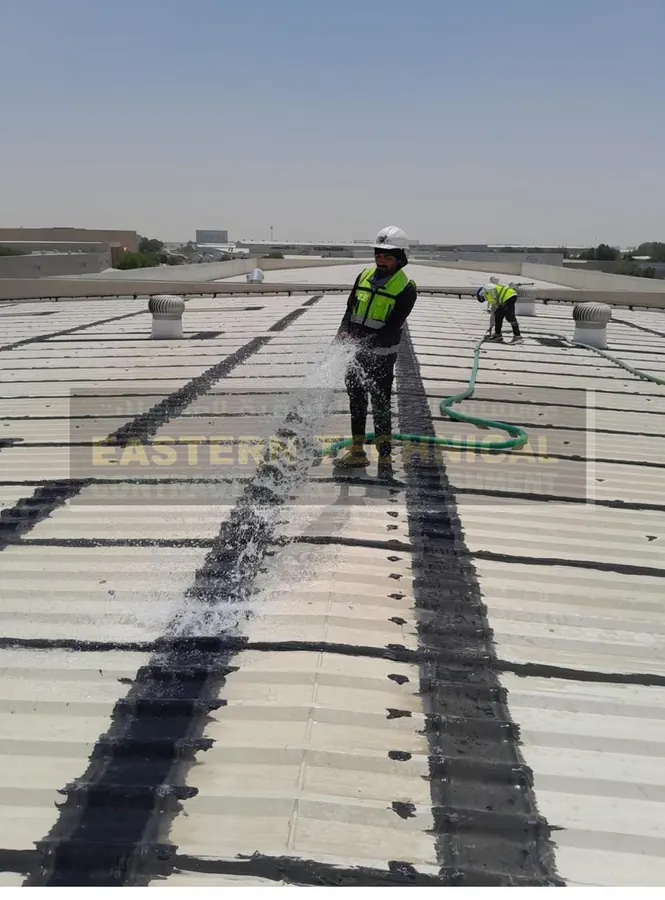
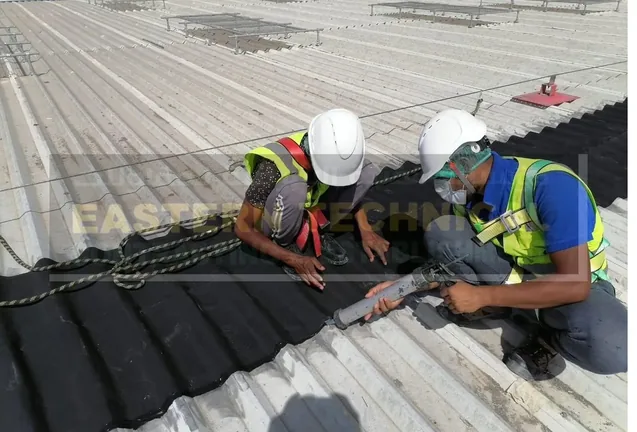
A small roof leak above a production line, storage area, electrical room, or loading bay is rarely a small maintenance issue. Water travels beneath metal sheets, through insulation, along purlins, and into joints that appear dry from the inside. The best waterproofing solutions for factories are therefore not selected by material alone. They are engineered around the roof condition, leak path, movement at joints, drainage performance, and the operating demands of the facility.
For industrial buildings, the objective is clear: stop active water entry, prevent corrosion from spreading, protect the roof assembly, and complete the work with minimal disruption to operations. A low-cost patch may stop a visible drip for a few months. A correctly specified waterproofing system addresses the failure point and gives the facility team a maintainable roof for years ahead.
Start With the Roof Failure, Not the Product
Factory roofs fail for different reasons, even when the symptoms look similar. On metal and sandwich panel roofs, leaks commonly develop at overlapping sheets, fasteners, ridge caps, gutters, flashing, skylights, smoke vents, penetrations, and drain points. Thermal expansion and contraction can open old seals. UV exposure can harden mastics. Sand accumulation can block drainage, while standing water accelerates deterioration at weak seams and corroded areas.
An inspection should establish whether water is entering through a single detail or through several connected defects. This requires checking the roof surface, underside of the roof, drainage routes, previous repair areas, and the condition of fasteners and supporting components. Water stains inside the building do not always identify the true entry point. The source may be several feet away, particularly on low-slope metal roofs.
For large warehouses and active factories, a detailed report is more useful than a general recommendation to “coat the roof.” It should identify defective areas, describe substrate preparation, define the waterproofing build-up, and separate immediate leak repairs from broader rehabilitation work. This gives operations and procurement teams a practical scope they can evaluate.
Best Waterproofing Solutions for Factories: Match the System
EPDM Rubberized Waterproofing for Difficult Details
EPDM-based waterproofing is a strong option where the roof has repeated movement, irregular shapes, aging metal, or many leak-prone details. Its flexibility makes it especially effective at gutters, penetrations, skylight curbs, smoke vents, flashing transitions, and joints between dissimilar materials. These are areas where rigid repair materials often crack as the roof moves under heat.
For factory buildings exposed to high temperatures and intense UV, an EPDM system can provide a durable, elastic barrier when installed over a properly prepared surface. It is not a shortcut for untreated corrosion or loose roofing sheets. Rusted areas must be repaired or stabilized, failed fasteners addressed, and surfaces cleaned before waterproofing is applied. The material performs best when the underlying roof has been made sound.
EPDM is particularly valuable for localized rehabilitation because it can reinforce critical details without requiring unnecessary removal of the entire roof assembly. However, when sheet corrosion is widespread or drainage has failed across the roof, localized detailing alone may not be enough. The repair scope must match the extent of deterioration.
Liquid-Applied Systems for Complex Roof Geometry
Liquid-applied waterproofing systems are practical on roofs with complicated profiles, multiple service penetrations, or areas that are difficult to cover with preformed membranes. Applied correctly, they form a continuous layer across seams, fastener lines, flashings, and transitions.
Their performance depends heavily on surface preparation and application control. Dust, moisture, loose coatings, oil, and rust reduce adhesion. Thickness also matters. A thin application may look complete but can fail early under UV exposure, ponding water, or movement. Contractors should verify the compatible primer, reinforcement requirements at joints, and required dry film thickness rather than treating every roof area the same.
These systems are often well suited to targeted repairs around high-risk details. They may also be used as part of a wider restoration system when the roof is structurally stable and the substrate can be properly prepared.
Membrane Rehabilitation for Aging Metal Roofs
When a metal roof has extensive seam failures, recurring leaks, and widespread corrosion but remains structurally serviceable, a membrane-based rehabilitation system can extend its working life. The membrane creates a new water-shedding layer over the existing roof and can reduce dependence on repeated patch repairs.
This approach demands careful planning. Areas with severe metal loss, loose sheets, damaged insulation, or unstable deck conditions need repair before the membrane is installed. Edges, laps, transitions, and drainage details require the same level of attention as the main roof field. A large membrane installation can fail at one poorly treated gutter connection or penetration.
The advantage is consistency across a broad roof area. The trade-off is that this type of rehabilitation requires a stronger upfront assessment, a defined installation sequence, and coordination with rooftop equipment, access routes, and ongoing factory activity.
Metal Roof Repairs and Protective Treatment
Waterproofing cannot compensate for damaged roof components forever. Corroded sheets, failed fixings, open laps, damaged ridge flashing, and deteriorated gutters should be repaired as part of the waterproofing program. In many cases, replacing limited damaged sections and sealing the repaired roof correctly is more economical than applying a system over a failing substrate.
Fasteners deserve special attention. A loose or deteriorated fastener can create a direct water path and allow wind-driven rain to enter beneath a sheet. Re-fastening, sealing, and treating fastener lines may be necessary before applying a broader waterproofing layer. Where corrosion has started around penetrations or at gutter lines, the repair must include cleaning, treatment, reinforcement, and a compatible waterproofing finish.
Drainage Is Part of Waterproofing
A waterproofing system is only as reliable as the roof's ability to shed water. Blocked gutters, undersized outlets, poor falls, and debris buildup create standing water that tests every seam and detail. On industrial roofs, drainage problems are often missed because the most visible issue is an internal leak rather than the water accumulation above it.
Gutters should be inspected for corrosion, loose joints, failed end caps, and inadequate discharge. Drain points must remain clear, and roof areas that hold water after rainfall should be assessed for slope and structural movement. Waterproofing a gutter without correcting its drainage path can result in another failure at a different point.
This is why end-to-end contractors bring roof repair, gutter work, penetration sealing, and maintenance into a single scope. The facility receives one coordinated solution instead of separate repairs that leave gaps between trades.
Plan Work Around Factory Operations
The right technical system can still become a poor project if execution disrupts production or creates safety risks. Before work begins, the contractor should identify access routes, restricted areas, equipment below the work zone, roof loading limits, weather constraints, and required permit procedures. For warehouses, protection of stored goods and loading operations must be included in the method of work.
Phased installation is often the most practical approach. Critical leak zones can be addressed first, followed by broader roof sections during planned maintenance windows. This reduces exposure to weather and allows facility teams to maintain operational control. Fast-response repairs are useful during active leaks, but they should lead into a permanent scope when recurring defects are identified.
ETCE KSA approaches industrial roof waterproofing as a combined diagnosis, repair, installation, and after-sales maintenance service. For facilities in Dammam, Jubail, Riyadh, and across Saudi Arabia, that integrated approach is valuable when one roof issue involves metal sheets, gutters, penetrations, and waterproofing details at the same time.
Choose on Lifecycle Value, Not Initial Price
The least expensive proposal is not always the lowest-cost solution over the life of the roof. Decision-makers should compare the expected service life, preparation requirements, treatment of corrosion, detail reinforcement, installation warranty, maintenance plan, and the contractor's ability to respond if a problem develops after handover.
A system that costs more initially may prevent repeated shutdowns, protect inventory and electrical equipment, and delay major roof replacement. Conversely, a full rehabilitation may not be justified where the roof is in good condition and leaks are isolated to a few details. The best choice depends on evidence from the inspection, not on a standard product preference.
A factory roof should not be managed only when water reaches the floor below. Treat the first recurring leak, rust line, or blocked gutter as an operational warning. A focused inspection and an engineered repair scope can protect the building long before a manageable defect becomes an emergency.
Related ETCE services
Need this checked on your own roof?
ETCE carries out industrial roof inspections, leak diagnosis, metal roof rehabilitation and EPDM waterproofing across Dammam, Al Khobar, Dhahran, Jubail, Riyadh and Jeddah.
Request a Roof Inspection WhatsApp UsMetal roof waterproofing across Saudi Arabia
ETCE is a metal roof waterproofing company in Saudi Arabia with its head office in Dammam. See our warehouse & factory roof waterproofing service or find your area: