A leaking warehouse roof rarely stays a roofing problem for long. It becomes damaged stock, unsafe walkways, electrical risk, insulation failure, and a maintenance budget that keeps getting pulled into repeat patchwork. That is why evaluating waterproofing companies in saudia should start with one question: can the contractor solve the root failure in an operating industrial building, or are they only selling a temporary surface fix?
For factories, logistics hubs, storage sheds, and large commercial roofs, waterproofing is not a cosmetic trade. It is an engineering and execution issue. The contractor has to understand how water travels across laps, gutters, penetrations, skylight edges, drain points, corroded fasteners, and aging metal sheets. On industrial sites, leaks are often symptoms of movement, thermal stress, failed detailing, rusted substrates, and poor drainage, not just open seams.
What separates strong waterproofing companies in saudia
A capable contractor does more than arrive with sealant and labor. They inspect the roof system as a whole, identify failure patterns, document the condition, and recommend a repair method that matches the building type and remaining roof life. That matters because a warehouse with single skin sheets needs a different approach than a sandwich panel roof with repeated leak points around penetrations and end laps.
The better companies also understand that industrial clients are managing uptime, safety, and procurement pressure at the same time. They know site access matters. They know shutdown windows are limited. They know a solution that looks cheap at award stage can become expensive if it fails during the next rain event or allows corrosion to continue underneath.
In practice, the strongest providers usually show depth in five areas: diagnosis, detailing, materials, execution, and after-service support. If one of those is weak, the project usually shows it later.
Diagnosis should come before product selection
Many roof leaks are misdiagnosed because water enters at one point and appears far away inside the building. This is common around gutters, ridge lines, smoke vents, skylights, duct penetrations, and overlapping sheets. A serious waterproofing company will inspect these details first and then assess the condition of the substrate, fasteners, joints, and drainage path.
If a contractor recommends a system before checking movement joints, rust level, ponding areas, and roof geometry, that is a warning sign. Material alone does not solve a design or detailing problem.
Industrial detailing is where most failures start
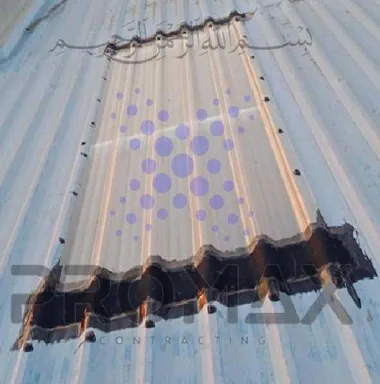
Large roofs fail at transitions more often than in open field areas. Penetrations, curbs, drains, side laps, and valley gutters are where water gets in. Good contractors know how to treat these points with reinforced detailing rather than broad coating claims.
This is one reason EPDM-based waterproofing has become a practical option for difficult industrial roofs. When properly designed and installed, it performs well around irregular details, accommodates movement better than many rigid patch methods, and can extend service life on aging metal roof sections that still have structural value.
What industrial buyers should ask before hiring
When procurement teams compare bids, price naturally gets attention. But on industrial waterproofing, the lower number often reflects a narrower scope, less surface preparation, weaker detailing, or no real responsibility after handover. A better comparison is scope against risk.
Ask how the contractor plans to inspect and report the problem. Ask whether they can fabricate or modify related roof components if the leak source involves damaged flashings, gutters, supports, or sheet sections. Ask what surface preparation is required before waterproofing starts. Ask how they will manage work on an active site with safety controls and minimal disruption.
Also ask what happens after installation. Industrial facilities need a contractor who can return, inspect, maintain, and respond if another issue appears in an adjacent area. Waterproofing is often tied to broader roof maintenance, not a one-time intervention.
Material knowledge matters, but matching the system matters more
There is no universal best system for every building. The right answer depends on roof type, exposure, movement, rust condition, traffic, detail complexity, and budget horizon. Some clients need localized repair at high-risk leak points. Others need rehabilitation across large metal roof areas where patching has already failed several times.
This is where technically hands-on companies stand apart. They can explain why one system is suitable for gutters but not ideal for a high-movement penetration. They can identify when corrosion has gone too far for surface treatment alone. They can tell the difference between a roof that needs restoration and one that needs staged replacement planning.
That kind of advice is more valuable than generic waterproofing promises because it helps owners avoid spending on the wrong intervention.
Why industrial roofs in Saudi conditions need a different standard
Heat, UV exposure, dust loading, thermal expansion, and occasional heavy rain create a difficult operating environment for roof systems across Saudi Arabia. Metal buildings expand and contract constantly. Fasteners loosen. Sealants age. Water finds weak points at laps and accessories. If the roof has already been patched multiple times, hidden failures are common.
That means the contractor must build around movement and weathering, not just around visible holes. A repair that ignores thermal stress or substrate preparation may hold briefly and then split, lift, or leak again. This is especially true on older warehouses and factories where different repair methods have been layered over time.
For facility managers, this is not just about keeping water out. It is about controlling corrosion, protecting insulation performance, preserving inventory conditions, and avoiding disruption to operations below. A leak over production lines or storage racks has a much higher business cost than the repair invoice alone.
Signs a contractor is built for industrial waterproofing
The first sign is technical range. Industrial roofs often need more than waterproofing membrane work. They may require sheet replacement, gutter repair, penetration treatment, fabrication support, rust remediation, and coordinated maintenance. A contractor that can handle these under one scope reduces handoff problems between trades.
The second sign is reporting quality. Site inspections should produce clear findings, marked failure points, and a practical recommendation. Not a vague statement that the roof is leaking and needs coating. Industrial clients need evidence they can review internally and use for decision-making.
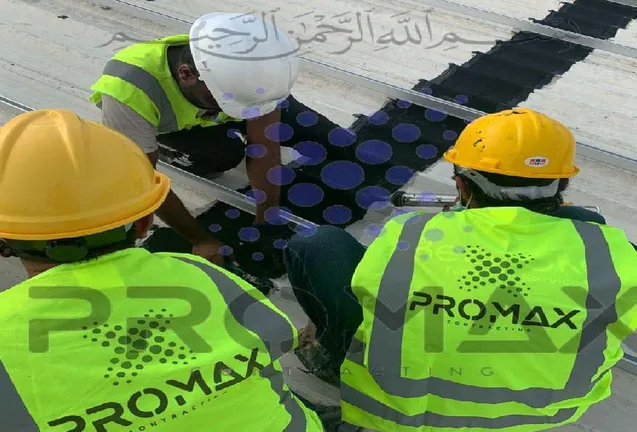
The third sign is execution discipline. Surface cleaning, preparation, adhesion control, edge treatment, overlap detailing, and final inspection determine whether the system performs. Waterproofing failures often come from rushed workmanship, not just poor materials.
The fourth sign is responsiveness. On active sites, waiting days for a callback after a leak report is not acceptable. Contractors serving factories and logistics operations need fast mobilization and a service mindset, especially during weather events or urgent failure situations.
One reason companies such as ETCE KSA stand out in this category is that they approach waterproofing as part of total roof performance – inspection, diagnosis, engineered detailing, installation, and ongoing support rather than isolated repair visits.
Where many buying decisions go wrong
The most common mistake is treating all leaks as equal. A minor drip at a roof penetration may be solvable with localized repair. Repeated leakage across multiple points on an aging metal roof is a different problem. It usually indicates system-wide deterioration, movement issues, or drainage failure.
Another mistake is buying on product language alone. Terms like long life, high performance, or weather resistant do not mean much without substrate preparation, detail treatment, and installation control. Even strong materials fail when applied over loose rust, trapped moisture, or unstable joints.
The third mistake is separating waterproofing from maintenance planning. If the roof is already showing rusting, failed laps, damaged gutters, and recurring leaks, the owner should ask for a broader roof condition view. Sometimes the most cost-effective path is phased rehabilitation focused on the highest-risk sections first.
How to make the right choice
If you are reviewing waterproofing companies in saudia for a warehouse, factory, or logistics building, look for a contractor that talks in failure points, details, substrates, movement, and service response – not just square footage and product names. Ask for a site inspection. Ask for a documented diagnosis. Ask how they will treat penetrations, gutters, drains, skylights, and corroded roof areas, because those are the places where industrial roofs usually prove whether a contractor knows the work or not.
The right partner is not the one with the broadest sales claim. It is the one that can stand on your roof, identify what is actually failing, and fix it in a way that holds under heat, rain, movement, and time. A dry building is good. A roof system that stops stealing attention from your operation is better.
Related ETCE services
Need this checked on your own roof?
ETCE carries out industrial roof inspections, leak diagnosis, metal roof rehabilitation and EPDM waterproofing across Dammam, Al Khobar, Dhahran, Jubail, Riyadh and Jeddah.
Request a Roof Inspection WhatsApp Us