A leak above an active warehouse aisle is never just a leak. It quickly turns into wet stock, corrosion around fasteners, rising internal humidity, production disruption, and a maintenance problem that keeps returning because the real failure point was never isolated. That is why facility teams evaluating waterproofing companies in Dammam Saudi Arabia should look past surface-level patching and focus on technical diagnosis, material suitability, and execution quality.
Dammam’s industrial buildings operate under harsh conditions. High heat, UV exposure, dust, occasional heavy rain, movement at roof joints, and aging metal substrates all work against roof performance. On warehouses, factories, logistics hubs, and production sheds, the roof is not a cosmetic element. It is an operating asset. If waterproofing is specified badly or installed casually, the damage does not stay on the roof. It moves into insulation, steel members, electrical runs, inventory zones, and maintenance budgets.
What separates waterproofing companies in Dammam Saudi Arabia
Not all contractors in this market solve the same problem. Some are general maintenance vendors that handle waterproofing as one item among many. Others are system-focused specialists that inspect failure points, define the right scope, prepare the substrate correctly, and install materials built for industrial use. For commercial and industrial clients, that difference matters.
A serious waterproofing contractor should start with inspection, not product sales. Industrial roofs fail for specific reasons – open laps, corroded sheets, weak penetrations, failed sealant lines, damaged gutters, ponding around drains, loose fasteners, cracked flashing, movement at expansion areas, and poor detailing around skylights or smoke vents. If a company cannot identify the failure mechanism, it is unlikely to deliver a lasting repair.
The second separator is system selection. A concrete roof, a sandwich panel roof, and an aging single skin corrugated roof do not need the same approach. Some contractors keep forcing one coating across every substrate because it is easier to sell and faster to apply. That usually creates callbacks. Good waterproofing companies work backward from roof type, roof condition, service life expectations, and plant operations.
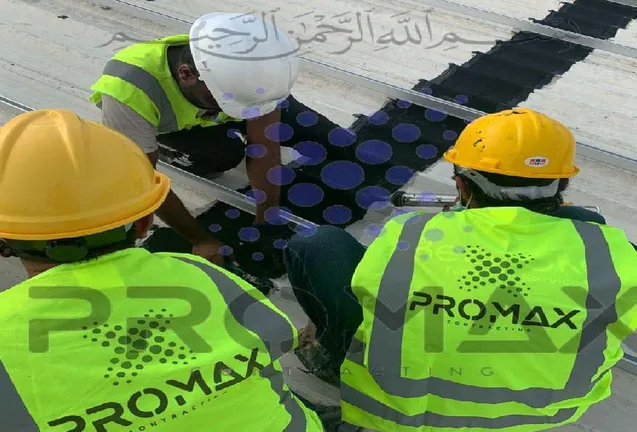
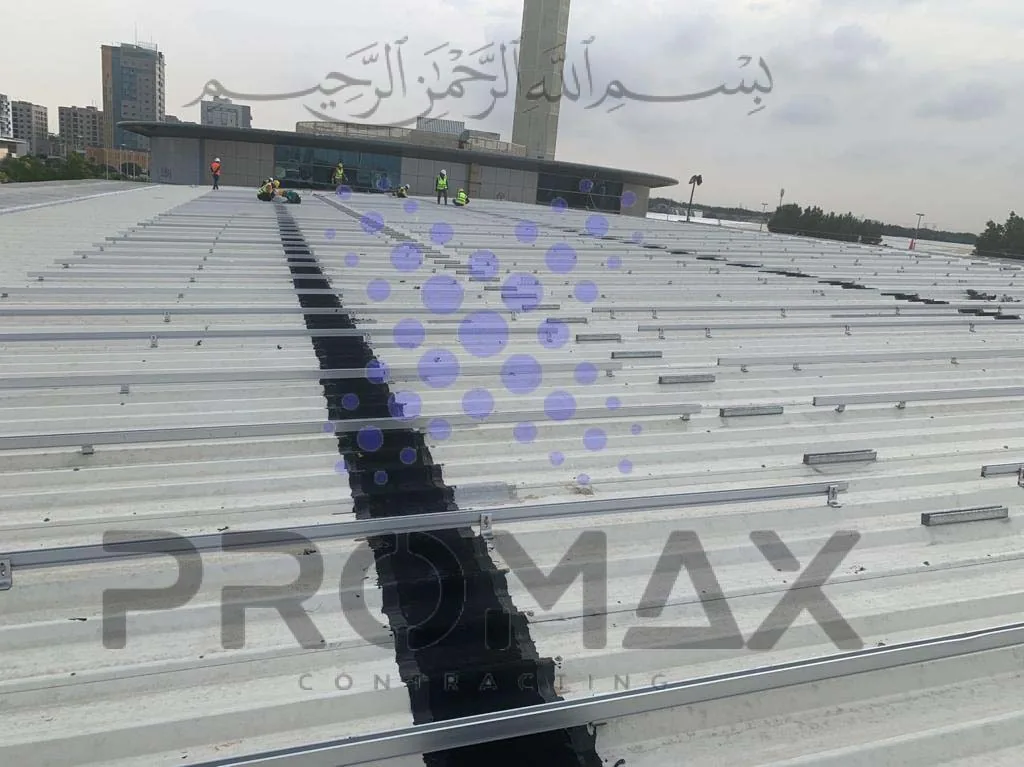
The third separator is execution under live site conditions. Industrial clients often cannot stop operations for extended roof work. That means the contractor must plan access, safety controls, material staging, weather timing, and area-by-area sequencing. A team that is technically strong on paper but weak in site execution can create almost as much disruption as the leak itself.
How to evaluate industrial waterproofing capability
If you are comparing bids, the cheapest proposal is rarely the most useful one. Scope clarity is usually more valuable than a lower upfront number. Two quotations can appear similar while covering completely different levels of diagnosis, preparation, detail treatment, and warranty support.
Start with the inspection method. Was the site physically surveyed? Were leak points mapped? Did the contractor assess sheet condition, rust progression, fastener performance, gutter integrity, and penetration detailing? Did they identify whether the problem is active water ingress, trapped moisture, or both? A real inspection should produce a report that helps operations and procurement teams understand what is failing and what must be prioritized.
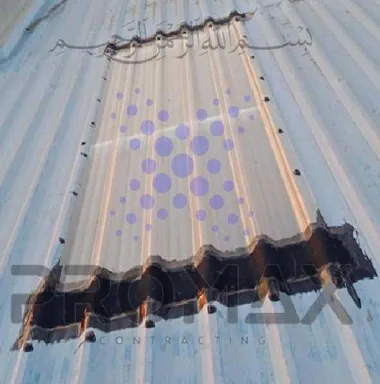
Then review substrate preparation. This is where many waterproofing jobs break down. On metal roofs, preparation can include rust treatment, replacement of deteriorated sections, tightening or replacing fasteners, cleaning contaminated surfaces, sealing open joints, and correcting localized weak details before the waterproofing layer is installed. If a proposal skips this stage, the installed system is being asked to bridge unresolved roof defects.
Finally, look at support after installation. Industrial owners need more than application crews. They need a contractor that can return for inspections, address isolated damage, maintain high-risk details, and support long-term roof performance. One-time application without follow-up is a common weak point in this sector.
Systems matter more than brand names
Many buyers ask which waterproofing product is best. The better question is which system is right for the roof assembly and failure condition. Material names alone do not solve industrial leakage.
For aging metal roofs in Dammam, EPDM-based waterproofing systems are often a strong option, especially around difficult leak points such as roof penetrations, gutters, overlaps, skylights, drain zones, and movement-prone interfaces. EPDM performs well where flexibility, weather resistance, and long-term sealing are needed. On industrial roofs with repeated movement and thermal cycling, that flexibility can be a major advantage over rigid repair methods.
That said, not every roof should receive the same EPDM detail package, and not every leak justifies a full overlay system. Sometimes the right answer is targeted rehabilitation. Sometimes it is partial sheet replacement combined with detail waterproofing. Sometimes the roof has reached a condition where repeated repair is no longer economical. Good contractors will say that directly, even if the answer is less convenient.
The same applies to coatings. A coating may perform well on a sound roof with proper preparation and correct film build. It may fail quickly if used to hide active corrosion, open seams, or weak drainage conditions. Coatings are not a substitute for engineering judgment.
Common failure points on warehouses and factories
Industrial roofs usually leak at the details first, not across the entire field area. Penetrations are one of the biggest problem zones. Pipe supports, curbs, exhaust openings, cable entries, and equipment bases create interruptions in the roof line. If these are sealed with generic mastics or poorly shaped flashing, water entry is only a matter of time.
Gutters and drain points are another frequent source of trouble. Standing water, debris accumulation, failed joints, and rusted channels can move water back into the roof edge or wall line. Many facilities treat this as a drainage cleaning issue when the underlying problem is actually waterproofing failure at the gutter interface.
Skylights, smoke vents, end laps, side laps, and fastener lines also need close attention. On older roofs, the leak may appear far from the actual entry point because water migrates along panels or structural lines before showing internally. This is why visual patching from below almost never solves the problem.
Why end-to-end service is not a sales slogan
For industrial owners, one contractor handling inspection, design input, fabrication support, installation, and maintenance is not just convenient. It reduces coordination gaps. When different vendors split responsibility, each one tends to blame the other when a leak returns. The result is delay, repeated access issues, and unclear accountability.
A contractor with in-house or tightly managed execution across diagnosis, detailing, sheet work, waterproofing application, and after-sales support is usually better positioned to close those gaps. This is particularly relevant on older facilities where roof issues overlap with corrosion, damaged accessories, poor water flow, and previous repair failures.
That contractor model is one reason specialized firms such as ETCE KSA are often a better fit for warehouses and factories than general-purpose maintenance vendors. Industrial clients usually need a partner that can inspect fast, report clearly, solve across multiple roof conditions, and return when the building needs support again.
Choosing a contractor for Dammam conditions
When shortlisting providers, ask practical questions. What roof types do they regularly handle? Do they have experience with sandwich panels, single skin sheets, corrugated metal roofs, and warehouse leak points? Can they provide a condition-based recommendation instead of a standard package? How quickly can they mobilize for inspection and emergency response? Can they work safely over active industrial operations?
Also ask how they define success. A reliable answer should focus on leak elimination, substrate stabilization, durable detailing, and reduced maintenance recurrence – not just completion of application works. Waterproofing in Dammam is not a paperwork exercise. It is a performance requirement.
The strongest companies are usually straightforward about trade-offs. They will explain when a localized repair is cost-effective and when it is only delaying a larger rehabilitation need. They will distinguish between temporary containment and durable correction. And they will not pretend that every roof can be saved with the same treatment.
For facility managers and owners, that honesty is useful. It helps with budgeting, shutdown planning, asset protection, and long-range maintenance decisions.
If you are reviewing waterproofing companies in Dammam Saudi Arabia, the right choice is usually the one that treats your roof like an engineered industrial system, not a surface to be patched until the next rain. A good contractor should leave you with fewer leaks, fewer unknowns, and a roof that can keep doing its job while the rest of your operation keeps moving.
Related ETCE services
Need this checked on your own roof?
ETCE carries out industrial roof inspections, leak diagnosis, metal roof rehabilitation and EPDM waterproofing across Dammam, Al Khobar, Dhahran, Jubail, Riyadh and Jeddah.
Request a Roof Inspection WhatsApp Us