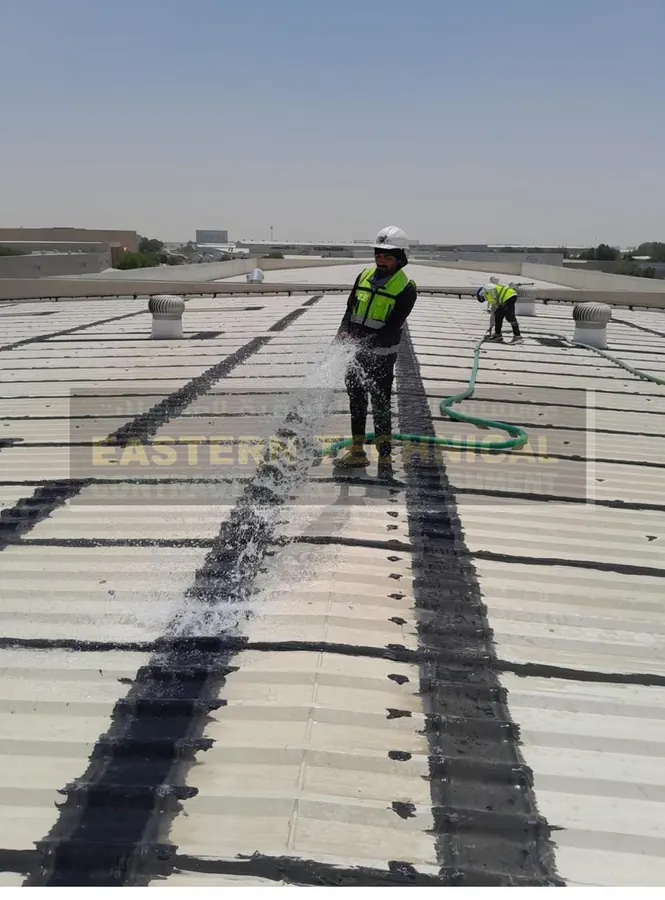
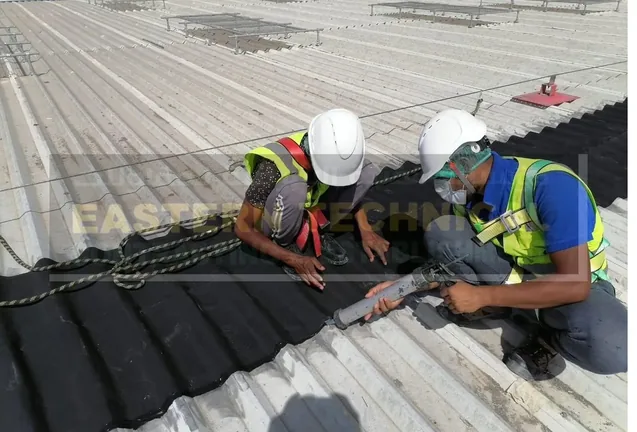
A roof leak above active inventory, production lines, or loading operations is not a minor maintenance issue. In Saudi industrial facilities, water entry can quickly spread beneath metal sheets, attack fasteners and purlins, stain insulation, and force unplanned work stoppages. Warehouse roof waterproofing KSA requires more than applying sealant over a visible crack. It requires identifying the route water takes, correcting failed details, and installing a system that can handle heat, UV exposure, wind-driven rain, sand, and roof movement.
For warehouse owners, facility managers, and project teams, the objective is straightforward: stop leaks at their source, prevent corrosion from advancing, and protect operations without replacing a roof that may still have years of service life. The right solution depends on roof condition, geometry, drainage, and the number of penetrations – not just the location of the drip inside the building.
Why Metal Warehouse Roofs Fail in Saudi Arabia
Metal roofing is widely used on factories, logistics facilities, storage sheds, and commercial warehouses because it is fast to install and suitable for large spans. Its weak points are usually not the main roof sheets themselves. Failures develop at joints, screws, overlaps, gutters, ridge caps, skylights, smoke vents, pipe penetrations, and transitions between different building elements.
High daytime temperatures cause repeated expansion and contraction across long metal panels. Over time, fasteners can loosen, washers can harden, and sealant joints can split away from the sheet. UV exposure accelerates the aging of many conventional sealants. When rain arrives, water follows the path of least resistance through lap joints, around deteriorated screws, or into areas where drainage has been restricted by dust, debris, or corrosion.
A small leak can also be misleading. Water may enter near a ridge, travel along a purlin or insulation layer, and appear many meters away from the actual failure point. Treating only the visible interior stain often leads to repeated repairs and growing maintenance costs.
Warehouse Roof Waterproofing KSA Starts With Diagnosis
A durable repair begins with a site inspection, not a material decision. The roof must be assessed as an operating system: sheets, fasteners, flashings, joints, drainage, penetrations, and supporting steel all affect waterproofing performance.
An effective inspection reviews the following critical conditions:
- Rusting, perforation, deformation, and loose or damaged roof sheets
- Open side laps, end laps, ridge details, and failed sealant lines
- Missing fasteners, cracked washers, enlarged screw holes, and poor fixing patterns
- Leaks around skylights, smoke vents, exhaust ducts, pipes, cable trays, and curbs
- Blocked gutters, ponding areas, damaged drain points, and corrosion at water collection zones
The inspection should also consider safe access, roof traffic, active operations below, and whether work can be phased by zone. A detailed report gives the facility team a clear repair scope and helps distinguish between isolated leak repairs, partial rehabilitation, and a full waterproofing treatment.
EPDM Waterproofing for Difficult Roof Details
EPDM rubberized waterproofing is particularly effective where metal roof details have become difficult to maintain with standard sealants alone. Properly selected and installed EPDM systems remain flexible as roof sheets move under thermal stress. This makes them suitable for irregular shapes and high-risk areas where a rigid repair is likely to crack again.
On warehouse roofs, EPDM can be used to waterproof sheet overlaps, gutters, penetrations, skylight perimeters, smoke vents, drain points, and transitions between roof components. It is also valuable in localized areas of aging metal where corrosion has started but the structure remains suitable for rehabilitation.
Material selection still depends on the application. A small screw-hole issue may need fastener replacement, surface preparation, and a localized waterproofing detail. A corroded gutter requires cleaning, repair of damaged metal, correct falls toward outlets, and a continuous lining approach. A roof with widespread failed laps and repeated leaks may require a larger membrane-based treatment across the affected elevations.
The key is compatibility and preparation. EPDM will not compensate for loose sheets, wet substrates, unstable rust scale, or failed drainage. Industrial waterproofing is a sequence of repair, preparation, detailing, and controlled installation.
Surface Preparation Determines Service Life
Most premature roof repair failures can be traced to poor preparation. Industrial roofs collect dust, silica, oxidation, old coatings, loose sealant, and contaminants from maintenance activity. Waterproofing materials need a clean, dry, stable surface to form a reliable bond.
Preparation normally includes removing failed sealants and loose corrosion, cleaning the repair zone, treating or replacing severely deteriorated metal, securing loose sheets, and addressing defective fasteners before waterproofing begins. At penetrations and roof accessories, the contractor must shape the waterproofing detail to avoid gaps, sharp edges, and water traps.
This stage takes time, but it prevents the common cycle of emergency patching. Applying material over a contaminated surface may look complete on the day of installation, yet it can separate after thermal movement or the next heavy rain event.
Control Water Before It Reaches the Building
Waterproofing and drainage must be planned together. Even a high-quality membrane is under unnecessary stress if water remains ponded around gutters, outlets, or low points. Standing water increases corrosion risk, loads roof details for longer periods, and exposes weak joints that may otherwise remain dry.
For large warehouses, gutter condition deserves special attention. Gutters can corrode from the inside, especially where dust and debris hold moisture after rainfall. Their joints, outlets, expansion areas, and connections to downpipes should be inspected as part of the roof scope. A leak at a gutter can be mistaken for a roof-sheet failure, while water overflowing a blocked gutter may enter through wall and roof junctions.
Drain points should be clear, adequately sealed, and positioned to carry water away without creating backflow. Where roof geometry has changed due to additions, equipment installations, or previous repairs, drainage patterns should be reviewed before waterproofing work is finalized.
Plan the Work Around Warehouse Operations
A warehouse roof project must protect the building and keep the facility functioning. This is especially relevant in logistics centers, manufacturing sites, and storage facilities where equipment, stock, and personnel remain active below the roof.
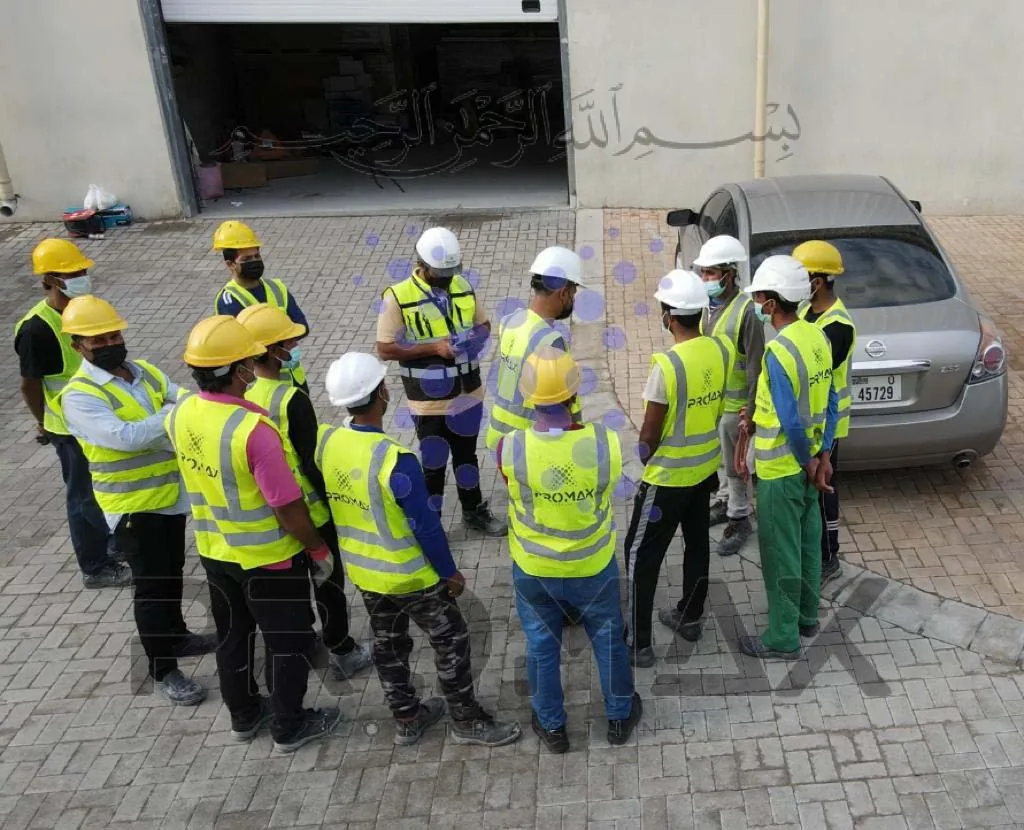
The work plan should define access routes, safety controls, material staging, weather monitoring, and protection for sensitive areas below. Roof repairs can often be divided into zones, allowing priority leak areas to be addressed first while the remaining scope is scheduled around operations. Emergency leaks may require immediate containment and temporary protection before permanent repairs are installed under suitable surface conditions.
ETCE KSA approaches this type of work as an engineered maintenance task, combining inspection, repair detailing, EPDM waterproofing, metal roof rehabilitation, fabrication support, installation, and after-sales service under one contractor team. That coordination reduces the risk of separate trades leaving gaps between roofing, gutter, penetration, and drainage responsibilities.
When Repair Is Better Than Replacement
Full roof replacement is not always the most practical answer. If the sheets remain structurally sound and corrosion is localized, targeted rehabilitation can extend service life at lower cost and with less operational disruption. Repairs are often appropriate when leaks are concentrated at joints, fasteners, penetrations, or gutters rather than spread across the entire roof field.
Replacement becomes more likely when metal loss is extensive, sheets have widespread deformation, insulation is severely saturated, or corrosion has compromised the roof's integrity. The decision should be based on inspection findings, not on the number of times a leak has been patched. Repeated patching without resolving the underlying movement, drainage, or corrosion issue simply transfers cost into future maintenance budgets.
Maintain the Roof After Waterproofing
Waterproofing is durable, but industrial roofs still need periodic attention. A practical maintenance program checks gutters and drain points, removes debris, reviews fasteners and exposed joints, and inspects areas around new equipment or service penetrations. Any damage caused by roof access should be repaired promptly before it becomes a leak path.
Scheduled inspections are particularly valuable before and after periods of rainfall. They help facility teams catch deteriorating seal lines, blocked drainage, or isolated corrosion before those conditions affect inventory, equipment, or building operations. Maintenance records also make future capital planning more accurate because management can see which sections are stable and which areas require rehabilitation.
The best roof repair is the one that restores confidence in the building below it. Start with a proper inspection, treat the full failure path rather than the visible symptom, and choose a waterproofing system designed for the movement and exposure conditions of the roof.
Related ETCE services
Need this checked on your own roof?
ETCE carries out industrial roof inspections, leak diagnosis, metal roof rehabilitation and EPDM waterproofing across Dammam, Al Khobar, Dhahran, Jubail, Riyadh and Jeddah.
Request a Roof Inspection WhatsApp UsMetal roof waterproofing across Saudi Arabia
ETCE is a metal roof waterproofing company in Saudi Arabia with its head office in Dammam. See our warehouse & factory roof waterproofing service or find your area: