A warehouse roof rarely fails all at once. It starts with a small coating break near a fastener, standing water in a low area, rust at a gutter lap, or condensation trapped beneath insulation. If you are asking what causes warehouse roof corrosion, the real answer is usually a combination of moisture, contamination, design weakness, and delayed maintenance rather than one isolated defect.
For facility managers and industrial property owners, that distinction matters. Corrosion is not just a surface issue. Once it starts, it can spread under laps, around penetrations, along purlin lines, and inside concealed areas where the damage is easy to miss until leaks, loose sheets, or structural deterioration appear.
What causes warehouse roof corrosion in real conditions?
Metal does not corrode simply because it gets old. It corrodes when the protective system is compromised and the roof stays exposed to the conditions that drive oxidation or chemical attack. On warehouse buildings, those conditions often exist every day.
The most common driver is persistent moisture. Rainwater that does not drain correctly, condensation forming on the underside of roof sheets, and water entry through failed fasteners or flashing details all create long-term wetting. A roof can tolerate occasional exposure. It struggles when water remains in contact with metal for extended periods.
The second major factor is coating breakdown. Most warehouse roofs rely on galvanized layers, painted finishes, or protective membranes to separate metal from the environment. Once that barrier is scratched, worn, blistered, or cracked by movement, UV exposure, or poor installation, the bare steel becomes vulnerable. Corrosion usually accelerates at these weak points because water and airborne contaminants collect there first.
Contamination also plays a serious role. Dust, industrial fallout, salts, chemical vapors, bird droppings, and debris do more than make a roof look neglected. They hold moisture against the surface and can create localized corrosive conditions. In industrial zones and coastal environments, this process is often much faster than building owners expect.
Moisture is the main trigger, but not the only one
A metal warehouse roof can perform for many years in harsh weather if moisture leaves the assembly quickly and protective layers remain intact. Problems begin when the roof stops drying.
Poor drainage is one of the most frequent causes. If the roof profile has low spots, blocked gutters, undersized downpipes, or incorrect slope, water stays on the roof longer than intended. Ponding does not always need to be dramatic to be harmful. Even shallow standing water around laps, penetrations, and fastening points can shorten roof life.
Condensation is another common but underestimated issue. Warm humid air inside a warehouse rises and meets cooler metal surfaces, especially at night or during seasonal swings. If ventilation is poor or insulation is missing, damaged, or improperly detailed, condensation can form repeatedly on the underside of the roof. That can corrode sheets from below while the top surface still appears acceptable.
Leaks from adjacent problem areas also feed corrosion. Failed skylight seals, open joints, cracked sealant, aging gutters, poorly flashed ducts, and unsealed roof penetrations can direct water onto vulnerable metal edges. In practice, the corrosion you see is often not where the original water entry began.
Why hidden moisture is more dangerous
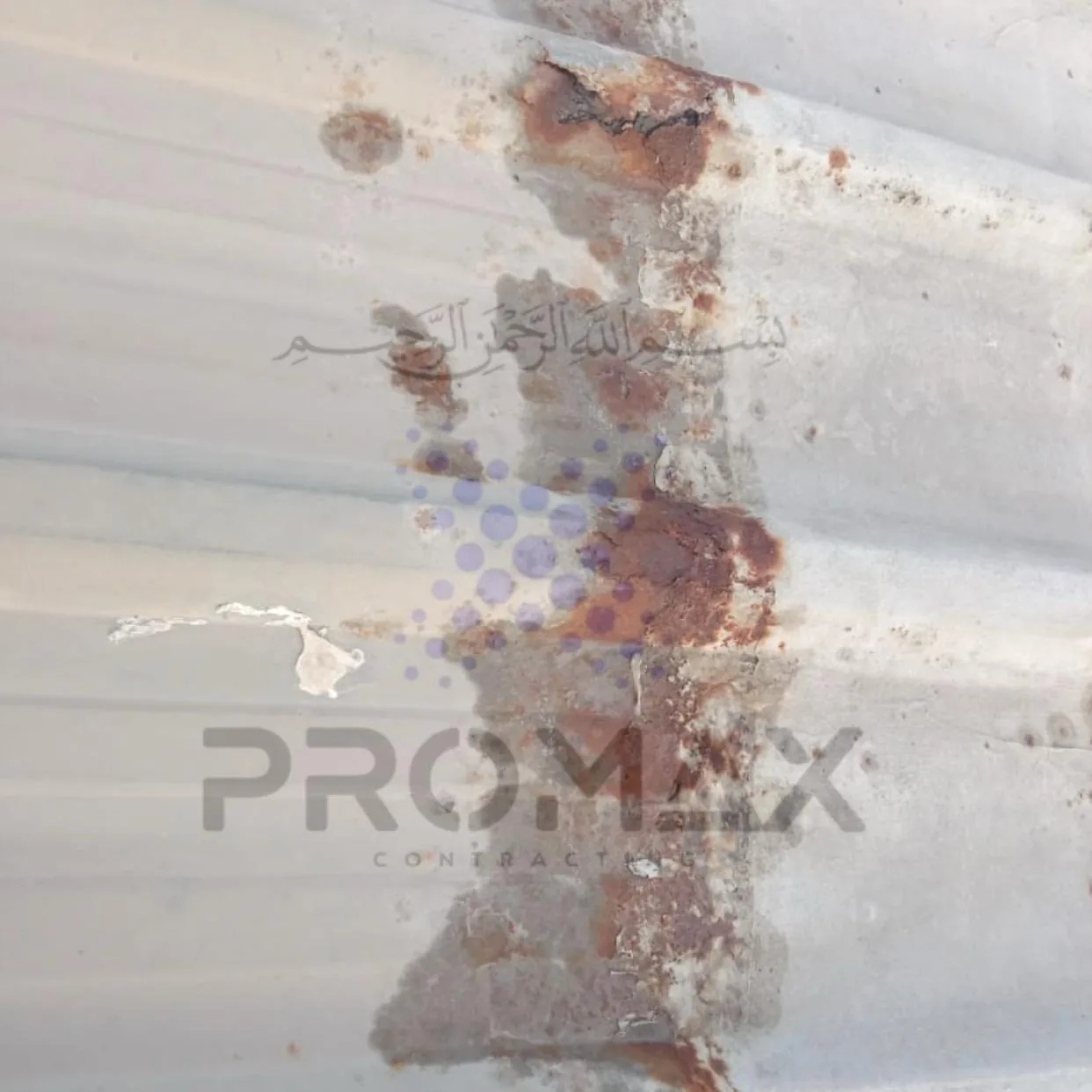
Visible rust gets attention. Trapped moisture does not. Water entering beneath laps, under patch repairs, or into insulation can stay active for long periods without obvious staining on the top surface. By the time the roof shows external distress, metal loss may already be advanced.
This is why inspection reports on industrial roofs need more than a walkover and a photograph of red rust. The source, path, and retention of water are what determine the repair strategy.
The roof details that fail first
Corrosion rarely starts in the middle of a clean, well-drained roof sheet. It usually starts at details where water, movement, and installation stress come together.
Fasteners are one of the first weak points. If fasteners are overdriven, underdriven, loose, or fitted with failed washers, water can enter around the hole and begin attacking the metal. Once rust develops around a fastener, the fixing can loosen further, enlarging the opening and worsening the problem.
Laps and joints are also high-risk areas. End laps and side laps can trap moisture, especially if sealant has failed or panels were not aligned properly. In older roofs, capillary action can draw water into these seams repeatedly.
Gutters and valley areas see concentrated runoff and debris accumulation, so they corrode faster than open roof slopes. The same is true for penetrations such as vents, ducts, smoke hatches, and pipe supports. Every cut edge and every mechanical connection is a potential corrosion point if the detailing is weak.
Cut edges deserve special attention. When metal sheets are cut during installation or modification, the exposed edge loses some of the protection provided by the original factory finish. If those edges are left untreated, corrosion often begins there and migrates inward.
Environmental exposure makes a major difference
Not all warehouse roofs age at the same speed. A roof in a dry inland location behaves differently from one exposed to industrial emissions, marine salts, or high humidity. The question is not just what causes warehouse roof corrosion, but what accelerates it on a specific site.
In coastal and Gulf climates, airborne salts can settle on roof surfaces and remain active when combined with dew, humidity, or rain. In industrial zones, chemical residues and airborne pollutants may attack coatings and bare metal more aggressively. Where dust and sand are frequent, drainage channels can clog faster and abrasion can gradually wear protective finishes.
High heat and UV exposure add another layer of stress. They do not directly create rust, but they degrade sealants, coating systems, gaskets, and membranes. As these protective elements age and crack, water entry becomes more likely. Thermal movement then enlarges small failures over time.
Installation errors often start the problem early
Some corrosion is age-related. A surprising amount is installation-related.
Incompatible metals can create galvanic corrosion when moisture bridges them. Poorly detailed penetrations leave exposed cut edges. Incorrect slope produces chronic drainage issues. Fastener patterns may be inadequate for movement and wind loads, causing sheets to shift and enlarge holes. Even metal shavings left on the roof after drilling can rust quickly and stain surrounding panels, which is sometimes the first visible sign of poor workmanship.
Repairs can also make things worse if the wrong materials are used. Generic patching compounds, incompatible sealants, or coatings applied over wet, unstable surfaces may give short-term visual improvement without stopping active corrosion beneath.
Why patching alone is not always enough
There is a trade-off here. If corrosion is light and localized, targeted treatment can be effective. But if the issue is tied to widespread condensation, failed drainage design, or advanced metal thinning at structural points, surface repair alone will not hold for long. The correct approach depends on how deep the damage goes and whether the root cause has been identified.
How to spot corrosion before it becomes a shutdown issue
Early signs are often operational rather than dramatic. You may notice recurring leaks in the same zone, discolored runoff at downpipes, bubbling paint, rust lines at panel laps, damp insulation, loose fasteners, or staining around roof penetrations. On the underside, look for rust freckles, water marks, and deterioration at support interfaces.
If sections of the roof dry slowly after rainfall while others clear quickly, that usually points to drainage inefficiency or trapped debris. If corrosion appears concentrated near skylights, vents, gutters, or equipment curbs, the problem is likely detail-specific rather than uniform weathering.
For active industrial facilities, timing matters. Waiting until corrosion becomes visible from the ground often means paying for sheet replacement, structural strengthening, operational disruption, and emergency leak response instead of planned maintenance.
What stops warehouse roof corrosion from spreading
The first step is accurate diagnosis. A roof should be assessed for water entry points, trapped moisture, coating condition, fastener integrity, lap condition, drainage performance, and substrate deterioration. Without that, repairs are often reactive and incomplete.
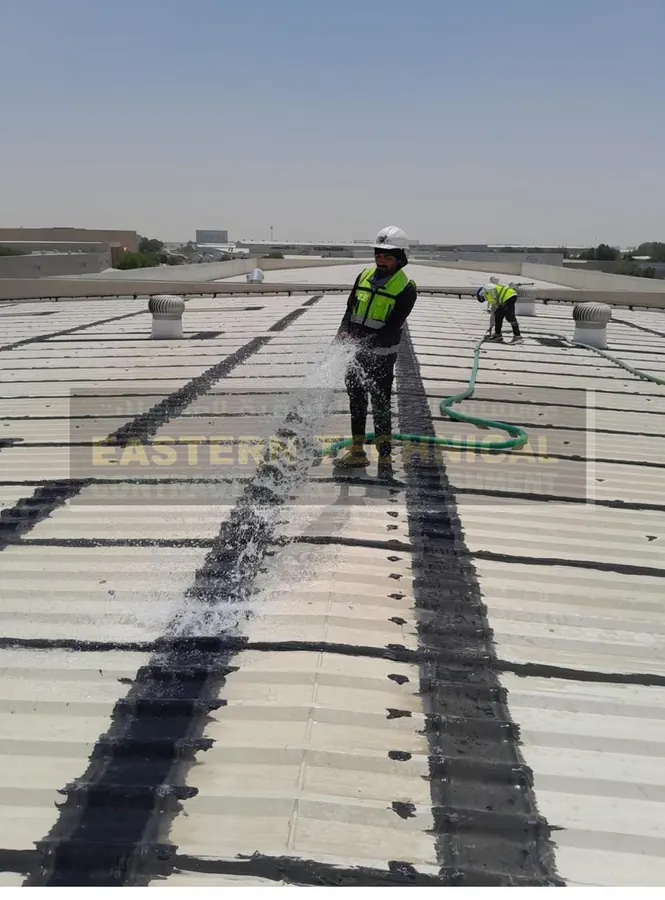
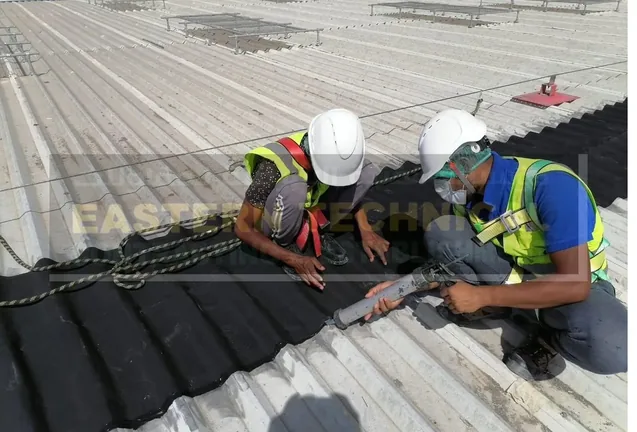
The right corrective action may include replacing failed fasteners, treating and sealing cut edges, restoring drainage paths, repairing gutters, rebuilding flashing details, isolating incompatible metals, and applying suitable waterproofing or rehabilitation systems where the substrate is still recoverable. On aging metal roofs with chronic leak points, engineered EPDM waterproofing at penetrations, laps, gutters, and transitions can be a practical way to block water entry without unnecessary full replacement.
There are cases where replacement is the better decision, especially when corrosion has reduced metal thickness significantly or affected structural elements. But many warehouse roofs fail prematurely because manageable defects were left untreated, not because the entire system had reached end of life.
A useful rule for industrial assets is simple: once rust is visible, inspect beyond the rust. The stain is only the symptom. The real issue is why that area stayed wet, why the protective layer failed, and whether the surrounding details are following the same path.
A warehouse roof does not need perfect conditions to last. It needs water control, intact protection, and maintenance that is based on how industrial buildings actually perform in service. That is where roof life is either preserved or quietly lost.
Related ETCE services
Need this checked on your own roof?
ETCE carries out industrial roof inspections, leak diagnosis, metal roof rehabilitation and EPDM waterproofing across Dammam, Al Khobar, Dhahran, Jubail, Riyadh and Jeddah.
Request a Roof Inspection WhatsApp UsMetal roof waterproofing across Saudi Arabia
ETCE is a metal roof waterproofing company in Saudi Arabia with its head office in Dammam. See our warehouse & factory roof waterproofing service or find your area: