 Dammam
Manufacturing
ATCO Group – East & West Factory
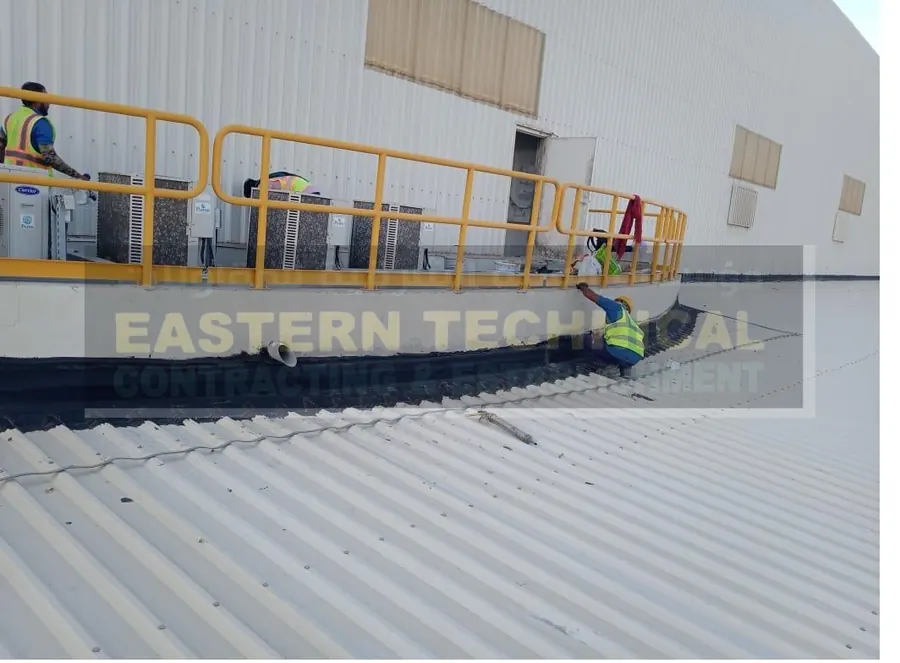
Valley gutters, ventilators and HVAC-platform junctions waterproofed across ATCO's East & West factories.
View projectTurbine ventilators and powered roof fans keep hot air moving out of warehouses and factories, but they never stop moving themselves. Whether wind-driven or electric, each unit vibrates constantly, and that vibration slowly works open the joints at its base. ETCE seals fan and ventilator bases by covering all four sides with EPDM, a rubber membrane flexible enough to absorb the movement instead of cracking.
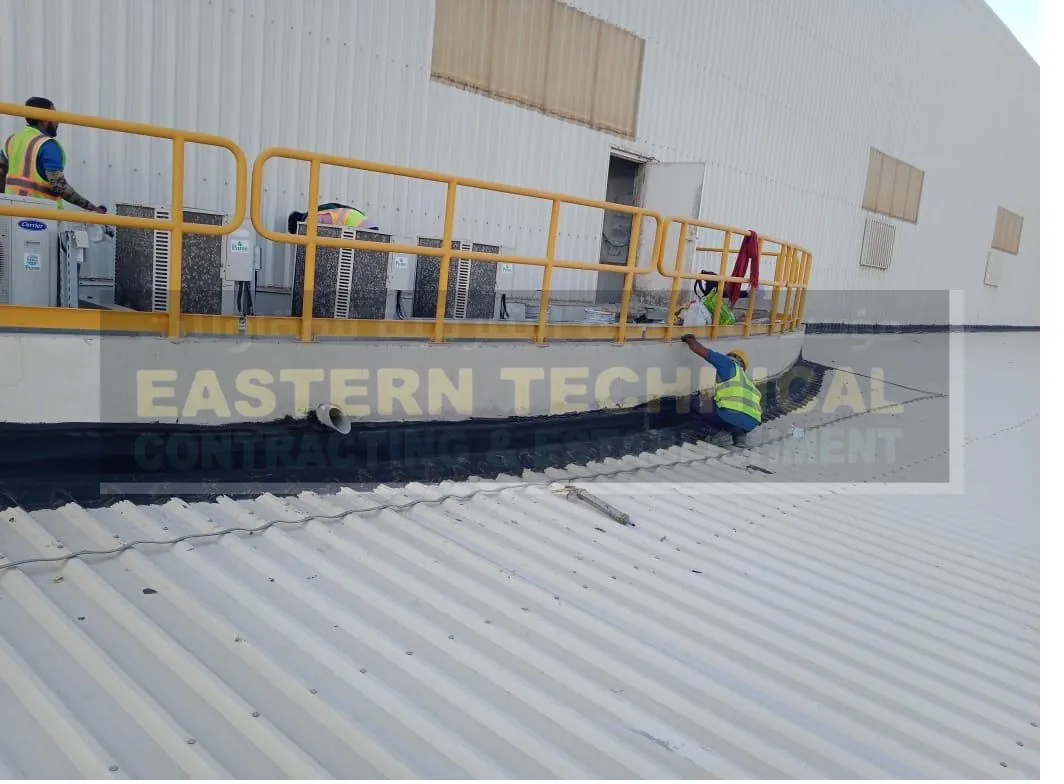 ATCO Group – East & West Factory – Dammam
A rigid sealant around a fan base is being shaken every minute the unit turns. In summer, when ventilators work hardest to pull heat out of the building, the roof metal is also at its hottest and moving most, so brittle sealants and old flashings crack sooner here than almost anywhere else on the roof. The joints between the unit's base, its mounting plate and the roof sheets become the main leak points.
Like other roof-mounted units, a ventilator also blocks water running down the slope. Water collects on its upslope side, slips in through the adjoining side laps or the unit's own joints, and rusts the base as it stands. Covering the base fully on all four sides with 1.2 mm EPDM bonded by Promax Bonding Adhesive takes those joints out of the water's path, while the membrane's flexibility lets it ride out the vibration. In coastal Jubail and Dammam it also shields the base from salt-laden moisture.
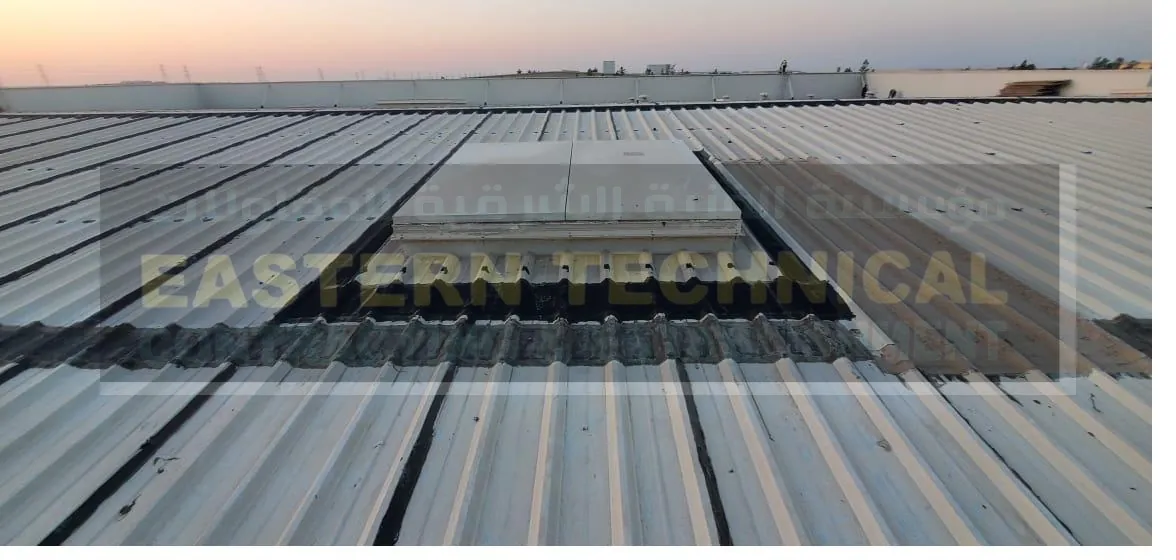
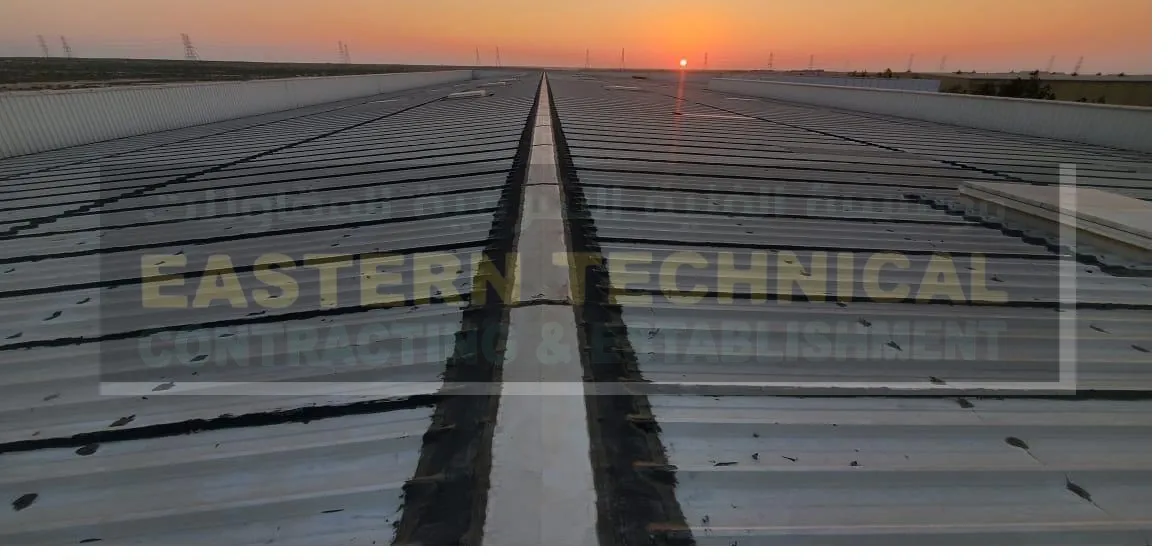
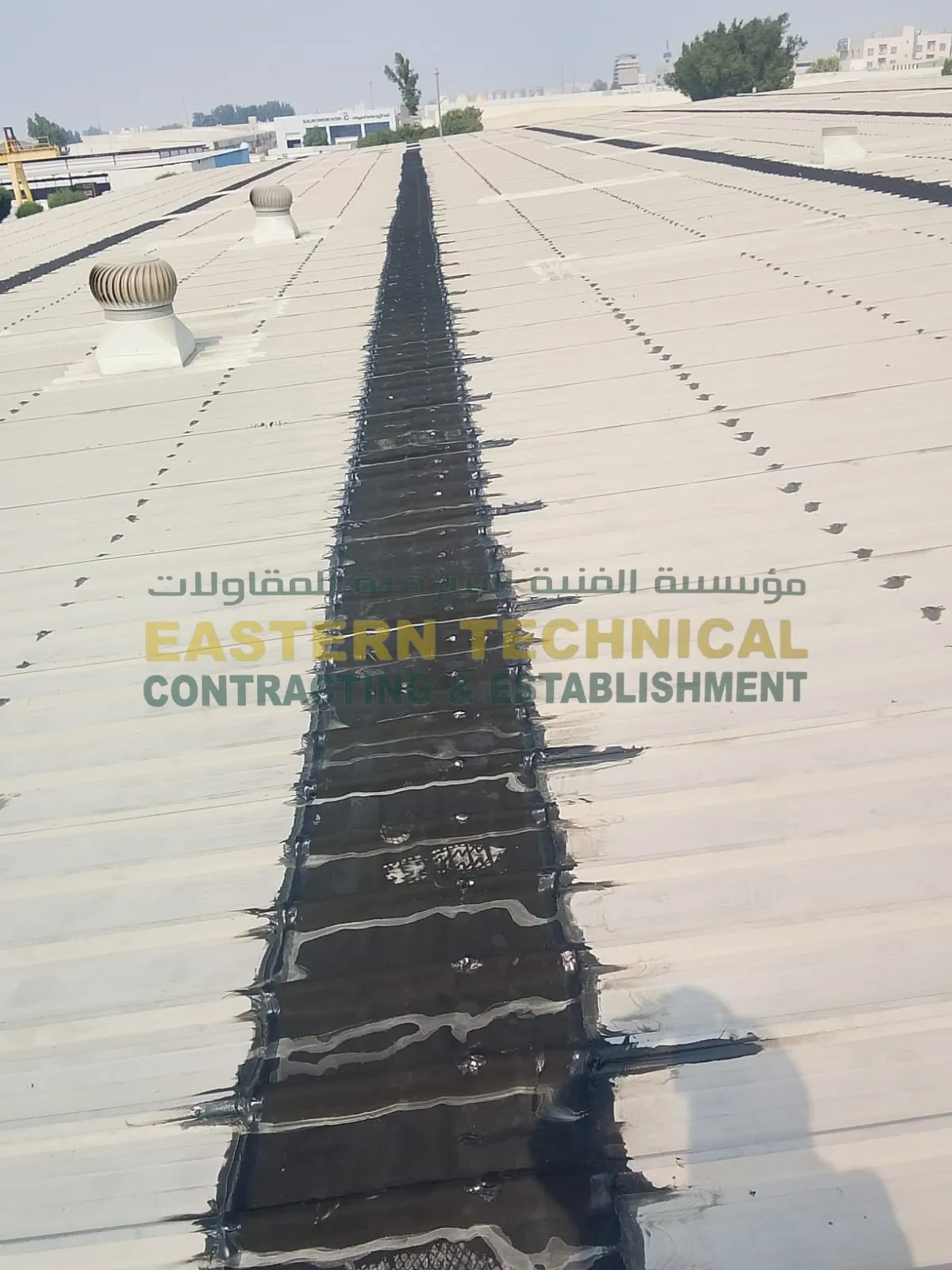
Site photos from ETCE projects in Saudi Arabia and Bahrain. Tap to enlarge.
Yes. Wind-driven turbines and powered exhaust fans both vibrate, and both sit in the path of water running down the roof. The base treatment is the same; only the dimensions and access arrangements change.
Powered units should be isolated by your maintenance team while our crew works around them, for safety. Turbine ventilators can usually stay in place, because the EPDM goes on the fixed base, not the rotating head.
EPDM is a rubber membrane that stretches and recovers, so it moves with the unit rather than fighting it. Because it is bonded over a wide area on all four sides, no single narrow line has to take all the strain.
No, our work is waterproofing the base and its joints. If the survey finds a damaged bearing, a loose head or a seized turbine, we record it in the report with photos so your maintenance team or the supplier can repair it.
Book a free survey and our engineer will check every ventilator and fan on your roof, then send a photo report with an itemised quote.
Leaking roof? An engineer calls you within 24 hours.
DammamValley gutters, ventilators and HVAC-platform junctions waterproofed across ATCO's East & West factories.
View project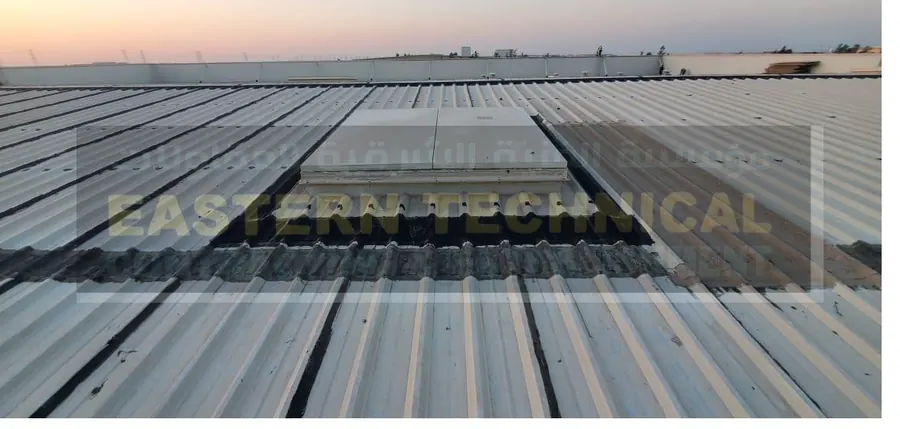 Riyadh
Turbine ventilators, skylights and sheet laps sealed with EPDM on an industrial roof in Riyadh.
View project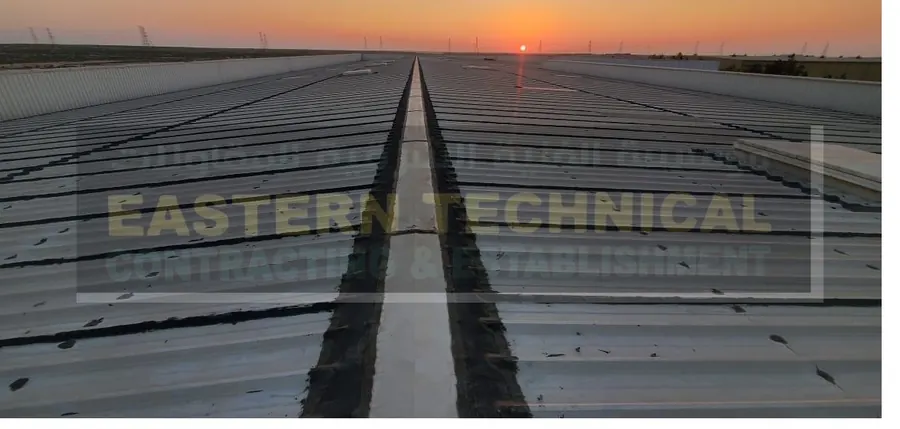 Dammam
Parapet gutters, the ridge line, laps and fasteners sealed across a long-span roof, then water-tested.
View project
We’re committed to delivering top-quality roofing service that protect your home & enhance it value. With years of expertise focus customer.