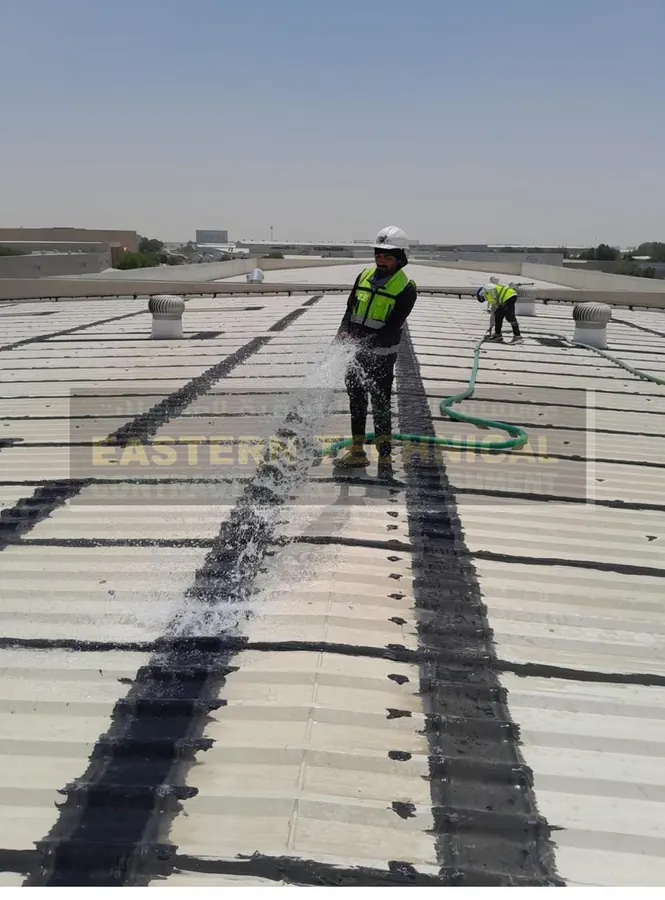
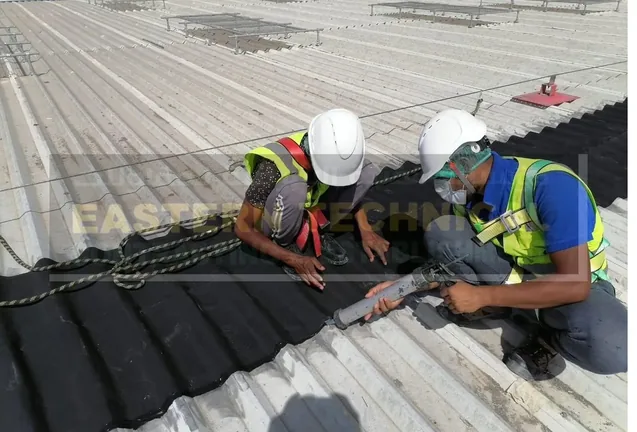
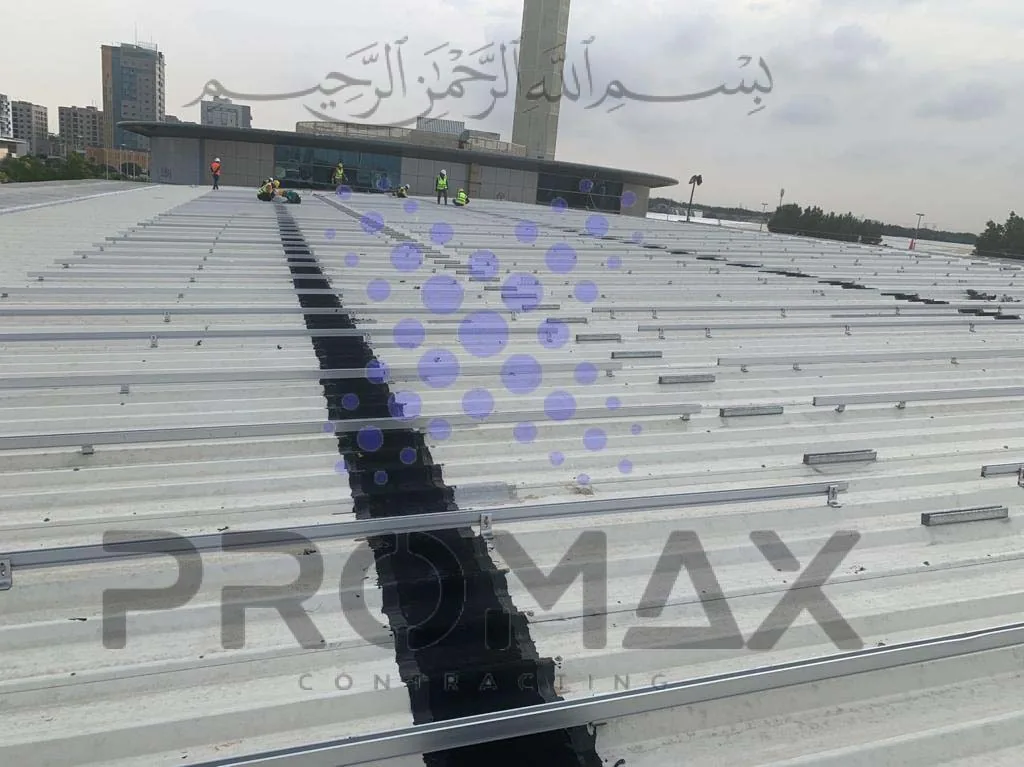
A metal roof rarely fails all at once. It starts at the laps, around old fasteners, beside skylights, inside gutters, and at penetrations where movement, heat, and water keep working the same weak points. That is why experienced metal roof waterproofing contractors do more than apply a coating and leave. They inspect the full roof system, identify why water is entering, and build a repair scope that fits the age, profile, use, and condition of the structure.
For warehouses, factories, and logistics buildings, this matters because a leak is not just a roofing issue. It affects stored goods, electrical systems, insulation performance, corrosion rates, maintenance budgets, and operational uptime. A proper waterproofing contractor looks at the roof as an active industrial asset, not a surface that needs a quick cosmetic fix.
What metal roof waterproofing contractors actually do
The job begins with diagnosis. On industrial metal roofs, water entry is often deceptive. The visible drip inside the building may be several meters away from the actual failure point. Wind-driven rain, overlapping sheets, capillary action, failed sealants, and blocked drainage all shift the path of water.
A capable contractor checks sheet laps, side laps, ridge details, end laps, screw lines, panel movement, curbs, flashing terminations, roof-mounted equipment, gutters, downpipe connections, smoke vents, and skylight interfaces. On older roofs, corrosion also has to be assessed carefully. Surface rust can sometimes be treated and sealed. Section loss, perforation, or severely weakened metal usually requires localized replacement before waterproofing can be trusted.
This is where many projects go wrong. Some contractors treat every leak the same way, usually with generic mastics or broad coating application. That can buy time, but it does not always solve movement at joints or long-term exposure at critical details. Industrial roofs need systems that handle thermal expansion, UV exposure, standing water at problem areas, and repeated stress around penetrations.
Why industrial metal roofs leak in the first place
Metal roofing performs well for years, but industrial buildings put these systems under constant strain. Large roof spans expand and contract daily. Fasteners loosen. Washers degrade. Previous repair materials harden and crack. Poor drainage leaves water sitting in gutters and low areas longer than intended.
The most common failures are not mysterious. They usually come from aging lap joints, failed fastener points, open seams, rusted gutters, poorly detailed penetrations, damaged flashing, and patchwork repairs from different vendors over time. Buildings with sandwich panels or mixed roof areas can be even more challenging because transitions between materials become leak-prone if they were not designed or maintained properly.
Weather exposure changes the repair strategy too. High heat, UV, dust, and seasonal rain events can accelerate failure in sealants and low-grade membranes. A contractor with real waterproofing experience does not just look for the hole. They look for the reason the area failed under operating conditions.
How metal roof waterproofing contractors evaluate repair options
Not every roof needs full replacement, and not every leaking roof is a good candidate for a simple coating job. The right contractor separates the roof into conditions and details. Some areas may need cleaning, rust treatment, sealing, and reinforcement. Others may need sheet replacement, gutter rebuilding, flashing modification, or specialized membrane work around difficult joints.
This is where engineered waterproofing adds value. On industrial roofs, the best repair is often a targeted system rather than a blanket approach. EPDM-based waterproofing, for example, is especially effective at complex leak points where movement and detailing matter more than surface appearance. Around penetrations, curb upstands, skylight bases, ducting, drain points, and problem gutters, a properly selected EPDM solution can outperform basic liquid patching because it handles movement and water pressure more reliably.
At the same time, there is no single material that is right for every condition. If a roof has widespread corrosion, severe sheet deformation, structural weakness, or failed supports, waterproofing alone is not enough. Good contractors say that clearly. They do not oversell a repair where rehabilitation or replacement of specific components is the safer path.
What to look for in metal roof waterproofing contractors
The strongest contractors are not just applicators. They are inspection, repair, fabrication, and maintenance teams in one operation. That matters on industrial sites because leak problems rarely stay inside one trade boundary. A roof may need sheet work, flashing adjustment, gutter repair, sealant detailing, penetrations treatment, and maintenance follow-up as part of one coordinated job.
Look for a contractor that can document roof condition with a detailed report, identify root causes, and explain the trade-offs between temporary repair, targeted rehabilitation, and larger intervention. They should be comfortable working on active warehouses and factories, where access, safety, production schedules, and weather windows all affect execution.
Response time matters too. In industrial environments, a delayed leak repair can mean stock damage, service interruption, or accelerated corrosion in concealed areas. Fast attendance is valuable, but speed without diagnosis is expensive. The right balance is a contractor that can mobilize quickly and still produce a technically sound repair scope.
You should also pay attention to how they handle after-sales support. Metal roofs move, age, and encounter new stress over time. A contractor that offers inspection, maintenance, and follow-up support gives owners a better chance of extending roof life instead of reacting only when a new leak appears.
Where specialized waterproofing makes the biggest difference
Industrial metal roofs usually fail at details, not field areas alone. That is why specialist contractors focus heavily on the transitions and interruptions in the roof plane. Gutters are a major example. Even when roof sheets are still serviceable, corroded or poorly sloped gutters can back water into joints and internal edges. If the contractor ignores that, leaks will continue.
Penetrations are another high-risk zone. Pipe supports, exhausts, ducts, cable entries, and equipment mounts create movement and sealing challenges that standard patch methods often cannot handle for long. Skylights and smoke vents are similar. Their perimeter detailing sees constant expansion, contraction, and water exposure, especially on older roofs where previous repairs have built up over time.
This is why contractors with broad capability stand out. If they can inspect, design a repair, fabricate the needed components, install the waterproofing, and return for maintenance, the building owner avoids the usual handoff problems between multiple vendors. ETCE KSA works in exactly that service model for industrial and warehouse roofs, which is often the difference between a repair that lasts one season and one that actually stabilizes the asset.
The cost question: repair now or wait
Facility teams often hesitate because they want to avoid major capital decisions. That is understandable, but waiting has a cost. Small leaks become insulation damage, corrosion spread, ceiling or equipment exposure, and repeated emergency callouts. By the time water is visible inside, hidden deterioration may already be underway.
That does not mean every roof needs a large project immediately. In many cases, staged rehabilitation is the practical answer. A contractor can address active leak points first, reinforce vulnerable details, rebuild drainage components, and plan future phases based on budget and roof condition. This approach works well for aging industrial buildings where operations cannot stop and full replacement is not justified yet.
The key is honesty in scoping. If a contractor cannot explain what is temporary, what is durable, and what depends on the roof substrate remaining stable, you are not getting enough technical clarity.
Why contractor selection affects roof life more than product choice
Owners often ask which waterproofing material is best. The better question is who is designing and installing the repair. On metal roofs, workmanship at seams, terminations, penetrations, and drainage points decides whether the system performs. Even a strong material fails if the substrate is not prepared correctly, if rust is left active, if details are bridged without reinforcement, or if movement zones are treated like static surfaces.
That is why experienced metal roof waterproofing contractors bring method, not just material. They inspect before pricing, prepare before sealing, repair before coating, and think in terms of the whole roof system. For industrial assets, that approach protects more than the roof sheet. It protects operations, inventory, and maintenance planning.
If your building has started leaking around joints, fasteners, gutters, skylights, or roof penetrations, the best next step is not a broad promise. It is a detailed inspection that shows exactly where the roof is failing and what repair strategy will hold under real site conditions.
Related ETCE services
Need this checked on your own roof?
ETCE carries out industrial roof inspections, leak diagnosis, metal roof rehabilitation and EPDM waterproofing across Dammam, Al Khobar, Dhahran, Jubail, Riyadh and Jeddah.
Request a Roof Inspection WhatsApp UsMetal roof waterproofing across Saudi Arabia
ETCE is a metal roof waterproofing company in Saudi Arabia with its head office in Dammam. See our warehouse & factory roof waterproofing service or find your area: