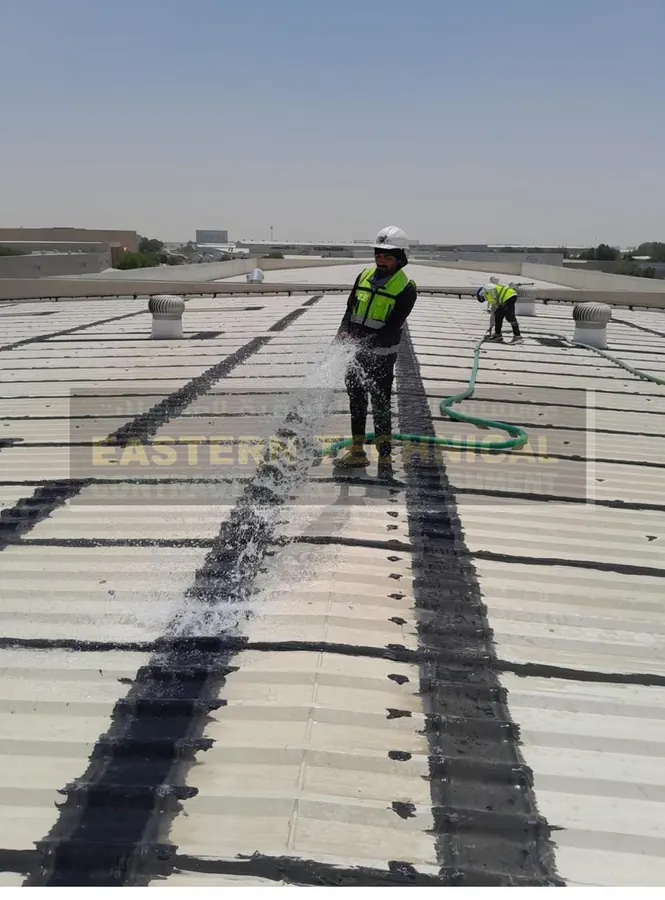
A warehouse roof can look acceptable from ground level while water is already entering through a failed fastener, lap joint, gutter connection, or roof penetration. So, how long does roof waterproofing last? For industrial metal roofs, the practical answer ranges from roughly 5 to 30 years or more, depending on the system selected, roof condition, installation quality, and maintenance discipline.
That range is wide because waterproofing is not a single product with a fixed expiry date. A coating applied over active corrosion and loose fasteners will not perform like a properly detailed EPDM system installed after substrate repairs. Facility managers should evaluate expected service life based on the roof's actual failure points, not a generic product warranty.
How Long Does Roof Waterproofing Last in Industrial Facilities?
On a sound, properly prepared roof, a high-quality EPDM waterproofing system can commonly deliver 20 to 30 years of service. In some conditions, it can perform longer with timely inspections and localized repairs. EPDM is highly resistant to UV exposure, heat cycling, rain, and ozone, which makes it particularly suitable for large warehouses, factories, and logistics facilities exposed to Saudi Arabia's demanding climate.
Liquid-applied coatings and surface treatments may offer shorter service lives, often around 5 to 15 years, depending on coating type, film thickness, roof movement, UV exposure, and maintenance. They can be useful in the right application, but they are not automatically the best answer for every metal roof. A thin treatment may reduce immediate leakage, while a fully engineered membrane system provides more dependable protection where joints, penetrations, and corrosion are recurring concerns.
The roof itself also matters. A newer metal roof with stable panels and sound fasteners is a different project from an aging corrugated sheet roof with rusted laps, failed sealant, and ponding water near gutters. The waterproofing system must be designed around those conditions.
What Determines Waterproofing Service Life?
The longest-lasting waterproofing projects are built on correct diagnosis. Water entering a building may travel beneath roof sheets or along structural members before it appears inside, so the visible stain is not always the source of the leak.
Roof preparation and corrosion repair
No waterproofing material can compensate for a weak substrate indefinitely. Before installation, the roof should be inspected for rusted panels, deteriorated fasteners, open laps, failed ridge details, damaged flashings, and weak areas around skylights, smoke vents, ducts, and drain points.
Surface cleaning is equally important. Dust, silica, oil, loose oxidation, and old failing sealant can prevent proper adhesion. Where corrosion has reduced the thickness or integrity of the metal, affected sections may require repair, reinforcement, or replacement before waterproofing begins. Skipping this stage may reduce a system expected to last decades into a short-term repair.
The waterproofing material and detailing method
Material selection should match the roof design and operating environment. EPDM performs well across large roof surfaces and is especially effective when properly detailed at difficult transitions. However, the membrane alone is not the full system. The quality of seams, terminations, edge restraint, flashing, adhesive application, and sealing around penetrations determines whether water stays out.
Industrial roofs commonly fail at interfaces rather than open sheet areas. Attention is required at gutters, roof-to-wall junctions, expansion areas, pipe penetrations, exhaust bases, skylights, smoke vents, curbs, and drainage outlets. These locations move, collect debris, or experience concentrated water flow. They need engineered detailing rather than a quick brush-applied repair.
Installation quality
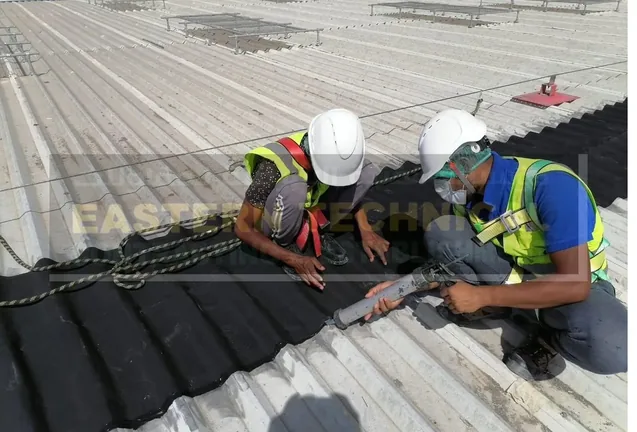
A good material installed poorly will not achieve its rated life. Membranes must be applied on a prepared, dry substrate, with correct overlaps and compatible components. Roof geometry, panel profile, existing sealants, and access constraints all affect the installation approach.
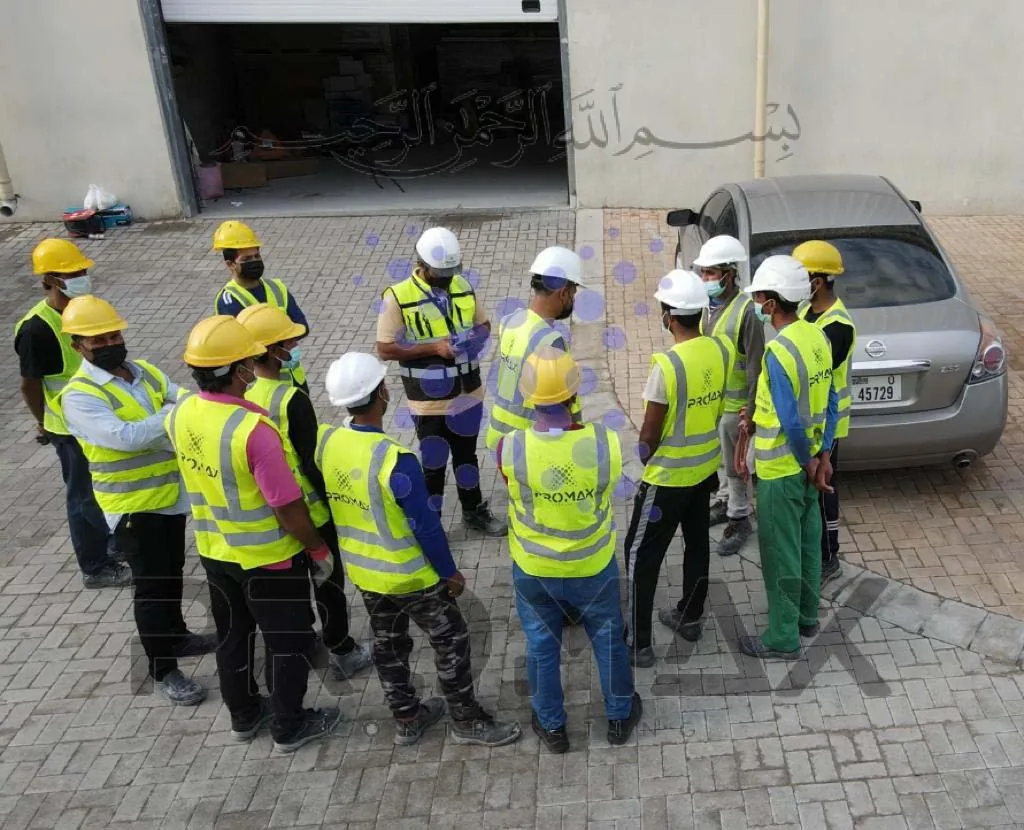
For active warehouses and factories, execution planning matters as much as material selection. The contractor must manage access, safety, weather exposure, work sequencing, and protection of operations below the roof. Rushed work often leaves weak termination points or incomplete repairs that only become visible during the next major rainfall.
Heat, UV, sand, and roof movement
Industrial roofs in Dammam, Riyadh, and across the Kingdom face severe thermal movement. Metal sheets expand under high daytime temperatures and contract as temperatures drop. This repeated movement stresses fasteners, laps, sealants, and waterproofing details.
UV exposure gradually ages many roof materials. Wind-driven sand and dust can abrade exposed surfaces and block drainage routes. Moisture trapped beneath deteriorated coatings or around unsealed penetrations accelerates rust. A system designed for movement and UV resistance, supported by regular roof cleaning, will last significantly longer than one left unattended.
Drainage and standing water
Waterproofing is more likely to fail where water remains on the roof after rain or washing. Ponding water increases stress at seams and low points, while blocked gutters can force water backward beneath flashings and sheet laps.
Drainage problems are not always caused by the roof membrane. They may result from undersized gutters, sagging metal, accumulated debris, damaged downpipes, or incorrect slope. Resolving these issues during the waterproofing project protects the system and reduces the risk of internal leakage, corrosion, and operational disruption.
Signs Your Waterproofing Is Nearing the End of Its Life
Roof waterproofing does not usually fail all at once. It gives facility teams warnings, often well before widespread leaks appear. Early action is more cost-effective than waiting for water to damage insulation, stored inventory, electrical systems, or roof structure.
Watch for recurring leaks in the same zone, rust staining below roof joints, cracked or detached sealant, loose flashing, lifted membrane edges, blistering, exposed seams, blocked gutters, and water marks around penetrations. An increase in maintenance callouts after rain is another clear signal that repairs are becoming reactive rather than controlled.
Interior condensation should also be assessed carefully. It can resemble a roof leak, but its source may be humidity, inadequate ventilation, or thermal bridging. A proper inspection separates these issues before a waterproofing scope is approved.
Extending the Life of Roof Waterproofing
Waterproofing lasts longer when it is managed as an asset, not treated as a one-time construction activity. A practical maintenance plan includes inspections before and after the rainy season, cleaning gutters and drains, removing debris, checking penetrations and flashings, and repairing small defects before they widen.
For large industrial sites, roof inspections should be documented by zone. This allows facility teams to track recurring failure points, prioritize repairs, and budget for rehabilitation based on roof condition rather than emergency events. Inspection reports should identify the source of a defect, its likely impact, recommended repair method, and urgency.
Avoid allowing unrelated trades to cut into or mount equipment on a waterproofed roof without approved details. New ducts, cable supports, exhaust units, solar equipment, and service access points can compromise the system if penetrations are not properly flashed and sealed. Any modification should be inspected after completion.
Repair, Restoration, or Full Replacement?
A localized repair is appropriate when the membrane is generally sound and the defect is isolated. Failed sealant around a pipe, a damaged section near a gutter, or a limited seam issue can often be repaired without replacing the entire system.
Restoration may be the better option when the metal roof remains structurally serviceable but has widespread leaking joints, aged sealants, or surface corrosion. This approach can rehabilitate the roof and extend its useful life without the cost and disruption of complete roof replacement.
Full replacement should be considered when corrosion has severely weakened the roof sheets, water damage is widespread beneath the roof system, drainage geometry is fundamentally inadequate, or repeated repairs no longer provide reliable protection. The right decision comes from a site inspection, not from applying another layer over a failing roof.
ETCE KSA approaches industrial roof waterproofing as a complete roof-performance task: inspection, diagnosis, substrate repair, EPDM detailing, installation, and after-sales support. For facilities with aging metal sheets or recurring leaks at complex roof details, this coordinated approach reduces the risk of gaps between separate contractors.
The most useful question is not only how many years a waterproofing system can last. Ask whether the roof has been prepared, detailed, drained, and maintained well enough to achieve that life. A thorough inspection before the next leak becomes an operational problem is the best place to start.
Related ETCE services
Need this checked on your own roof?
ETCE carries out industrial roof inspections, leak diagnosis, metal roof rehabilitation and EPDM waterproofing across Dammam, Al Khobar, Dhahran, Jubail, Riyadh and Jeddah.
Request a Roof Inspection WhatsApp UsMetal roof waterproofing across Saudi Arabia
ETCE is a metal roof waterproofing company in Saudi Arabia with its head office in Dammam. See our warehouse & factory roof waterproofing service or find your area: