
A roof leak rarely starts as a major emergency. It may begin as staining around a ceiling panel, moisture at a pipe penetration, corrosion near a fastener, or water collecting along a gutter line after rain. For a warehouse, factory, storage facility, or commercial building, those early signs are enough reason to call a waterproofing expert. The cost of inspection and targeted repair is usually far lower than operational disruption, damaged stock, corrosion of roof components, or an unplanned roof replacement.
The right contractor does more than apply a coating over a visible wet area. Effective waterproofing starts with identifying where water is entering, why the existing system failed, and whether the roof substrate, drainage arrangement, joints, screws, flashings, or penetrations require attention. This diagnostic approach matters most on large facilities, where the point of visible leakage can be several meters away from the actual failure.
What a Waterproofing Expert Should Inspect
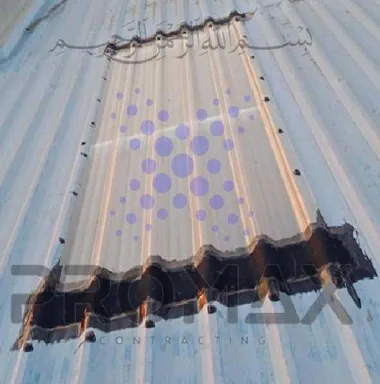
A proper roof inspection is a technical assessment, not a quick visual check from the ground. The contractor should review roof slopes, ponding areas, membrane condition, sheet overlaps, mechanical fasteners, expansion joints, parapet interfaces, gutters, downpipes, skylights, and all pipe or cable penetrations. On metal roofs, screw condition, washer failure, lap joints, rust formation, and purlin condition may also require review.
Water travels. A failed screw washer can allow moisture beneath a roof sheet, where it moves along laps or framing before appearing inside the building. A crack near a parapet can point to movement, poor detailing, or deterioration of an earlier repair. Treating only the stain below the roof may stop the symptom briefly, but it does not correct the water path.
A capable waterproofing expert also checks whether the roof is being affected by heat exposure, standing water, wind-driven rain, neglected drainage, and incompatible repair materials. These issues are common in facilities operating under harsh Gulf weather conditions, where extreme heat accelerates aging and occasional heavy rain exposes every weak detail at once.
Why Leak Patching Often Fails
Emergency patching has a place. If water is entering an active warehouse or plant area, immediate containment and temporary sealing can protect operations. But an emergency patch should lead to a planned inspection, not become the permanent repair strategy.
Repeated patching fails when the roof system has reached a wider stage of deterioration. Aged sealant around dozens of fasteners, corrosion beneath roof sheets, blocked gutters, failed flashing at skylights, or cracked membrane joints cannot be resolved reliably with isolated surface applications. Each new patch can also create uneven surfaces that trap water or make later repairs more difficult.
Material selection is another common problem. Not every coating, sealant, or membrane is suitable for every roof. The correct system depends on the roof substrate, existing material, surface preparation requirements, expected movement, drainage conditions, and the exposure level of the building. An EPDM-based waterproofing system can be a durable option for many applications, but it still depends on sound detailing and professional installation.
The trade-off is straightforward: a small repair may be appropriate when failure is localized and the surrounding roof remains in good condition. A more comprehensive treatment is usually more cost-effective when defects are widespread, water has entered below the visible surface, or the building has a history of recurring leaks.
Signs Your Facility Needs a Waterproofing Expert
Facility teams should not wait for water to drip into an occupied area. Several warning signs justify an expert assessment: recurring leaks after previous repairs, rust around roof screws or sheet laps, water ponding after rainfall, deteriorated sealant at penetrations, loose or damaged flashing, blocked gutters, moisture around skylights, and staining on internal ceilings or walls.
Changes in roof performance also matter. If a building that previously remained dry now develops leaks during moderate rain, the issue may be aging components rather than a single point of damage. If cooling costs rise while the roof surface shows cracking or open joints, the roof envelope may be losing more than water resistance.
For facilities with sensitive equipment, inventory, electrical installations, or continuous operations, the threshold for action should be even lower. A short inspection can prevent a leak from becoming a shutdown, safety concern, or insurance issue.
The value of a documented assessment
A professional assessment should give the property decision-maker a clear scope of work. This includes the observed defects, probable causes, recommended repair method, surface preparation requirements, material system, access needs, and areas that should be monitored after completion.
Documentation makes procurement and maintenance decisions easier. It helps compare repair options based on service life and risk, not only the lowest initial price. It also creates a useful record for landlords, consultants, maintenance teams, and insurers when water damage or recurring roof defects are under review.
What Reliable Waterproofing Work Looks Like
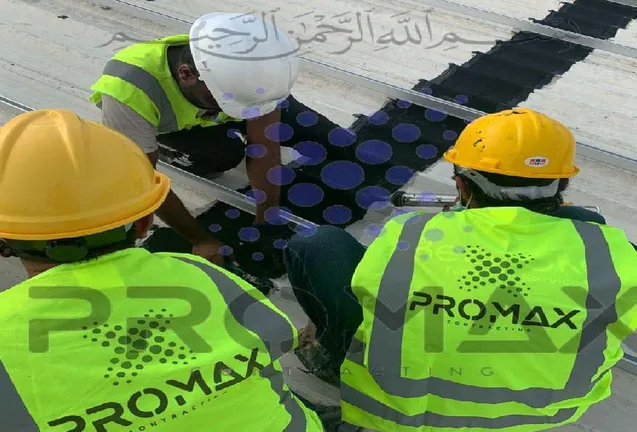
Good results depend on preparation as much as application. Roof surfaces may need cleaning, removal of failed material, rust treatment, tightening or replacement of compromised fasteners, local sheet repair, joint preparation, and correction of drainage obstructions before the waterproofing system is installed.
Details deserve special attention. Pipe penetrations, gutters, roof-to-wall junctions, skylights, curbs, and sheet overlaps are high-risk locations because they combine changes in material, movement, and concentrated water flow. These areas should be reinforced and sealed as part of the system rather than treated as an afterthought.
Execution also needs to suit the facility. A contractor should plan work zones, access routes, material staging, weather exposure, and safety controls to minimize disruption. On an active site, this may mean completing sections in sequence, protecting internal operations below the work area, and maintaining clear communication with the facility representative.
Promax Contracting approaches roof rehabilitation as an end-to-end site task, combining inspection, engineering support, fabrication capability where required, installation, and after-sales response. That combination is valuable when the problem extends beyond a membrane and includes corroded components, damaged gutters, failing roof sheets, or difficult access conditions.
Choosing the Right Scope Instead of the Cheapest Quote
A low quote can be expensive if it omits surface preparation, uses an unsuitable material, ignores drainage defects, or limits the repair to the first visible leak. When reviewing proposals, ask what failure mechanism the contractor has identified and how the recommended work addresses it. The answer should be specific to your roof, not a generic description of coating application.
Also ask about the condition of adjacent areas. A contractor may recommend targeted repairs for a roof that is otherwise sound. For a roof with widespread screw deterioration, multiple leaks, and aging joints, a larger treatment area may be justified. Neither option is automatically correct. The right decision depends on inspection findings, the building's operational risk, expected remaining service life, and the cost of future interruptions.
Warranty discussions should be equally practical. A warranty is meaningful only when the scope, preparation, materials, installation details, and exclusions are clearly defined. It should support proper work, not replace it.
Plan Repairs Before the Next Rain Event
The best time to assess waterproofing is when the roof is accessible and the facility has time to plan. Waiting for an active leak limits options and pushes decision-makers toward urgent patching. Scheduled inspections before seasonal weather changes allow repairs to be organized around operations, access requirements, and budget cycles.
A dry roof protects more than the structure above your head. It protects inventory, equipment, tenant confidence, maintenance budgets, and the daily reliability of the facility. When early warning signs appear, bring in a waterproofing expert who can identify the full problem and specify a repair that is built to last.
Related ETCE services
Need this checked on your own roof?
ETCE carries out industrial roof inspections, leak diagnosis, metal roof rehabilitation and EPDM waterproofing across Dammam, Al Khobar, Dhahran, Jubail, Riyadh and Jeddah.
Request a Roof Inspection WhatsApp Us