When a warehouse roof leaks above stock, machinery, or electrical services, waterproofing experts UAE facility teams can call quickly become an operational requirement, not simply another procurement option. A temporary patch may stop visible dripping for a day, but it does not identify the failed lap joint, corroded fastener line, blocked gutter, damaged flashing, or movement around a roof penetration that allowed water inside.
For industrial and commercial properties, waterproofing is not a single product applied over a roof. It is a site-specific repair and protection process. The right contractor must inspect the entire roof envelope, identify the actual source of ingress, recommend a system that suits the substrate and exposure conditions, and carry out the work without creating new weak points.
What Waterproofing Experts UAE Should Investigate First
A proper site inspection starts before any material is proposed. Water can travel beneath metal sheets, insulation layers, old membranes, parapet caps, and flashings before appearing inside the building. The point where water drips is often not where the roof has failed.
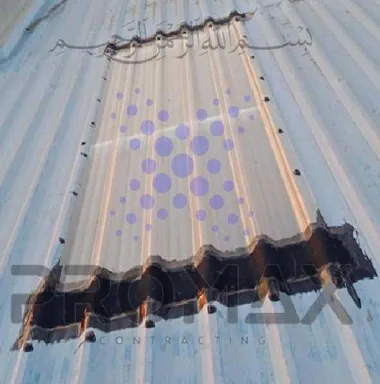
Experienced teams inspect roof slopes, drainage routes, gutters, downpipes, expansion joints, penetrations, skylights, wall-to-roof junctions, and prior repair areas. On metal roofs, screw condition, washer failure, sheet overlaps, rust development, and damaged sealant lines require close attention. On concrete roofs, cracks, ponding areas, loose existing coatings, and detailing at upstands can determine whether a repair will last.
This assessment matters because the same visible symptom can demand very different work. A leak at a roof edge may be caused by failed flashing, but it may also result from a gutter that overflows during heavy rainfall. Treating only the edge without correcting drainage leaves the building exposed.
Water Testing and Condition Mapping
Where the source of leakage is unclear, controlled water testing can help isolate the failed area. This should be done systematically, in sections, with access to the underside of the roof where possible. Random spraying across a large roof can produce misleading results and delay the repair decision.
Condition mapping is equally useful on large facilities. It records recurring leak points, areas of corrosion, damaged sheets, deteriorated joints, and drainage defects. Facility managers can then distinguish urgent work from items that can be planned into a maintenance budget.
Selecting the Right Waterproofing System
The best waterproofing system depends on the roof type, existing condition, movement, heat exposure, traffic level, drainage performance, and required service life. There is no responsible one-material answer for every roof.
EPDM membrane systems are widely used where long-term flexibility and weather resistance are required. They can be an effective solution for suitable roof configurations, particularly when installed with correct joint treatment, perimeter detailing, and termination methods. However, membrane performance depends on surface preparation and detailing. A high-quality membrane will not compensate for loose flashings, active corrosion, standing water, or untreated penetrations.
Metal roof waterproofing often requires a combined approach. Fasteners may need replacement or treatment, rusted areas may require preparation and protective coating, sheet laps need sealing, and gutters or flashings may need repair or replacement. If roof sheets have lost structural integrity, coating over them is not a durable answer. Localized replacement or fabrication work may be necessary before waterproofing begins.
Concrete roof treatment also requires careful judgment. Hairline cracks, larger moving cracks, construction joints, and service penetrations do not behave the same way. Rigid repair materials can be appropriate in stable areas, while flexible systems are needed where thermal movement is expected. The contractor should explain this distinction clearly rather than treating every crack with one filler.
Why Drainage Is Part of Waterproofing
In the UAE, roofs are exposed to prolonged heat, dust accumulation, and sudden periods of heavy rain. A roof may appear sound through dry months, then fail when drainage capacity is tested. Water that cannot move efficiently toward outlets can pond around joints, penetrations, and low points, increasing pressure on the waterproofing system.
Gutter condition deserves particular attention on warehouses and sheds. Loose brackets, corroded sections, inadequate falls, blocked outlets, and poor connections between roof sheets and gutters can all lead to water entering the building envelope. Gutter replacement is not always needed, but repeated patching of severely corroded sections can become more expensive than installing correctly fabricated replacements.
A competent contractor reviews the whole water path: where rain lands, how it flows, where it collects, and how it exits. This is also where fabrication capability adds value. Custom flashings, gutter sections, cappings, and closure details should fit the actual site condition, not force the building to accept a generic component.
Execution Quality Determines Service Life
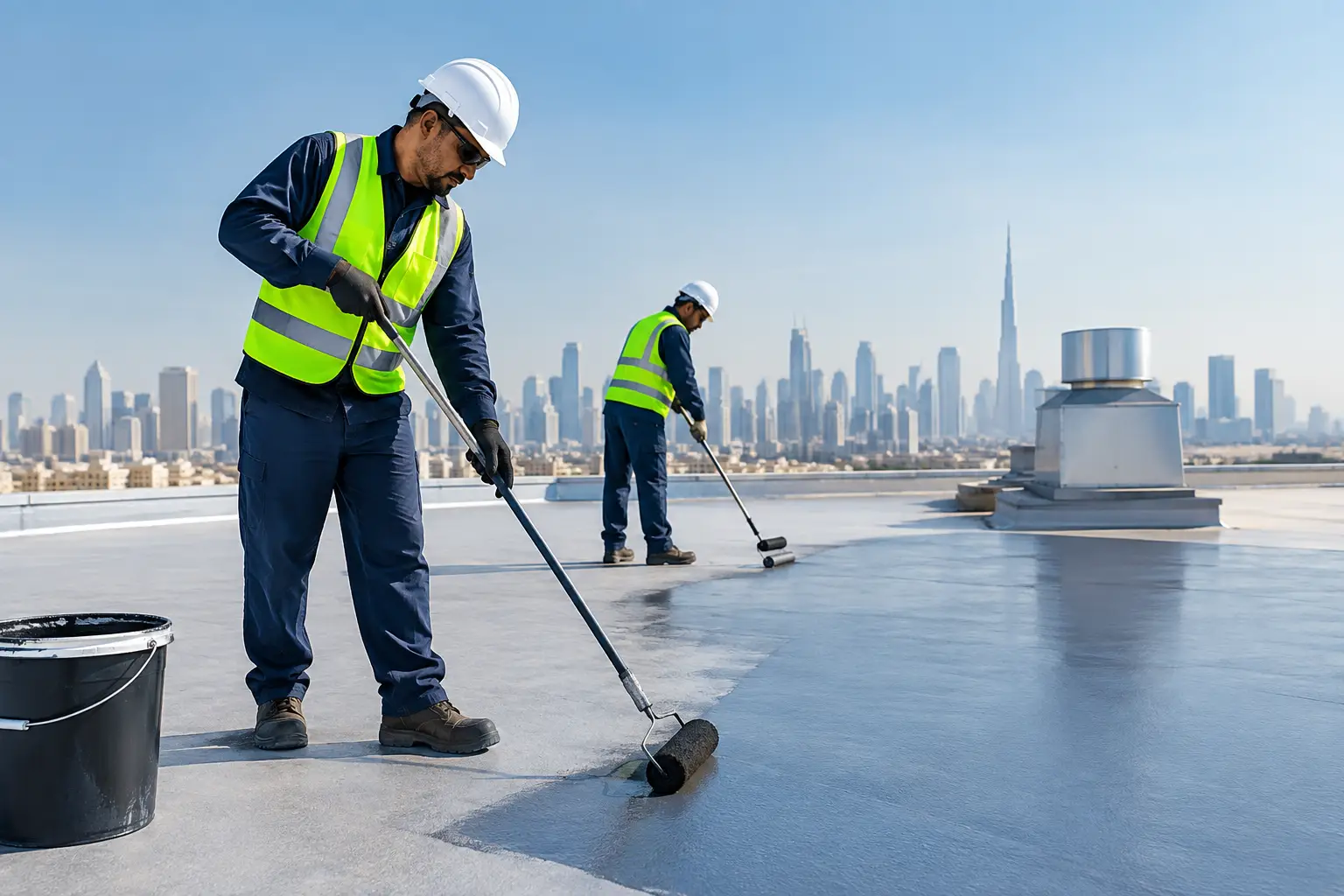
Even the correct specification can fail through poor installation. Industrial roof waterproofing has numerous detail points where workmanship directly affects the result: membrane overlaps, corners, pipe penetrations, fastener sealing, termination bars, transition areas, skylight perimeters, and connections to gutters or parapets.
Surface preparation is especially critical. Substrates must be clean, dry where required by the system, stable, and free from loose material. Rust treatment on metal components should address the affected surface properly before protective layers are applied. Simply covering active corrosion can trap the problem beneath the new work.
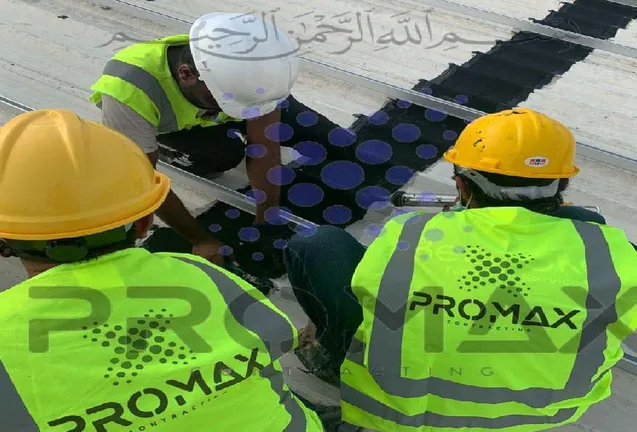
The work sequence also affects operations. On an active warehouse or plant, contractors should organize access, material handling, work zones, weather monitoring, and daily protection of open areas. The goal is to complete repairs efficiently while minimizing risk to stock, equipment, staff, and ongoing operations.
Promax Contracting approaches this type of work through site inspection, technical recommendations, fabrication support, installation, and responsive after-sales assistance. That integrated scope can reduce coordination gaps when a roof requires more than membrane application alone.
Questions to Ask Before Appointing a Contractor
The contractor should be able to describe the failure mechanism in plain terms. Ask where the leak originates, what evidence supports that conclusion, which areas require immediate action, and whether drainage or corrosion is contributing to the problem.
It is also reasonable to ask what preparation is included, how penetrations and perimeter details will be handled, whether damaged metal or flashings need replacement, and what inspection will take place after the work is complete. These questions are not administrative. They reveal whether the proposal is based on a real diagnosis or a generic coverage rate.
Price should be evaluated against scope, material suitability, access requirements, preparation work, detail treatment, and expected maintenance needs. The lowest proposal can become the highest-cost option if it excludes the repairs needed to make the waterproofing system perform. At the same time, a full replacement is not always necessary. A detailed inspection may show that targeted rehabilitation can extend the service life of a roof at a more practical cost.
Plan Repairs Before the Next Leak Becomes Disruption
Waterproofing works best when it is planned around condition, not only emergency response. Routine roof inspections can identify loose screws, early rust, split sealant, damaged flashings, and drainage restrictions before they become internal water damage. For larger facilities, documenting these findings creates a practical repair priority list rather than a cycle of urgent callouts.
A building does not need to wait for water to reach equipment, inventory, or occupied areas before action is taken. Start with a qualified inspection, insist on a clear diagnosis, and choose a repair system that addresses the roof, its details, and its drainage path together. That is how a maintenance decision becomes lasting protection for the asset.
Related ETCE services
Need this checked on your own roof?
ETCE carries out industrial roof inspections, leak diagnosis, metal roof rehabilitation and EPDM waterproofing across Dammam, Al Khobar, Dhahran, Jubail, Riyadh and Jeddah.
Request a Roof Inspection WhatsApp Us