A leaking roof rarely starts as a major event. In most industrial buildings, it begins at a fastener line, a failed lap joint, a curb, a skylight edge, or a drain point that has been taking stress for months. By the time water appears inside a warehouse or production area, the real issue is usually broader. That is why an industrial roof maintenance planning guide matters – not as paperwork, but as an operating tool that protects assets, reduces shutdown risk, and extends roof life.
For facility managers and operations teams, roof maintenance is often pushed behind production priorities until a storm, corrosion event, or repeat leak forces action. That approach is expensive. Emergency callouts cost more, access becomes harder, water damage spreads beyond the roof assembly, and temporary patching starts to replace proper planning. On industrial sites, especially those with aging metal roofs, deferred maintenance also creates a safety issue. Wet insulation, rusted sheets, loose fixings, and deteriorated penetrations do not stay isolated for long.
What an industrial roof maintenance planning guide should actually cover
A useful plan starts with the roof as a working system, not just a surface. The sheets, seams, fasteners, gutters, insulation, curbs, flashing details, expansion zones, skylights, smoke vents, drain points, and penetrations all age differently. If one component fails early, it can overload the others.
That is why maintenance planning should separate cosmetic aging from functional risk. A roof may look weathered and still perform acceptably. Another may appear serviceable from ground level while already allowing water ingress around penetrations and laps. Planning depends on inspection data, not assumptions.
A proper maintenance plan also needs to reflect building use. A dry warehouse storing palletized goods has one risk profile. A factory with heat-generating processes, roof-mounted services, frequent technician access, and internal humidity has another. Foot traffic, vibration, chemical exposure, and thermal movement all change what maintenance should look like.
Start with condition mapping, not generic scheduling
Many companies begin with a calendar. Twice a year, inspect the roof. After storms, inspect again. That is sensible, but it is not enough. The first step should be condition mapping. This means dividing the roof into zones and documenting current defects, likely failure points, drainage behavior, past repairs, and areas of repeated movement or ponding.
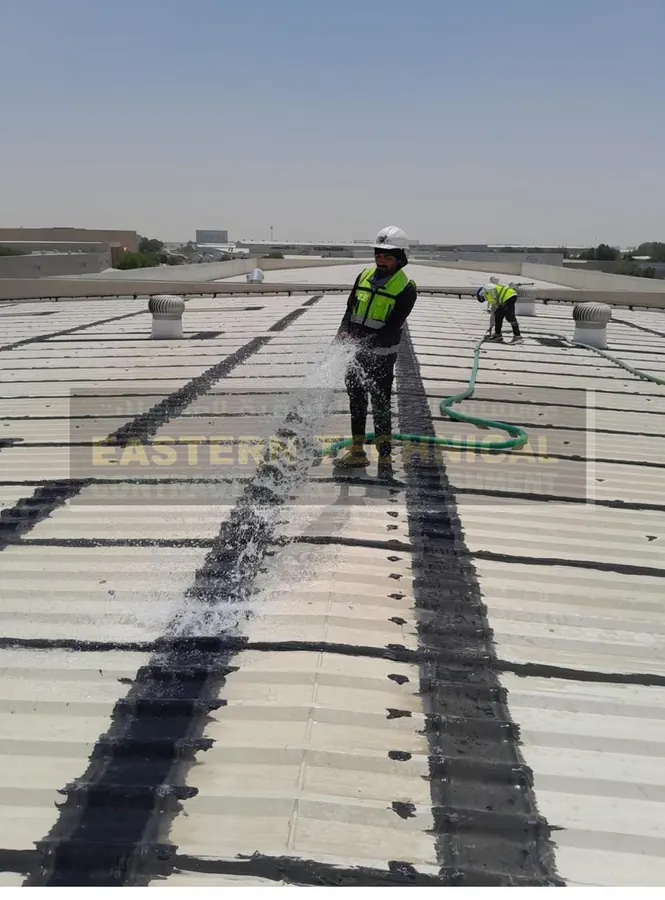
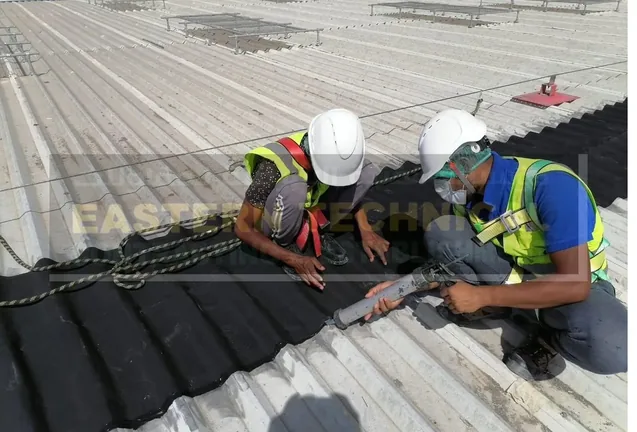
On metal and sandwich panel roof systems, common defects include open side laps, failed sealant lines, loose or backed-out fasteners, corrosion at cut edges, degraded ridge and gutter details, and leakage around rooftop equipment supports. On older industrial buildings, patch history matters. A roof with multiple repair materials from different contractors often fails where those systems meet.
Condition mapping gives maintenance teams something more useful than a simple checklist. It creates a baseline. Once that baseline exists, future inspections can track movement, corrosion spread, sealant failure, or recurring leaks in a measurable way.
Why leak history often tells the real story
Leak logs are often incomplete, but they are still valuable. If the same zone leaks during wind-driven rain but not during light rain, that points to laps, vertical interfaces, or upstand details rather than open field sheet failure. If leaks appear hours after rain stops, drainage and trapped water may be involved. If internal leaks shift location, water could be traveling along purlins, insulation layers, or service penetrations before it becomes visible.
A maintenance plan should connect internal leak history with external roof observations. Without that connection, teams end up repairing symptoms and missing the route of water entry.
Build the plan around risk, not age alone
Age matters, but industrial roof maintenance planning should not rely on age alone. Two roofs installed in the same year can be in completely different condition depending on exposure, installation quality, maintenance history, and site activity.
A practical risk-based plan usually groups roof issues into three classes. First are immediate failures that threaten operations or safety, such as active leaks over equipment, unstable sheets, blocked drains, or severe corrosion at structural interfaces. Second are short-term defects that are not yet disruptive but are likely to become failures within one maintenance cycle. Third are controlled defects that can be monitored while the owner plans broader rehabilitation.
This approach helps procurement and operations teams make better decisions. Not every issue needs emergency repair, and not every aging roof needs full replacement. In many cases, targeted waterproofing and rehabilitation at weak points can stabilize performance and buy useful service life. That is especially true where leak paths are concentrated around gutters, penetrations, skylights, and transitions.
Inspection frequency depends on the building and the climate
A fixed annual inspection can work for low-risk assets, but many industrial facilities need more attention. Buildings exposed to high UV, sand, thermal cycling, and seasonal storms will generally require at least semiannual inspection, plus checks after major weather events or rooftop works.
Frequency also depends on operational sensitivity. If one leak can halt production, damage stock, or affect electrical systems, the inspection interval should be tighter. The same applies to older metal roofs with active corrosion or roofs that carry frequent maintenance traffic for mechanical systems.
For facilities in demanding environments such as Dammam or Riyadh, thermal stress and dust loading can accelerate deterioration around details long before full sheet failure becomes obvious. That is one reason many industrial owners move from reactive maintenance to planned inspection with documented reporting.
What each inspection should document
Inspection records should do more than say the roof was checked. They should record moisture entry points, condition of seams and laps, fastener performance, rust development, membrane or coating breakdown where applicable, drainage restrictions, previous repair condition, and any safety concerns affecting access.
Photos matter. Marked-up roof plans matter more. If a contractor identifies twenty defects but the team cannot locate them precisely six months later, the report loses much of its value.
Repair strategy: patch, stabilize, or rehabilitate
This is where planning usually succeeds or fails. Some roofs are over-patched because the owner is trying to avoid capital spending. Others are pushed toward replacement when targeted rehabilitation would be the better business case.
A good maintenance plan defines decision thresholds. If defects are isolated and substrate condition is sound, localized repair may be enough. If leak points are concentrated around details while the main roof field remains serviceable, a focused waterproofing strategy may offer strong value. EPDM-based waterproofing is often effective at difficult interfaces such as gutters, penetrations, skylights, and drain points where rigid repairs tend to crack or separate over time.
If corrosion is widespread, fixings are failing across multiple zones, and water ingress is affecting insulation or internal operations, stabilization may only delay a larger intervention. In that case, maintenance planning should shift toward phased rehabilitation so the owner can sequence work without unnecessary disruption.
The key trade-off is simple. Short-term patching lowers immediate spend but can raise annual cost if the same leak paths keep reopening. Planned rehabilitation costs more upfront but usually reduces callouts, protects stock and equipment, and improves forecasting.
Budgeting should follow defect severity and business impact
Roof budgets often fail because they are based on last year’s spending, not current condition. That creates a mismatch between actual risk and available funds. A better method is to budget in layers.
First, reserve funds for emergency response and safety-critical defects. Second, allocate a planned corrective budget for known issues identified during inspections. Third, set a rolling allowance for larger rehabilitation work on aging zones with predictable decline.
This structure gives procurement teams clearer control. It also helps avoid the common trap of using emergency budgets for recurring defects that should have been addressed through planned works.
For large industrial portfolios, budgeting by roof zone can also improve decision-making. A high-value storage area, loading corridor, or production-critical bay may justify faster intervention than a low-risk annex, even if the roof defects appear similar.
Contractor coordination is part of maintenance planning
Industrial roofs are damaged as much by uncontrolled access as by weather. Mechanical work, cable runs, temporary equipment placement, and unauthorized penetrations create leak paths that no inspection schedule can fully offset.
A maintenance plan should therefore include roof access control, work permit rules for third-party contractors, and clear detail standards for new penetrations or modifications. If service teams cut into panels, disturb flashing, or leave fasteners unsealed, the maintenance team inherits a future leak.
This is where a single contractor with inspection, diagnosis, waterproofing, fabrication, repair, and after-sales support under one scope can simplify control. ETCE KSA works in this model because industrial clients usually do not need more coordination. They need faster diagnosis, cleaner execution, and a repair strategy that matches the building, not a generic product pitch.
Make the plan usable on a live site
The best maintenance plan is the one people can act on during a busy week. Keep it practical. Assign roof zones, inspection dates, defect priorities, approved repair methods, access rules, responsible parties, and escalation thresholds. If the document is too broad, it will be ignored until the next leak.
Most of all, treat roof maintenance as asset protection, not a housekeeping task. On an industrial building, the roof protects stock, equipment, continuity, safety, and the structure itself. Once water gets past the roof line, the cost is rarely limited to the repair area.
If you want fewer emergencies next season, the time to plan is while the roof is still giving you options.
Related ETCE services
Need this checked on your own roof?
ETCE carries out industrial roof inspections, leak diagnosis, metal roof rehabilitation and EPDM waterproofing across Dammam, Al Khobar, Dhahran, Jubail, Riyadh and Jeddah.
Request a Roof Inspection WhatsApp UsMetal roof waterproofing across Saudi Arabia
ETCE is a metal roof waterproofing company in Saudi Arabia with its head office in Dammam. See our warehouse & factory roof waterproofing service or find your area: