A metal roof rarely fails across the whole surface first. It starts at the laps, around fasteners, at skylight curbs, near gutters, and wherever movement and weather keep working the same weak point. That is exactly where epdm metal roof waterproofing earns its value. For warehouses, factories, sheds, and utility buildings, it gives facility teams a practical way to stop active leaks, protect aging roof assemblies, and avoid the cost and disruption of premature replacement.
Industrial roofs leak for predictable reasons. Metal expands under heat, contracts at night, and keeps stressing joints over time. Fastener washers harden and crack. Sealants dry out. Rust forms around cut edges and ponding areas. When a roof has already been patched several times with incompatible products, the problem usually gets worse, not better. A proper EPDM-based system is not just another layer of mastic. It is a targeted waterproofing approach designed for movement, exposure, and difficult detailing.
Why EPDM metal roof waterproofing performs well on industrial roofs
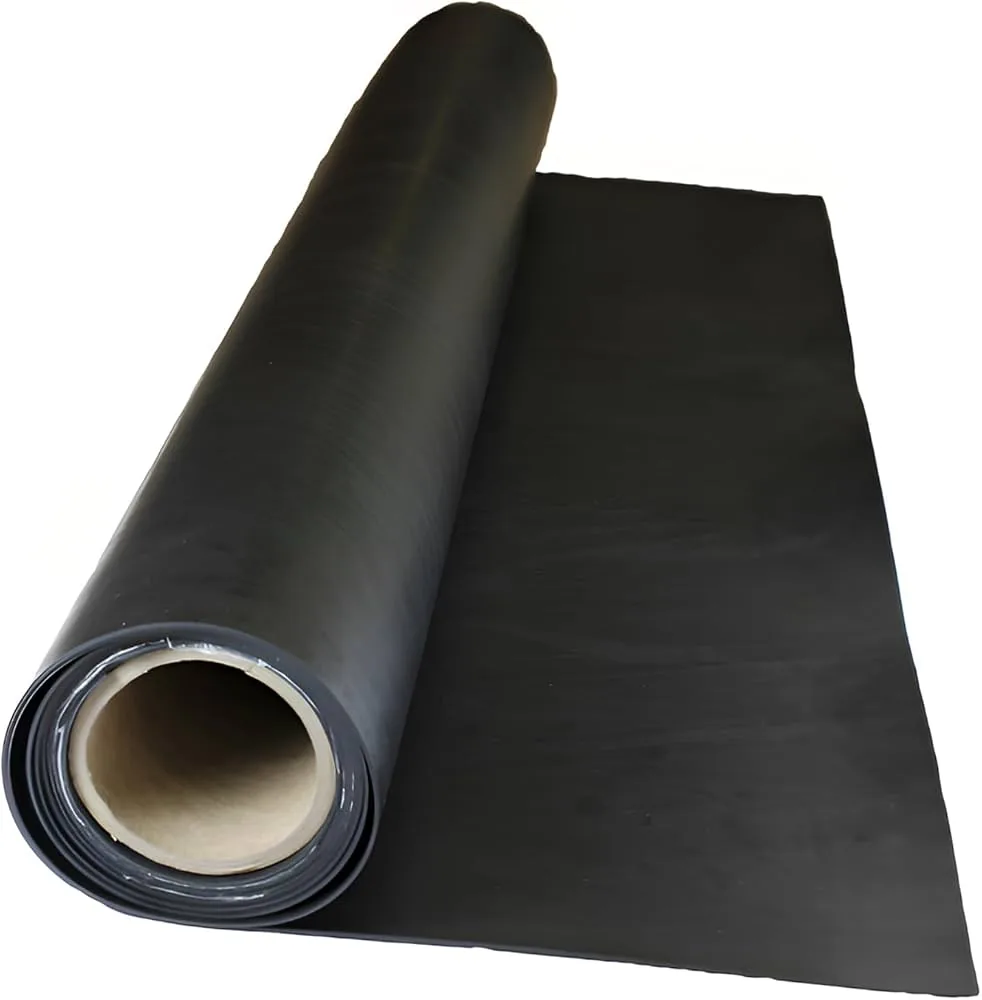
EPDM is a synthetic rubber membrane known for flexibility, weather resistance, and long service performance. On metal roofs, those characteristics matter because the substrate moves. A rigid repair can look fine on day one and split after the next heat cycle. EPDM remains elastic, which makes it well suited for critical leak points where metal panels, screws, curbs, gutters, and flashings experience constant movement.
It also handles UV exposure well, which is a major factor on large roof areas and exposed details. In hot climates, surface temperatures can become severe, especially on darker metal roofs. Waterproofing systems that become brittle under heat do not hold their seal for long. EPDM maintains flexibility better than many quick-fix products used in emergency patching.
That said, EPDM is not a magic answer for every roof condition. If the metal deck is structurally unsound, if corrosion has penetrated beyond surface damage, or if insulation and substrate layers are saturated and deteriorated, waterproofing alone may not be enough. The right decision depends on inspection, moisture mapping where needed, and an honest review of whether the roof needs rehabilitation or full replacement.
Where EPDM metal roof waterproofing is most effective
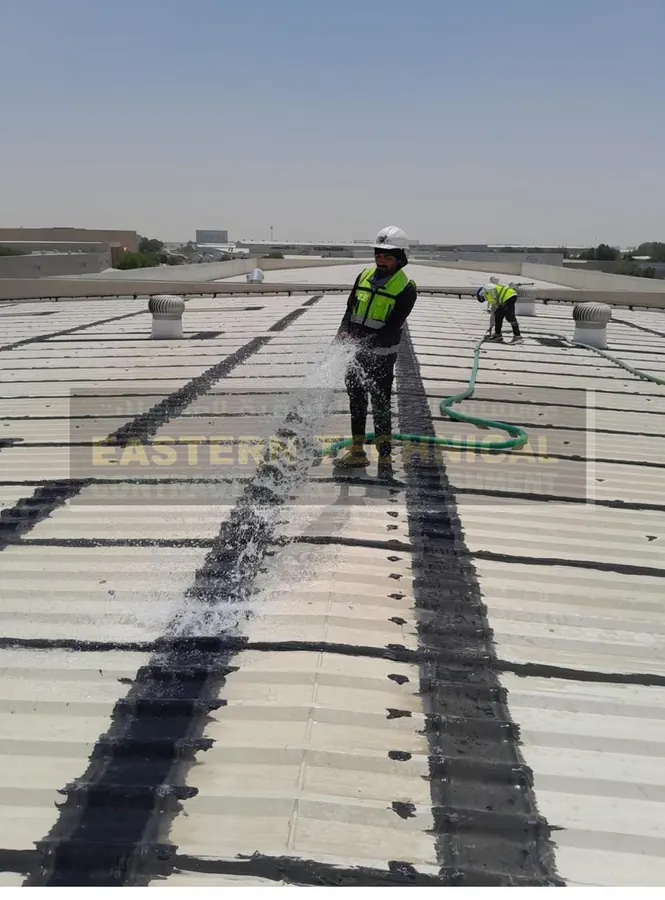
The strongest use of EPDM on metal roofs is often not as a one-size-fits-all blanket application. It is most effective where leak risk concentrates. In industrial buildings, that typically means longitudinal and transverse seams, end laps, screw lines, ridge caps, side laps, roof-to-wall junctions, gutters, box gutters, downpipe connections, penetrations, skylights, smoke vents, exhaust bases, and drain points.
These are the areas where water entry starts and where many patching materials fail early. A correctly installed EPDM detail can bridge transitions, accommodate movement, and create a durable seal over irregular geometries. That is especially useful on older warehouses and production buildings where multiple service penetrations have been added over time.
Gutters deserve special attention. Many roof leaks blamed on panels actually begin in corroded or poorly sealed gutter sections. Water backs up, finds open joints, and tracks into the building envelope. EPDM lining and detailing inside gutters can restore waterproofing performance without forcing immediate full replacement of adjoining roof elements.
Common failure points before waterproofing starts
A durable result starts with diagnosis, not product selection. On-site inspection should identify whether water entry is direct, wind-driven, or traveling from another location. Metal roofs are notorious for misleading leak paths. A drip over a production line may originate several meters upslope.
Fastener failure is one of the most common issues. Backed-out screws, worn washers, and enlarged holes allow water to pass through the roof skin. Seam separation is another frequent problem, especially on older panel systems that have cycled through years of thermal movement. Penetration flashings often crack at corners or detach where old sealants have lost adhesion.
Corrosion must also be assessed carefully. Surface rust can often be treated as part of the rehabilitation process. Deep section loss around fasteners, gutters, and panel laps is a different matter. If the substrate cannot support adhesion or mechanical integrity, waterproofing should not proceed until those sections are repaired or replaced.
What proper installation should include
Successful EPDM roof waterproofing depends more on preparation and detailing than on the membrane alone. The roof surface has to be cleaned thoroughly. Dust, loose coatings, oxidation, oil residue, and failed sealants all interfere with adhesion. Any unstable patch materials should be removed. Corroded zones need treatment and, where necessary, metal repair before waterproofing is applied.
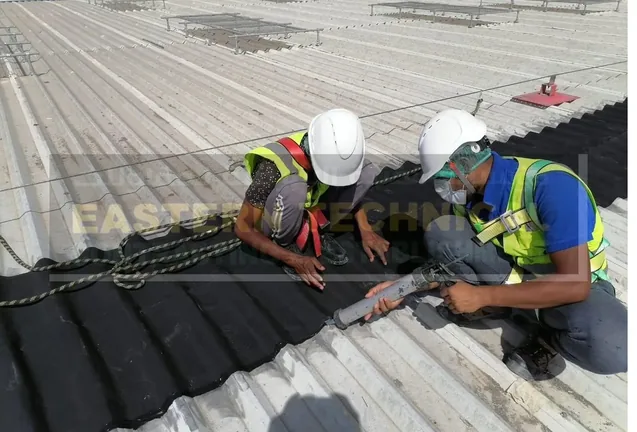
Once the substrate is ready, critical details are addressed first. Seams, penetrations, curbs, and gutters are the high-value zones because that is where leak recurrence usually begins. The EPDM system must be compatible with the existing roof condition and properly terminated at edges and transitions. If movement is expected, detailing has to allow for it rather than fight it.
This is where contractor experience matters. Industrial roofs rarely present ideal conditions. There are old repairs, uneven surfaces, custom penetrations, and active operational constraints below. A hands-on team knows how to sequence preparation, detail difficult areas, and keep the system consistent across mixed roof conditions. That is one reason many facility managers prefer a contractor that can inspect, diagnose, fabricate supporting metal components, install the waterproofing, and stay available for follow-up support.
Repair versus replacement – the real decision
For owners and facility managers, the question is usually not whether leaks are a problem. It is whether the roof still justifies rehabilitation. EPDM-based waterproofing is often the right answer when the metal roof remains structurally serviceable but leak-prone at details and aging joints. In those cases, targeted rehabilitation can extend service life, control capital spending, and reduce disruption to operations.
Replacement becomes more likely when corrosion is widespread, insulation is compromised across large sections, or previous repair history has created too many incompatible layers. There is also a timing issue. If a facility can stabilize a roof today with engineered waterproofing and schedule replacement later under better budget and operational conditions, that may be the smarter path.
The mistake is treating every leak as either a minor patch or a full reroof trigger. Industrial assets need a middle option. That is where a properly specified EPDM rehabilitation strategy often fits.
Why execution speed matters on active sites
Leaks in industrial buildings are not cosmetic. They interrupt production, damage stock, affect electrical systems, and create slip and safety risks. In some facilities, one failed roof penetration above a process area can carry more operational cost than the repair itself.
That is why response speed matters almost as much as technical quality. A contractor working in this category must understand access restrictions, permit systems, shutdown windows, and safety controls. Fast service only helps if the repair is also durable. Temporary patching may stop visible water for a short period, but if the detail is not rebuilt correctly, the facility will pay for the same issue twice.
Companies such as ETCE KSA are positioned for this kind of work because the value is not just in installing EPDM. It is in handling the whole problem – inspection, reporting, metal repair support, waterproofing detail execution, and after-sales follow-up under one scope.
What facility teams should expect from a waterproofing partner
A serious roofing contractor should be able to explain why the roof is leaking, not just where. They should identify the primary failure points, distinguish between urgent repair zones and longer-term risk areas, and recommend whether the building needs localized treatment or broader rehabilitation.
They should also understand related trades. On industrial roofs, waterproofing work often intersects with gutters, flashings, curbs, support frames, duct penetrations, and safety access components. A contractor with fabrication and maintenance capability can solve these interfaces faster and with fewer handoffs.
Procurement teams and project managers should ask practical questions. How will the roof be prepared? Which leak points are included? How are penetrations, drains, skylights, and gutters treated? What happens if hidden corrosion is found? How will work be phased to avoid disrupting operations? Good answers to those questions usually say more than a product brochure ever will.
A metal roof does not need perfection to stay dry, but it does need the right system at the right points and a contractor who understands how industrial buildings behave in service. If your roof is still structurally viable, EPDM waterproofing can buy back reliability where leaks actually start – and that can be the difference between constant reactive maintenance and a roof that finally works as it should.
Related ETCE services
Need this checked on your own roof?
ETCE carries out industrial roof inspections, leak diagnosis, metal roof rehabilitation and EPDM waterproofing across Dammam, Al Khobar, Dhahran, Jubail, Riyadh and Jeddah.
Request a Roof Inspection WhatsApp UsMetal roof waterproofing across Saudi Arabia
ETCE is a metal roof waterproofing company in Saudi Arabia with its head office in Dammam. See our warehouse & factory roof waterproofing service or find your area: