
A roof leak at a warehouse is rarely just a roof issue. Water can reach stored materials, electrical routes, insulation, steel members, and active work areas before the visible ceiling stain appears. A qualified waterproofing specialist Dubai facility teams can depend on must identify the full path of water entry, not simply apply sealant over the nearest crack.
For commercial and industrial buildings, waterproofing is an asset-protection decision. Dubai’s heat, UV exposure, wind-driven rain, dust accumulation, and aging roof details place constant pressure on membranes, fasteners, gutters, skylights, and penetrations. The right contractor brings inspection discipline, suitable system selection, trained installation crews, and after-sales response when conditions change.
Why Industrial Roof Leaks Need Technical Diagnosis
Many roof failures begin at details rather than across the main roof area. A failed screw washer, open lap joint, split flashing, blocked gutter outlet, or poorly sealed pipe penetration can allow water beneath the roof covering. Once trapped water moves through insulation or along structural members, the final internal leak point may be several meters away from the original defect.
This is why quick patching often becomes an expensive cycle. A patch may stop visible dripping for a short period while moisture remains inside the assembly. Corrosion can continue around metal sheets and purlins, insulation can lose performance, and repeated repairs can create uneven surfaces that complicate future maintenance.
A proper site inspection should assess roof slope, drainage routes, membrane condition, metal deterioration, skylight interfaces, parapet edges, expansion joints, penetrations, and previous repair areas. The contractor should also consider how the building operates. A facility with continuous production, high-value stock, or sensitive equipment needs a repair plan that controls risk without creating unnecessary downtime.
What a Waterproofing Specialist in Dubai Should Inspect
The inspection stage determines whether the recommended scope solves the actual problem. Property teams should expect clear observations, photographs of defects, and a practical recommendation based on roof condition and anticipated service life.
Roof coverings, laps, and fasteners
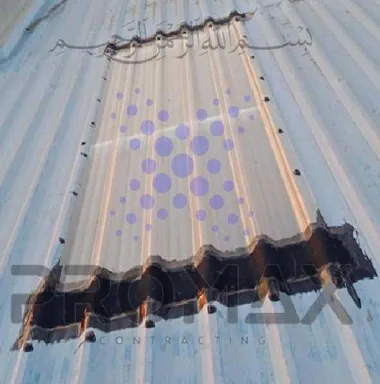
Metal roofs commonly develop leakage around screws, overlap joints, ridge details, and sheet edges. Heat movement can weaken old sealants and enlarge openings around fasteners. Where corrosion has affected the metal itself, sealing alone may not be adequate. The damaged section may require treatment, reinforcement, or replacement before waterproofing is installed.
For concrete roofs, the inspection should identify cracks, ponding areas, failed joints, and loose or damaged existing membranes. Water standing after rainfall is not always caused by the membrane. It can indicate poor falls, restricted outlets, or drainage lines that need corrective work.
Drainage and gutter condition
Gutters are a major part of roof waterproofing, especially on warehouses and sheds with wide roof spans. Blockage from dust, debris, or deteriorated gutter sections can force water back under roof sheets or over the gutter edge. Overflow can also stain facades and accelerate corrosion around eaves.
A specialist should check gutter alignment, outlet capacity, joint sealing, support condition, and downpipe connections. In some cases, gutter replacement or fabricated sections are more cost-effective than repeatedly repairing thin, corroded material.
High-risk roof details
Skylights, exhaust openings, ducts, roof hatches, pipe penetrations, and wall-to-roof junctions require careful detailing. These areas move differently under heat and vibration, so a rigid repair method may crack or detach. A compatible flexible system, properly terminated and sealed, is usually more reliable than a surface-level coating applied without preparation.
Selecting the Right Waterproofing System
There is no single membrane or coating that suits every roof. The correct system depends on substrate condition, roof geometry, existing materials, exposure level, required warranty, access limitations, and budget. A responsible contractor explains these trade-offs before work begins.
EPDM-based waterproofing systems are often suitable for demanding roof applications because they provide flexible, durable membrane coverage and can accommodate thermal movement when installed with proper detailing. They can be particularly effective around complex joints, roof transitions, and areas exposed to intense sun. However, the substrate must be prepared correctly, and terminations must be mechanically secure and fully sealed.
For localized failures, a targeted repair can be the sensible option when the remaining roof is in sound condition. For widespread deterioration, isolated patches may only defer a larger problem. Full or partial rehabilitation can reduce recurring callouts, protect insulation and structure, and give maintenance teams a more predictable asset plan.
The lowest initial quote is not always the lowest operating cost. A proposal should distinguish between temporary emergency containment, localized repair, and long-term restoration. Each serves a different purpose. Emergency work stops active ingress; planned rehabilitation addresses the causes that keep bringing water back.
Execution Matters as Much as Material Choice
Even a high-quality membrane can fail if it is installed over wet, dusty, loose, or corroded surfaces. Surface preparation is not an optional extra. It is the work that allows a waterproofing system to bond, seal, and perform as intended.
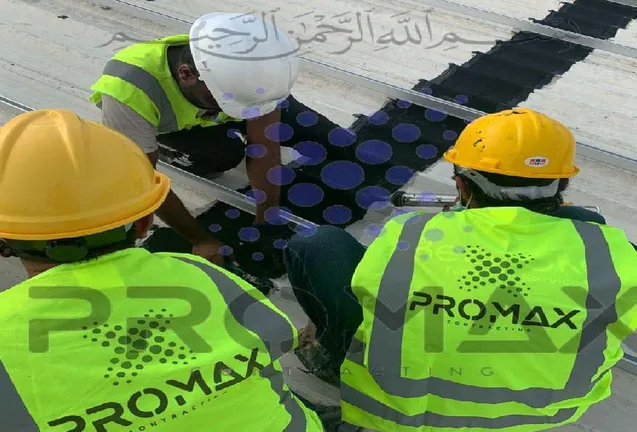
Professional execution typically includes cleaning and drying the substrate, removing failed materials, treating rusted metal where required, tightening or replacing defective fasteners, repairing damaged sheets or flashings, and preparing joints before membrane installation. The crew must then check overlaps, edge terminations, penetrations, and drainage paths before demobilizing.
For occupied facilities, work sequencing is equally important. Roofing activity can affect loading bays, storage areas, access roads, and operations below skylights or penetrations. A competent contractor coordinates safe access, material handling, weather planning, and work zones with the site team. This is especially relevant where repairs must be completed during limited shutdown windows.
Questions to Ask Before Appointing a Contractor
A waterproofing proposal should be clear enough for a facility manager, consultant, or procurement team to compare scope without guessing what is excluded. Ask whether the contractor has inspected the roof in person, how the leak source was verified, what substrate repairs are included, and how drainage issues will be handled.
It is also reasonable to ask what system will be used at laps, corners, skylights, gutters, and pipe penetrations. These details often determine whether the project lasts. Request clarity on access equipment, safety controls, workmanship coverage, maintenance requirements, and the response process if leakage reappears after completion.
Experience with large facilities matters. A contractor who understands warehouse roofs, metal cladding interfaces, fabrication requirements, and corrosion treatment can manage related defects within one coordinated scope. That reduces handoffs between multiple vendors and avoids the common problem of one party blaming another for an unresolved leak.
Promax Contracting approaches roof rehabilitation through site inspection, system selection, fabrication support where needed, and practical after-sales coordination. For facility teams, this means the work can address the roof covering, drainage components, metal repairs, and critical sealing details as connected parts of one building-envelope problem.
Plan Maintenance Before the Next Rainfall
Waterproofing should not be treated as a once-only project. Schedule roof checks before the rainy season and after major weather events, particularly on aging buildings. Regular inspections can identify loose fasteners, blocked outlets, sealant breakdown, membrane damage, and early corrosion while repairs are still contained and manageable.
Keep records of repair locations, material systems, inspection findings, and photographs. These records help maintenance teams track repeat issues, plan capital work, and make better decisions when a new leak appears. They also give the next contractor a factual starting point instead of relying on assumptions.
The useful next step is simple: inspect the roof before the leak becomes an operational incident. A detailed assessment now can protect stock, equipment, structure, and working time when the next heavy rain tests every weak detail.
Related ETCE services
Need this checked on your own roof?
ETCE carries out industrial roof inspections, leak diagnosis, metal roof rehabilitation and EPDM waterproofing across Dammam, Al Khobar, Dhahran, Jubail, Riyadh and Jeddah.
Request a Roof Inspection WhatsApp Us