A gutter leak over a warehouse loading bay is rarely a minor maintenance item. Water can track behind wall cladding, soak insulation, corrode steel supports, damage stored goods, and create slip hazards below. Knowing how to repair leaking roof gutters starts with treating the gutter as part of the complete roof drainage system, not as an isolated strip of metal that simply needs more sealant.
For industrial facilities, the correct repair depends on the source of the leak, the gutter material and profile, the degree of corrosion, and whether the system can still carry peak rainfall without overflowing. A patch may stop visible drips for a season. An engineered repair addresses the failed joint, damaged lining, poor falls, blocked outlets, and any water entry point around the gutter.
Find the actual source before repairing the gutter
Water does not always leak where it appears inside the building. It may enter through a gutter end lap, travel along a bracket or roof sheet overlap, then emerge several meters away. This is particularly common on long metal-roof buildings, box gutters, and valley gutters where concealed areas are difficult to inspect from below.
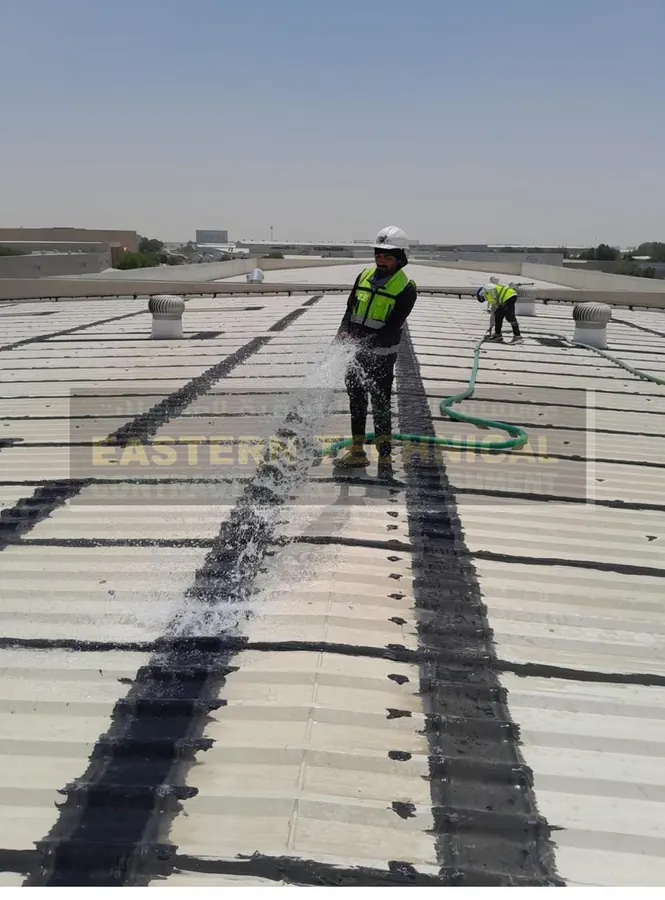
A proper inspection should begin from the roof level whenever safe access is available. Check the gutter during or immediately after rainfall if possible. If the roof is dry, controlled water testing can help isolate the entry point. Start low and work upward so the test does not introduce water above the area being examined.
Look closely at gutter joints, end caps, outlet connections, expansion points, fastener penetrations, corners, and areas beneath roof-sheet laps. Standing water is also a warning sign. A gutter with inadequate fall may appear watertight in light rain but overflow during a heavy storm, sending water over the back edge and into the building envelope.
Common causes of industrial gutter leaks
The most frequent failures are deteriorated sealant at lap joints, rust-through in galvanized steel, cracked coatings, loose fasteners, failed outlet connections, and debris restricting drainage. In older facilities, previous spot repairs can create their own problems when incompatible sealants crack under movement or trap moisture against the metal.
Thermal movement is another major factor. Metal gutters expand under high heat and contract as temperatures fall. If joints are rigidly sealed without allowing for movement, the sealant can split or pull away. Harsh UV exposure, sand accumulation, and persistent moisture make this failure more likely on industrial sites in Saudi Arabia.
How to repair leaking roof gutters: match the repair to the failure
The repair method should be based on condition, not convenience. Cleaning a joint and applying a bead of sealant is suitable only when the metal remains sound, the joint is correctly aligned, and drainage is working. If corrosion has perforated the gutter or water is ponding across multiple sections, a surface-only patch is not a durable answer.
Repair failed joints and lap connections
For a leaking lap joint, remove loose debris, failed sealant, rust scale, and contaminants from the repair area. The surface must be dry and mechanically prepared before any waterproofing material is installed. Simply applying new sealant over cracked sealant usually leads to early failure because the new material is bonded to an unstable layer.
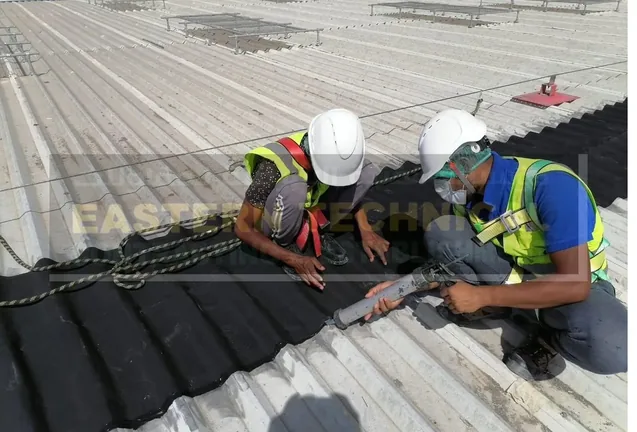
After preparation, the joint can be resealed with a compatible waterproofing system designed for metal movement and outdoor exposure. For critical joints, a reinforced membrane detail provides greater reliability than sealant alone. EPDM-based waterproofing is often effective where gutters move, where joint geometry is irregular, or where a repair needs stronger resistance to UV and standing water.
The repair should extend beyond the visible joint line. Water can enter at the edge of a lap or through a small split beside a fastener, so the waterproofed zone must cover the full vulnerable area with properly sealed edges.
Treat corrosion before it becomes a replacement issue
Surface rust does not automatically mean a gutter must be replaced. If the steel remains structurally sound, it can be cleaned, treated, primed where required, and protected with a compatible waterproofing coating or membrane system. The goal is to stop oxygen and moisture from continuing the corrosion cycle.
Perforated metal requires more than coating. Small holes may be stabilized and bridged with a reinforced repair detail, provided the surrounding metal is firm and not thinning extensively. Where corrosion has spread across long gutter runs, weakened the gutter edge, or affected support brackets, partial or full replacement is normally the safer option.
This is where a condition assessment saves money. Repeatedly patching a corroded gutter can cost more over time than replacing the failed section and installing a continuous waterproof lining at the joints, outlets, and transitions.
Repair outlets, downpipes, and overflow points
A gutter may be intact but still leak because water backs up at the outlet. Check that outlet strainers are clear and that the downpipe can discharge at the required rate. Leaves, packaging debris, sand, bird nesting material, and roof sediment can reduce capacity quickly.
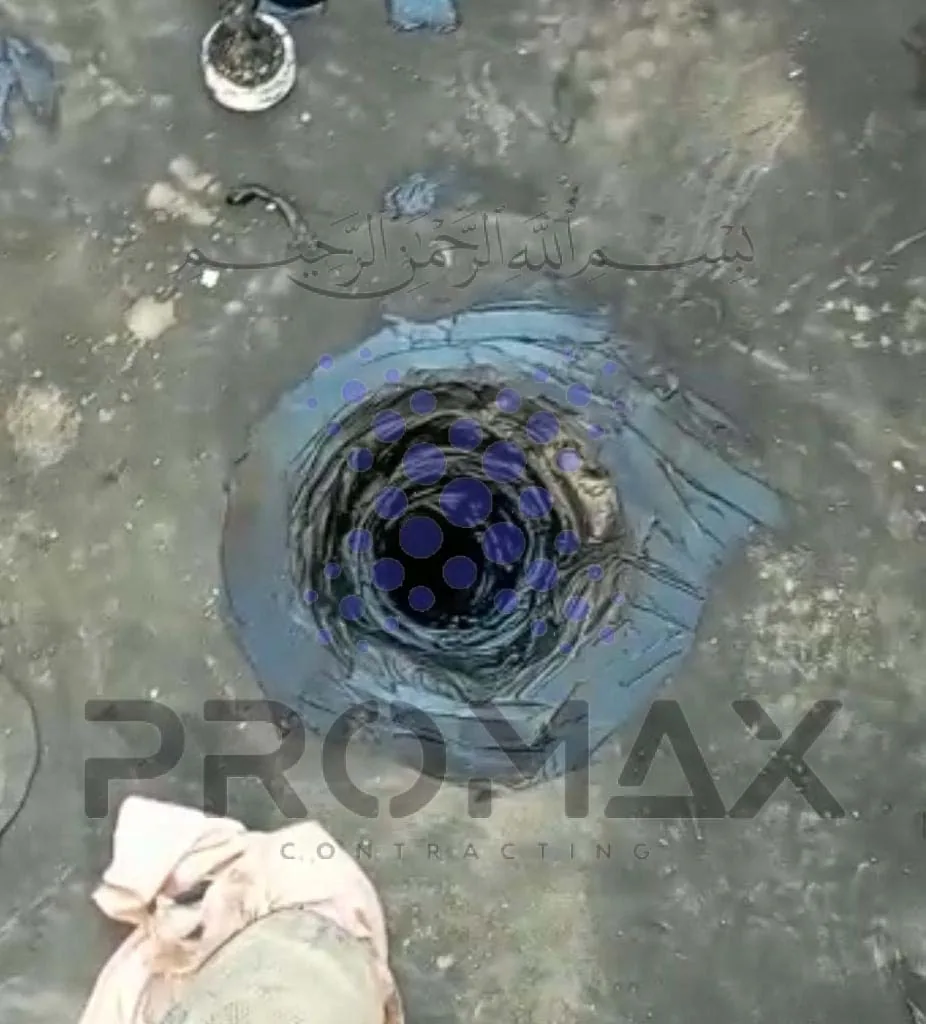
Inspect the outlet flange and its connection to the gutter. These points move under thermal cycling and are exposed to concentrated water flow. A reinforced waterproofing detail around the outlet is often needed, especially on box gutters and internal drainage channels. If water overtops the gutter during rainfall, review gutter size, slope, outlet capacity, and the need for additional drainage points rather than sealing the overflow path.
Prepare the surface correctly or expect the repair to fail
Most gutter repair failures are preparation failures. Waterproofing products cannot bond reliably to damp metal, dust, chalking paint, loose rust, oil, or old unstable sealant. Industrial roofs also collect fine airborne contaminants that may not be obvious from a ground-level inspection.
The repair sequence generally includes cleaning, drying, mechanical abrasion or rust removal, treatment of corroded areas, priming when specified, and installation of the selected sealant, coating, or membrane. Every system has requirements for overlap width, curing conditions, and edge sealing. Skipping those details can turn a quality material into a short-term patch.
Avoid using incompatible materials. Some bituminous products, aggressive solvents, or poor-quality mastics can react with existing coatings or degrade when exposed to intense heat. The selected repair system must suit the gutter substrate, operating temperature, expected movement, and exposure to ponding water.
Know when a repair should become a rehabilitation project
A localized repair is appropriate when the leak is confined and the remaining gutter system is in good condition. Rehabilitation is the better route when leaks occur at multiple joints, corrosion is widespread, water ponds throughout the run, or earlier repairs have failed repeatedly.
For large warehouses and factories, an inspection should also assess related roof details. Gutter leaks can be connected to damaged roof-sheet laps, loose flashing, failed skylight seals, penetrations, smoke vents, or drainage transitions. Repairing one visible drip while leaving adjacent entry points untreated can result in another callout after the next rainfall.
A complete rehabilitation may include replacing damaged metal sections, correcting falls, fabricating new outlets or flashings, and applying an EPDM waterproofing system to high-risk gutter zones. This approach is more disruptive initially, but it reduces reactive maintenance and protects the building structure, insulation, and operations below.
Plan the work around safety and operations
Gutter repairs take place at height and often above active traffic routes, storage areas, and production equipment. Establish safe roof access, fall protection, exclusion zones below the work area, and a plan for weather changes. Wet metal roofs are hazardous, and temporary covers must be secured so they cannot become wind hazards.
Facility teams should also protect stock and equipment before testing or opening gutter sections. If hot work is required for metal fabrication, permits, fire watch procedures, and protection of adjacent roof materials are essential. In many cases, cold-applied membrane and sealant systems reduce hot-work exposure, but the method still needs to be selected by the condition of the roof and gutter.
Build gutter maintenance into the roof plan
The most cost-effective gutter repair is the one prevented by routine inspection. Check gutters before and after the rainy season, after severe wind events, and whenever roof maintenance crews are already on site. Clear debris, inspect joints and outlets, and document early corrosion before it becomes a leak path.
For aging industrial roofs, a detailed condition report helps prioritize immediate repairs against planned rehabilitation. ETCE KSA approaches gutter leaks as part of a wider waterproofing and drainage assessment, helping facility teams address difficult leak points before they interrupt operations.
A dry interior starts with controlled water on the roof. Repair the failed detail, restore drainage capacity, and keep inspecting the system before small gutter defects turn into structural and operational damage.
Related ETCE services
Need this checked on your own roof?
ETCE carries out industrial roof inspections, leak diagnosis, metal roof rehabilitation and EPDM waterproofing across Dammam, Al Khobar, Dhahran, Jubail, Riyadh and Jeddah.
Request a Roof Inspection WhatsApp UsMetal roof waterproofing across Saudi Arabia
ETCE is a metal roof waterproofing company in Saudi Arabia with its head office in Dammam. See our warehouse & factory roof waterproofing service or find your area: