A gutter leak above a warehouse loading bay is rarely just a gutter problem. Water can travel beneath metal roof laps, soak insulation, corrode structural steel, damage stock, and create unsafe conditions before it becomes visible indoors. This industrial gutter refurbishment guide is written for facility teams that need to make a sound repair decision before a localized defect becomes a wider building failure.
For factories, logistics warehouses, sheds, and large commercial buildings, refurbishment is often more practical than full gutter replacement. The right approach depends on the gutter's remaining structural condition, the extent of corrosion, drainage design, roof movement, and the condition of connected roof details.
Start With a Condition Survey, Not a Coating Decision
A new waterproof layer cannot correct a failed substrate, poor falls, blocked outlets, or loose supports. The first stage is a detailed site inspection that identifies where water enters, where it travels, and what is causing the gutter to fail.
Inspection should cover the full gutter run, including box gutters, valley gutters, eaves gutters, outlets, downpipes, expansion joints, end laps, internal corners, and interfaces with metal roof sheets. The surrounding roof must also be checked. A leak reported at a gutter may originate at a penetration, skylight, smoke vent, roof lap, or damaged flashing higher on the roof slope.
Look for standing water after rainfall or washdown, rust staining, pinholes, split joints, cracked sealant, failed fasteners, distorted metal, and loose brackets. Pay close attention to outlet locations. Debris buildup at drains creates prolonged ponding, and ponding accelerates corrosion at the exact points where water must leave the roof.
A useful inspection report should separate cosmetic surface oxidation from active section loss. Light rust can often be prepared and protected. Deep corrosion, perforation, thinning metal, or loss of support may require fabricated replacement sections before waterproofing work begins.
Identify the Real Failure Mechanism
Industrial gutters usually fail through a combination of age, weather exposure, movement, and drainage neglect. Treating only the visible hole may provide a short-term result while the primary cause continues to damage the system.
Corrosion and coating breakdown
In coastal and industrial areas, salt, humidity, airborne contaminants, and trapped debris can attack galvanized steel rapidly once its protective coating is compromised. On older metal roofs, corrosion often starts at overlaps, fastener lines, joints, and areas where water remains after drainage.
If rust is limited to the surface, mechanical cleaning and a compatible waterproofing system may be sufficient. If the metal has lost thickness or can be punctured during preparation, the affected section should be reinforced or replaced. Applying a membrane over severely deteriorated steel without restoring the base can simply hide a progressive failure.
Failed joints and thermal movement
Long gutter runs expand and contract under Saudi Arabia's high temperatures. Rigid repairs at movement points often crack, especially where previous contractors have used incompatible sealants or patch materials.
Expansion joints need a flexible detail that accommodates movement while remaining watertight. EPDM-based waterproofing is particularly effective where gutters connect to metal roof sheets, curbs, drain points, and other difficult transitions because it can form a continuous flexible barrier over correctly prepared surfaces.
Poor fall and restricted drainage
A gutter can be fully waterproofed and still fail operationally if water does not reach its outlets. Sediment, roof dust, sand, packaging debris, and deteriorated coating flakes can restrict flow. In some buildings, original gutter falls are inadequate, or structural settlement has created low points.
Cleaning alone will not solve recurring ponding. The refurbishment scope may need localized regrading, additional outlets, improved sump details, downpipe modifications, or fabricated internal liners that direct water toward drains. This is where an engineered site assessment matters more than selecting the thickest coating available.
Choose Refurbishment or Replacement Based on Risk
Refurbishment is a strong option when the gutter profile remains stable, supports are sound, corrosion is localized or manageable, and drainage can be restored. It reduces disruption and can avoid disturbing large sections of an active roof.
Replacement becomes the better decision when there is widespread perforation, severe deformation, failed support steel, persistent reverse falls, or corrosion across most of the gutter run. Partial replacement is often suitable where damage is confined to outlets, corners, end sections, or selected valley areas.
The lowest initial-cost solution is not always the lowest operational-cost solution. A patch-based program may be appropriate for a facility scheduled for redevelopment within a short period. For an operating warehouse expected to remain in service for years, a continuous waterproofing system with properly rebuilt drains and details usually provides better protection against repeat callouts and stock disruption.
The Industrial Gutter Refurbishment Process
A reliable industrial gutter refurbishment guide must focus on execution. Product selection matters, but surface preparation, detailing, and quality control determine whether the work holds through heat, rain, and building movement.
1. Control access and protect operations
Before work starts, the contractor should establish access routes, lifting requirements, roof safety controls, material storage areas, and protection for production, inventory, and traffic below. Gutter work can release debris and dirty water into active areas, so sequencing must be coordinated with the facility team.
If repairs involve hot work, cutting, or fabrication, permit controls and fire precautions are required. Most waterproofing work can be planned in phases to keep loading bays, production lines, and storage areas operating.
2. Clean, prepare, and repair the substrate
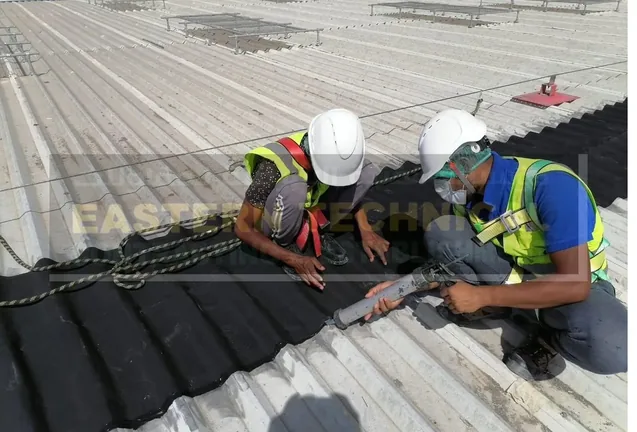
The gutter must be cleared of debris, old loose sealant, failed coatings, and standing water. Corroded surfaces are mechanically prepared until loose rust and unsound material are removed. Edges, seams, corners, and outlet mouths require extra attention because these are common leak paths.
Holes and weak metal are repaired with suitable fabricated steel sections, reinforcement plates, or compatible repair details. Loose fasteners and damaged brackets are corrected before the waterproofing layer is installed. A membrane is not a substitute for structural repair.
3. Rebuild critical details
Most industrial gutter leaks occur at transitions rather than across open flat areas. Outlets, drain bowls, lap joints, internal corners, expansion joints, and interfaces with roof sheets should receive purpose-designed treatment.
At drain points, the waterproofing system must be dressed securely into the outlet without reducing water flow. At roof-to-gutter transitions, the detail must prevent capillary water tracking beneath the roof sheet. Where roof penetrations or adjacent flashings discharge into the gutter, those connections must be included in the scope rather than left as separate risks.
4. Install a compatible waterproofing system
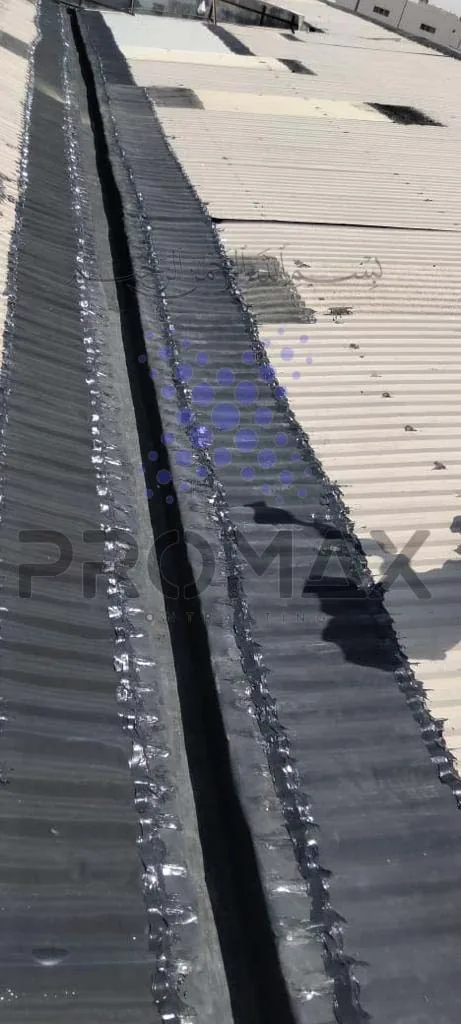
The selected system must adhere to the prepared substrate and remain flexible under thermal cycling. EPDM rubberized waterproofing systems are well suited to aging metal gutters because they provide a continuous waterproof layer across seams, corners, repairs, and complex geometry.
Compatibility is critical. Existing bituminous materials, aged coatings, oils, and residual sealants can affect adhesion. Test areas and primer requirements should be determined during the survey, not discovered halfway through installation. Thickness, reinforcement requirements, curing conditions, and detailing methods should follow the approved system design.
5. Test drainage and document completion
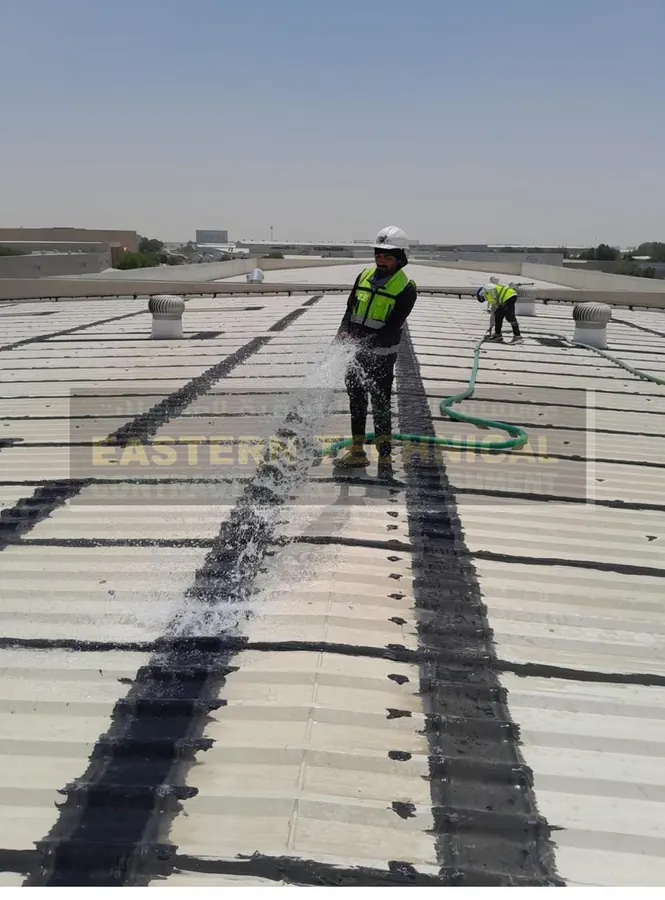
Once completed, the gutter should be tested with controlled water flow to confirm that joints, outlets, and transitions are watertight. The team should also observe whether water drains freely or remains trapped at low points.
Closeout documentation should identify repaired areas, materials used, drain locations, maintenance requirements, and any sections that need future monitoring. This gives facility managers a working record instead of relying on memory when the next rainy season arrives.
Plan Maintenance Around the Gutter's Actual Exposure
Even a high-quality refurbishment needs maintenance. The correct interval depends on the site. A clean logistics building in a low-debris area may need fewer inspections than a factory exposed to dust, sand, airborne process residue, or nearby construction activity.
At minimum, gutters and outlets should be inspected before periods of expected rainfall and after major storms. Teams should remove debris, check for standing water, examine outlet strainers, and look for cracks or lifting at joints and repair edges. Any new roof leak should trigger an upstream inspection, because the entry point may be some distance from the visible water damage.
ETCE KSA approaches gutter refurbishment as part of the full roof drainage and waterproofing system. That matters on industrial sites where a gutter repair may connect directly to aging metal sheets, roof penetrations, skylights, smoke vents, and drain points.
A gutter does not need to look completely failed before action is justified. When corrosion is starting, drains are slowing, or sealant repairs are becoming routine, schedule a professional inspection and make repairs while the work can still be planned rather than forced by the next leak.
Related ETCE services
Need this checked on your own roof?
ETCE carries out industrial roof inspections, leak diagnosis, metal roof rehabilitation and EPDM waterproofing across Dammam, Al Khobar, Dhahran, Jubail, Riyadh and Jeddah.
Request a Roof Inspection WhatsApp UsMetal roof waterproofing across Saudi Arabia
ETCE is a metal roof waterproofing company in Saudi Arabia with its head office in Dammam. See our warehouse & factory roof waterproofing service or find your area: