A warehouse roof can look sound from ground level while water is already tracking through a failed gutter joint, pipe penetration, or corroded sheet lap. So, how long does EPDM waterproofing last? On a properly designed, correctly installed, and maintained roof, an EPDM waterproofing system commonly provides 20 to 30 years of service, and in favorable conditions it can perform longer. But the membrane itself is only one part of the answer. Details, substrate condition, drainage, installation quality, and maintenance determine whether the system reaches that potential.
For industrial facilities, the useful question is not simply how many years an EPDM membrane can survive in a laboratory. It is how long it can keep an active roof watertight while facing high heat, UV exposure, wind-driven rain, sand, standing water, roof movement, and the day-to-day demands of maintenance traffic.
How Long Does EPDM Waterproofing Last in Real Conditions?
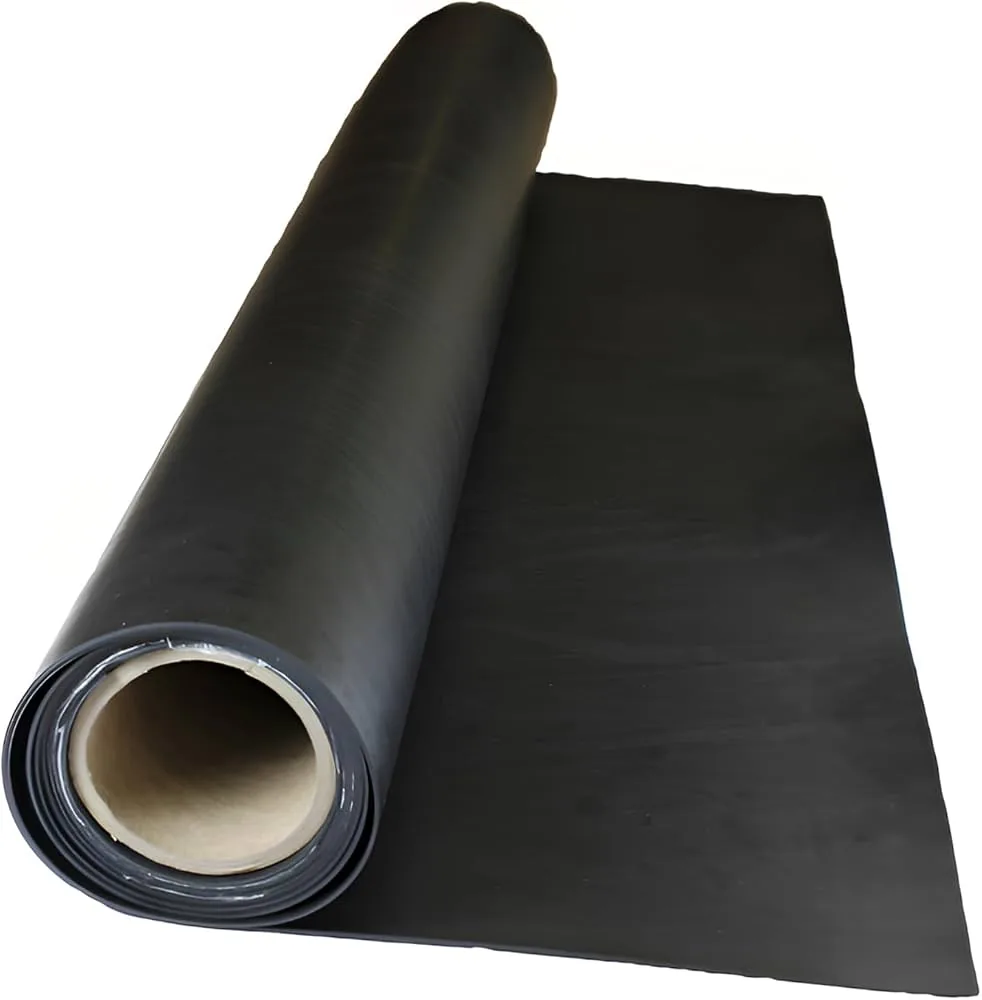
EPDM is a synthetic rubber membrane valued for elasticity, weather resistance, and long-term UV performance. It does not become brittle as quickly as many rigid coatings when exposed to repeated temperature changes. That flexibility is particularly useful on metal roofs, where sheets expand and contract significantly between hot daytime conditions and cooler nights.
A 20-to-30-year range is a practical planning benchmark for an industrial EPDM waterproofing system. However, a membrane applied over an unprepared, rusted, or unstable roof may fail far earlier, even when the EPDM material is high quality. Likewise, a carefully detailed system on a stable roof with functional drainage can remain serviceable beyond the standard planning period.
For facility managers, this distinction matters. A warranty period, a material life expectancy, and a roof system service life are not identical. The roof system includes seams, adhesives, termination bars, flashings, drains, gutters, fasteners, penetrations, and the underlying roof structure. A leak at one of these points can interrupt operations long before the main membrane has reached the end of its life.
The Factors That Control EPDM Service Life
Substrate Preparation and Roof Rehabilitation
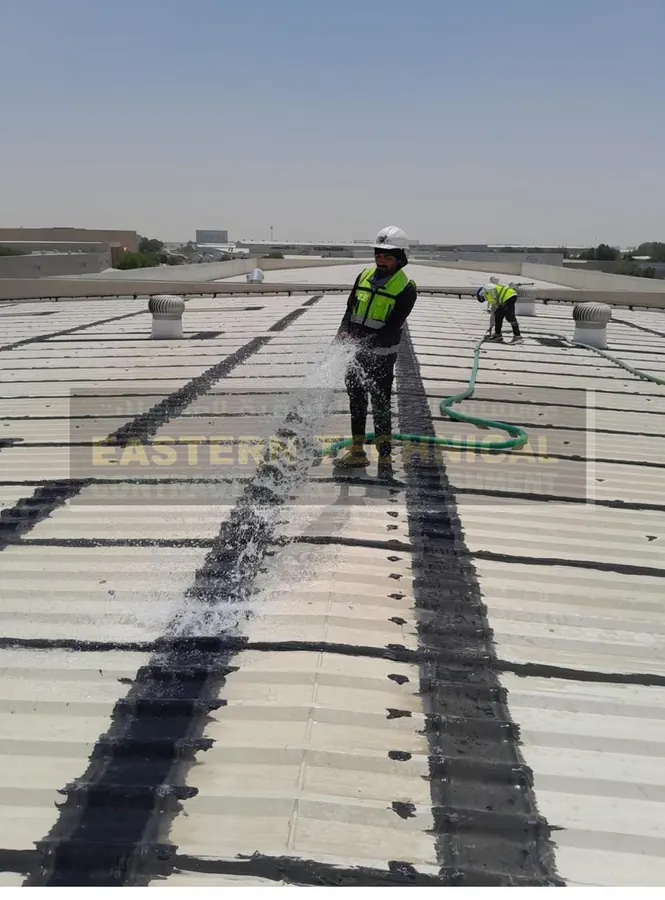
EPDM needs a clean, dry, stable surface. On aging corrugated metal roofs, single-skin sheets, sandwich panels, and industrial sheds, this often requires more than basic cleaning. Loose rust, failed sealant, damaged fasteners, open laps, deteriorated insulation, and weak sheet sections must be identified before waterproofing begins.
Applying a membrane over active corrosion or trapped moisture only hides the underlying problem temporarily. Corrosion can continue beneath the system, moisture can affect adhesion, and movement in weakened roof sheets can place stress on seams and flashings. Proper rehabilitation may involve mechanical cleaning, rust treatment, replacement of damaged sheets or fasteners, joint correction, and localized fabrication work before EPDM installation.
Detailing at Leak-Prone Areas
Most roof failures do not occur in the center of an open roof field. They occur where the roof changes direction, where water is concentrated, or where another component passes through the roof.
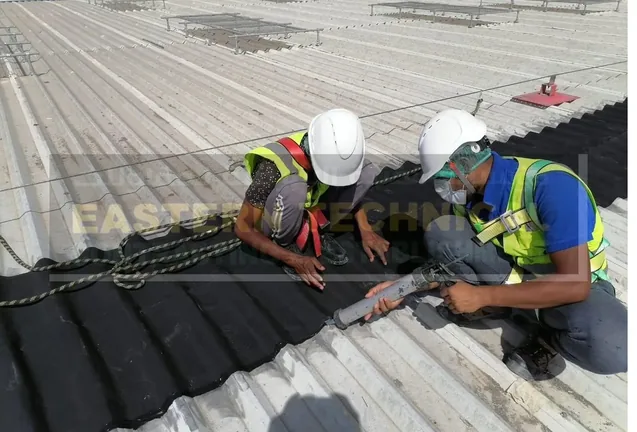
Common high-risk points include gutters, valley gutters, ridge connections, wall junctions, skylights, smoke vents, HVAC supports, duct penetrations, pipe penetrations, drain outlets, and roof-to-parapet transitions. These areas require compatible materials and enough membrane flexibility to accommodate movement. They also require correct laps, clean bonding surfaces, secure terminations, and drainage paths that remain open.
A system can have an excellent EPDM membrane and still develop leaks if the detailing is rushed. Industrial waterproofing is execution work. The condition of every transition matters as much as the material selected.
Heat, UV, and Thermal Movement
High solar exposure places continuous demand on industrial roofs. Metal roof panels expand under heat and contract when temperatures drop. Over time, this movement can loosen fasteners, open overlaps, and crack inflexible sealants. EPDM's elasticity helps it accommodate this movement, which is one reason it is effective for metal roof rehabilitation.
Still, thermal movement must be addressed in the design. Wide sheet spans, poorly supported flashing, restrictive terminations, and incompatible repair materials can create stress concentrations. A contractor should assess the roof geometry, sheet profile, existing expansion conditions, and the movement around penetrations rather than treating every roof as a flat, uniform surface.
Drainage and Standing Water
Standing water is not always an immediate EPDM failure, but it is never something to ignore on an industrial roof. Persistent ponding can expose weak seams, accelerate contamination buildup, overload gutters, and hide developing defects. On metal roofs, it may also indicate a distorted sheet, blocked outlet, failed gutter slope, or structural deflection.
Regular cleaning of gutters, valleys, drain points, and outlets is a direct investment in waterproofing life. Water must leave the roof as intended. If it cannot, even a well-installed system is carrying unnecessary risk.
Installation Conditions and Workmanship
EPDM installation depends on controlled preparation. Surfaces must be dry and properly cleaned, adhesives must be compatible and applied at the correct coverage, and seams need proper overlap and pressure. Dust, moisture, oil residue, loose rust, and rushed application can reduce bond strength.
This is especially relevant on operating warehouses and factories, where installation may need to be phased around logistics, production schedules, access restrictions, and safety controls. Fast execution is valuable, but speed should come from planning, trained crews, and organized materials handling, not from skipping surface preparation or detail checks.
Signs the Waterproofing Needs Attention Before Its Expected Life Ends
Do not wait for a major internal leak before inspecting an EPDM roof system. Small defects are usually less disruptive and less costly to correct than widespread water entry and corrosion damage.
Warning signs include recurring damp patches, water marks below gutters or penetrations, lifted membrane edges, open seams, cracked or detached sealant, blistering, visible rust at fasteners or sheet laps, blocked drains, and ponding that remains after rainfall. Inside the building, look for dripping around skylights, roof-mounted equipment, ducts, or wall connections. A musty odor, damaged ceiling materials, or unexpected corrosion on internal steel can also indicate concealed water travel.
Water does not always enter directly above the visible stain. It can move along metal sheets, purlins, insulation layers, cable routes, and duct supports before appearing inside. A competent inspection traces the water path, not just the point where it becomes visible.
Maintenance That Extends EPDM Waterproofing Life
EPDM is low-maintenance, not no-maintenance. A planned inspection program helps preserve its expected service life and allows repairs to be performed before damage expands.
For most industrial facilities, inspect the roof at least twice a year and after severe weather, high winds, unusual rainfall, or roof work by other trades. The inspection should cover membrane condition, seams, flashings, gutters, outlets, penetrations, roof-mounted equipment, fasteners, and areas where foot traffic is common. After any new ducting, mechanical installation, cable routing, or roof access work, inspect the affected waterproofing details immediately.
Keep the roof clear of loose debris, sand accumulation, abandoned materials, and sharp objects. Do not allow uncoordinated trades to cut, drill, or seal through the roof without a waterproofing repair plan. A small unauthorized penetration can become the source of a long-running leak.
Document inspections with photographs and clear observations. This gives facility teams a history of recurring issues, supports maintenance budgeting, and helps identify whether a local repair is sufficient or whether a wider rehabilitation program is required.
Repair, Recoat, or Replace?
An EPDM system does not need full replacement every time a leak occurs. Localized seam openings, punctures, damaged flashing, or failed terminations can often be repaired if the surrounding membrane remains sound and the substrate is stable.
Broader intervention becomes more appropriate when defects are widespread, corrosion has weakened the roof sheets, water is trapped beneath the system, drainage has repeatedly failed, or earlier repairs have created a patchwork of incompatible materials. In these cases, a detailed site inspection should separate membrane issues from underlying roof, gutter, and structural problems.
For warehouses and factories in Saudi Arabia, an engineered assessment is particularly valuable because heat, UV exposure, sand, and aging metal components often act together. ETCE KSA approaches these roofs as complete working systems, assessing the leak source, roof condition, drainage paths, penetrations, and required rehabilitation before recommending the waterproofing scope.
The longest-lasting EPDM waterproofing system is not necessarily the thickest or the most expensive one. It is the system matched to the roof, installed over a properly prepared substrate, detailed carefully at every vulnerable point, and checked before minor defects turn into operational downtime.
Related ETCE services
Need this checked on your own roof?
ETCE carries out industrial roof inspections, leak diagnosis, metal roof rehabilitation and EPDM waterproofing across Dammam, Al Khobar, Dhahran, Jubail, Riyadh and Jeddah.
Request a Roof Inspection WhatsApp UsMetal roof waterproofing across Saudi Arabia
ETCE is a metal roof waterproofing company in Saudi Arabia with its head office in Dammam. See our warehouse & factory roof waterproofing service or find your area: