A metal roof that leaks at laps, fasteners, skylights, or gutters does not always need full replacement. In many industrial facilities, the better question is not whether the roof is metal, but whether the substrate is stable enough for a high-performance waterproofing system. So, can EPDM be applied on metal roofs? Yes – but only when the roof is properly inspected, prepared, and detailed around movement points, penetrations, and corrosion zones.
That distinction matters. On warehouses, factories, and logistics buildings, a metal roof is rarely failing in one simple way. You may have aged sheets, thermal movement, loose fasteners, open seams, rust at overlaps, failed sealant, and ponding around drains all at the same time. EPDM can be an effective solution, but it is not a shortcut over unresolved structural or surface problems.
Can EPDM Be Applied on Metal Roofs in Practice?
In practice, EPDM can be installed over many metal roof configurations, including corrugated sheets, standing seam-adjacent details, gutters, curb flashings, skylight perimeters, and problem areas around roof penetrations. It is especially useful where repeated leak points are concentrated in joints and transitions rather than across the entire roof field.
The reason EPDM is considered for metal roofs is straightforward. It offers strong waterproofing performance, good flexibility, and reliable behavior under heat and movement when the system is correctly selected and installed. Industrial roofs expand and contract daily. A rigid repair tends to crack or separate. EPDM performs better when movement is part of the problem.
Still, there is a difference between applying EPDM on a metal roof and applying it correctly. Adhesion, detailing, sheet condition, slope behavior, and water flow all need to be assessed before the first section is installed.
Where EPDM Works Well on Metal Roofs
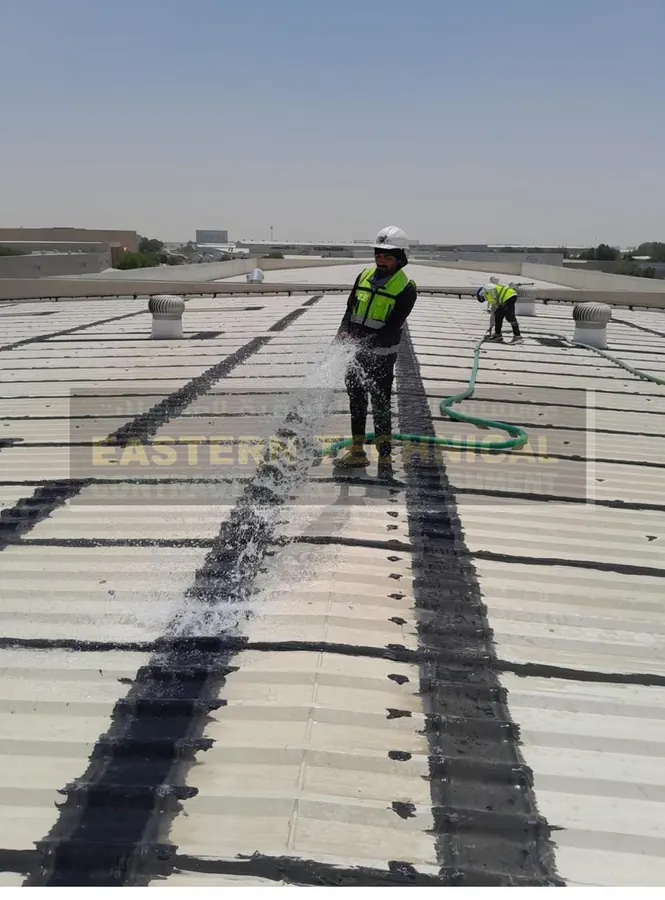
EPDM is often a strong choice when the metal roof remains serviceable but has persistent leakage at predictable weak points. These usually include end laps, side laps, corroded fixings, curbs, pipe penetrations, smoke vents, ridge transitions, gutter junctions, and drain areas.
On aging industrial roofs, these are the locations where patch repairs tend to multiply. One leak is sealed, then another opens two meters away because the underlying movement and weathering continue. EPDM is valuable here because it can create a more continuous waterproof barrier across irregular and failure-prone details.
It also performs well where UV exposure is severe and where the facility cannot afford repeated shutdowns for temporary repair cycles. For warehouses and factories, the real cost of roof leakage is often not the repair itself. It is product risk, interrupted operations, insulation damage, interior corrosion, and ongoing maintenance labor.
When EPDM Should Not Be Applied Directly
This is where technical judgment matters. EPDM should not be treated as a cover-up for a roof that has already moved beyond repairable condition.
If the metal deck or sheets are structurally unsound, if corrosion has perforated large sections, if fastener pull-out is widespread, or if the roof profile is badly distorted, direct application may not be appropriate. The substrate has to be stable. Waterproofing cannot compensate for failed metal components that continue to shift, flex excessively, or disintegrate under the membrane.
Another issue is trapped moisture. If the roof assembly holds water below the surface, applying a membrane without addressing the source can lock in deterioration. That may lead to ongoing corrosion below the repair area and shortened service life.
Contamination is another common reason for failure. Old coatings, oxidized surfaces, dust, oil, and loose rust all interfere with proper adhesion. On active industrial sites, roofs are often exposed to conditions that make surface preparation more demanding than expected.
Surface Preparation Decides the Outcome
The answer to can EPDM be applied on metal roofs depends less on the material itself and more on preparation quality. Metal roofs require disciplined surface treatment before any EPDM system is installed.
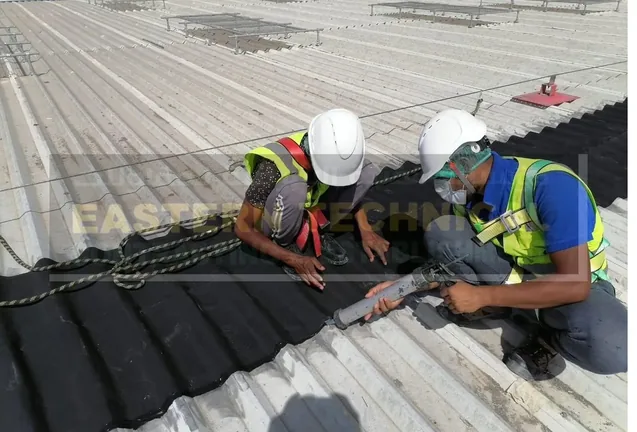
The roof must first be inspected for loose sheets, failed fixings, rusted sections, open joints, wet insulation risk, and drainage issues. Any unstable metal sections should be repaired or replaced. Fasteners may need tightening or replacement. Corroded zones must be mechanically cleaned, treated, or cut out if deterioration is advanced.
After that, the surface needs proper cleaning. Dirt, chalking, oxidation, grease, and previous failed repair materials have to be removed. If adhesion is part of the system design, primer compatibility and drying conditions also matter. Skipping these steps is one of the fastest ways to turn a promising repair into a callback.
Detailing is just as important as field preparation. The membrane has to be terminated correctly at edges, upstands, curbs, and penetrations. A roof may look sealed from a distance while actually remaining vulnerable at every transition point.
Common Metal Roof Problem Areas That Need Special Detailing
Metal roofs do not fail evenly. They fail at stress points. EPDM can address these points well, but only if they are treated as engineered details rather than simple patches.
Gutters are a common example. On industrial buildings, gutters often show corrosion, standing water, failed joints, and movement at outlets. An EPDM lining system can be highly effective here, but outlet detailing and water flow must be correct. If the gutter geometry is wrong or blocked, the membrane alone will not solve the problem.
Skylights, smoke vents, and roof penetrations are another category. These areas combine movement, sealant aging, and difficult flashing geometry. EPDM works well because it can accommodate shape changes better than brittle repair materials, but the terminations must be secure and compatible with the surrounding substrate.
Laps and fastener lines also deserve attention. If the roof profile creates repetitive leak paths, a localized repair may not be enough. In such cases, broader treatment zones or a more integrated rehabilitation approach may be the right decision.
Adhesive Application vs Fully Engineered Rehabilitation
Not every EPDM solution for metal roofing is the same. Some situations call for targeted treatment at leak-prone details. Others require a more comprehensive rehabilitation strategy across larger roof sections.
A small warehouse with isolated leakage near penetrations may only need focused repair work. A large factory roof with recurring leaks across joints, curbs, gutters, and rusted transitions usually needs a coordinated system, not a collection of spot fixes.
This is where many projects go wrong. The owner asks for a quick stop-leak measure, but the roof is actually showing system-wide fatigue. The contractor installs local repairs, the next rain exposes the next weak point, and the cycle continues. A technically sound EPDM installation starts with diagnosis, not just product selection.
Performance Expectations and Trade-Offs
EPDM is durable, but it is not magic. Facility teams should expect good waterproofing performance when the roof is repairable, the substrate is stable, and the detailing is executed correctly. They should not expect it to solve structural deflection, major drainage design defects, or advanced corrosion hidden below the surface.
There are also trade-offs. A localized EPDM application can be cost-effective and fast, but if failure points are widespread, partial treatment may only delay larger intervention. A broader rehabilitation scope costs more upfront but may reduce recurring maintenance and water ingress risk.
The right choice depends on roof age, leak history, business interruption risk, and how long the building is expected to remain in service. For industrial property owners, that decision is usually operational before it is cosmetic.
What Facility Managers Should Ask Before Approving the Work
Before moving ahead, ask for a roof condition assessment based on actual failure points, not just a generic recommendation. The key questions are whether the metal substrate is sound, where movement is occurring, how corrosion is being handled, what preparation method is planned, and how penetrations and terminations will be detailed.
It is also worth asking whether the proposed EPDM scope is targeted repair or part of a wider roof rehabilitation plan. That affects cost, lifespan, shutdown planning, and maintenance expectations.
For industrial sites in Saudi Arabia, where heat, UV exposure, dust, and aging roof assets combine, on-site inspection matters even more. ETCE KSA approaches these roofs as operating building systems, not flat product applications. That is the right mindset for any contractor handling metal roof waterproofing at scale.
If your metal roof is leaking, the practical answer is this: EPDM can be applied successfully, but only after the roof earns that solution through proper inspection, preparation, and detail design. The best repair is the one that matches the real condition of the roof, not the one that simply covers it fastest.
Related ETCE services
Need this checked on your own roof?
ETCE carries out industrial roof inspections, leak diagnosis, metal roof rehabilitation and EPDM waterproofing across Dammam, Al Khobar, Dhahran, Jubail, Riyadh and Jeddah.
Request a Roof Inspection WhatsApp UsMetal roof waterproofing across Saudi Arabia
ETCE is a metal roof waterproofing company in Saudi Arabia with its head office in Dammam. See our warehouse & factory roof waterproofing service or find your area: