A warehouse roof starts leaking over a loading bay, and the first question is rarely technical. It is financial. When facility teams compare roof refurbishment versus replacement costs, they are usually balancing three pressures at once – budget, downtime, and the risk of a bigger failure if the wrong choice is made.
For industrial buildings, that decision should never be reduced to a simple price per square foot. A lower upfront figure can become the more expensive option if corrosion is advancing under laps, insulation is compromised, or leak points around gutters, skylights, and penetrations have multiplied across the roof. On the other hand, full replacement is not automatically the smart move just because a roof looks old.
How roof refurbishment versus replacement costs should be evaluated
The real comparison starts with condition, not age. Two metal roofs installed in the same year can have completely different cost profiles today depending on maintenance history, drainage performance, coating failure, fastener movement, panel corrosion, and how often leaks were patched without addressing the root cause.
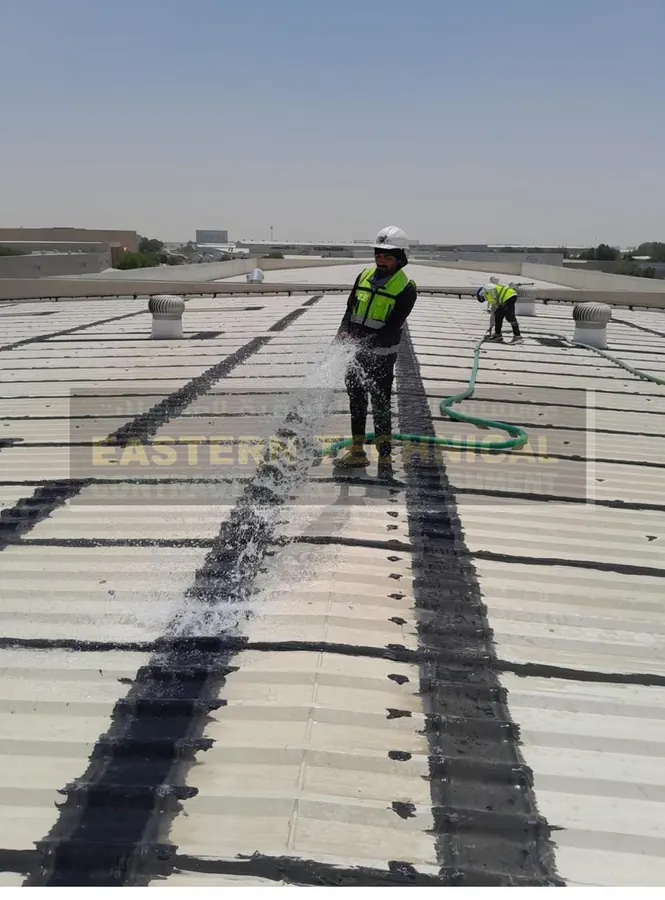
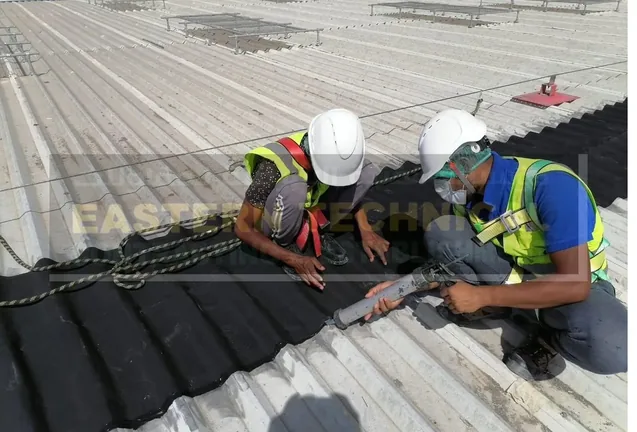
Refurbishment usually makes financial sense when the roof structure is still sound, the sheets have usable life left, and the main failures are concentrated in waterproofing details or surface deterioration. In that case, a contractor can restore performance by treating rust, sealing laps, repairing penetrations, upgrading gutters, replacing localized damaged sections, and applying an engineered waterproofing system such as EPDM at high-risk leak zones.
Replacement becomes harder to avoid when deterioration is systemic. If corrosion has reduced the integrity of large roof areas, if repeated leaks have affected insulation or interior operations, or if fixings and sheets are failing across the whole asset, a repair-led approach may only delay a larger capital expense.
This is why inspection quality matters. A useful site assessment does more than count leaks. It identifies whether water entry is coming from sheet laps, end laps, screw points, ridge details, flashing terminations, drain points, skylight interfaces, or movement around roof-mounted services. Without that level of diagnosis, cost comparisons are guesswork.
What typically makes refurbishment less expensive upfront
Refurbishment is usually cheaper at the start because it avoids full strip-out, disposal, and large-scale installation labor. For an active warehouse or factory, that matters. The less disruption to operations, the lower the indirect cost.
A refurbishment scope may include corrosion treatment, replacement of failed fasteners, resealing of joints, gutter rehabilitation, reinforcement of weak details, and targeted waterproofing. On metal and sandwich panel roofs, these measures can extend service life substantially when the substrate remains stable.
There is also a speed advantage. A refurbishment program can often be phased zone by zone, allowing operations to continue with less interruption. For distribution centers, manufacturing buildings, and storage facilities, that scheduling flexibility has real financial value even if it does not appear in the contractor's line-item pricing.
The caution is straightforward. Refurbishment only stays economical when the scope matches the roof condition. If the contractor is asked to keep repairing a roof that has already crossed into structural decline, the owner can end up paying for recurring callouts, temporary leak control, damaged stock risk, and eventual replacement anyway.
Where replacement costs become justified
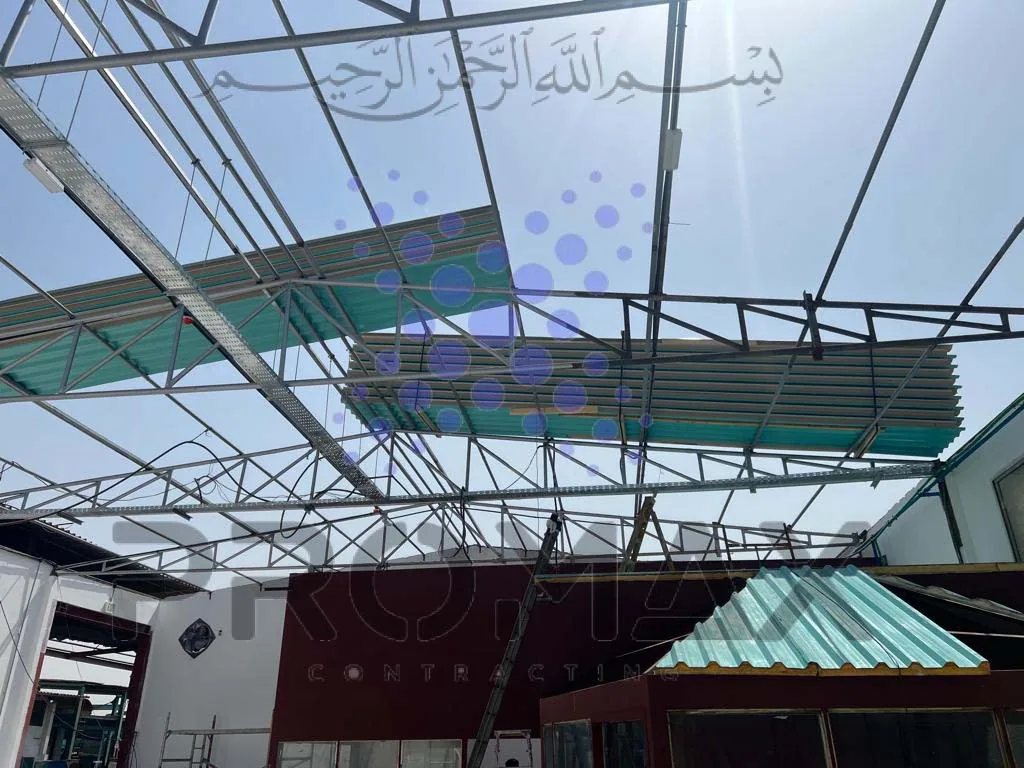
Full replacement is expensive because it includes demolition, waste handling, new materials, installation, access equipment, and often upgrades to flashings, insulation, drainage details, and safety components. On paper, that number can look difficult to defend against a lighter rehabilitation budget.
But replacement can still be the better financial decision when the existing roof has become a liability. If widespread rust has thinned sheets, if panel laps are opening across multiple elevations, if water ingress is chronic, or if previous patching has created an inconsistent roof build-up, replacement may reduce long-term maintenance cost and operational risk.
Another factor is predictability. A replacement project usually gives the owner a clearer new-life cycle with fewer hidden defects left in place. Refurbishment carries more dependence on existing substrate condition, which means the quality of inspection and execution is critical.
That does not mean replacement is always superior. It means the premium can be justified when the roof has reached the point where repair no longer controls risk with enough certainty.
The hidden costs most owners miss
The visible contractor quote is only part of the picture. Industrial roof decisions should also account for leak-related production interruption, stock exposure, damage to electrical systems, interior corrosion, safety incidents caused by wet floors or falling debris, and the management time spent chasing repeat failures.
There is also the issue of access and sequencing. A roof over a live facility may require night work, phased isolation, temporary weather protection, or coordination around sensitive operations. In some cases, a technically sound refurbishment outperforms replacement simply because it can be delivered with less operational disruption.
Energy performance can also shift the numbers. If the existing system is allowing heat gain through deteriorated assemblies or moisture-affected insulation, replacement may improve building performance enough to support the investment. But that benefit should be measured, not assumed. A targeted refurbishment combined with waterproofing upgrades may solve the immediate water-entry problem without the cost of full reconstruction.
When refurbishment is the stronger option
For many aging industrial roofs, the best answer sits between doing nothing and tearing everything off. If the primary issue is water ingress at details rather than complete roof failure, a well-designed refurbishment can deliver strong value.
This is especially true on large-span warehouses and factories where common leak points are localized but recurring – penetrations, gutters, end laps, skylight surrounds, smoke vents, and drain transitions. These areas often fail before the main roof field does. Addressing them with engineered repair methods and durable waterproofing can stop the damage cycle at a fraction of full replacement cost.
In hot, UV-heavy environments and on assets exposed to moisture, sand, and corrosive conditions, material compatibility matters. A generic patch is cheap until it fails. A system-based refurbishment approach, using materials suited to movement, heat, and aging metal substrates, usually costs more than short-term patching but much less than full replacement. That is often the real cost comparison owners should be making.
When replacement is the safer call
If inspections show deep corrosion, widespread sheet perforation, unstable substrate conditions, or repeated failures across large areas, replacement often becomes the safer capital decision. The trigger is not just visible leakage. It is the loss of confidence that the existing roof can continue to perform after repair.
This is common where years of reactive maintenance have created multiple incompatible repair layers. Once the roof becomes a patchwork of sealants, fastener fixes, and local overlays, defect tracing gets harder and failure risk rises. At that point, replacement may cost more now but reduce uncertainty later.
Owners should also be realistic about intended holding period. If the building is a long-term operational asset, a higher upfront investment can make sense. If the property is being stabilized for medium-term use, refurbishment may offer the better return.
How to get a cost comparison that is actually useful
A meaningful quote should separate immediate repair needs from optional scope, identify failure points clearly, and explain expected service-life outcomes. It should also state what remains in place and what risks are still present after the work.
That level of detail matters because two prices can look comparable while representing completely different risk levels. One contractor may be pricing cosmetic treatment and basic sealing. Another may be addressing substrate preparation, fastener replacement, drainage correction, detail waterproofing, and long-term leak control. Without technical clarity, owners end up comparing numbers instead of solutions.
For industrial facilities, the best partners are the ones who can inspect, diagnose, fabricate required components, execute repairs, and support the roof after handover. That integrated approach typically produces better cost control than splitting the work across multiple vendors. It is one reason companies such as ETCE KSA are brought in on complex metal roof rehabilitation scopes where leak behavior, corrosion, and detailing all interact.
A roof decision should protect operations, not just satisfy this quarter's budget. If refurbishment can restore waterproofing, control corrosion, and extend life with confidence, it is often the stronger financial move. If the roof has already moved beyond dependable repair, replacement is not overspending – it is risk control. The right answer comes from the condition on the roof, not the assumption made from the ground.
Related ETCE services
Need this checked on your own roof?
ETCE carries out industrial roof inspections, leak diagnosis, metal roof rehabilitation and EPDM waterproofing across Dammam, Al Khobar, Dhahran, Jubail, Riyadh and Jeddah.
Request a Roof Inspection WhatsApp UsMetal roof waterproofing across Saudi Arabia
ETCE is a metal roof waterproofing company in Saudi Arabia with its head office in Dammam. See our warehouse & factory roof waterproofing service or find your area: