A warehouse roof rarely fails all at once. It starts with a small leak at a fastener line, a cracked seal around a skylight, corrosion in a gutter, or moisture entering at a panel overlap. Under Saudi Arabia's heat, UV exposure, windblown sand, and occasional heavy rain, these minor defects can spread quickly. Metal roof restoration Saudi Arabia is therefore not a cosmetic repair. It is a practical asset-protection program designed to stop water entry, control corrosion, and extend the working life of an industrial roof without unnecessary disruption to operations.
For facility managers, owners, and project teams, the right decision is not always full replacement. A properly diagnosed and engineered restoration system can protect an aging metal roof for years, provided the substrate remains structurally sound and the repair scope addresses every active failure point.
Metal Roof Restoration Saudi Arabia Starts With Diagnosis
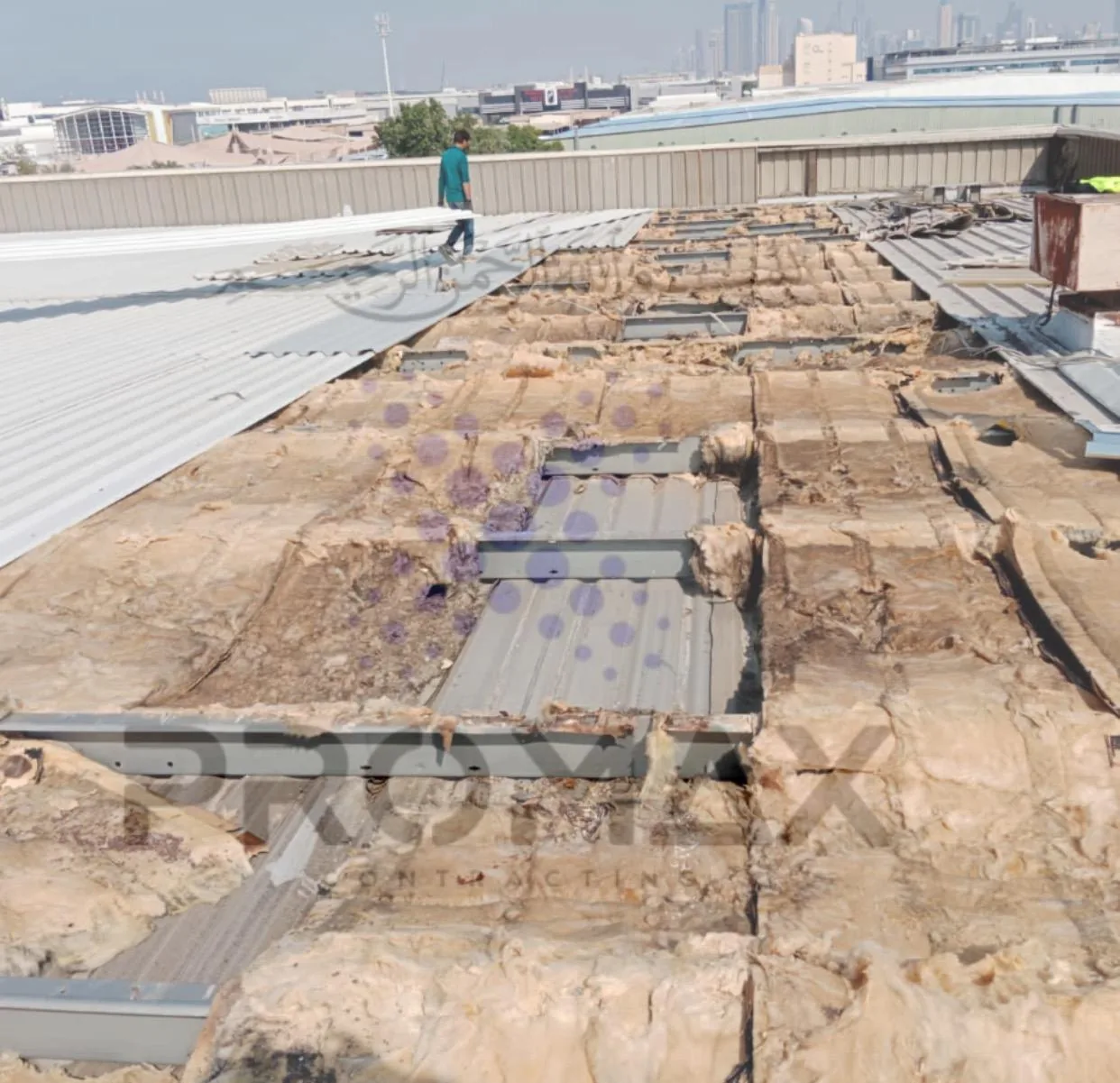
The visible leak is often not the actual source. Water can travel beneath sheet laps, along purlins, through insulation, or around penetrations before it appears inside the building. Patching the interior drip point without investigating the roof assembly usually leads to repeat repairs and greater damage.
A technical inspection should assess the complete roof condition: sheet corrosion, loose or failed fasteners, damaged sealant, open overlaps, ridge and eave details, gutters, drain points, skylights, smoke vents, flashing transitions, and mechanical penetrations. The inspection must also identify whether trapped moisture has affected insulation, support members, or internal finishes.
This assessment determines whether the roof needs localized repair, full waterproofing restoration, partial sheet replacement, or a broader rehabilitation program. ETCE KSA approaches this work as an industrial maintenance task, not a surface coating exercise. The objective is to locate the water path, prepare the substrate correctly, and install a system that remains secure through thermal movement and weather exposure.
Signs That Restoration Should Not Be Delayed
Recurring leaks after basic sealant repairs are a clear warning sign. So are rust stains on internal members, corroded fasteners, ponding in gutters, deteriorated panel laps, loose roof sheets, and water marks around skylights or duct penetrations. In operational buildings, a rise in maintenance calls after rain is often enough evidence that the roof requires a systematic inspection.
Heat also accelerates roof movement. Metal sheets expand during the day and contract as temperatures fall. A rigid patch or poorly bonded membrane can split at these movement points. Restoration details must allow for the actual behavior of the roof, particularly on large warehouses and factories with long sheet runs.
Why Industrial Metal Roofs Fail in Saudi Conditions
Sunlight and temperature are only part of the problem. Intense UV exposure dries out ordinary sealants and weakens low-grade repair materials. Dust and sand collect in gutters and behind flashings, slowing drainage and holding moisture against metal surfaces. Coastal facilities around Dammam and Jubail may also face a more aggressive corrosion environment due to humidity and salt-laden air.
The original roof design and installation quality matter as well. A roof may have been installed with inadequate lap sealing, incorrectly placed fasteners, undersized gutters, or poorly detailed penetrations. Modifications made later for ducts, exhausts, cables, pipes, and equipment can create additional leak paths if flashing is not integrated correctly.
For this reason, restoration should not treat the metal sheet as the only concern. The system must address connections, transitions, drainage, and all locations where the roof plane is interrupted. These details are where most water entry occurs.
Selecting the Right Restoration Scope
A full roof replacement can be justified when sheets are extensively perforated, structural components are compromised, or the roof has reached the end of its serviceable life. However, replacement brings higher material costs, longer site activity, disposal requirements, and a greater risk of operational interruption. It is not automatically the most cost-effective response to leakage.
Where the metal deck remains stable, restoration can be the more controlled option. Localized corroded sheets may be replaced, fasteners can be upgraded or resealed, laps can be treated, and vulnerable areas can receive a continuous waterproofing system. This approach preserves usable roof components while correcting the actual failure mechanisms.
EPDM-based waterproofing is particularly effective for difficult areas such as gutters, roof penetrations, skylights, smoke vents, drain points, and transitions between different materials. Its flexibility helps it accommodate movement better than many rigid repair methods. It depends, however, on disciplined substrate preparation, compatible primers and adhesives, and careful detailing at edges and terminations. Installing quality membrane material over loose rust, contaminated surfaces, or unstable sheets will not create a durable result.
Restoration Is Not One Product Applied Everywhere
A large corrugated roof may need different treatment at sheet laps than at a box gutter. A single-skin sheet roof may require a different preparation sequence from an insulated sandwich panel roof. Areas around hot ducting, equipment supports, and roof-mounted services often require custom flashing or fabricated metal work before waterproofing can begin.
This is why a site-specific method statement is valuable. It sets out access requirements, surface preparation, corrosion treatment, repair materials, membrane detailing, water-testing procedures, and safety controls. It also helps the facility team plan work around loading schedules, production areas, and sensitive equipment below the roof.
A Practical Metal Roof Restoration Sequence
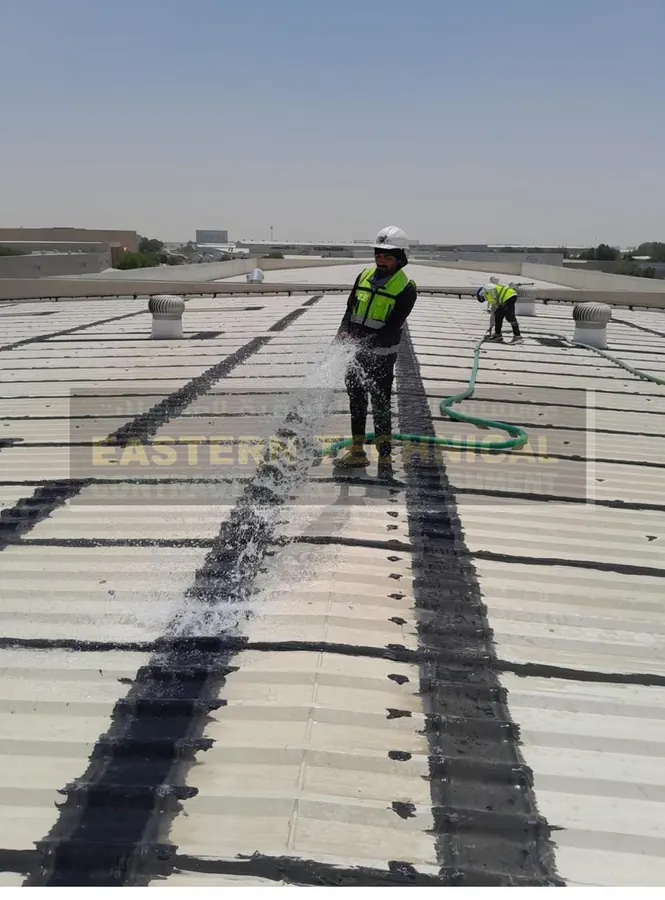
Execution quality determines whether restoration becomes a long-term repair or another short-lived patching cycle. The work normally begins with controlled access and safety preparation, followed by cleaning of the roof surface and drainage paths. Dirt, loose coating, failed sealant, and oxidation must be removed from areas receiving repair materials.
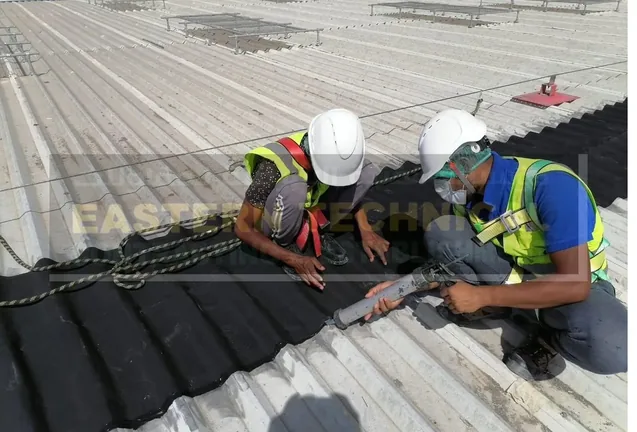
Corroded locations are then evaluated. Surface corrosion may be mechanically prepared and protected, while severely weakened sheets require replacement rather than concealment. Loose fasteners are tightened or replaced, and oversized or damaged fastener holes are repaired using the appropriate detail. Sheet overlaps, ridges, gutters, and flashing lines are sealed and reinforced according to their exposure and movement requirements.
Waterproofing work follows after the substrate is dry, stable, and properly prepared. EPDM membranes and compatible detailing components can then be installed at targeted leak points or across defined roof zones. Particular attention is required at corners, termination bars, drains, curbs, and penetrations. These are not minor finishing details. They are the locations most likely to decide whether the roof remains watertight.
Final quality control should include visual inspection of seams and terminations, checks for drainage restrictions, and water testing where appropriate. A detailed completion report gives facility teams a useful baseline for future maintenance and budgeting.
Protect Operations While the Work Is Underway
Industrial facilities cannot always stop production because a roof needs repair. Restoration planning should therefore consider operating hours, internal stock protection, equipment locations, vehicle routes, and weather conditions. A contractor must coordinate roof access, material staging, hot-work controls where applicable, and daily housekeeping without creating unnecessary risk on an active site.
Fast response matters most when leaks threaten inventory, electrical equipment, production lines, or stored materials. But speed should not mean skipping diagnosis or preparation. Emergency containment can stop immediate water entry, while a planned second phase delivers the permanent restoration required for the roof's condition.
Maintenance Extends the Value of Restoration
Even a well-restored roof needs routine attention. Gutters should be cleared before rainy periods, debris should not be allowed to build up around drains, and new rooftop penetrations should be inspected and flashed correctly. Facility teams should also investigate small interior stains promptly rather than waiting for a larger leak event.
A periodic roof inspection is especially useful after severe weather, construction work on the roof, or installation of new mechanical services. It allows minor defects to be corrected before insulation becomes wet, corrosion expands, or internal operations are affected.
The best time to plan restoration is before emergency leakage dictates the schedule. A documented inspection, a clear repair scope, and an experienced industrial contractor give owners control over cost, safety, and downtime while preserving a roof that still has useful service life.
Related ETCE services
Need this checked on your own roof?
ETCE carries out industrial roof inspections, leak diagnosis, metal roof rehabilitation and EPDM waterproofing across Dammam, Al Khobar, Dhahran, Jubail, Riyadh and Jeddah.
Request a Roof Inspection WhatsApp UsMetal roof waterproofing across Saudi Arabia
ETCE is a metal roof waterproofing company in Saudi Arabia with its head office in Dammam. See our warehouse & factory roof waterproofing service or find your area: