A leaking warehouse roof rarely fails all at once. More often, it starts at laps, fasteners, penetrations, gutters, skylights, and rusted sheet joints, then spreads into insulation damage, production risk, and recurring maintenance calls. That is why the roof replacement vs roof rehabilitation decision matters so much for industrial facilities. The wrong choice can lock you into unnecessary capital cost or, just as problematic, a short-term repair cycle that never really solves the problem.
For factories, warehouses, logistics buildings, and large sheds, the answer is rarely emotional. It comes down to condition, structural integrity, remaining service life, business disruption, and whether the roof system can still be engineered back into reliable performance.
Roof replacement vs roof rehabilitation: what is the real difference?
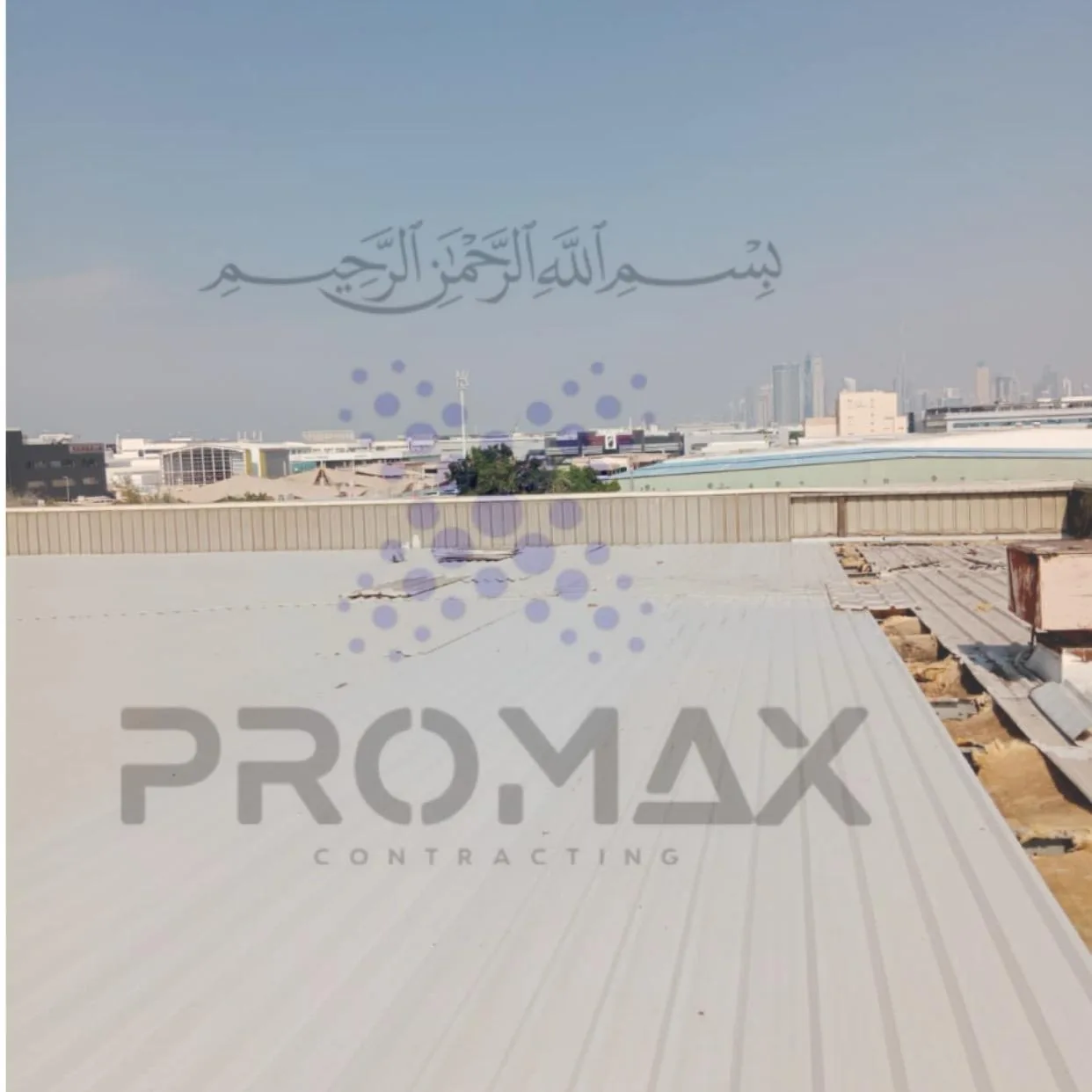
Roof replacement means removing the failed roof system, either fully or in major sections, and installing a new one. On industrial buildings, that can include roof sheets, insulation, flashings, gutters, trims, fasteners, and accessories around penetrations and drainage points. It is the heavier intervention, with higher cost, longer schedules, and greater operational impact.
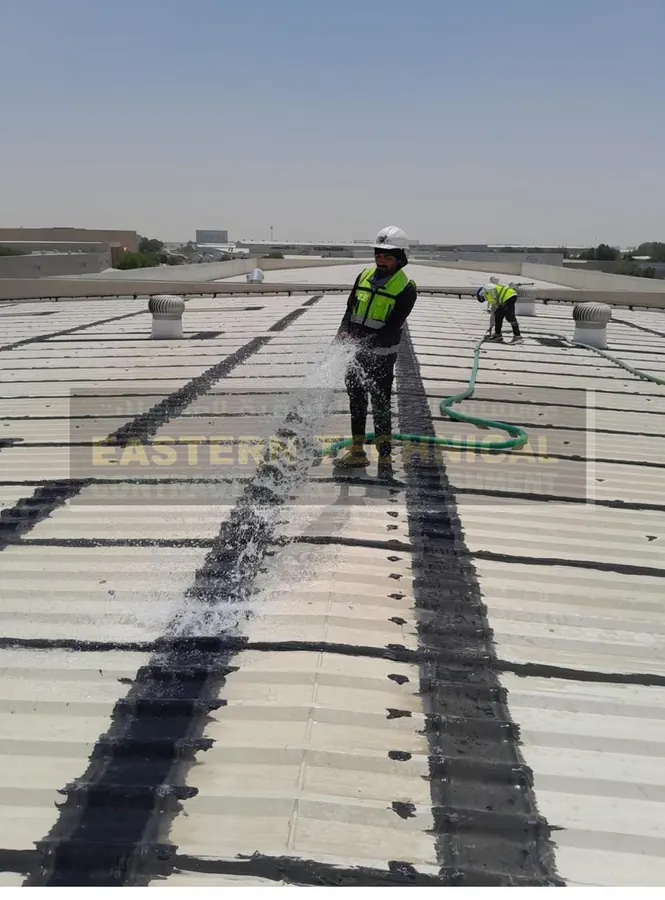
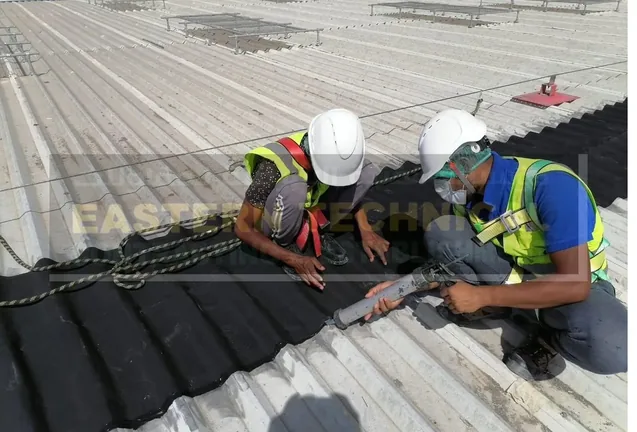
Roof rehabilitation is different. It focuses on restoring the existing roof where the base structure and substantial portions of the roof assembly are still viable. The work may include corrosion treatment, sheet repairs, fastening correction, sealing of joints, refurbishment of gutters, treatment around skylights and vents, and installation of waterproofing systems such as EPDM-based solutions at vulnerable areas. The goal is to stop leakage, extend service life, and improve reliability without tearing off a roof that can still perform.
That distinction matters because many industrial roofs do not need complete replacement, even when they are leaking badly. They need an accurate diagnosis and a system-level repair strategy.
When roof rehabilitation makes more sense
Rehabilitation is often the smarter option when the roof has widespread leakage but limited structural failure. A metal roof may look exhausted from the top, yet still be a strong candidate for restoration if the deck, purlins, and main sheet areas remain sound. In these cases, failure is usually concentrated at details. Fastener fatigue, failed sealants, thermal movement at laps, gutter ponding, poorly sealed penetrations, and localized rust can make an entire building feel compromised even though the core roof assembly is still recoverable.
This is common on aging warehouses and factories exposed to heat, UV, dust, moisture, and thermal cycling. The roof expands and contracts daily. Over time, screws loosen, washers degrade, sheet overlaps open up, and water starts entering at points that were never properly upgraded. Replacing the whole roof may solve the problem, but it may not be the most efficient engineering answer.
A well-designed rehabilitation program can extend roof life significantly while avoiding major tear-off work. It also reduces disruption inside active facilities where inventory, equipment, and operations cannot easily stop for a large roofing project.
Another practical advantage is speed. Rehabilitation can often be phased, targeting the highest-risk leak zones first while keeping the facility operational. For building owners trying to control budget and downtime together, that matters.
When replacement is the right call
There are cases where rehabilitation is no longer responsible. If corrosion is deep and widespread across sheets, fixings, and structural supports, patching the waterproofing layer will not solve the real issue. The same applies when roof geometry has failed, drainage cannot be corrected within the existing assembly, or previous repairs have created multiple incompatible layers that are now trapping moisture.
Replacement is usually justified when the roof has reached the end of its practical life and the substrate cannot support a durable restoration. If panels are extensively perforated, insulation is saturated across large areas, or structural members show ongoing deterioration, a new system is often the safer and more economical choice over the full asset life.
There is also a compliance and risk dimension. Some facilities need upgraded performance for safety, access, drainage, or future maintenance planning. If the existing roof cannot reasonably be brought up to the required standard, replacement becomes a capital project rather than a repair decision.
Cost is not just the contract value
Most clients begin with budget, and that is reasonable. Replacement usually carries the larger upfront number. It involves demolition, disposal, new materials, more labor, and a longer site program. Rehabilitation is generally less expensive at the start because it preserves serviceable components and concentrates investment where failures actually occur.
But contract value alone is not the full cost picture. Industrial facilities should also calculate downtime risk, stock protection, production interruption, access constraints, and the cost of deferring action. A cheap temporary fix that allows hidden corrosion to advance can become more expensive than a properly engineered rehabilitation. On the other hand, a full replacement chosen too early may tie up capital that could have been avoided for years.
This is why condition surveys matter. The best decision comes from inspection data, not assumptions. Moisture entry points, corrosion depth, fastening condition, movement at joints, drainage performance, and the status of penetrations all need to be assessed in the field.
Roof replacement vs roof rehabilitation for metal roofs
On metal roofs, the roof replacement vs roof rehabilitation decision often turns on one key question: is the roof failing as a structure, or failing as a waterproofing system?
If it is mainly a waterproofing failure, rehabilitation usually deserves serious consideration. Metal roofs leak at details long before the full assembly becomes unsalvageable. Penetrations for ducts and services, laps between sheets, ridge details, gutter transitions, and skylight upstands are frequent weak points. These can often be upgraded using engineered repair methods and durable waterproofing treatment without replacing every panel.
If it is a structural failure, replacement moves to the front. Severe section loss, unstable substrates, major deformation, or advanced support corrosion are signs that waterproofing alone will not carry the load.
This distinction is where industrial experience matters. A contractor focused on active commercial and warehouse roofs will look beyond the visible stain line and assess the actual failure mechanism. That avoids two common mistakes: overselling replacement where rehabilitation would work, or applying cosmetic repairs to a roof that has already gone too far.
What decision-makers should ask before choosing
The right path becomes clearer when a few practical questions are answered honestly. How much of the roof area is still sound? Are the leaks concentrated at details or spread through the field of the roof? Is corrosion superficial, moderate, or structurally advanced? Can drainage be corrected? How disruptive would tear-off be to operations below? And what service life do you need from the next intervention?
If the building is planned for long-term use, rehabilitation should still be measured against realistic life extension, not wishful thinking. A serious rehabilitation program should produce a defined scope, not a collection of patches. It should address gutters, penetrations, laps, fasteners, flashings, and movement points together.
That is where an end-to-end contractor adds value. Diagnosis, detailing, fabrication, waterproofing, and maintenance planning need to connect. ETCE KSA typically approaches these roofs as complete industrial systems rather than isolated leak points, which is exactly how long-term performance is recovered.
The risk of doing neither
Some owners delay the decision because replacement feels too expensive and rehabilitation sounds too partial. That hesitation usually costs more than either option. Once water enters repeatedly, rust accelerates, insulation degrades, internal damage spreads, and emergency callouts become routine. The roof problem turns into an operations problem.
There is also the issue of false economy. Repeated sealing with the wrong materials, unplanned patching around penetrations, and reactive repairs after every rain event can leave the roof harder to restore later. By the time a proper survey is commissioned, the intervention required is larger and more disruptive.
A better approach is early technical assessment. When the roof still has recoverable value, rehabilitation can be highly effective. When it does not, replacement can be planned in a controlled way instead of under emergency pressure.
For industrial buildings, the best decision is rarely the most aggressive one. It is the one that matches actual roof condition, site operations, and required service life. If your roof still has a sound base, rehabilitation may protect the asset faster and more economically than a full tear-off. If the structure is too far gone, replacement is the cleaner answer. The key is to act before leakage becomes deterioration you can no longer contain.
Related ETCE services
Need this checked on your own roof?
ETCE carries out industrial roof inspections, leak diagnosis, metal roof rehabilitation and EPDM waterproofing across Dammam, Al Khobar, Dhahran, Jubail, Riyadh and Jeddah.
Request a Roof Inspection WhatsApp UsMetal roof waterproofing across Saudi Arabia
ETCE is a metal roof waterproofing company in Saudi Arabia with its head office in Dammam. See our warehouse & factory roof waterproofing service or find your area: