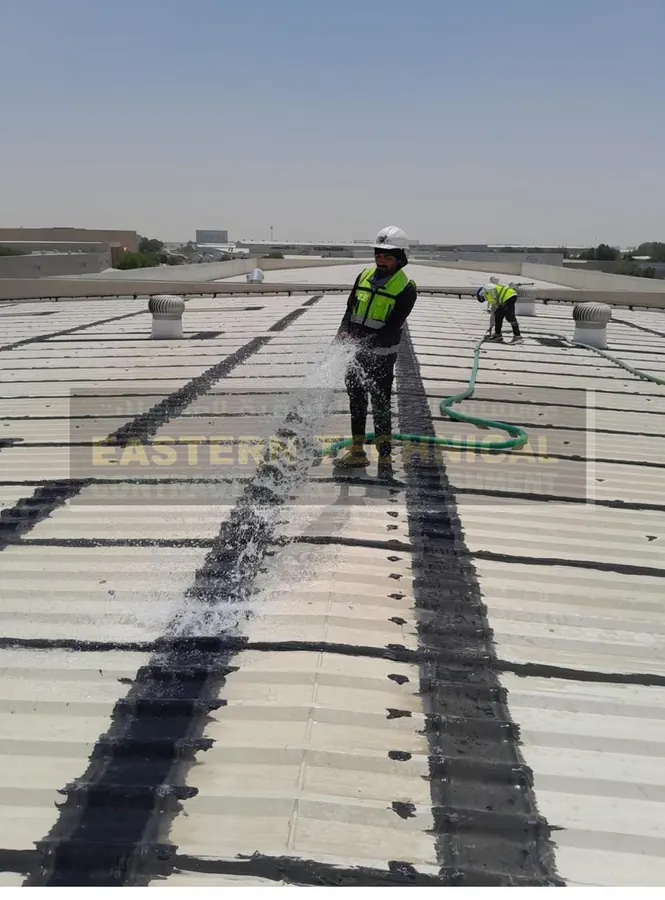
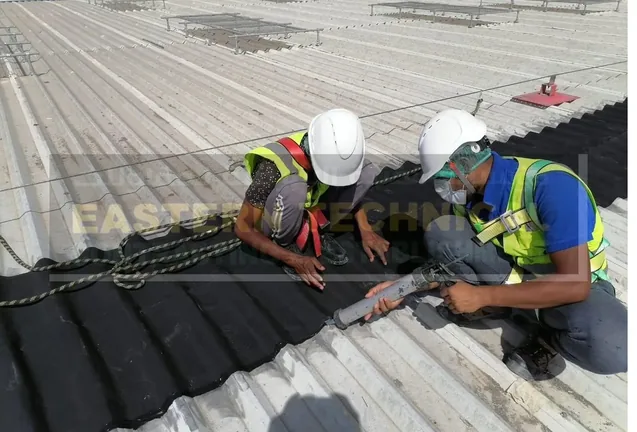
A roof rarely fails across the whole surface first. It usually starts at the details – around pipes, vents, curbs, skylights, cable trays, drain points, and equipment supports. That is why roof penetration waterproofing matters so much on industrial and commercial buildings. One weak seal at a moving pipe or corroded curb can send water into insulation, purlins, ceilings, stock areas, and electrical zones long before the main roof membrane shows obvious damage.
For warehouses, factories, sheds, and service buildings, penetrations are not a minor accessory. They are the highest-risk points on the roof. They interrupt the waterproofing layer, they expand and contract at different rates, and they are often surrounded by fasteners, old patchwork, and difficult access. If the detailing is wrong, the leak returns. If the detailing is engineered for movement, UV exposure, and actual site conditions, the repair holds.
Why roof penetration waterproofing fails so often
The common assumption is that a leak around a penetration needs more sealant. On active industrial roofs, that approach usually buys a short quiet period and then creates a bigger repair later. Sealants alone cannot compensate for bad geometry, loose substrate, rust, trapped moisture, open laps, or repeated movement around service entries.
A penetration is a transition point. You are asking one system to bridge horizontal roof sheets or slabs, vertical upstands, circular pipe surfaces, mechanical fixings, and often irregular corners. Add heat, dust, standing water, vibration from equipment, and maintenance traffic, and the area starts working against a basic patch almost immediately.
Older metal roofs are especially vulnerable. Roof sheets move. Curbs loosen. Fasteners back out. Previous repair materials harden and crack under UV. On concrete roofs, failure can come from poor detailing at sleeves, drain bowls, and parapet transitions. In both cases, the leak path is not always where the stain appears inside the building.
What effective roof penetration waterproofing requires
Good roof penetration waterproofing is not just a product choice. It is a detailing method. The repair has to account for substrate condition, water flow, thermal movement, penetration shape, and the remaining life of the surrounding roof.
The first requirement is diagnosis. Before any installation starts, the contractor needs to identify whether the problem is at the penetration itself, at the adjacent laps, at nearby fasteners, or from water traveling from a higher point. This is where many repairs go wrong. Teams fix what looks wet instead of what is actually allowing ingress.
The second requirement is substrate preparation. Waterproofing installed over rust scale, loose coatings, dust, old silicone residue, or damp surfaces will not perform as intended. Preparation may include cleaning, abrasion, rust treatment, tightening or replacing fixings, rebuilding deteriorated areas, and correcting poor slope around the detail.
The third requirement is using a system that can handle movement. This is one reason EPDM-based detailing performs well at difficult penetrations. It remains flexible, conforms well around irregular shapes, and tolerates thermal cycling better than brittle patch materials. On industrial roofs exposed to intense sun and temperature swings, flexibility is not a bonus. It is part of the service life.
High-risk penetrations on industrial roofs
Not all penetrations fail in the same way. Pipe penetrations are frequent problem areas because the round profile creates a hard transition from the roof plane to a moving vertical element. If the pipe also vibrates or carries temperature variation, stress builds quickly at the seal.
Equipment curbs bring a different challenge. HVAC units, exhaust systems, and access hatches often sit on box curbs with multiple corners and old mechanical fixings. Water can pond around the base, and previous repairs may hide corrosion or open joints.
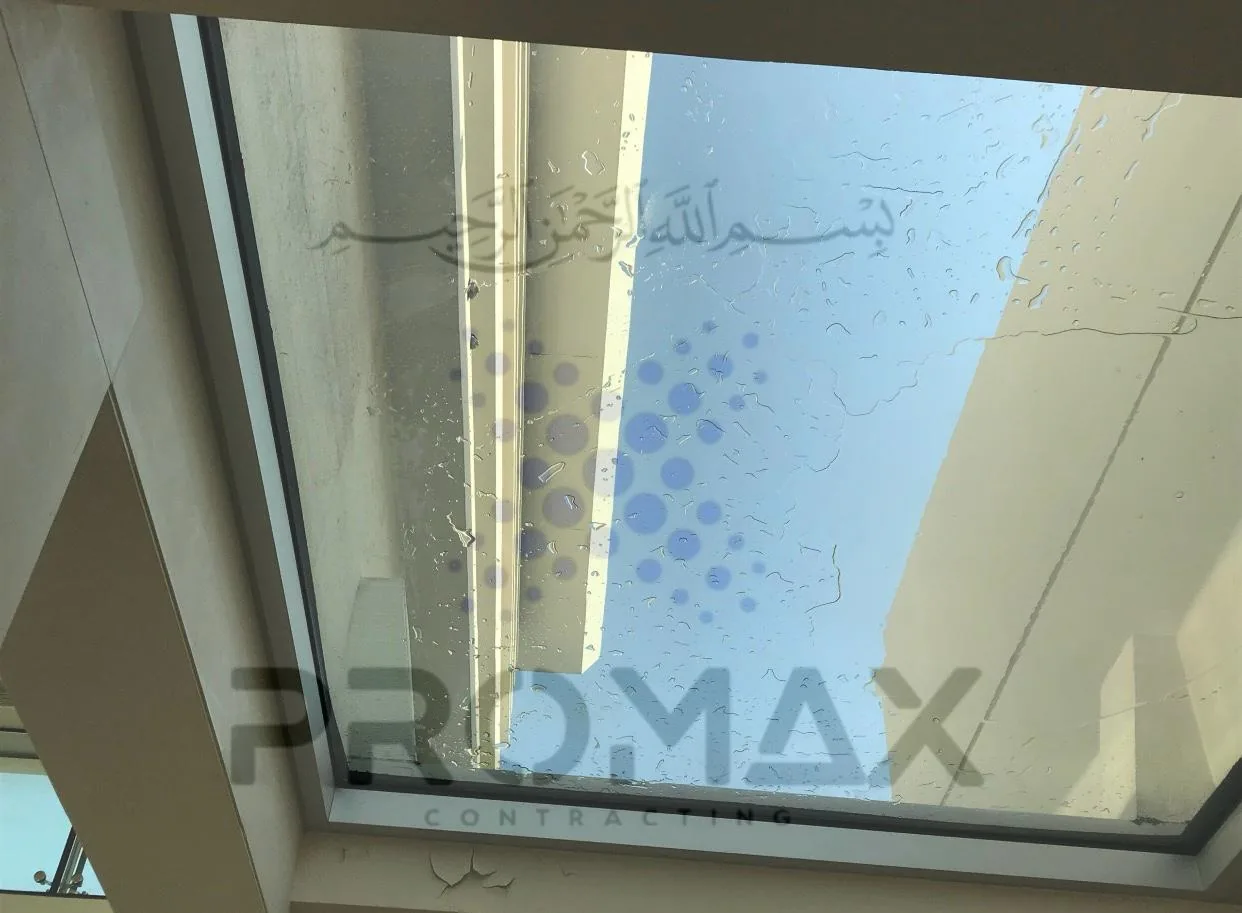
Skylights and smoke vents combine horizontal and vertical detailing with aging plastic or metal frames. Drain points are another category entirely. Here the problem may involve blocked flow, improper tie-in to the membrane, or water sitting at the bowl and attacking the weakest joint. Cable trays, supports, and anchor points are often overlooked, but each additional roof entry creates another interruption in the waterproofing line.
Choosing the right repair approach
There is no single repair method that suits every penetration. A pipe through a metal roof may need local sheet repair, fastening correction, and a formed waterproofing boot. A curb on an aging warehouse may need complete perimeter rebuilding before membrane detailing can begin. A drain point may require reshaping, cleaning, and reinforcement of the tie-in zone rather than a simple top patch.
This is where engineered judgment matters. If the surrounding roof is still serviceable, a localized penetration repair may be the right decision. If multiple penetrations are failing across a large area, isolated patching becomes less efficient and less reliable. In that case, it may be better to integrate the penetration works into a broader rehabilitation scope for the roof, gutters, and drainage transitions.
A serious contractor will also consider what happens after the repair. Can the area be accessed for maintenance without damaging the detail? Will nearby trades install new services later and cut through the waterproofing again? Is there a need for protective walkways or fabricated supports to keep future penetrations controlled and sealed properly?
Roof penetration waterproofing on metal roofs
Metal roofs deserve special attention because they move more than many owners expect. Long sheet runs expand in heat and contract at night. If a penetration detail is rigid, it eventually separates from the substrate or tears at the edge. That is why roof penetration waterproofing on metal structures should be planned with movement in mind from the start.
The best results usually come from combining corrective roof work with the waterproofing application. That may include replacing damaged fasteners, addressing corroded sheets, stabilizing curbs, repairing gutters, and then detailing each penetration with a compatible flexible system. Treating the waterproofing in isolation while leaving sheet instability untouched is rarely a lasting fix.
For aging industrial roofs, this integrated approach is often more economical than repeated emergency callouts. The leak may appear small, but the cost of wet insulation, damaged stock, production interruption, and repeated access quickly exceeds the cost of a proper detail repair.
Execution quality decides service life
Even the right material fails when the installation sequence is rushed. Corners need proper shaping. Membrane contact must be continuous. Edge terminations have to be secure. Drain points should be tested for flow, not just visually inspected. If existing materials are incompatible, that has to be addressed before the new system is applied.
This is where experienced site teams make a difference. Industrial roofs are rarely clean, empty, and easy to access. There may be active operations below, heat load above, equipment restrictions, and tight shutdown windows. The repair plan has to fit real operating conditions without cutting corners on preparation or curing.
ETCE KSA approaches these details as field engineering work, not cosmetic patching. That matters on facilities where one failed roof penetration can affect stock, machinery, power systems, or tenant operations within hours of heavy rain.
When to inspect before leaks become visible
Many owners wait for interior staining before they act. By then, water may already have traveled through insulation layers, deck joints, or structural members. A better trigger is condition, not visible leakage. If the roof is older, if new services have been added, if previous patchwork is visible, or if penetrations sit near ponding areas, inspection should happen before the next failure.
This is especially true after mechanical modifications. Every new duct, pipe, support, or cable route changes the waterproofing risk profile of the roof. A clean installation by one trade does not automatically mean a watertight installation from a roofing standpoint.
The practical standard is simple: any roof penetration should be treated as a controlled waterproofing detail, not an afterthought left to site improvisation.
What decision-makers should ask before approving a repair
Ask how the leak path was diagnosed, not just where the water appeared. Ask what preparation will be done to the substrate. Ask whether the detail is designed to handle movement and UV exposure. Ask if adjacent roof defects will undermine the repair. And ask what maintenance or inspection interval is recommended afterward.
Those questions separate a short-term patch from a repair strategy. On industrial assets, that difference affects uptime, maintenance budgets, and the remaining life of the entire roof system.
A dry building is not just about the main roof covering. It is about the weakest details being treated with the same seriousness as the largest surface. If your penetrations are aging, patched repeatedly, or sitting on a roof already under stress, deal with them early. Small leak points have a habit of becoming expensive building problems when they are left to the next rainy day.
Related ETCE services
Need this checked on your own roof?
ETCE carries out industrial roof inspections, leak diagnosis, metal roof rehabilitation and EPDM waterproofing across Dammam, Al Khobar, Dhahran, Jubail, Riyadh and Jeddah.
Request a Roof Inspection WhatsApp UsMetal roof waterproofing across Saudi Arabia
ETCE is a metal roof waterproofing company in Saudi Arabia with its head office in Dammam. See our warehouse & factory roof waterproofing service or find your area: