A leak above an active warehouse aisle is rarely just a roof problem. Water can reach insulation, electrical runs, stored goods, production equipment, and structural steel long before it becomes visible inside. The decision on roof restoration vs replacement should therefore be based on the actual condition of the roof system, not only the size of the latest leak or the lowest initial quotation.
For factories, warehouses, logistics facilities, and large sheds, the right scope protects operations as well as the building. Restoration can extend the life of an aging metal roof at a controlled cost. Replacement can be the safer investment when corrosion, structural damage, or repeated failures have moved beyond repair. A proper site inspection separates these two situations.
What Roof Restoration Means on an Industrial Building
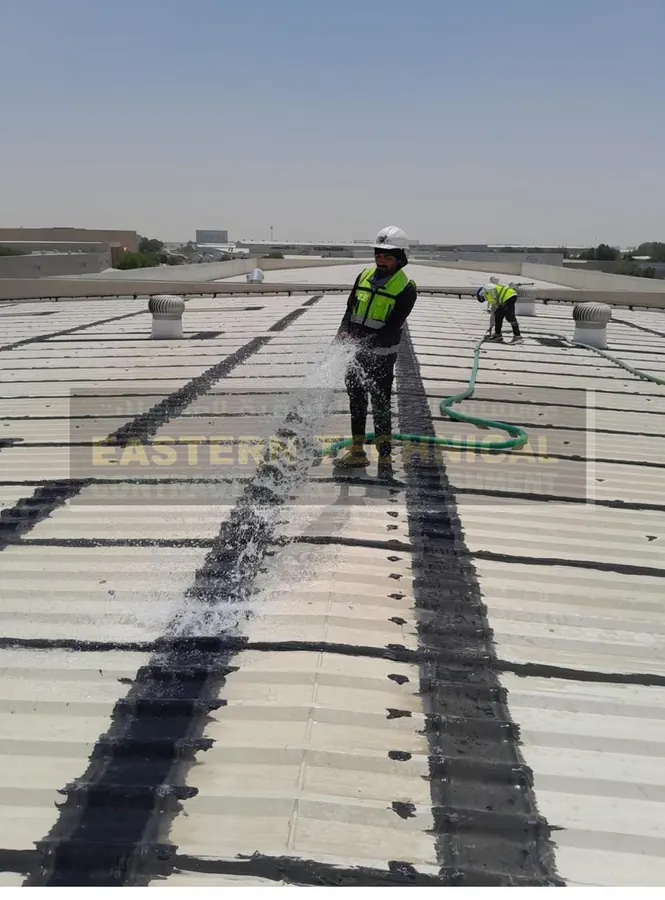
Roof restoration is a targeted rehabilitation process. It does not mean applying a coating over a leaking roof and hoping for the best. A sound restoration program starts with inspection, defect mapping, cleaning, repair of damaged components, treatment of corrosion, and waterproofing of every vulnerable detail.
On metal roofs and sandwich panel roofs, common failure points include overlaps, fasteners, ridge caps, gutters, valleys, roof-to-wall junctions, skylights, smoke vents, pipe penetrations, drain points, and damaged flashing. Thermal movement, UV exposure, wind-driven rain, sand accumulation, and standing water can all weaken these points over time.
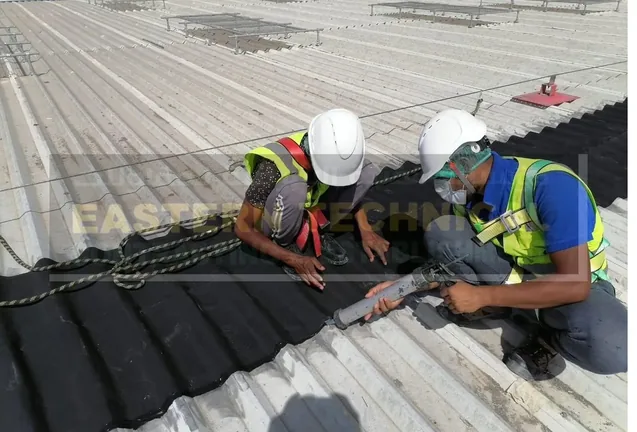
A restoration scope may include replacing failed fasteners and washers, sealing joints, repairing localized sheet damage, treating rusted areas, correcting drainage issues, and installing an EPDM-based waterproofing system at critical leak zones. EPDM rubberized membranes are particularly effective where movement, irregular geometry, or persistent water exposure makes conventional patching unreliable.
The objective is not to make the roof look newer. It is to create a continuous, durable water barrier while preserving roof sections that remain structurally serviceable.
When Restoration Is the Better Business Decision
Restoration is usually the stronger option when the roof substrate is fundamentally stable and damage is limited to identifiable areas. A roof can have visible leaks without requiring full removal. The key question is whether the existing sheets, panels, framing, and connections can continue performing once defects are corrected.
Restoration often makes sense when corrosion is surface-level rather than through the metal, insulation remains dry or can be locally repaired, and leaks are concentrated around details rather than spread across the full roof area. It is also suitable when the roof has remaining service life but needs immediate waterproofing protection.
For an operating facility, restoration has important practical advantages. Work can often be phased by roof zone, reducing disruption to warehouse traffic, production schedules, and tenant activity. It generates less demolition waste, requires fewer material removals, and can be completed faster than a full roof change-out.
Cost is another factor, but it should be measured correctly. A lower upfront restoration cost is valuable only if the scope addresses the actual failure mechanism. Repeated emergency patching is not restoration. If a contractor seals one leak while leaving failing fasteners, blocked gutters, deteriorated skylight curbs, and corroded laps untouched, water will simply find another path.
Roof Restoration vs Replacement: The Critical Tests
The best decision comes from a technical evaluation rather than a visual walkover alone. Industrial facility teams should require an inspection report that identifies the roof type, leak locations, corrosion extent, drainage condition, condition of penetrations, and any evidence of structural deterioration.
Metal Thickness and Corrosion Depth
Surface rust can often be cleaned, treated, and protected. Deep pitting, perforation, loss of sheet thickness, or widespread corrosion at laps and fastener lines is more serious. When metal has lost its integrity across broad areas, waterproofing alone cannot restore its load-bearing performance.
Corrosion around gutter lines deserves particular attention. Gutters collect water, debris, and fine sand, creating long-term wet conditions that accelerate deterioration. A gutter that has rusted through or lost its slope may require replacement or fabricated repair as part of the roof scope.
Structural Condition Below the Roof Skin
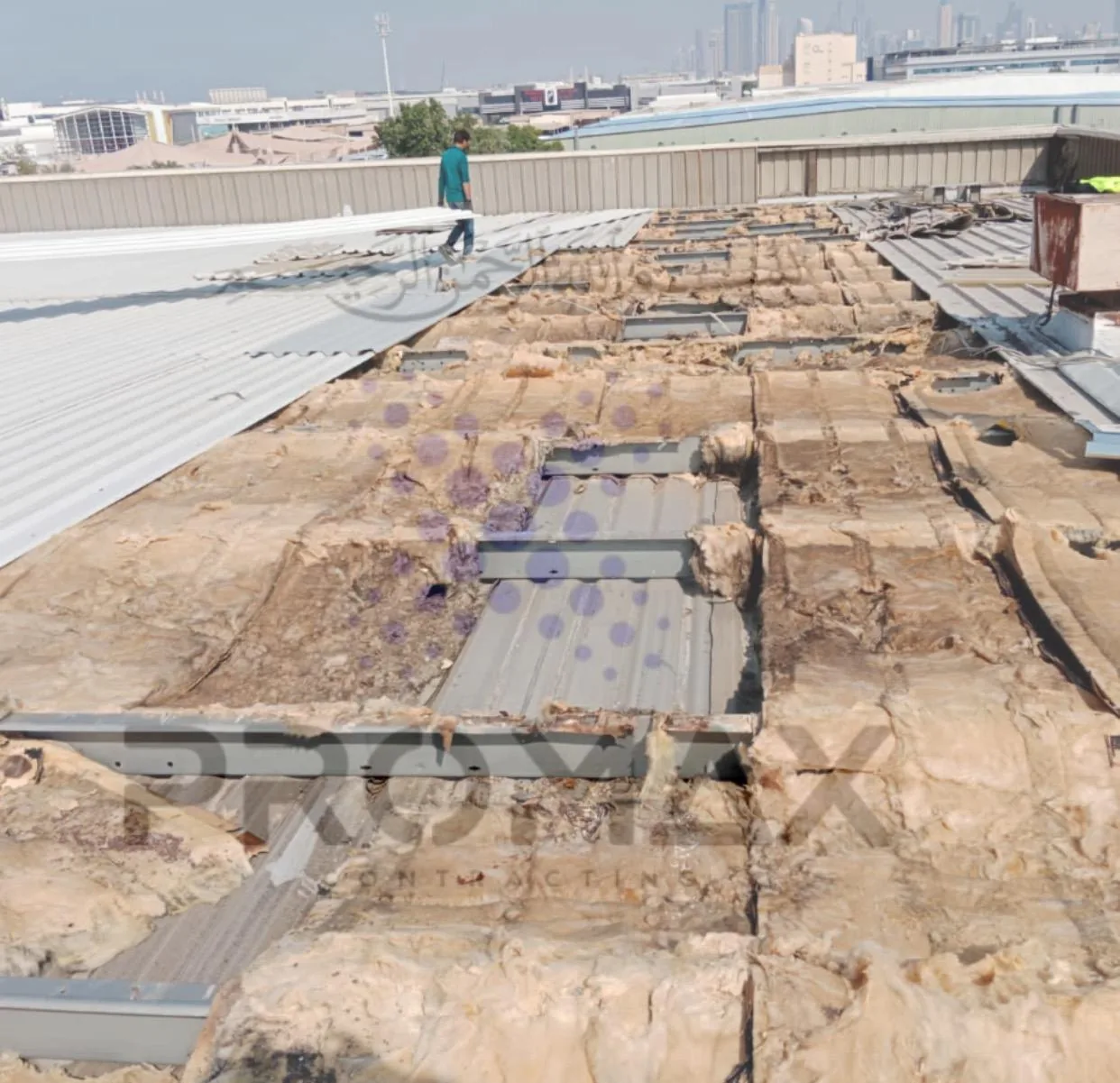
A leaking roof can conceal damaged insulation, weakened purlins, corroded support members, or sagging sections. If water has been entering for years, the visible roof surface may understate the problem. Replacement becomes more likely when the supporting structure requires extensive repair or when roof deflection is affecting drainage and panel alignment.
Extent and Pattern of Leaks
One recurring leak at a smoke vent is different from leaks appearing across multiple elevations, sheet laps, and interior zones. Localized failures favor restoration. Widespread, shifting leaks may indicate a system-wide breakdown caused by aging sheets, failed joint design, movement, or deterioration below the surface.
Previous Repair History
Review the building's maintenance record. A roof that has received isolated repairs over several years may still be restorable if the repairs were incomplete or incompatible. However, if leaks return repeatedly after competent repairs and new failures continue appearing across the roof, replacement may provide better long-term control.
When Full Roof Replacement Is the Right Scope
Replacement should be considered when the existing roof cannot reliably support a restoration system or when the repair area has become too extensive. This may include severely corroded sheets, widespread perforations, failed sandwich panel cores, compromised roof framing, major drainage defects, or significant water damage below the roof skin.
Replacement is also justified when a facility needs to change roof performance requirements. For example, an expansion, new rooftop equipment, altered drainage design, or compliance-related upgrades may require a roof system that the existing structure cannot accommodate without major intervention.
The disruption is greater, and planning must be more rigorous. Materials, access routes, weather protection, safety controls, removal sequencing, and temporary protection for operations all need coordination. Yet a well-managed replacement can eliminate recurring maintenance exposure and provide a predictable service life where restoration would only delay a larger failure.
Do not treat replacement as automatically superior because it is more extensive. Removing serviceable roof sections increases cost, waste, and operational risk. The right answer is the one supported by condition data and lifecycle value.
Evaluate Cost Beyond the Initial Quote
A realistic comparison should include the total impact on the facility. Restoration may have a lower initial cost and shorter execution period, but its expected lifespan depends on substrate condition, detailing quality, drainage correction, and preventive maintenance. Replacement has a higher capital cost but may reduce reactive repair needs and improve long-term predictability.
Facility managers should compare each option against the cost of disruption. A roof failure during a rainy period can damage inventory, interrupt operations, create safety concerns, and force unplanned access work. The cheapest scope on paper can become expensive when it does not stop water ingress.
Ask for a clear breakdown of repair areas, waterproofing details, corrosion treatment, sheet replacement allowances, gutter work, penetration treatment, access requirements, warranty terms, and maintenance recommendations. A defined scope makes it easier to compare contractors and prevents critical details from being excluded.
Why Detailing Decides the Result
Most industrial roofs do not fail in the middle of an intact sheet. They fail at transitions and interfaces. A durable solution must address every place where water can enter or collect: panel laps, ridge flashings, wall junctions, curbs, vents, gutters, drains, and service penetrations.
This is where engineered EPDM waterproofing systems add value. Properly installed EPDM can accommodate movement and form durable seals around difficult roof geometry. It is especially useful for aging metal structures where rigid repairs may crack, separate, or lose adhesion under heat cycles.
Execution matters as much as material selection. Surfaces need correct preparation, damaged substrates must be repaired before membrane installation, and drainage paths need to remain clear. A waterproofing system is only as reliable as its weakest transition.
Start With a Condition-Based Scope
Before committing to restoration or replacement, inspect the roof during dry conditions and investigate known leak zones, not only obvious damage. Document photos, measurements, corrosion areas, drainage defects, and internal water marks. Then prioritize repairs based on risk to operations, safety, and the building structure.
For industrial assets in Dammam, Riyadh, and across Saudi Arabia, heat, UV exposure, sand, and occasional heavy rainfall make preventive roof maintenance a practical asset-protection measure. The right contractor should be able to inspect, diagnose, fabricate required components, execute waterproofing, and remain available after handover.
A roof does not need to fail completely before action is taken. A disciplined inspection today can define whether restoration will protect the asset for years or whether replacement should be planned before the next leak becomes a shutdown.
Related ETCE services
Need this checked on your own roof?
ETCE carries out industrial roof inspections, leak diagnosis, metal roof rehabilitation and EPDM waterproofing across Dammam, Al Khobar, Dhahran, Jubail, Riyadh and Jeddah.
Request a Roof Inspection WhatsApp UsMetal roof waterproofing across Saudi Arabia
ETCE is a metal roof waterproofing company in Saudi Arabia with its head office in Dammam. See our warehouse & factory roof waterproofing service or find your area: