A roof decision usually looks simple on paper until the building starts sweating, leaking around penetrations, or pushing HVAC costs higher than expected. When owners compare sandwich panel roofs versus single skin, the right answer depends less on brochure claims and more on how the facility actually performs under heat, dust, moisture, and daily operations.
For warehouses, factories, logistics buildings, and sheds, the roof system affects more than weather protection. It influences internal temperature stability, condensation risk, structural corrosion, maintenance frequency, and how easily future repairs can be carried out. A lower upfront price can become an expensive choice if the roof turns into a constant maintenance item.
Sandwich panel roofs versus single skin: the real difference
The core difference is construction. A single skin roof is typically one layer of profiled metal sheet fixed onto the supporting structure. It is straightforward, lighter, and often selected where the budget is tight or insulation is not the primary requirement.
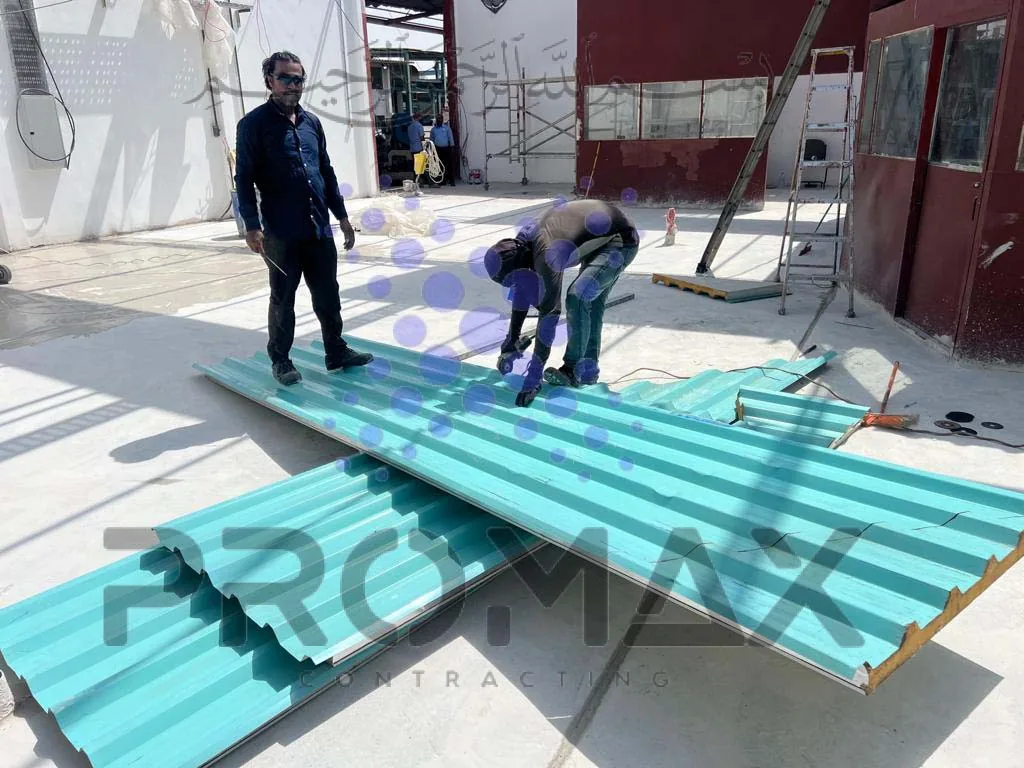
A sandwich panel roof is a built-up insulated panel. It usually consists of an outer metal face, an insulated core, and an internal liner or lower metal face. That built-in assembly changes how the roof behaves in service. It is not just a sheet covering the building – it is part weather barrier, part thermal control layer, and part internal finish.
This matters because industrial buildings rarely fail at one point only. Heat gain, thermal movement, poorly treated joints, aging fasteners, and water ingress often work together. The roof type either helps control those issues or leaves the building more exposed to them.
Where single skin still makes sense
Single skin roofing is not automatically the wrong option. In some projects, it is the practical choice. If the building is open-sided, naturally ventilated, non-conditioned, or used for storage where internal temperature control is not critical, single skin can be a reasonable fit.
It also suits projects where speed and initial cost are the deciding factors. Material cost is usually lower, the system is simpler, and replacement of damaged sheets can be straightforward if the supporting structure is still sound.
But the trade-off needs to be understood clearly. Single skin does not provide meaningful thermal insulation on its own. In high heat conditions, the roof deck can transfer significant solar load into the building. That raises cooling demand, affects worker comfort, and can create internal temperature swings that are hard on certain stored goods or production processes.
Condensation is another issue. In buildings with humidity, night cooling, or operational moisture, a single metal sheet can become the cold surface where water forms. Over time, that can lead to dripping, staining, internal corrosion, wet insulation below, and recurring complaints that are often mistaken for external leaks.
Why sandwich panels are often preferred for industrial buildings
The main advantage of sandwich panels is controlled performance. The insulation core reduces heat transfer, which helps stabilize interior conditions and lowers the strain on cooling systems. In large facilities, that difference can be operationally significant, not just a comfort upgrade.
Sandwich panels also improve condensation control because the internal surface temperature behaves differently from bare metal sheet. That does not eliminate all moisture risk – poor detailing, open joints, and damaged seal lines can still cause problems – but it gives the roof system a stronger starting point.
There is also an installation and appearance advantage in many industrial settings. A properly installed sandwich panel roof creates a cleaner internal finish, reducing the need for separate underlayers or additional treatments. For facilities where hygiene, visual order, or enclosed working conditions matter, that can be valuable.
The limitation is that sandwich panel systems demand better detailing discipline. Panel joints, end laps, penetrations, ridge conditions, curbs, gutters, and interface areas must be handled correctly. If these details are poorly executed, the building may still suffer water ingress despite the superior panel build-up.
Cost is not just purchase price
This is where many roof comparisons go off track. If the only question is which sheet costs less per square foot, single skin often wins. If the question is which system costs less over ten years of operation, the answer can change fast.
Single skin may bring lower procurement cost but higher long-term exposure to heat gain, condensation, rust formation, and repeated leak repairs. In older industrial stock, these roofs often need ongoing attention around fasteners, overlaps, skylight junctions, and penetrations. The hidden cost is not just repair material. It is access equipment, production disruption, and maintenance cycle fatigue.
Sandwich panels usually involve a higher initial investment, but they can reduce operational waste if the building is enclosed and mechanically cooled. They may also cut the need for additional thermal upgrades later. For facilities that run year-round with staff, equipment, or temperature-sensitive inventory, lifecycle value often matters more than first cost.
That said, not every sandwich panel roof performs well forever. If water enters through failed seals or damaged joints and remains trapped, the problem can spread unseen. A more advanced roof system still needs inspection and maintenance.
Sandwich panel roofs versus single skin in leak behavior
Leak behavior is different between the two systems, and that affects diagnosis. On a single skin roof, leaks often trace back to exposed fasteners, sheet laps, corrosion points, roof penetrations, failed sealants, or movement around accessories. The source can sometimes be identified visually, but not always. Water travels along sheet profiles and structural lines before showing inside.
On sandwich panel roofs, the challenge is often at the joints and transitions. Water may enter at panel side laps, end laps, ridge details, flashing interfaces, skylights, smoke vents, pipe penetrations, or gutter connections. Once inside, moisture can migrate within the assembly and emerge away from the true entry point.
This is why repair quality matters more than repair speed. Surface patching without proper inspection usually delays the problem instead of solving it. In active facilities, engineered waterproofing at difficult leak points is often the difference between a one-time intervention and a repeat callout.
Structural and durability considerations
Both systems depend heavily on environment and maintenance history. In hot, dusty, and coastal or humid conditions, metal roof deterioration accelerates if coatings are damaged or water remains trapped at overlaps and accessories.
Single skin sheets are more exposed internally and externally, so corrosion risk can become visible earlier. That can be an advantage for inspection, but it also means the system has fewer built-in barriers. Once rust starts around fasteners or laps, sheet integrity can decline quickly.
Sandwich panels protect the internal face better in many cases, but impact damage, poor handling, open joints, and failed closures can compromise the system. Not every damaged panel needs full replacement, but not every problem should be treated as cosmetic either. Delamination, water ingress into the core, and joint failure need technical assessment, especially on older assets.
Which roof type fits which building?
For low-spec storage, open sheds, and facilities where insulation is not a requirement, single skin may still be serviceable if detailing is correct and the owner accepts a more active maintenance profile. It can also work where future redevelopment is planned and long-term performance is not the main driver.
For enclosed warehouses, production buildings, logistics hubs, and facilities with high cooling demand, sandwich panels are usually the stronger option. They support thermal control, help reduce condensation risk, and deliver a more complete roof envelope from day one.
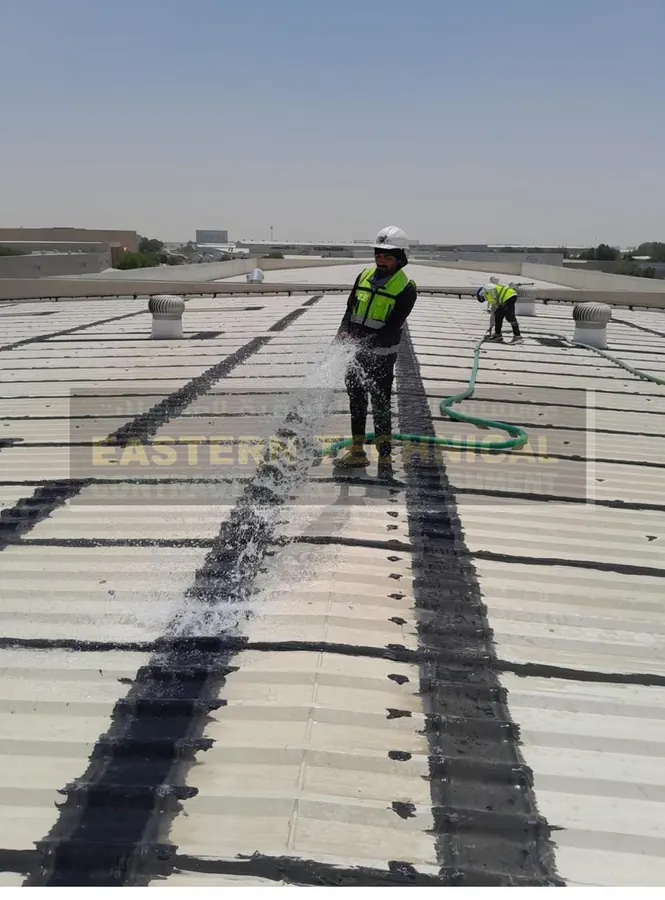
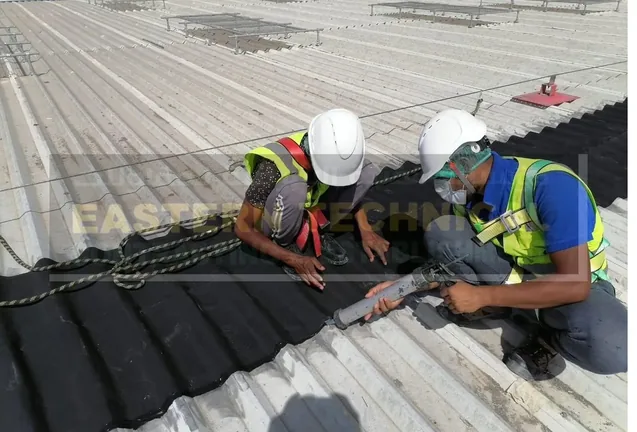
For existing buildings, the answer is often not full replacement versus doing nothing. Many aging roofs can be rehabilitated if the structure is stable. Single skin roofs may be upgraded through targeted waterproofing, rust treatment, flashing correction, and leak-point sealing. Sandwich panel roofs may need joint remediation, penetration waterproofing, localized panel replacement, or gutter and drainage correction.
That is where a site-based approach matters. ETCE KSA typically sees roof failures tied less to the original product category and more to neglected details, aging accessories, and repair methods that were never matched to actual roof movement and exposure.
The practical decision for owners and facility teams
If you are comparing systems for a new project, start with building use, cooling demand, moisture exposure, and maintenance expectations. If you are dealing with an existing roof, start with condition, not assumptions. Many owners label a roof as “bad” when the real issue is limited to penetrations, drainage, or failed laps.
The better question is not which roof sounds better in general. It is which roof gives your facility the right balance of thermal performance, leak resistance, service life, and maintainability under actual operating conditions.
A roof should reduce operational risk, not create a permanent maintenance program. If the building is expected to work hard through heat, weather, and continuous use, choose the system – and the repair strategy – that performs like an asset, not a temporary cover.
The smart move is to assess the roof as a working industrial system, because that is exactly what it is.
Related ETCE services
Need this checked on your own roof?
ETCE carries out industrial roof inspections, leak diagnosis, metal roof rehabilitation and EPDM waterproofing across Dammam, Al Khobar, Dhahran, Jubail, Riyadh and Jeddah.
Request a Roof Inspection WhatsApp UsMetal roof waterproofing across Saudi Arabia
ETCE is a metal roof waterproofing company in Saudi Arabia with its head office in Dammam. See our warehouse & factory roof waterproofing service or find your area: