A sandwich panel roof rarely fails all at once. It starts at the laps, around fasteners, beside skylights, at gutter lines, or where movement has slowly opened a joint that looked fine from ground level. That is why knowing how to waterproof sandwich panel roofs is less about applying a coating everywhere and more about identifying where water is entering, how the roof moves, and which repair system will hold under heat, UV, dust, and daily expansion cycles.
For warehouses, factories, and logistics buildings, the stakes are higher than a visible drip. Water entry can damage insulation performance, stain internal finishes, corrode metal components, affect stored goods, and create repeated shutdowns for patch repairs that never fully solve the problem. On industrial sites, waterproofing has to be planned as a system, not treated as a cosmetic fix.
How to waterproof sandwich panel roofs the right way
The first step is inspection, and this is where many projects go wrong. A contractor who only looks for open holes will miss the actual leak path. Sandwich panel roofs can allow water to travel along joints, penetrate around loose fasteners, enter at end laps, or bypass poorly sealed penetrations before showing up inside at a different location.
A proper inspection checks panel joints, side laps, end laps, ridge areas, gutters, perimeter terminations, skylight curbs, vent pipes, smoke vents, drain points, and any added service penetrations. It also evaluates panel condition, rust level, screw tightness, failed sealant, damaged flashing, and signs of movement between roof elements. If insulation inside the panel has been compromised, the repair approach may need to go beyond surface treatment.
This is why one repair method does not fit every roof. Some sandwich panel roofs need localized joint treatment. Others need full detailing of penetrations and gutters plus replacement of failed accessories. Older roofs with repeated leaks often need a reinforced waterproofing system over critical zones rather than another round of basic sealant.
Where sandwich panel roofs usually leak
The weak points are predictable. The challenge is that they often appear in combination.
Longitudinal joints are common failure areas because movement and weather exposure gradually reduce the effectiveness of the original seal. End laps are another major risk, especially where slope is limited or installation tolerances were poor from the beginning. Fasteners can loosen over time, and once washers age or deform, each fixing point becomes a small entry path for water.
Penetrations are more complicated than they look. Duct supports, vent pipes, cable trays, equipment mounts, and curbs interrupt the original panel geometry. If these details were improvised on site, the waterproofing around them often fails first. Gutters and drain transitions are equally critical. Water volume is concentrated there, so a small defect can produce a large leak.
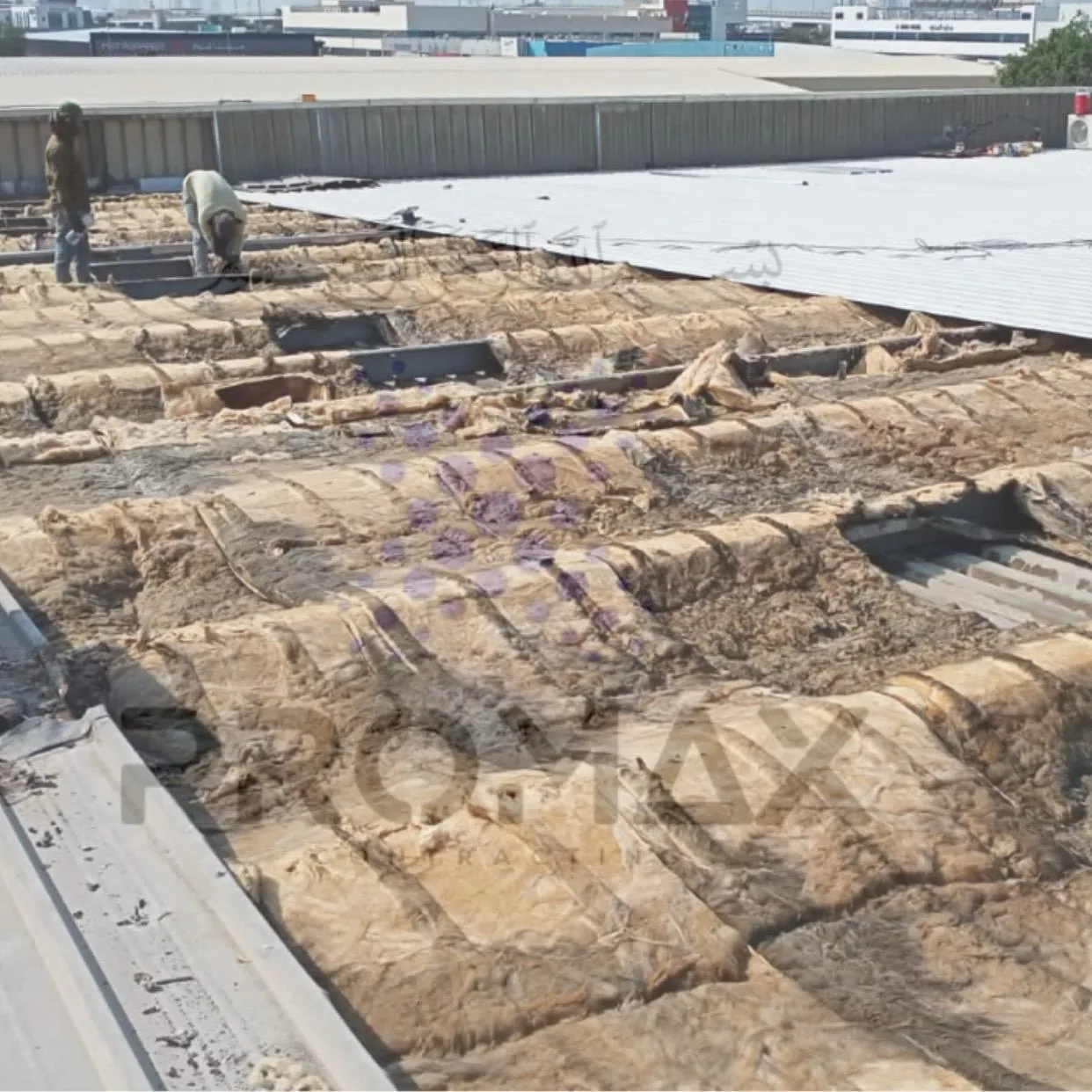
On many industrial roofs, previous repairs add another layer of difficulty. Silicone over old dust, bituminous patches on metal, incompatible mastics, and loose sheet pieces fixed over open joints can hide the real condition while trapping moisture underneath. Before a durable system is installed, these areas need to be stripped back to a sound substrate.
The best waterproofing methods depend on the failure point
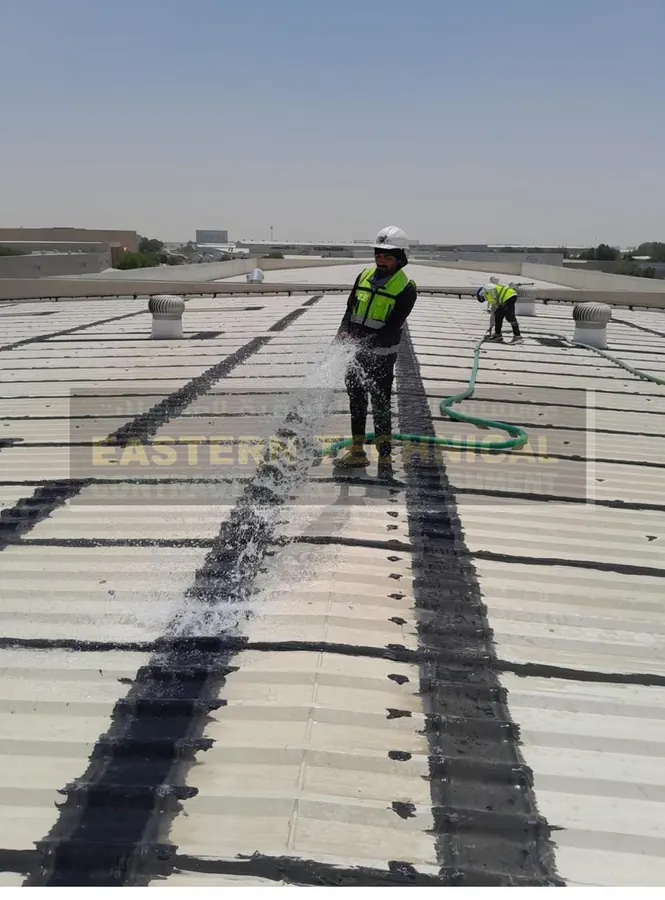
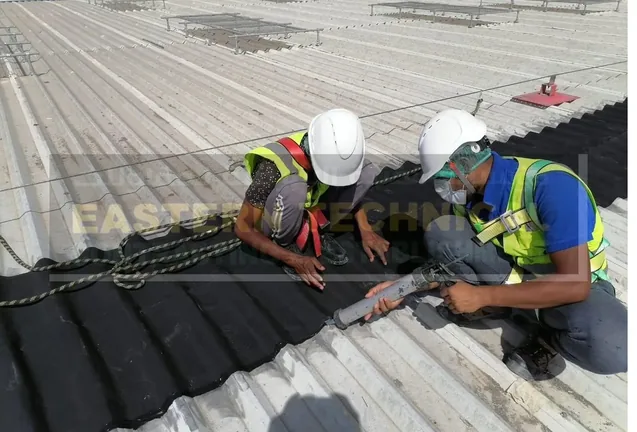
If the roof is generally sound and leaks are limited to isolated joints or details, targeted repair can be effective. That usually includes cleaning the substrate properly, tightening or replacing failed fasteners, resealing panel laps, and rebuilding vulnerable details with a reinforced membrane system.
For higher-risk areas, EPDM-based waterproofing is often the better option than relying on sealant alone. Sealant has its place, but on industrial metal roofs it should not be expected to bridge movement, UV exposure, and irregular geometry by itself for years. A properly detailed EPDM system gives the repair more body, better elongation, and stronger long-term performance at difficult leak points such as skylights, penetrations, gutter corners, and drain zones.
Where corrosion is present, the sequence matters. Waterproofing over active rust without surface preparation is not a repair. Rusted sections must be assessed, cleaned, treated, and in some cases replaced before any membrane or sealing layer is installed. If metal loss is advanced, structural review may also be necessary. Waterproofing should protect a roof, not conceal a failing component.
Surface preparation decides whether the repair lasts
This is the part clients do not always see, but it is the part that separates a service call from a durable waterproofing job. Sandwich panel roofs collect dust, oxidation, grease near exhaust points, and residues from old repair materials. If the surface is not cleaned and stabilized, new materials will not bond as designed.
Preparation usually involves dry cleaning, removal of failed mastics, mechanical tightening of loose fixings, treatment of corrosion, and detailed cleaning around joints and accessories. On active industrial sites, access planning is also part of preparation. Waterproofing crews need safe movement, weather timing, and a method that does not interrupt operations unnecessarily.
This is also when hidden defects become visible. A panel joint that seemed to need sealant may actually have open alignment, damaged insulation edges, or movement from inadequate support below. Those conditions must be addressed before the waterproofing layer goes down.
Detailing matters more than broad coverage
Many owners ask whether a coating can simply be rolled over the full roof. Sometimes a wider treatment area makes sense, but broad coverage alone is not what stops leaks. Leaks stop when details are engineered correctly.
On sandwich panel roofs, detailing is the real work. That means reinforcing side laps and end laps where required, sealing around screw lines, wrapping penetrations with compatible membrane components, rebuilding gutter junctions, and terminating edges so wind and water cannot get underneath the repair. At skylights and smoke vents, transitions must be formed carefully to handle shape changes and thermal movement.
This is where experienced industrial roof teams have an advantage. Large commercial roofs are full of field-modified details, and each one needs a practical solution that fits the actual site condition. ETCE KSA typically addresses these projects by combining inspection, fabrication support where needed, and waterproofing execution under one scope so leak points are not handed off between trades.
When partial repair is enough – and when it is not
A targeted repair is enough when the roof panels remain structurally sound, leak points are identifiable, and the majority of joints and details are still serviceable. In that case, focused waterproofing can extend roof life significantly without the cost of a major overhaul.
It is not enough when leaks are widespread, corrosion is advanced, panel integrity is compromised, or previous patching has affected too many areas. In those cases, repeating local repairs can become more expensive over time than implementing a broader rehabilitation plan. Facility managers usually know this pattern well – the same zones leak after every rain event, each repair buys a little time, and maintenance teams keep returning to the same trouble spots.
The right decision comes from condition data, not guesswork. A detailed roof report should identify immediate leak points, secondary risk areas, and the remaining service life of the roof assembly. That allows owners to separate urgent waterproofing from capital planning.
What good waterproofing should deliver
A good sandwich panel roof waterproofing system should do three things well. It should stop current water entry, tolerate building movement and thermal cycling, and remain maintainable over time. If a repair only solves the first point, it will fail early.
For industrial buildings in hot, exposed environments, material behavior under UV and temperature swing matters. So does compatibility with metal substrates and existing roof geometry. The best result is rarely the cheapest short-term patch. It is the repair that reduces repeat callouts, protects the roof from further rusting, and gives the facility a manageable maintenance path.
Owners should also expect documentation. Before-and-after records, identified leak zones, repair scope, and maintenance recommendations help internal teams track roof condition and plan future works more intelligently.
A practical standard for facility teams
If you are evaluating how to waterproof sandwich panel roofs, start by rejecting the idea that every leak can be solved with more sealant. Industrial roofs need diagnosis first, then the right combination of fastening correction, joint treatment, flashing repair, and reinforced waterproofing at critical details.
That approach is more disciplined, but it is also more economical over the life of the building. A roof that stays dry protects operations, inventory, equipment, and the structure below. On a working warehouse or factory, that is not a minor maintenance issue. It is part of keeping the site reliable.
The most useful next step is simple: inspect the roof before the next leak turns into internal damage, and repair the real failure points instead of the stains they leave behind.
Related ETCE services
Need this checked on your own roof?
ETCE carries out industrial roof inspections, leak diagnosis, metal roof rehabilitation and EPDM waterproofing across Dammam, Al Khobar, Dhahran, Jubail, Riyadh and Jeddah.
Request a Roof Inspection WhatsApp UsMetal roof waterproofing across Saudi Arabia
ETCE is a metal roof waterproofing company in Saudi Arabia with its head office in Dammam. See our warehouse & factory roof waterproofing service or find your area: