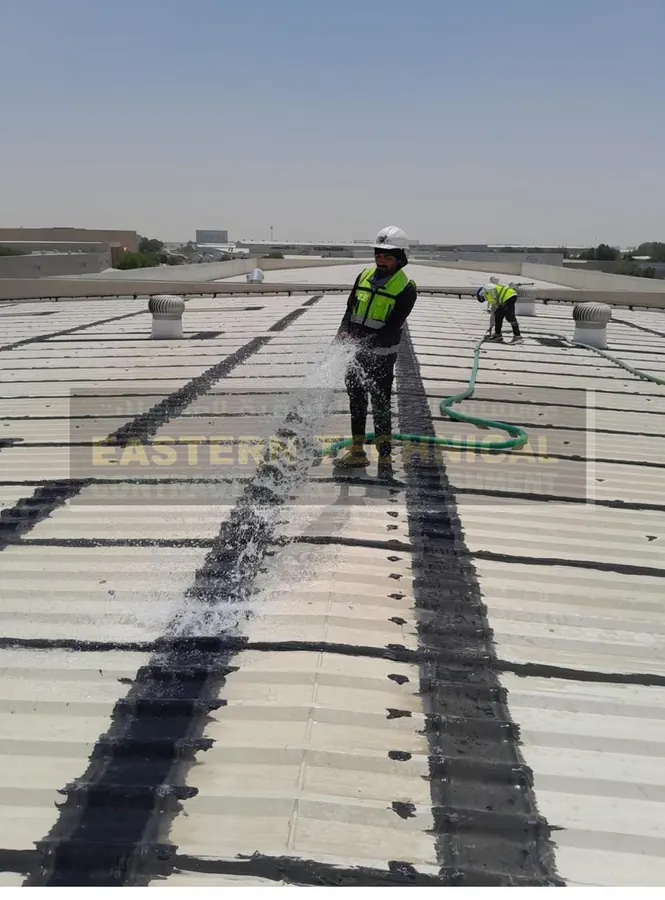
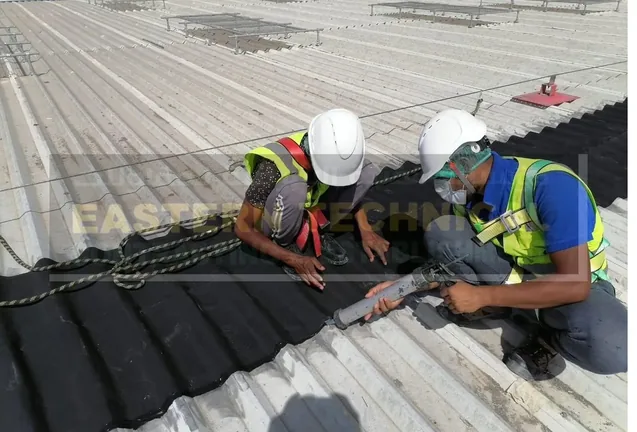
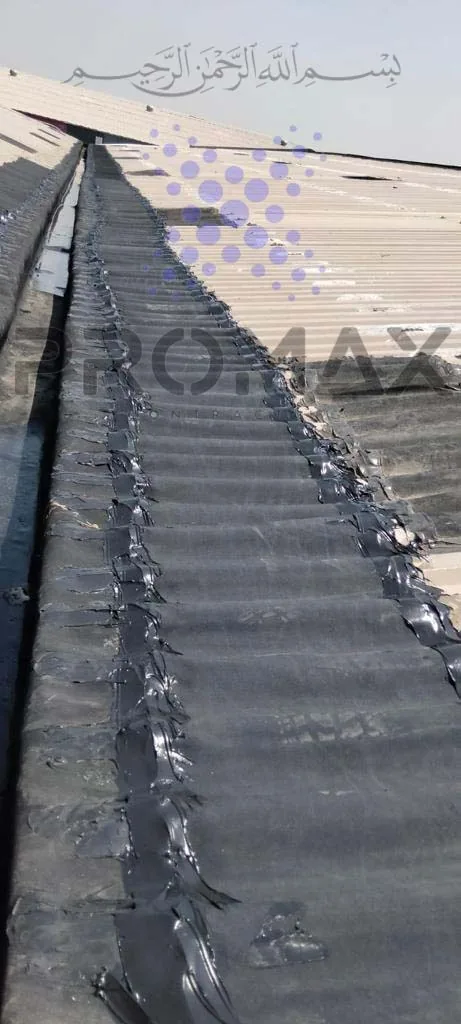
A warehouse gutter rarely fails in one dramatic moment. More often, a small split at a lap joint, a failed outlet seal, or corrosion beneath old coating allows water to enter the building envelope over repeated rain events. For facility teams, choosing the right warehouse gutter sealing methods is not just a maintenance decision. It affects roof life, wall protection, stored goods, electrical safety, and operational continuity.
Industrial gutters work under difficult conditions. They collect high water volumes from large roof areas, endure movement from heat cycles, hold debris and standing water, and may be exposed to salt air, dust, UV radiation, and aggressive corrosion. A repair that only covers the visible crack can fail quickly if the underlying gutter condition is not addressed.
Start With the Gutter Failure, Not the Sealant
The first step is to identify where water is escaping and why. Water marks inside a warehouse do not always indicate the actual entry point. A leak at a gutter outlet can travel along structural members before becoming visible over a loading area, production line, or storage zone.
A proper inspection should assess the gutter floor, sidewalls, end laps, expansion joints, outlet connections, downpipe interfaces, fasteners, and transitions where the gutter meets metal roofing. The inspection should also check whether water is ponding because of inadequate falls, blocked outlets, sagging sections, or poorly positioned drain points.
Four signs usually indicate that a simple spot repair may not be enough:
- Repeated leakage from several joints after previous sealant repairs
- Rust scale, pinholes, or thinning metal across the gutter base
- Standing water that remains long after rainfall or roof cleaning
- Separation at outlets, penetrations, or gutter-to-roof transitions
The scope of repair depends on these findings. A localized joint failure may need cleaning, priming, and a compatible sealant system. A gutter with widespread corrosion or multiple aging seams usually requires a continuous waterproof lining rather than another round of isolated patches.
Common Warehouse Gutter Sealing Methods
Sealant Repairs for Localized Joints and Fasteners
Polyurethane, MS polymer, and butyl-based sealants are commonly used for small cracks, fastener penetrations, overlapping metal laps, and localized joint movement. These materials can provide a practical repair when the substrate is sound and the affected area is limited.
The trade-off is that sealant is not a substitute for a failing gutter system. Sealants can lose adhesion when applied over rust, dust, moisture, old incompatible coatings, or loose metal. They are also exposed at the surface, where standing water, UV exposure, and thermal movement can gradually weaken the repair.
For a dependable result, the metal must be mechanically cleaned, dry, and stable. Corroded sections should be treated or replaced where required. The sealant should be selected for adhesion to the existing gutter material and for the expected movement at the joint. Applying a thick bead over a dirty leak point may stop water temporarily, but it does not create a long-term engineered repair.
Reinforced Liquid-Applied Waterproofing
Liquid-applied systems can be useful for complex details, irregular gutter shapes, small transitions, and areas with numerous fasteners or penetrations. Applied in layers, often with reinforcing fabric at joints and changes in direction, these systems form a continuous waterproof surface over the prepared gutter.
This method can reduce the number of exposed seams compared with individual sealant repairs. It is particularly useful where a gutter has many difficult connection points that would be time-consuming to repair one by one. However, application quality is critical. Surface moisture, poor cleaning, insufficient thickness, and improper curing conditions can shorten the service life.
Liquid systems also require careful material selection. Not every coating is designed for permanent ponding water, high roof temperatures, or direct adhesion to aged galvanized metal. The system must be specified around the actual site condition, not selected simply because it is easy to apply.
EPDM Gutter Lining for Extensive Leakage
EPDM rubberized waterproofing is a strong option for metal box gutters, valley gutters, and collection channels with repeated seam failures or widespread corrosion. Rather than attempting to reseal every joint individually, an EPDM membrane lining creates a continuous barrier across the gutter base and up its sidewalls.
This approach is especially effective where the existing metal remains structurally stable but is no longer reliably watertight. The membrane can bridge minor surface irregularities and cover multiple aging laps, pinholes, and repaired areas within one system. Properly detailed EPDM also performs well under UV exposure and movement caused by temperature changes.
The critical work is in the detailing. Outlets, corners, termination points, expansion areas, and connections to roof sheets must be prepared and sealed correctly. A membrane installed over sharp rust edges, loose old coating, or blocked outlets will still be vulnerable. The gutter must be cleaned, repaired, and drained before lining begins.
For industrial sites in Dammam, Riyadh, and other demanding Saudi Arabian environments, EPDM lining is often selected because it addresses both water entry and the ongoing deterioration of aging metal gutters. It is not automatically the right choice for every short crack, but it is a practical long-term method when the failure is systemic.
Metal Section Replacement Before Sealing
Where corrosion has eaten through the gutter, the metal substrate may no longer support a reliable repair. In these cases, damaged sections should be fabricated and replaced before the waterproofing system is installed. Attempting to bridge severely weakened metal can conceal a structural problem while allowing the surrounding gutter to continue deteriorating.
Replacement is also appropriate where gutter falls are incorrect, sections have collapsed, or outlet locations are too small for the roof catchment area. Water management must be corrected before sealing. A perfectly waterproof gutter that overflows during heavy rain still puts the warehouse at risk.
Surface Preparation Determines Repair Life
Most gutter repair failures begin before the membrane or sealant is applied. Industrial gutters collect sediment, roof debris, oxidation, old mastic, and contaminated water. These conditions prevent adhesion and create hidden weak points beneath the repair.
Preparation typically includes removing debris, washing the gutter, drying the surface, mechanically removing loose corrosion, and treating sharp edges or damaged sections. Old failed sealant should be cut back where it interferes with bonding. Any open holes, loose fasteners, and unstable joints need repair before the final waterproofing layer is applied.
Drain outlets deserve special attention. A gutter lining or coating must transition cleanly into the outlet without restricting drainage. If an outlet is partially blocked by old sealant or debris, water will pond around the connection and place constant stress on the repair. In large warehouses, checking the downpipe route and discharge condition is equally necessary. The gutter cannot perform if water has nowhere to go.
Detail the High-Risk Areas Correctly
Long straight gutter runs are usually easier to waterproof than their connection points. Most repeat failures occur at corners, end laps, expansion locations, outlets, roof-to-gutter transitions, and areas where other services penetrate the system.
At a gutter joint, the repair must accommodate movement without pulling away from the metal. At an outlet, it must direct water into the drainage path without creating a raised edge that traps sediment. At a roof transition, it must prevent capillary water from tracking beneath adjacent sheets or flashings.
These details are why material compatibility matters. A system may perform well across a flat gutter base but fail at the first corner if its reinforcement, primer, adhesive, and termination method are not designed to work together. Mixing unrelated materials without a clear detail can produce short-lived repairs and difficult future maintenance.
Plan Repairs Around Warehouse Operations
Gutter sealing work should be planned around the facility's active areas. Access requirements, lifting equipment, roof safety, weather forecasts, curing periods, and protection of stock below must be considered before work starts. For a logistics warehouse or factory, the repair plan should limit disruption while still allowing adequate time for surface preparation and quality checks.
A practical contractor approach includes a site inspection, moisture and corrosion assessment, repair scope, material recommendation, and clear identification of urgent leak points. During installation, completed sections should be checked for continuity, adhesion, drainage, and detail quality before the work area is released.
ETCE KSA approaches warehouse waterproofing as an integrated maintenance task, combining inspection, metal repair, gutter sealing, EPDM waterproofing, and after-sales support where the condition requires more than a basic patch.
Do Not Treat Gutter Maintenance as an Afterthought
Even the best gutter sealing system needs periodic inspection. Debris buildup, damaged downpipes, new roof penetrations, and movement around expansion joints can create fresh water paths over time. Scheduled cleaning and inspection are far less costly than responding after water has reached warehouse interiors.
The right repair is the one that matches the actual failure mechanism: seal a sound local joint, line a gutter with widespread leakage, and replace metal that has lost its integrity. When the gutter is assessed as part of the full roof drainage system, maintenance teams can stop managing recurring leaks and start protecting the building asset for the long term.
Related ETCE services
Need this checked on your own roof?
ETCE carries out industrial roof inspections, leak diagnosis, metal roof rehabilitation and EPDM waterproofing across Dammam, Al Khobar, Dhahran, Jubail, Riyadh and Jeddah.
Request a Roof Inspection WhatsApp UsMetal roof waterproofing across Saudi Arabia
ETCE is a metal roof waterproofing company in Saudi Arabia with its head office in Dammam. See our warehouse & factory roof waterproofing service or find your area: