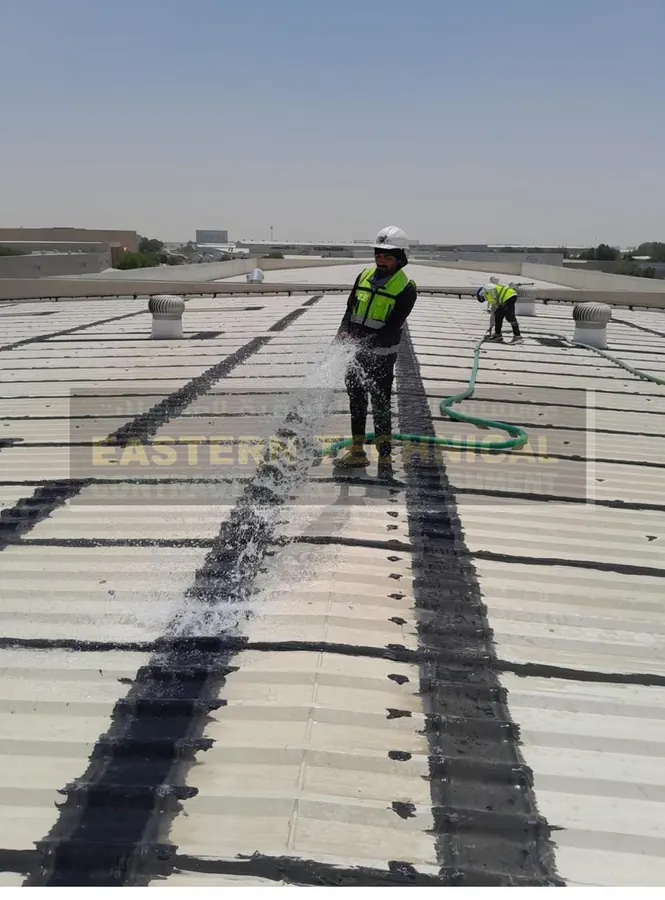
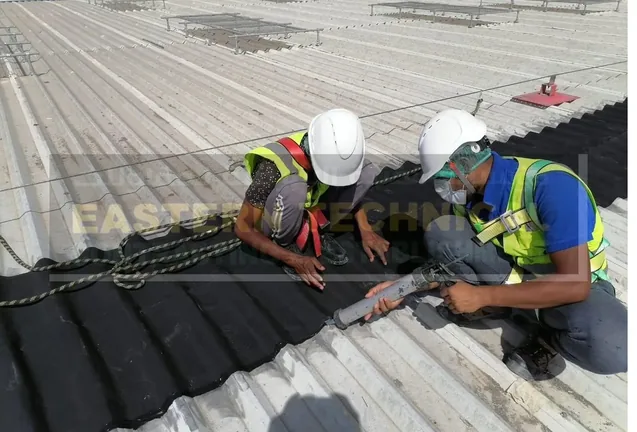
A leaking industrial gutter is rarely just a gutter problem. Water can travel beneath roof sheets, enter wall junctions, corrode steel supports, damage stored goods, and disrupt operations long before it becomes visible inside the building. The best materials for gutter waterproofing are the ones that match the gutter substrate, joint movement, drainage load, and exposure conditions – not simply the product that is quickest to apply.
For warehouses, factories, sheds, and logistics facilities, the right system must handle standing water, intense UV exposure, heat cycling, sand accumulation, and the movement common in long metal roof structures. Material selection must begin with an inspection of the gutter itself, its outlets, lap joints, fasteners, expansion points, and connection to the roof.
Why industrial gutters fail before the roof does
Industrial gutters operate in a difficult zone. They collect large volumes of runoff, retain dirt and debris, and often have seams that move as the roof expands and contracts. On aging metal buildings, protective coatings can break down and corrosion can form around laps, screw penetrations, drain outlets, and end caps.
Ponding water makes every weakness more severe. A small opening at a gutter lap may only leak during heavy rainfall, while a blocked outlet can force water backward under the roof sheet. Applying sealant over a wet, rusted, or poorly prepared surface may stop the leak temporarily, but it does not correct the conditions causing the failure.
A durable repair therefore combines surface preparation, compatible waterproofing material, correct reinforcement, and drainage correction. If water cannot leave the gutter freely, even a high-quality membrane is being asked to compensate for a drainage design or maintenance issue.
Best materials for gutter waterproofing in industrial buildings
EPDM rubber membrane for flexible, long-term protection
EPDM is one of the strongest choices for industrial gutter waterproofing, particularly where gutters have repeated leaks at seams, corners, outlets, or transitions to metal roofing. The rubber membrane remains flexible through temperature changes and accommodates movement that can split rigid coatings or brittle sealant lines.
A properly installed EPDM system creates a continuous waterproof lining across the gutter floor, sidewalls, joints, and drain details. It is especially effective for wide box gutters, valley gutters, parapet gutters, and fabricated metal gutters with extensive corrosion or multiple historical repairs. EPDM also performs well under strong UV exposure, making it suitable for demanding conditions across Saudi Arabia.
The trade-off is that EPDM is not a simple patch material. It requires disciplined substrate preparation, compatible adhesive, properly formed inside and outside corners, and careful detailing around outlets. On severely corroded gutters, damaged metal may need repair or replacement before membrane installation. When installed as an engineered system rather than a loose overlay, EPDM offers excellent service life and reliable protection at complex leak points.
Butyl tape for laps, fasteners, and controlled detailing
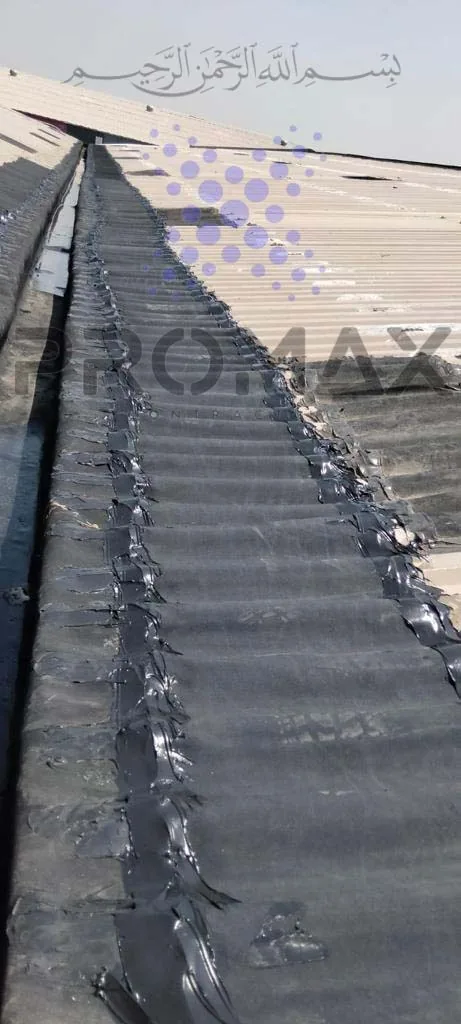
Butyl waterproofing tape is highly effective at metal-to-metal laps, screw lines, panel joints, and localized penetrations. It stays tacky and flexible, helping it maintain a watertight seal as metal components expand and contract. For narrow cracks or sound gutter seams, butyl tape can be an efficient part of a targeted repair.
Its limitation is exposure and application quality. Tape must be applied to a clean, dry, stable surface with correct overlap and pressure. Rust scale, dust, moisture, and old failing sealant reduce adhesion. In open gutters that hold standing water, butyl tape is often best used as a reinforcing component beneath a compatible liquid coating or membrane system rather than as the only line of defense.
Polyurethane or hybrid sealants for joints and transitions
High-performance polyurethane and hybrid polymer sealants are practical materials for sealing narrow joints, end laps, outlet collars, flashing interfaces, and small openings around mechanical fasteners. They provide better flexibility and adhesion than many general-purpose sealants when applied to prepared metal substrates.
Sealant is valuable, but it should not be mistaken for a full gutter waterproofing system. Wide seams, badly rusted joints, and areas with persistent ponding water need reinforcement or membrane coverage. A thick bead over an open joint can crack, detach, or trap water beneath it if movement is not controlled. The best use of sealant is as part of the detail work: sealing edges, transitions, and small gaps before or alongside a larger waterproofing assembly.
Liquid-applied waterproofing coatings for complex shapes
Liquid-applied coatings can be useful where gutter geometry is irregular or where numerous small details make sheet installation difficult. These systems can cover corners, outlet flanges, fastener zones, and uneven repair areas without creating additional sheet seams. When reinforced with fabric at joints and changes of plane, they can form a continuous protective layer.
The correct coating depends on the substrate and service conditions. Some coatings are better suited to UV exposure, while others require topcoats or have limitations under continuous immersion. Thickness control is critical. A coating applied too thin may look complete on installation day but wear through or split at movement points later.
For industrial gutters, liquid systems are most successful when the metal is properly cleaned, primed where needed, and repaired before coating begins. They are not a substitute for replacing metal that has lost structural integrity.
Metal repair sections and flashing for failed substrate
Waterproofing material cannot restore steel that has rusted through. Where the gutter floor has holes, deep pitting, failed seams, or distorted sections, fabricated metal repair may be required before the waterproofing layer is installed. New metal sections, flashing plates, reinforced outlet sumps, and properly fixed end caps provide a stable base for the final system.
This is often the overlooked part of gutter rehabilitation. Facilities sometimes repeat sealant repairs over deteriorated metal because access is easier and immediate leakage is reduced. The result is a cycle of short-term interventions. Repairing the substrate first allows the membrane, tape, or coating to perform as intended.
Match the material to the failure condition
There is no single material that fits every gutter. A sound galvanized steel gutter with minor opening laps may only require preparation, butyl tape reinforcement, and a compatible sealant detail. A wide box gutter with standing water and multiple seam failures may justify a fully lined EPDM system. A gutter with heavily corroded sections needs metal repair before either approach.
Drainage is equally important. Outlet diameter, outlet location, downpipe condition, gutter slope, and accumulated debris must be checked during the assessment. If water ponds at one end of the gutter after every rain event, waterproofing should be paired with corrective work at the outlet or gutter profile. Otherwise, the repair will remain under unnecessary hydraulic pressure.
Compatibility also matters. A material that adheres well to clean galvanized steel may perform differently over aged paint, aluminum, previously coated metal, or bituminous residue. Test areas, primers, manufacturer-approved accessories, and substrate preparation procedures should be established before full installation on active facilities.
Installation details that determine service life
The material itself is only half the system. Long-lasting gutter waterproofing starts with removing loose rust, failed coating, dirt, trapped moisture, and old incompatible sealant. Metal must be assessed for thinning and holes. Sharp edges and projecting fasteners should be corrected because they can puncture or stress a membrane over time.
Joints, corners, and drain outlets deserve additional attention. These areas experience movement and concentrated water flow, so they should receive correctly shaped reinforcement rather than an excessive buildup of sealant. Waterproofing should continue high enough on gutter sidewalls to protect against splashback and temporary water backup during heavy rainfall.
Installation sequencing also matters on operating sites. Work zones should be planned around weather, roof access, material storage, and protection of production areas below. A contractor should verify adhesion and finish quality before reopening drainage paths, then confirm that water flows freely to each outlet.
At ETCE KSA, gutter work is approached as part of the wider roof drainage and metal rehabilitation condition. This avoids treating a visible gutter leak in isolation when the actual cause may be roof-sheet laps, failed flashing, blocked drains, or corrosion hidden beneath previous repairs.
Avoid the quick fixes that create repeat leaks
A few common approaches repeatedly underperform in industrial gutters. Applying new sealant over wet surfaces, coating over loose rust, using rigid patch materials at moving laps, and covering blocked outlets all produce a repair that may look acceptable but has no dependable foundation.
Another mistake is limiting inspection to the visible leak location. Water can travel along roof laps or gutter seams and emerge several meters from the original entry point. A proper inspection follows the water path from roof discharge to gutter, outlet, downpipe, and final drainage point.
The most useful next step is a condition-based inspection before the next rainy period. Record ponding locations, seam failures, corrosion depth, outlet performance, and roof-to-gutter transitions. That information makes it possible to choose a repair system that protects the asset instead of merely delaying the next callout.
Related ETCE services
Need this checked on your own roof?
ETCE carries out industrial roof inspections, leak diagnosis, metal roof rehabilitation and EPDM waterproofing across Dammam, Al Khobar, Dhahran, Jubail, Riyadh and Jeddah.
Request a Roof Inspection WhatsApp UsMetal roof waterproofing across Saudi Arabia
ETCE is a metal roof waterproofing company in Saudi Arabia with its head office in Dammam. See our warehouse & factory roof waterproofing service or find your area: