A warehouse roof rarely fails all at once. It starts at the lap joints, around fasteners, beside skylights, at gutter lines, or where an old penetration was patched three times by three different crews. When clients ask about the best industrial roof waterproofing materials, the right answer is not the cheapest coating in a drum. It is the material that matches the roof profile, the leak source, the thermal movement, and the operating demands below.
For industrial facilities, waterproofing is not just about stopping water stains. It is about protecting stock, machinery, electrical systems, insulation, and production continuity. On metal roofs especially, the wrong material can trap moisture, fail under movement, or lose adhesion in harsh UV and heat. That is why material selection has to start with roof behavior, not product marketing.
What makes the best industrial roof waterproofing materials work
Industrial roofs move. Metal sheets expand and contract. Fasteners loosen over time. Old sealants become brittle. Rust develops around cut edges and ponding zones. A waterproofing material has to handle all of that while staying bonded to a surface that may already be aged, contaminated, or uneven.
The best systems usually share a few characteristics. They tolerate movement without splitting, resist UV exposure, maintain adhesion on prepared metal surfaces, and can be detailed properly around difficult areas like penetrations, valleys, gutters, vents, and curb flashings. Just as important, they must be serviceable. A facility team should be able to inspect and maintain the system before small issues become active leaks.
There is no single material that wins on every roof. A standing seam metal roof with active joint movement needs something different from a corroded corrugated warehouse roof or a sandwich panel assembly with leak points at screws and overlaps.
Best industrial roof waterproofing materials by application
EPDM membrane and EPDM-based detailing systems
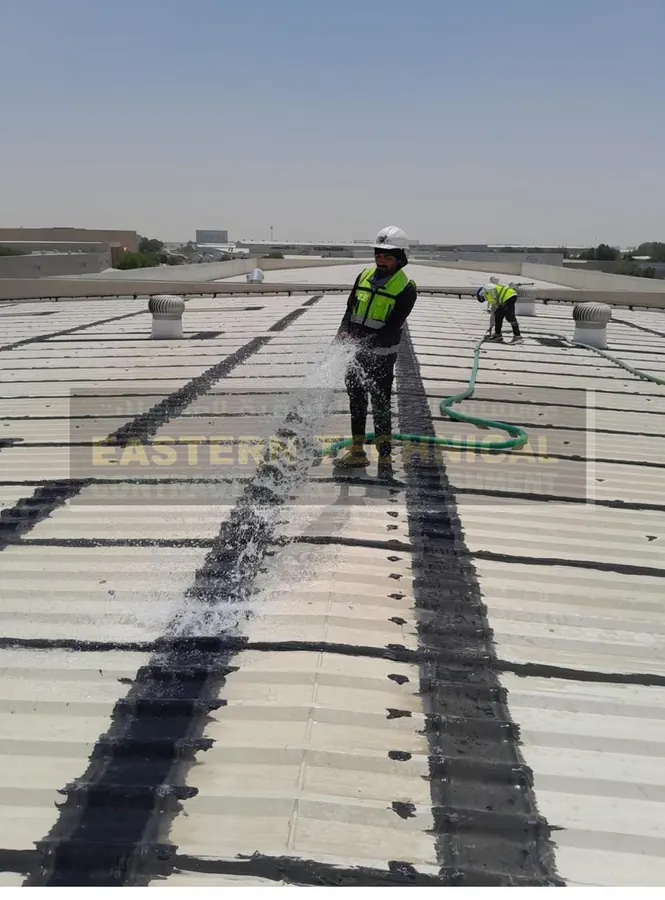
For many industrial metal roofs, EPDM is one of the most dependable waterproofing materials available. It performs well where movement is a constant issue, which is why it is often used around roof penetrations, gutters, skylights, smoke vents, drain points, and other high-risk leak locations.
The main advantage of EPDM is elasticity. It can absorb movement that would crack a rigid repair. It also has strong weather resistance and a long service life when installed correctly. On rehabilitation projects, EPDM is particularly effective for difficult details where sheet laps, screw lines, and flashing terminations are the true problem rather than the full roof field.
The trade-off is that EPDM is not a magic cover-up for badly deteriorated substrates. Surface preparation matters, and badly rusted sections may still require sheet replacement or structural repair before waterproofing begins. Installation quality also matters more than many buyers realize. Good detailing at edges and transitions is what separates a durable system from a temporary patch.
Liquid-applied polyurethane membranes
Polyurethane membranes are often chosen where a roof has many penetrations or irregular geometries that make sheet systems harder to install. Because they are liquid-applied, they can form a continuous membrane over complex shapes and detailing zones.
These systems generally offer strong adhesion and good mechanical performance. For industrial roofs with numerous equipment bases, curbs, and service penetrations, polyurethane can be a practical option. It is also useful where a seamless finish is preferred over multiple sheet joints.
However, polyurethane systems are sensitive to application conditions. Surface moisture, poor preparation, or incorrect film thickness can shorten service life. They also require disciplined workmanship. On active industrial sites, that means proper planning, weather timing, and inspection during installation.
Silicone roof coatings
Silicone coatings are widely used where UV exposure is severe and where water resistance is a priority. They can perform well on industrial roofs that need a restoration approach rather than full replacement, especially when the existing substrate is still fundamentally sound.
A major strength of silicone is its resistance to weathering and sunlight. It can also handle some ponding conditions better than many other coatings. For aging roof surfaces that are not heavily trafficked, silicone can be an effective rehabilitation material.
The limitation is that coatings are only as good as the roof beneath them. If the roof has open joints, failed fasteners, active corrosion, or damaged details, coating alone is not enough. In many industrial cases, silicone works best as part of a system after repairs, reinforcement, and leak-source treatment are completed.
Acrylic roof coatings
Acrylic coatings are often selected for cost-sensitive projects and can provide useful waterproofing and solar reflectivity benefits. They are generally easier to apply and may suit large roof areas where the substrate is in fair condition and drainage is adequate.
That said, acrylic is usually less forgiving in demanding industrial conditions. Areas with standing water, heavy weathering, or significant movement may expose its limits faster. For warehouse and factory roofs, acrylic can be a reasonable choice in the right environment, but it is not usually the first recommendation for roofs with chronic leak history or aggressive thermal cycling.
Bituminous membranes and modified bitumen systems
Bituminous systems still have a place in industrial waterproofing, particularly on certain low-slope roof assemblies. They can provide good water resistance and are familiar to many contractors.
But on metal industrial roofs, they are often less attractive than more flexible systems. Weight, detailing complexity, and performance under movement can become concerns. On aging sheeted roofs, bituminous products may solve one problem while creating another if compatibility and movement are not considered upfront.
Why metal industrial roofs need a different material strategy
A factory or logistics building roof is not the same as a small commercial roof. Long sheet runs, exposed fasteners, roof penetrations added after original construction, and years of thermal movement create a specific failure pattern. Water can travel far from the visible leak point, which is why material selection has to follow diagnosis.
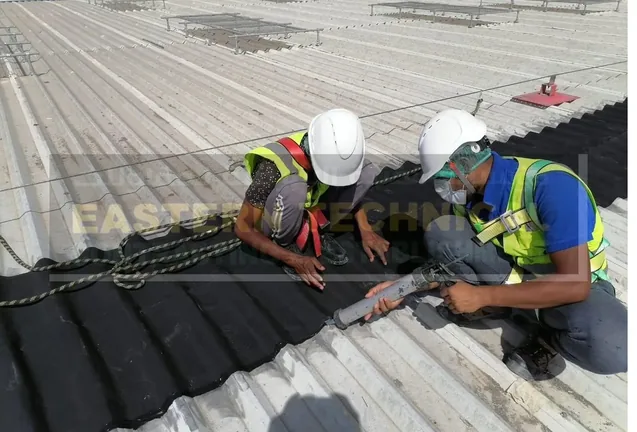
On metal roofs, waterproofing usually succeeds when it addresses the exact weak points. That means overlaps, end laps, side laps, fixing points, valley gutters, box gutters, flashing interfaces, and openings. In many cases, the best industrial roof waterproofing materials are used in combination rather than as a single blanket product.
An engineered approach may involve substrate repair, rust treatment, fastener replacement, sealing of joints, reinforced detailing, and then a field waterproofing layer where appropriate. This is more reliable than simply coating over symptoms.
How to choose the right material for your facility
Start with the roof condition, not the product brochure. If the metal is structurally sound but leaking at critical points, a targeted EPDM-based system may be the best value because it treats movement-sensitive details directly. If the roof has many irregular penetrations and requires a continuous membrane, polyurethane may fit better. If the roof is broadly weathered but still serviceable, a restoration coating system may be justified after repairs.
The operating environment also matters. Heat, UV, dust, moisture, roof traffic, and maintenance access all affect performance. A material that works on a lightly used roof may not hold up the same way above active plant operations where maintenance crews, equipment servicing, and repeated access are routine.
Budget should be evaluated against downtime risk, not only installation cost. A cheaper material that fails at penetrations or laps can cost far more when stock is damaged or production is interrupted. For most industrial owners, life-cycle value matters more than headline price.
Common mistakes when specifying waterproofing materials
The first mistake is treating every leak as a surface problem. Many leaks start because of failed details, corrosion, loose fixings, or poor drainage. A coating or membrane applied without correcting those issues will not last.
The second mistake is choosing a material with no regard for movement. Metal roofs expand and contract every day. If the waterproofing cannot stretch with that movement, it will split where it matters most.
The third mistake is ignoring inspection and maintenance. Even the best material benefits from periodic checks, especially at gutters, curbs, drains, and service penetrations. Industrial roofs age under hard conditions. Small defects are manageable when caught early.
What experienced facility teams usually prioritize
The most effective buyers are not looking for a miracle product. They want a system that can be inspected, detailed properly, installed without guesswork, and supported after handover. That is why specialist contractors are often brought in for metal roof rehabilitation rather than general coating crews.
On complex warehouses and factories, waterproofing is part of asset protection. It has to work with the roof geometry, not fight it. Companies such as ETCE KSA focus on this type of industrial application because the real challenge is rarely the material alone. It is diagnosis, detailing, execution, and follow-up support under active site conditions.
If you are comparing materials for an industrial roof, look past generic claims and ask a more useful question: which system is most likely to hold at the joints, penetrations, gutters, and movement points on your specific building? That is usually where the right decision starts.
Related ETCE services
Need this checked on your own roof?
ETCE carries out industrial roof inspections, leak diagnosis, metal roof rehabilitation and EPDM waterproofing across Dammam, Al Khobar, Dhahran, Jubail, Riyadh and Jeddah.
Request a Roof Inspection WhatsApp UsMetal roof waterproofing across Saudi Arabia
ETCE is a metal roof waterproofing company in Saudi Arabia with its head office in Dammam. See our warehouse & factory roof waterproofing service or find your area: