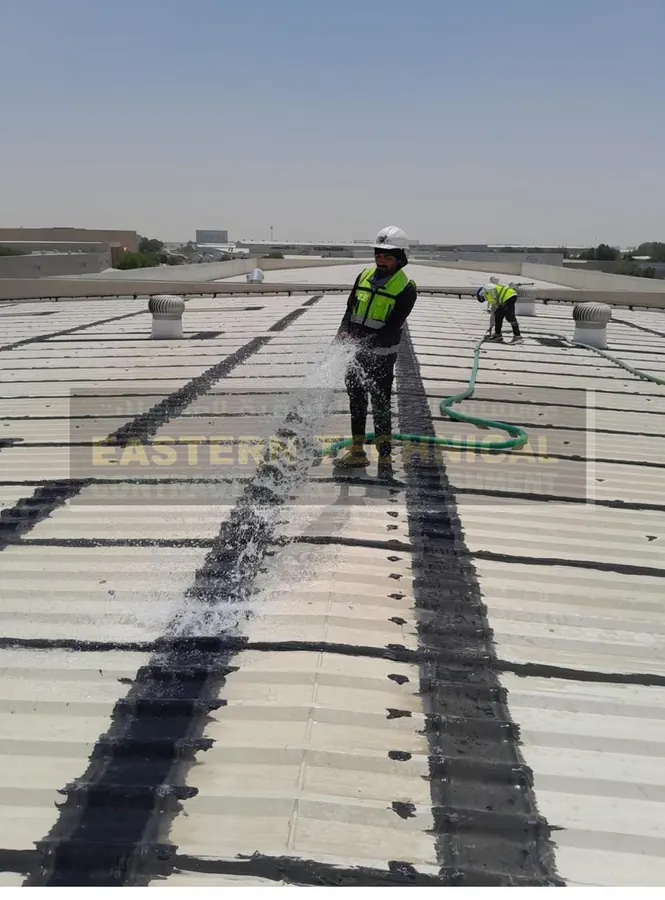
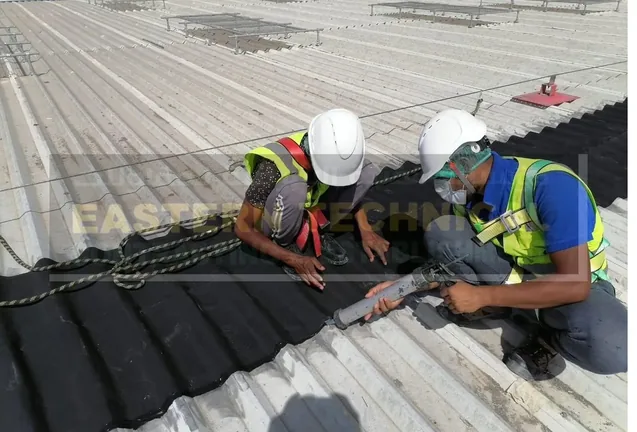
A roof leak in a warehouse or factory rarely stays a small problem. What starts as a drip at a skylight or panel lap can quickly turn into insulation damage, corrosion, stock exposure, safety risk, and unplanned shutdowns. The best roof leak repair methods are the ones that match the actual failure point, the roof type, and the operating conditions of the building – not just the fastest patch applied before the next rain.
For industrial and commercial roofs, especially metal systems, repeated leaks usually mean the original weak point was never properly diagnosed. Water can travel along fasteners, purlins, panel overlaps, curb flashings, and gutters before it becomes visible inside. That is why durable repair begins with tracing the leak path, checking the roof assembly, and choosing a method that solves both water entry and future deterioration.
Why some roof leak repairs fail early
Many roof leaks are treated as surface problems when they are actually system problems. A contractor may apply sealant over a visible crack, but if the substrate is rusted, the fasteners are loose, the joint is moving under thermal expansion, or the slope is holding water, that sealant becomes a short-term cover rather than a repair.
Industrial roofs are especially demanding. Large spans, daily temperature swings, UV exposure, sand, moisture, vibration, and foot traffic all put stress on joints and accessories. On metal roofs, movement is a major issue. A repair that works on a static surface may split on a sheet lap or penetration within one hot season.
This is why the best roof leak repair methods are usually layered solutions. Surface preparation matters. Reinforcement matters. Compatibility with metal, existing coatings, and roof movement matters. In many cases, the leak point is only one part of a broader rehabilitation need.
Best roof leak repair methods for industrial buildings
EPDM waterproofing for difficult leak points
For recurring leaks around penetrations, joints, gutters, skylights, smoke vents, and drain areas, EPDM-based waterproofing is one of the most dependable methods available. It performs well because it combines flexibility, weather resistance, and strong waterproofing performance on details that tend to move or crack.
This method is particularly effective where standard mastics keep failing. Pipe penetrations, curb flashings, valley details, and transitions between dissimilar materials are common problem zones. An EPDM repair can absorb movement far better than brittle patching compounds, which is a major advantage on aging metal roofs and warehouse structures exposed to heat.
That said, EPDM is not a magic overlay for every condition. If the substrate is heavily corroded, unstable, or contaminated, preparation and local replacement may still be required before waterproofing is installed. The method is only as good as the condition of the base it is bonded to.
Fastener replacement and sealing
A surprising number of leaks come from failed fasteners rather than failed panels. Washers dry out, screws back out under movement, and fixing points become enlarged over time. On single-skin sheet roofs, corrugated sheets, and sandwich panel systems, this can create hundreds of small entry points across a large area.
Replacing failed fasteners with the correct type and size, then sealing vulnerable fixing lines where needed, is often more effective than coating over the whole roof without addressing the source. This is a targeted method, but it needs discipline. Randomly tightening old screws can worsen damage if the substrate is weak or the hole is already oversized.
Where fastening lines show widespread failure, the repair should be planned systematically, not spot by spot. Otherwise, the roof keeps leaking in new locations as neighboring fasteners fail.
Joint and lap repair with reinforced sealing systems
Panel laps and longitudinal joints are common leak paths on metal roofs. Capillary action, weak sealant lines, panel distortion, and thermal movement can all allow water to pass through what looks like a closed seam. In these cases, reinforced joint sealing systems are usually stronger than basic caulking.
The right repair depends on joint geometry and movement. Some laps can be restored with compatible sealants and reinforcement. Others need cleaning, rust treatment, mechanical correction, and a flexible waterproof band or membrane system over the joint. If there is panel misalignment or deformation, sealing alone may not be enough.
This is one of the clearest examples of why diagnosis matters. If water is entering through a lap because the roof is ponding, the lap repair and drainage correction should be handled together.
Gutter, valley, and drain rehabilitation
Leaks at gutters are often underestimated because they affect both waterproofing and drainage performance. Internal box gutters, eave gutters, valleys, and drain sumps take concentrated water flow and tend to collect debris, standing water, and corrosion. Once they deteriorate, patching isolated holes rarely delivers long service life.
A better method is rehabilitation of the full water-handling section. That may include cleaning, rust removal, local metal replacement, resealing joints, rebuilding outlets, and installing a durable waterproof lining. This approach costs more than a quick patch, but it reduces repeat failures in one of the highest-risk zones on the building.
For facilities with active operations, this is often the repair that prevents the most disruption. Gutter leaks can affect wall lines, electrical routes, loading zones, and stored goods far from the original defect.
Localized sheet replacement for corroded or damaged areas
Not every leak should be sealed. If the metal sheet has lost integrity due to corrosion, impact damage, tearing, or severe deformation, localized replacement is often the correct method. Trying to bridge over weak steel may slow the leak, but it does not restore structural reliability or provide a clean base for long-term waterproofing.
This is common around old penetrations, roof-mounted equipment, and poorly executed earlier repairs. Replacing only the failed section can be cost-effective if the surrounding roof is still serviceable. If corrosion is widespread, though, repeated local replacement may become less efficient than a broader rehabilitation strategy.
The trade-off is straightforward. Replacement takes more planning and site coordination, but it eliminates compromised material instead of trying to preserve it beyond its useful life.
How to choose the right method
The right repair starts with three questions. Where is the water entering, what condition is the substrate in, and how much movement does that detail experience? Those answers narrow the repair options quickly.
If the issue is isolated and the roof is otherwise sound, a targeted repair may be the best value. If the roof has multiple leak points, rusting accessories, failed fasteners, and aging joints, a piecemeal approach usually costs more over time. In that case, partial rehabilitation or a coordinated waterproofing upgrade is the smarter decision.
Roof type also matters. Sandwich panels, corrugated sheets, standing seam systems, and built-up industrial details each fail differently. A method that performs well on one assembly may be weak on another. This is where experienced inspection makes a real difference. Water entry, visible damage, and root cause are not always in the same place.
What a proper repair process should include
A durable repair process is practical and methodical. It starts with inspection from both inside and outside the building, followed by condition mapping of seams, penetrations, gutters, fasteners, and corrosion zones. Moisture paths, previous patchwork, and movement-related defects should be identified before any material is applied.
Surface preparation is the stage many teams rush, and it is often where long-term performance is won or lost. Contaminants, loose rust, failed sealant, wet substrate, and unstable metal must be dealt with first. After that, the repair method should be installed with attention to edge termination, reinforcement, and compatibility between materials.
For large facilities, documentation is also valuable. A proper report helps maintenance teams prioritize immediate leaks versus developing failure zones. That is especially useful for warehouses and factories operating under budget cycles or phased maintenance planning.
ETCE KSA works in exactly this space – diagnosing industrial roof failures, repairing active leaks, and carrying out waterproofing and rehabilitation work that fits the condition of the roof rather than forcing a one-size-fits-all patch.
When repair is no longer enough
There is a point where leak repair becomes maintenance theater. If a roof has widespread corrosion, repeated patch layers, failed drainage, and active leakage across multiple zones, the building may need more than another service call. It may need structured rehabilitation with replacement of weak components and a durable waterproofing system across critical details.
That does not always mean full roof replacement. In many industrial buildings, the better option is to preserve what is still sound, rebuild the failed sections, and install a waterproofing solution designed for movement, weather exposure, and long-term maintenance access. This can control cost while extending service life in a meaningful way.
A good roof repair should do more than stop today’s leak. It should reduce the chance of the next one appearing two bays away after the next storm, the next heat cycle, or the next season of standing water. That is the standard worth paying for.
Related ETCE services
Need this checked on your own roof?
ETCE carries out industrial roof inspections, leak diagnosis, metal roof rehabilitation and EPDM waterproofing across Dammam, Al Khobar, Dhahran, Jubail, Riyadh and Jeddah.
Request a Roof Inspection WhatsApp UsMetal roof waterproofing across Saudi Arabia
ETCE is a metal roof waterproofing company in Saudi Arabia with its head office in Dammam. See our warehouse & factory roof waterproofing service or find your area: