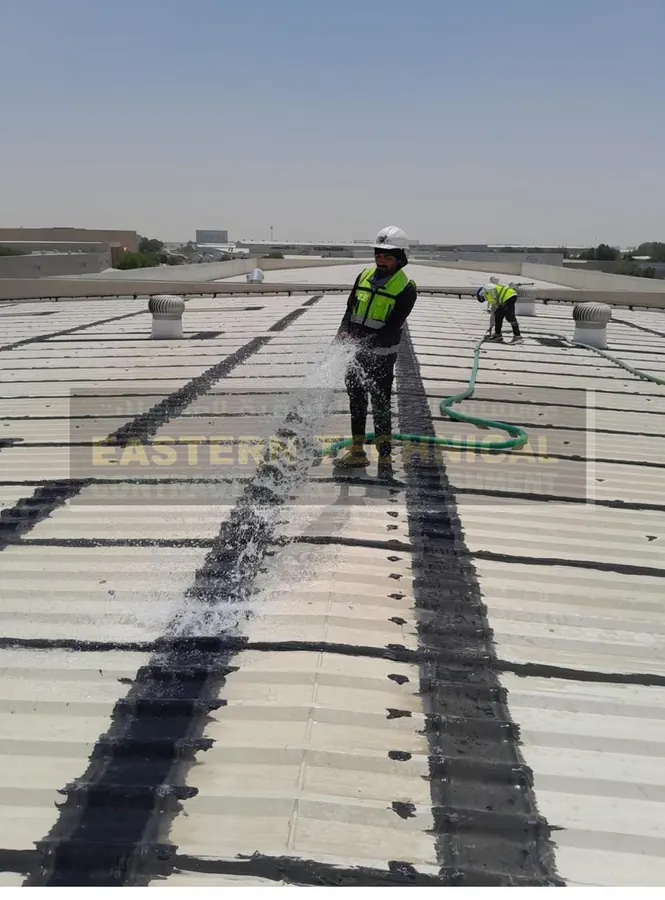
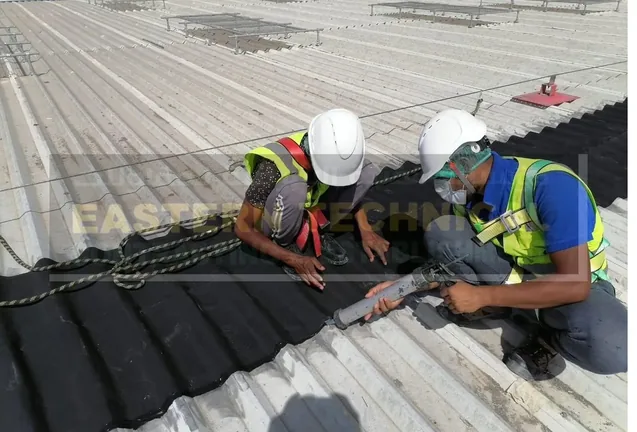
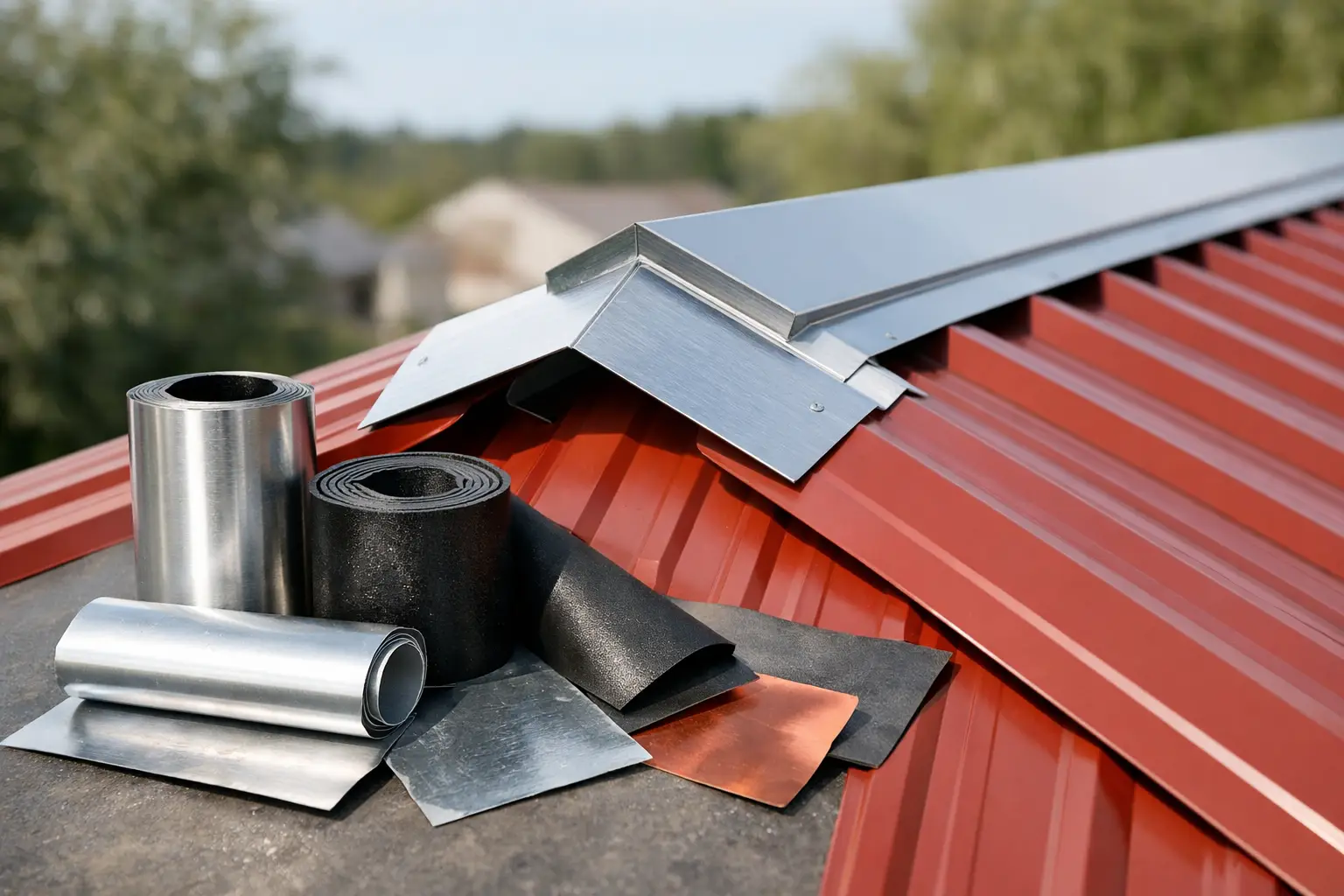
A leaking roof penetration rarely fails because the roof sheet alone is defective. Most industrial leaks begin where materials meet: around pipes, skylights, smoke vents, gutters, wall transitions, and fasteners. Choosing the best materials for roof flashing means selecting a system that can move with the roof, resist corrosion, tolerate extreme heat, and remain watertight after years of maintenance activity.
For warehouses, factories, logistics facilities, and metal sheds, flashing should never be treated as a small finishing detail. It is a working component of the waterproofing system. The wrong material, poor metal compatibility, or an undersized flashing profile can allow water below the roof sheet, accelerate rust, damage insulation, and interrupt operations below.
Best Materials for Roof Flashing in Industrial Buildings
There is no single flashing material that suits every roof. The right choice depends on roof type, slope, existing sheet material, drainage conditions, penetration size, expected movement, and local exposure to UV, heat, sand, moisture, and airborne contaminants.
EPDM rubber for moving and irregular details
EPDM is one of the strongest options for difficult flashing details on industrial roofs. It is especially effective around pipe penetrations, duct supports, skylights, smoke vents, drain points, gutter joints, and transitions where rigid metal flashing is likely to crack or separate.
A quality EPDM flashing system remains flexible through heat cycles and accommodates movement between roof sheets, curbs, pipes, and structural elements. This matters on long-span metal roofs, where thermal expansion and contraction can be significant. A rigid repair may look secure on installation day but open at its edges after repeated temperature changes.
EPDM also performs well under prolonged UV exposure and does not corrode. On aging corrugated sheets, sandwich panel roofs, and single-skin metal roofs, it can bridge localized rusted areas when the substrate has been properly prepared and stabilized. It is not a substitute for replacing severely weakened steel, but it is a highly effective waterproofing material for sound substrates and complex leak points.
The installation standard is critical. EPDM needs proper surface cleaning, compatible primers or adhesives where required, correctly detailed terminations, and mechanical fastening in areas exposed to wind uplift. Applying rubber membrane over dirt, loose rust, wet surfaces, or failed sealant simply transfers the failure to a new layer.
Galvanized steel for formed metal flashings
Galvanized steel remains a practical flashing material for many industrial metal roof assemblies. It is readily fabricated into custom profiles for ridge details, sidewalls, headwalls, eaves, curbs, gutters, and large transition areas. For facilities with galvanized roof sheets, matching the base metal can also simplify compatibility decisions.
Its main strength is formability. A contractor can fabricate wide cover flashings, closure profiles, apron flashings, and purpose-made rain deflectors to suit the actual site condition rather than forcing a standard part onto an irregular roof detail. This is valuable where old roof sheets have uneven laps, previous repairs, or nonstandard penetrations.
However, galvanized steel is not automatically the longest-life option. Cut edges, scratched coatings, standing water, and coastal or chemically exposed environments can shorten its service life. It should be protected with appropriate coatings when site conditions demand it, and it should not be installed in direct contact with incompatible metals that can create galvanic corrosion.
Aluminum for lightweight corrosion resistance
Aluminum flashing is lightweight, corrosion-resistant, and easy to form. It can be a good choice for certain roof transitions, wall flashings, and cover details where low weight and clean fabrication are priorities. Aluminum does not rust in the way unprotected steel does, which gives it an advantage in humid environments.
The trade-off is compatibility and physical durability. Aluminum is softer than steel and can be damaged by repeated foot traffic, unsecured equipment, or aggressive maintenance work. It should also be kept away from copper and isolated from certain materials or runoff conditions that may accelerate corrosion. On industrial facilities, aluminum flashing should be selected as part of a full roof assembly, not as an isolated material decision.
Stainless steel for aggressive environments
Stainless steel is often the premium choice where corrosion risk is high, mechanical durability is essential, or long-term access for replacement will be difficult. It is suitable for heavy-duty gutters, chemical-exposure areas, roof drains, specialist penetrations, and critical flashing zones where failure would have major operational consequences.
Its higher initial cost is the main limitation. For a standard warehouse roof, stainless steel across every flashing detail may not be necessary. But in locations exposed to salt-laden air, persistent moisture, industrial emissions, or difficult drainage conditions, the lifecycle value can justify the investment.
Grade selection matters. Not all stainless steel performs equally in every environment. The flashing design should also avoid water traps, unsealed laps, and incompatible fasteners, because even a high-grade material can fail prematurely if the detail encourages water retention or crevice corrosion.
Lead-free specialty flashing for difficult transitions
Traditional lead flashing has long been used for complex roof intersections because it is flexible and easy to shape. In modern industrial work, lead-free alternatives are often preferred due to handling, environmental, and project-specification requirements. These products may combine metal layers with flexible waterproofing compounds to create formable flashing for awkward transitions.
They can be useful at wall junctions, small penetrations, and repair details where a formed metal profile is impractical. Still, they should not be used as a quick cover-up for deteriorated roof structure or active corrosion. Their performance depends on secure termination, correct overlap direction, and compatibility with adjacent sealants and roof coatings.
Material Compatibility Is as Important as the Flashing Itself
Many roof flashing failures are caused by mixing materials without considering how they interact. Water carries minerals and contaminants across the roof surface. When dissimilar metals remain wet and electrically connected, galvanic corrosion can begin. The less resistant metal becomes the sacrificial point of failure.
Copper, for example, should not drain directly onto galvanized steel or aluminum. Aluminum and galvanized steel may also require separation in certain conditions. Compatible fasteners, washers, sealants, tapes, and closure strips are part of the flashing system. Using a high-quality metal sheet with low-grade screws or unsuitable sealant creates a weak link exactly where the roof needs to remain sealed.
For metal roof rehabilitation, the condition of the existing substrate must be checked before any new flashing is installed. Loose fasteners, open sheet laps, corroded purlin zones, failed butyl tape, and damaged insulation can all affect the repair approach. A site inspection should identify whether flashing repair alone is sufficient or whether the roof requires localized sheet replacement, fastener replacement, rust treatment, membrane reinforcement, or drainage correction.
How to Select the Right Flashing Material
Start with the failure point, not with a preferred product. A leaking pipe penetration needs flexibility and a watertight boot or membrane transition. A large wall-to-roof intersection may require a fabricated metal profile with properly designed overlaps. A failing gutter joint may benefit from EPDM reinforcement, while a heavily corroded gutter may require replacement with a more durable metal section.
Roof movement is another decision factor. Long metal sheets expand and contract with temperature changes. Flashing at fixed curbs, masonry walls, ducts, and structural supports must accommodate that movement without pulling loose. EPDM is often the better choice for flexible transitions, while fabricated steel or aluminum is suitable where the detail is stable and needs shape, coverage, and mechanical protection.
Drainage should guide the design. Flashing must direct water out and over the roof surface, never create a reverse lap or flat pocket where water can stand. At curbs and penetrations, the upslope side needs enough height and a properly formed cricket or diverter where water volume is substantial. A good material cannot compensate for poor water flow.
Installation Practices That Protect the Roof
The longest-lasting flashing work follows disciplined preparation and sequencing. The area should be cleaned of dust, loose coating, failed sealant, and unstable rust. Any damaged roof sheet or loose fastening must be corrected before applying new waterproofing. Flashing should then be installed in the direction of water flow, with upper sections lapped over lower sections so water is shed outward.
Sealant is valuable, but it should not be the only defense against leaks. On industrial roofs, sealant-only repairs often fail under UV exposure, movement, and ponding water. Mechanical fastening, formed overlaps, compatible tapes, termination bars, and membrane reinforcement provide the system strength that sealant alone cannot deliver.
Inspection after installation is equally practical. Check terminations, corners, fastener lines, gutter outlets, and areas around equipment supports. These locations should be included in preventive maintenance plans, particularly before seasonal rain or after high-wind events.
For facilities managing aging metal roofs in Dammam, Riyadh, or other demanding Saudi environments, the material choice should be backed by a site-specific assessment. ETCE KSA approaches flashing as part of the complete roof waterproofing and maintenance system, from diagnosis and fabrication through installation and follow-up support.
The best flashing material is the one that fits the roof’s movement, exposure, drainage, and existing construction – then is installed with enough care that water has no path to test the building below.
Related ETCE services
Need this checked on your own roof?
ETCE carries out industrial roof inspections, leak diagnosis, metal roof rehabilitation and EPDM waterproofing across Dammam, Al Khobar, Dhahran, Jubail, Riyadh and Jeddah.
Request a Roof Inspection WhatsApp UsMetal roof waterproofing across Saudi Arabia
ETCE is a metal roof waterproofing company in Saudi Arabia with its head office in Dammam. See our warehouse & factory roof waterproofing service or find your area: