A warehouse roof can look sound across thousands of square feet and still leak at one small pipe, duct, cable tray, or smoke vent. Penetrations interrupt the roof’s drainage plane, create complex movement points, and expose the waterproofing system to heat, UV, wind, dust, and standing water. Knowing how to seal roof penetrations properly is therefore not a minor repair detail. It is a critical part of protecting the structure, equipment, inventory, and operations beneath the roof.
For industrial metal roofs, a reliable repair is never just a bead of sealant around the opening. It requires correct diagnosis, compatible materials, proper surface preparation, and a flashing detail designed for the penetration type and the roof’s movement.
Why Roof Penetrations Fail on Industrial Buildings
Most penetration leaks begin at the transition between the roof sheet and the item passing through it. Metal roof panels expand and contract under Saudi Arabia’s high daytime temperatures. Pipes, ducts, cable conduits, and equipment curbs may move at different rates. When a rigid patch or ordinary sealant is asked to absorb that movement, it can split, pull away, or crack around fasteners.
A second frequent cause is poor drainage. If a penetration sits in a low area, water remains around the flashing longer than intended. Dust and sand can also collect at the edge of a patch, slow drainage, and conceal early deterioration. On aging roofs, corrosion around screw holes and cut edges can further weaken the substrate beneath the seal.
The visible water stain inside the building is often some distance from the actual entry point. Water can travel beneath overlapping sheets, insulation, or internal roof liners before it becomes visible. That is why a proper inspection must cover the penetration, the surrounding panel laps, nearby fasteners, gutters, and the direction of roof fall.
How to Seal Roof Penetrations Properly: Start With Inspection
Before selecting a membrane or sealant, identify what is actually penetrating the roof and how it is supported. A round pipe requires a different detail than a large rectangular duct, skylight frame, smoke vent, or equipment curb. The condition of the existing flashing matters as much as the opening itself.
A site inspection should establish whether the roof is single-skin metal, corrugated sheet, sandwich panel, or an existing rehabilitated system. It should also check the panel profile, coating condition, corrosion level, roof slope, ponding water, fastener integrity, and accessibility around the work area.
The inspection should answer practical questions. Is the pipe fixed to the structure while the roof panel moves beneath it? Is the existing boot split at its upper edge? Has a contractor previously covered the area with incompatible bitumen, silicone, acrylic, or mastic? Is there enough sound metal around the opening to create a dependable bond?
Where corrosion has perforated the sheet or significantly reduced its thickness, applying membrane over the damaged area alone is not a durable repair. The affected metal must be treated, reinforced, or replaced as part of the waterproofing detail. Waterproofing cannot compensate for a failing substrate.
Surface Preparation Decides the Life of the Repair
EPDM flashing and high-performance waterproofing materials depend on a clean, stable surface. The preparation stage is where many short-term repairs fail.
First, remove loose sealant, failed patches, peeling coating, dirt, oxidation, oil, and trapped moisture from the work zone. The area must extend beyond the immediate leak point so the new flashing bonds to sound material. On corrugated metal, cleaning must reach the profile valleys and ridges, not only the high points that are easy to access.
Next, inspect fasteners around the penetration. Loose, missing, or rusted screws should be replaced with suitable fasteners and sealing washers. Open seams and exposed cut edges need separate treatment before the primary penetration flashing is installed. If rainwater can enter through a panel lap next to the penetration, sealing only the pipe boot will not solve the problem.
The surface must be dry before primer, adhesive, tape, or membrane is applied. This requirement is especially important on roofs where condensation forms under dust buildup or around air-conditioning ducts. Working over hidden moisture can trap water below the repair and cause premature bond failure.
Use a Flashing System That Can Move With the Roof
A durable penetration detail should be flexible enough to accommodate thermal movement while remaining firmly bonded at the roof interface. EPDM rubberized waterproofing is particularly effective for difficult metal-roof penetrations because it provides elasticity, UV resistance, and strong weathering performance when installed as a complete system.
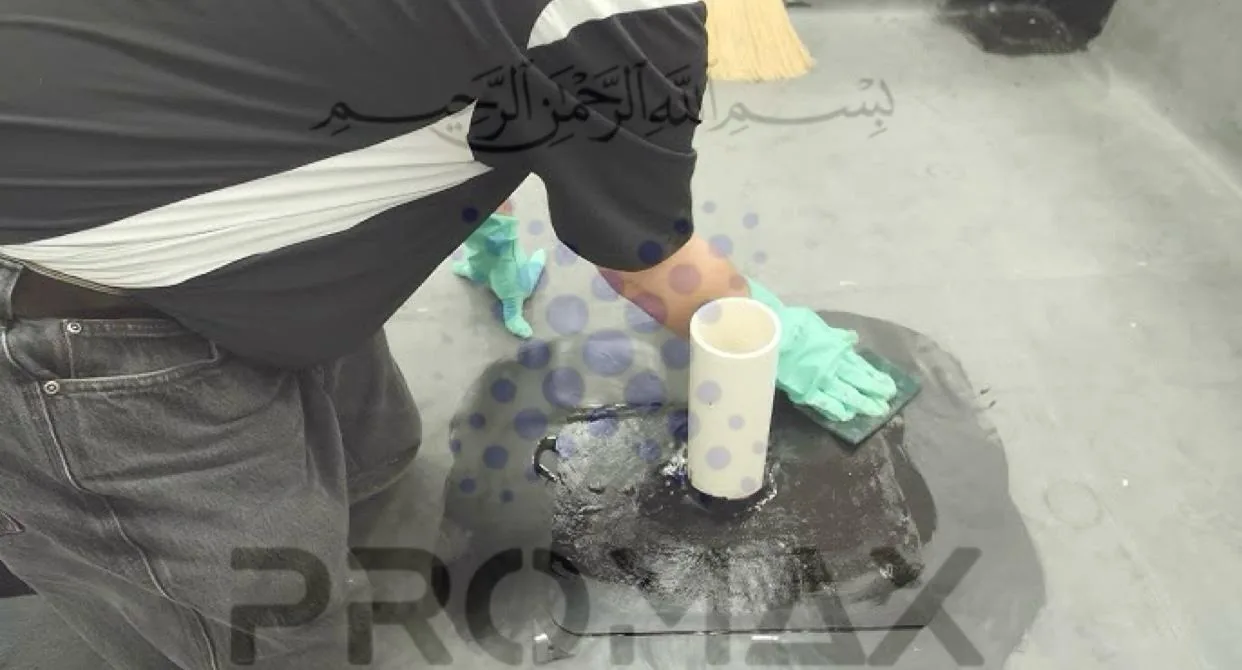
For a round pipe, the detail may include a formed boot or a field-fabricated EPDM collar. The flashing should extend onto the roof surface with adequate overlap in all directions. Its upper edge must be arranged so water flows over the flashing rather than being directed underneath it. On a sloped roof, the upslope side deserves special attention because it faces the highest water load.
Rectangular ducts, large vents, and equipment supports generally require custom-fabricated flashing. Sharp corners should not be treated as simple folds in a flat membrane. They need properly formed corner pieces and reinforced transitions that maintain flexibility without creating fishmouths, wrinkles, or open channels.
For penetrations through corrugated sheets, the roof profile creates another challenge. A flat patch that bridges over corrugations leaves voids below it. Those voids become water paths. The flashing system must conform to the sheet profile or include compatible closure and transition materials that create continuous contact across the ribs and valleys.
Sealant still has a role, but it should support the flashing system rather than replace it. Using sealant as the sole waterproofing layer is a common temporary fix that often fails under UV exposure and expansion cycles. Material compatibility is essential as well. Some sealants, cleaners, and old coatings can affect adhesion or react poorly with the new system.
Installation Details That Prevent Repeat Leaks
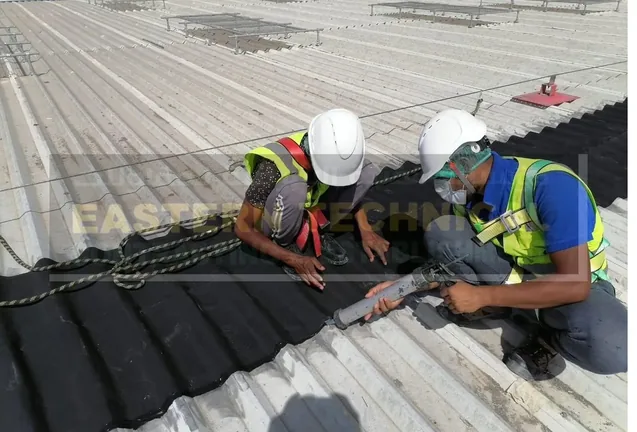
Once the substrate is prepared and the correct detail is selected, installation must follow a controlled sequence. Prime surfaces where the selected system requires it, allow the primer to flash off correctly, and apply the EPDM membrane or flashing without stretching it. Stretched material may shrink back later and place stress on edges or corners.
Work the membrane firmly into corrugations, around pipe contours, and at transitions using suitable pressure. Every edge must be fully adhered and sealed according to the system design. The work should avoid wrinkles, trapped air, lifted edges, and excessive sealant buildup. Thick sealant beads may look reassuring on the day of installation, but they can crack as they cure and move.
Mechanical termination may be necessary at certain curbs, vertical transitions, or high-stress details. Where used, termination bars, fasteners, and cover strips should be installed in a manner that does not create new water entry points. The detail should also remain serviceable. A facility team needs to be able to inspect the flashing after maintenance work on the pipe, duct, or rooftop equipment.
Do not overlook penetrations created after the original roof installation. New electrical conduits, solar supports, exhaust lines, and communication cables are frequent sources of leaks when routed through the roof without a designed flashing detail. Every new opening should be assessed before it is cut, not repaired after the first rain event.
Quality Checks Before Releasing the Work Area
A finished repair should be inspected from the roof and from inside the building. On the roof, check that the flashing is continuously bonded, laps are correctly oriented, fasteners are sealed, and drainage paths remain open. Inside, inspect for wet insulation, corrosion, stained liners, or concealed water tracks near the penetration.
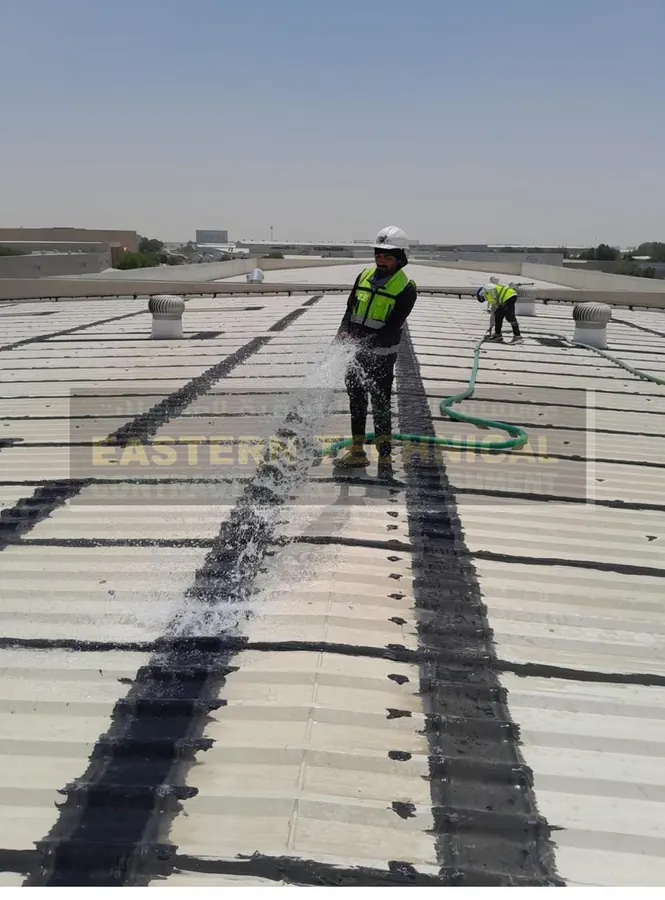
Where conditions allow, controlled water testing can help confirm the detail. The test should begin at the lowest part of the flashing and move gradually upslope. Flooding the entire area at once makes it harder to identify the actual point of entry if water appears inside.
Documentation also adds value for industrial facilities. Photos of the original condition, substrate repair, installed flashing, and final inspection help maintenance teams track recurring issues and plan future roof rehabilitation. On large warehouses and factories, this record can prevent the same location from being repaired repeatedly by different contractors using different materials.
Plan Maintenance Around High-Risk Details
Roof penetrations should be included in routine maintenance inspections, particularly before seasonal rain, after high winds, and following any work that disturbs rooftop services. Check for split boots, loose terminations, cracked sealant, corrosion, blocked drainage, and damage caused by technicians walking or placing tools on the flashing.
For aging metal roofs with multiple leak points, isolated patches may no longer be the most economical strategy. A wider EPDM waterproofing program across penetrations, gutters, seams, skylights, and damaged sheet areas can provide a more controlled long-term solution. The right scope depends on the roof’s remaining condition, operational needs, and the number of active failure points.
ETCE KSA approaches penetration waterproofing as an engineered roof detail, not a surface-level patch. A careful site assessment, correct fabrication, and disciplined installation give facility teams a repair that is built for heat, movement, and active industrial use.
The best time to address a weak penetration is while it is still a localized defect. Once water reaches insulation, steel supports, electrical systems, or stored goods, a small roof detail becomes an operational problem.
Related ETCE services
Need this checked on your own roof?
ETCE carries out industrial roof inspections, leak diagnosis, metal roof rehabilitation and EPDM waterproofing across Dammam, Al Khobar, Dhahran, Jubail, Riyadh and Jeddah.
Request a Roof Inspection WhatsApp UsMetal roof waterproofing across Saudi Arabia
ETCE is a metal roof waterproofing company in Saudi Arabia with its head office in Dammam. See our warehouse & factory roof waterproofing service or find your area: