A leaking joint on an industrial roof rarely stays a small problem. What starts as a hairline opening at a sheet lap, curb edge, gutter connection, or penetration flange can turn into insulation damage, corrosion, interior disruption, and repeated patchwork that never holds. If you need to know how to seal industrial roof joints properly, the answer is not simply applying more sealant. The joint has to be diagnosed, prepared, detailed, and sealed with a system that matches the roof type, movement, weather exposure, and condition of the substrate.
Industrial roofs fail at joints because joints are where movement, water flow, fasteners, heat, and aging materials meet. On metal roofs, daily expansion and contraction put constant stress on laps and transitions. On sandwich panel roofs and corrugated sheets, profile geometry creates irregular gaps that basic mastics cannot bridge for long. On older warehouses and factories, rust, failed fasteners, loose flashings, and past repair layers make a simple reseal unreliable unless the full joint condition is addressed first.
How to seal industrial roof joints without repeat failure
The first step is identifying what kind of joint you are dealing with. A longitudinal overlap in metal sheeting behaves differently from a roof-to-wall junction, a skylight perimeter, a gutter outlet, or a pipe penetration. Each one sees different movement, drainage patterns, and UV exposure. Treating them all with the same product is one of the most common reasons repairs fail early.
Joint width and movement matter just as much as location. Some roof joints need a flexible elastomeric sealant that can accommodate movement. Others need reinforcement with EPDM or butyl-based detailing because the opening is irregular, stressed, or already deteriorated. If the joint is sitting in ponding water, product choice becomes even more critical. A material that performs well on a vertical flashing may break down fast in a horizontal wet zone.
Surface condition decides whether the repair will bond or peel. Industrial roofs often carry dust, chalking, oxidation, oil residue, old bituminous repairs, or corrosion. Even a high-quality waterproofing product will fail if it is installed over weak, contaminated, or unstable surfaces. Good sealing work starts with cleaning, mechanical preparation where needed, and checking whether primer is required for the substrate.
Inspection before any sealing starts
A proper inspection should look beyond the visible leak point. Water often enters at one joint and travels along laps, purlins, or insulation before appearing inside the building. That is why the stained ceiling panel inside the facility is only a symptom, not the source. The roof should be checked for open side laps, failed end laps, loose or backed-out fasteners, rusted sheet edges, split flashing corners, damaged closures, and movement cracks around rooftop equipment.
This is also the stage to decide whether the joint can be repaired directly or whether local replacement is needed first. If the sheet metal is heavily corroded, deformed, or structurally weak, sealing over it may only delay failure. Durable work depends on a sound base.
Choosing the right system for industrial roof joints
For many industrial applications, the best long-term result comes from using a joint sealing system rather than a single exposed bead of sealant. That may include surface preparation, primer, sealant, reinforcing membrane, edge treatment, and protection at critical details. This is especially true on aging metal roofs, large warehouses, and high-temperature sites where movement cycles are severe.
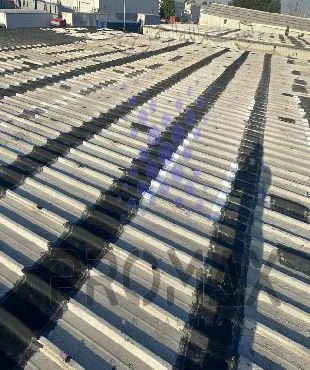
EPDM-based detailing is often a strong option for difficult joints because it combines flexibility, weather resistance, and good performance under UV and thermal stress. On roof penetrations, transitions, gutters, and irregular profiles, an EPDM waterproofing detail can outperform simple caulking because it creates a formed waterproof layer rather than relying on one thin line of adhesion.
But there are trade-offs. Not every joint needs a reinforced membrane detail. Narrow laps in good condition may only require resealing with the correct industrial-grade sealant after proper preparation. On the other hand, joints that have already been repaired several times usually need a more engineered approach. If the site has significant movement, heavy solar exposure, and previous coating breakdown, going back with the same quick fix is usually wasted money.
Sealant compatibility is not optional
One frequent failure point is chemical incompatibility between old and new materials. Silicone over contaminated surfaces, polyurethane over unstable previous repairs, or membrane adhesives over oxidized metal can all create weak bonds. Before sealing, the repair team should confirm compatibility with existing roof materials, especially on roofs with a long repair history.
This also applies to primers. Some substrates need them for reliable adhesion, and some do not. Skipping primer to save time can shorten repair life. Using the wrong primer can create a different problem. Product selection needs to follow the actual roof condition, not a generic method statement.
Application steps that determine performance
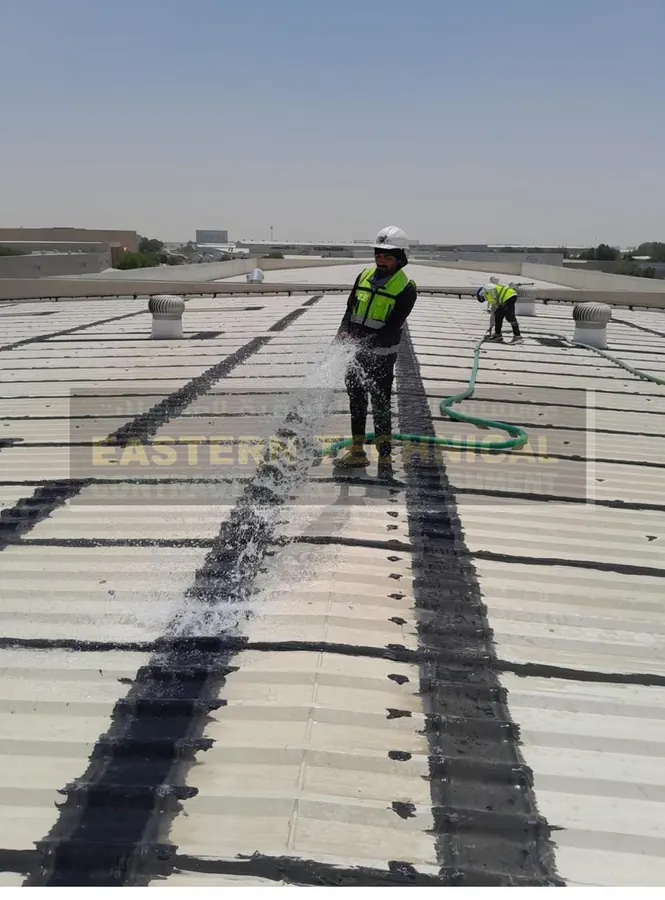
Once inspection and product selection are complete, execution becomes the deciding factor. The joint should be dry unless the selected system is specifically designed for damp application. Loose rust, failed coatings, and weak existing sealant must be removed. Cleaning should expose a firm, bondable surface rather than just making the area look neat.
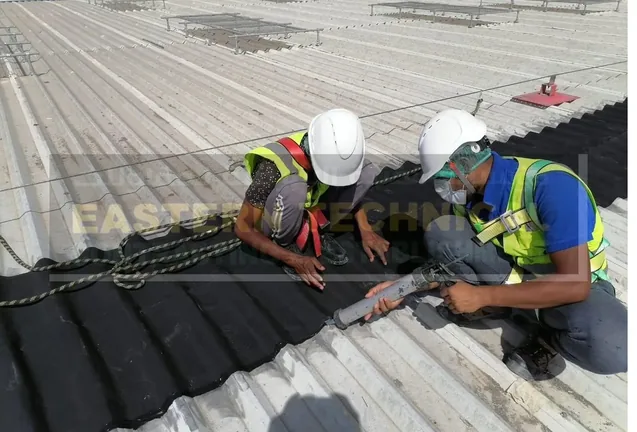
After preparation, the joint is sealed according to its function. A moving gap may need the correct bead geometry and backing support so the sealant can stretch without tearing. A roof lap or transition may need embedded reinforcement so the waterproof layer spans uneven surfaces and fastener lines. Penetrations and curbs need careful treatment at corners and changes in plane because that is where cracks often begin.
Curing conditions matter more than many site teams assume. Heat, dust, moisture, and installation timing can affect adhesion and finish quality. On active industrial sites, roof work also has to be coordinated with operations, safety controls, and access limitations. Fast work is valuable, but rushed detailing at critical joints usually shows up later as callbacks.
Common mistakes when sealing industrial roof joints
The biggest mistake is treating the leak instead of the joint assembly. If fasteners are loose, metal edges are rusted, or flashing geometry is poor, sealant alone will not solve the issue. Another common mistake is applying a thick surface patch over dirt or old failed material. It may stop water briefly, but it rarely survives heat cycles.
Overusing generic sealants is another problem. Industrial roofs need products that match movement, substrate, and exposure. A warehouse roof in high heat and UV conditions places very different demands on a joint than a shaded wall crack. The joint detail must match the service conditions.
There is also the issue of underestimating movement. Long metal sheets expand and contract every day. If the seal is too rigid or bonded incorrectly across the joint, it can split, shear, or pull away at the edges.
When repair is enough and when rehabilitation makes more sense
Not every leaking roof needs full replacement, but not every joint issue should be handled as an isolated patch either. If the roof has multiple active leak points, widespread lap failure, corroded fasteners, aging penetrations, and recurring maintenance history, a broader rehabilitation strategy often gives better value. That may involve resealing critical joints across the roof, treating penetrations and gutters together, and upgrading vulnerable details with EPDM waterproofing solutions designed for industrial service.
For facility managers and owners, the real question is not just how to stop today’s leak. It is how to reduce repeat access, protect production areas, and extend roof life with the fewest disruptions. A localized repair can be the right move when the failure is isolated and the roof is otherwise stable. A system-level approach is the better option when the same types of joints are failing across the asset.
On large industrial buildings in places such as Dammam and Riyadh, that decision often comes down to exposure. Heat, UV, wind-driven rain, dust loading, and thermal movement accelerate failure at roof joints. Repairs in these conditions need to be engineered for service life, not just immediate closure.
A well-sealed industrial roof joint should do more than pass the next rain event. It should remain bonded, flexible, and watertight through movement cycles and weather exposure while protecting the surrounding roof assembly from corrosion and deterioration. That only happens when inspection, material choice, surface preparation, and detailing are handled with the same seriousness as the visible leak itself. If the joint is critical, aging, or repeatedly failing, treat it like an engineered repair, not a tube-of-sealant job.
Related ETCE services
Need this checked on your own roof?
ETCE carries out industrial roof inspections, leak diagnosis, metal roof rehabilitation and EPDM waterproofing across Dammam, Al Khobar, Dhahran, Jubail, Riyadh and Jeddah.
Request a Roof Inspection WhatsApp UsMetal roof waterproofing across Saudi Arabia
ETCE is a metal roof waterproofing company in Saudi Arabia with its head office in Dammam. See our warehouse & factory roof waterproofing service or find your area: