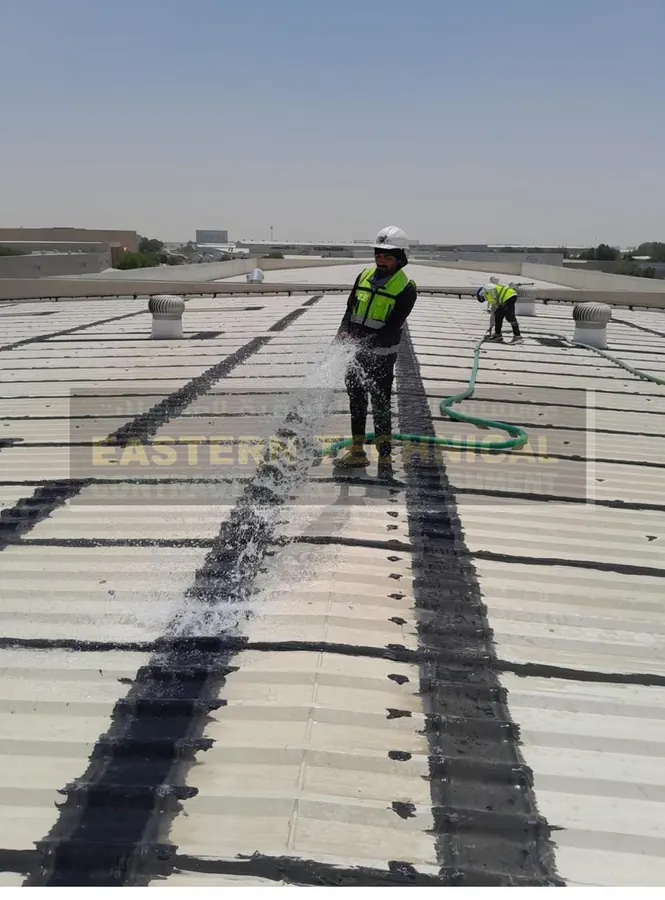
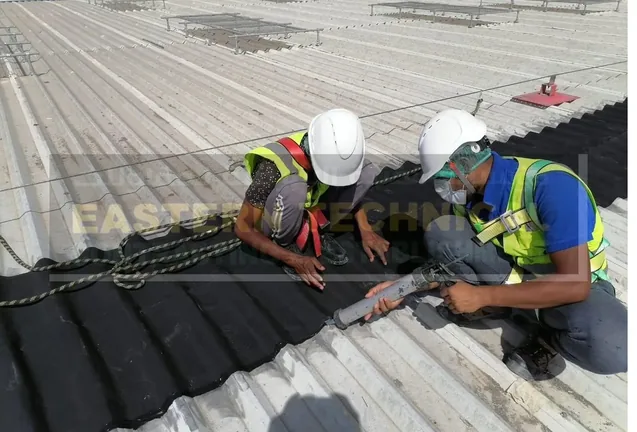

A leak rarely starts as a major event. On a warehouse or factory roof, it often begins as a loose fastener washer, a cracked seal around a penetration, a blocked gutter outlet, or a small corrosion point beneath an overlapping sheet. By the time water reaches inventory, electrical systems, insulation, or operating areas, the repair scope has already grown. This commercial building leak prevention guide is built for facility teams that need to protect active industrial assets before minor roof defects become downtime, safety exposure, and expensive structural deterioration.
Saudi Arabia's heat, UV exposure, wind-driven sand, temperature movement, and occasional heavy rainfall put continuous stress on metal roof systems. A practical prevention plan does not depend on one annual inspection or repeated spot sealing. It requires a clear view of where water enters, why that location failed, and which repair system will remain stable under real operating conditions.
Start With the Roof's Actual Failure Points
Industrial leaks do not always appear directly below the defect. Water can travel along purlins, insulation, sheet laps, and internal surfaces before it becomes visible inside the building. That is why a stain on a ceiling panel is evidence, not a diagnosis.
The highest-risk areas are usually roof penetrations, sheet overlaps, gutters, drain points, skylights, smoke vents, ridge details, wall-to-roof junctions, and areas affected by previous repairs. Fasteners are another frequent source of water entry, especially on aging corrugated sheets and single-skin metal roofs. When washers harden, fasteners loosen, or sheet movement enlarges a hole, water can pass through even when the surrounding panel looks acceptable.
Corrosion requires particular attention. Rust around a fastener or lap joint may indicate trapped moisture beneath an old coating or sealant. Simply applying new sealant over oxidized metal can conceal the problem for a short period, but it does not restore the weakened substrate. The affected area must be cleaned, assessed, treated, and rebuilt using a compatible waterproofing detail.
Build Inspections Around Weather and Roof Movement
A useful inspection program has two parts: planned checks and event-driven checks. Planned inspections establish a baseline and identify deterioration before the rainy season. Event-driven checks follow heavy rain, high winds, major temperature shifts, roof access by other trades, or any incident that could disturb sheets, flashings, or penetrations.
For many commercial facilities, inspections twice each year are appropriate, with additional targeted checks after severe weather. A roof with widespread corrosion, multiple rooftop services, older sandwich panels, or a history of recurring leaks may need more frequent review. The correct interval depends on the roof's age, exposure, condition, and the operational consequence of a failure.
During each inspection, the team should document the location, condition, probable cause, photographs, and recommended action for every defect. A detailed report makes it possible to prioritize repairs by risk instead of responding only to the most visible leak. It also helps owners distinguish between isolated maintenance work and signs that a larger rehabilitation program is becoming necessary.
Keep Drainage Routes Clear and Functional
Waterproofing materials cannot compensate for poor drainage indefinitely. Standing water increases pressure at laps, accelerates corrosion in gutters, exposes weak sealant joints, and creates conditions for debris buildup. On large warehouses, one blocked outlet can hold water across a significant roof area during a storm.
Gutters should be inspected for sediment, sand, loose fasteners, failed joints, corrosion, and damage from unsupported loads. Downpipes and drain outlets must be checked for restrictions, particularly where leaves, packaging debris, or windblown material can collect. Internal gutter systems deserve careful review because a concealed failure may allow water to enter wall assemblies or roof cavities before it is detected.
Drainage corrections may involve cleaning, regrading local low points, repairing gutter joints, adding support, or installing properly designed waterproofing at drain transitions. The best solution depends on the roof geometry. Adding a patch without addressing why water is ponding often leads to the same repair request after the next rain.
Treat Penetrations as Engineered Details
Pipes, ducts, cable trays, exhaust equipment, skylights, smoke vents, and access points interrupt the roof's protective surface. Each penetration must accommodate movement between the roof sheet, the equipment, and the supporting structure. Rigid sealant alone often fails because metal expands and contracts under intense daily heat.
EPDM rubberized waterproofing systems are particularly effective at difficult transition points when they are correctly designed and installed. Their flexibility helps them accommodate movement at penetrations, gutters, laps, skylight curbs, smoke vents, and drain points. However, material selection is only one part of the result. Surface preparation, adhesion, edge termination, reinforcement, and compatibility with existing roof components determine whether the detail remains watertight.
Avoid treating every penetration with the same repair method. A small conduit opening, a large duct curb, and a damaged skylight perimeter each require different detailing. Where rooftop equipment has been installed after the original roof construction, inspect for unsupported cuts, missing flashings, and improper fastening that may have compromised the sheet profile.
Control Corrosion Before It Spreads
On metal roofs, corrosion is both a waterproofing issue and an asset-life issue. Once the coating is damaged, moisture can move beneath laps, around fasteners, and through scratches caused by maintenance access. The visible rust line is often smaller than the affected area below it.
Effective corrosion control starts with identifying the source of moisture and removing loose oxidized material. The repair approach may include local metal treatment, replacement of severely degraded sheet sections, fastener replacement, lap restoration, and a compatible protective waterproofing system. Where the roof has broad deterioration, isolated repairs can become inefficient. Rehabilitation may be more economical because it addresses multiple failure points as one integrated system.
Facility teams should also review roof access practices. Uncontrolled foot traffic, dragged equipment, unsecured tools, and unplanned service work can damage panels and sealants. Designated walk routes and clear permit controls reduce avoidable roof damage, especially on active logistics and manufacturing sites.
Choose Repairs Based on Cause, Not Convenience
The fastest repair is not always the most durable repair. Applying sealant at a leak point may be appropriate for a small, well-defined defect on sound material. It is not the right answer when the surrounding metal is corroded, drainage is poor, movement is excessive, or previous sealant layers have failed repeatedly.
A good repair decision considers the roof's remaining service life, the size of the affected area, the building's operational sensitivity, and access requirements. Local repairs are efficient when defects are isolated. Sectional restoration is often better where a gutter line, roof elevation, or group of penetrations has common deterioration. Full roof rehabilitation becomes a serious option when failures are widespread and reactive maintenance is consuming budget without improving reliability.
This is where a contractor's diagnostic capability matters. The work should begin with site inspection and condition reporting, then move to a defined scope that includes preparation, materials, detail treatment, quality checks, and maintenance recommendations. ETCE KSA applies this end-to-end approach for industrial roofs where leaks, rust, and complex roof details require more than temporary patching.
Create a Practical Leak Prevention Plan
A prevention plan should assign responsibility, not just list inspection dates. The facility manager may own the program, while maintenance teams handle routine housekeeping and a specialist contractor performs detailed assessments and engineered repairs. Procurement teams should retain inspection reports, repair records, warranty information, and photographs so recurring issues can be tracked over time.
The plan should define how leaks are reported, who assesses urgency, and how emergency work is separated from permanent corrective work. For example, a temporary water-control measure may be necessary during rainfall, but the final repair should be scheduled after the area is dry and properly prepared. Combining these two steps without documenting them is one reason temporary repairs remain in place far longer than intended.
Budgeting should also reflect risk. A leak above a critical production area, electrical room, high-value storage zone, or busy loading operation deserves earlier action than a similar defect over an unused area. Prevention is not about repairing every cosmetic flaw immediately. It is about using condition data to stop water from reaching the parts of the building where consequences are highest.
Respond Early, Then Repair Permanently
When a leak is reported, protect people and operations first. Isolate affected equipment where necessary, manage water safely, and document the internal location and weather conditions. Then inspect the roof system as soon as conditions allow. Waiting until the next season can turn a manageable detail repair into corrosion, insulation damage, and repeat disruption.
The most reliable commercial roofs are not those that never receive maintenance. They are the roofs managed by teams that inspect early, correct root causes, and treat every penetration, gutter, lap, and corroded area as part of one working waterproofing system.
Related ETCE services
Need this checked on your own roof?
ETCE carries out industrial roof inspections, leak diagnosis, metal roof rehabilitation and EPDM waterproofing across Dammam, Al Khobar, Dhahran, Jubail, Riyadh and Jeddah.
Request a Roof Inspection WhatsApp UsMetal roof waterproofing across Saudi Arabia
ETCE is a metal roof waterproofing company in Saudi Arabia with its head office in Dammam. See our warehouse & factory roof waterproofing service or find your area: