A roof leak over a cable tray, production line, or storage bay rarely starts as a major failure. More often, it begins at a small penetration that was patched with the wrong material, sealed without proper surface prep, or left to move under heat and vibration. The best ways to seal roof penetrations depend on the roof type, the penetration detail, and the movement the assembly will see over time.
On industrial buildings, penetrations are not minor details. Pipes, ducts, cable routes, supports, vents, skylight curbs, drain outlets, and mechanical fixings interrupt the roof plane and create stress points. On metal roofs and sandwich panel systems, these areas are exposed to thermal expansion, UV, standing dust, moisture, and fastener fatigue. A seal that looks acceptable on day one can split, harden, or detach long before the next rainy period if the system was not engineered for the actual conditions.
What makes roof penetrations fail
Most penetration leaks are not caused by one issue alone. They usually come from a combination of poor geometry, poor adhesion, and movement. A round pipe through a flat membrane is relatively simple to flash. A cluster of conduits passing through a corrugated metal profile is not. Add corrosion, old mastics, loose screws, and heat cycling, and the weak point becomes obvious.
Another common problem is using general-purpose sealant as the whole repair strategy. Sealants have a role, but on industrial roofs they should not be expected to bridge large gaps, compensate for bad detailing, and survive constant movement without reinforcement. If the penetration is critical, the repair needs a complete waterproofing detail, not just a bead of product around the edge.
Best ways to seal roof penetrations on industrial roofs
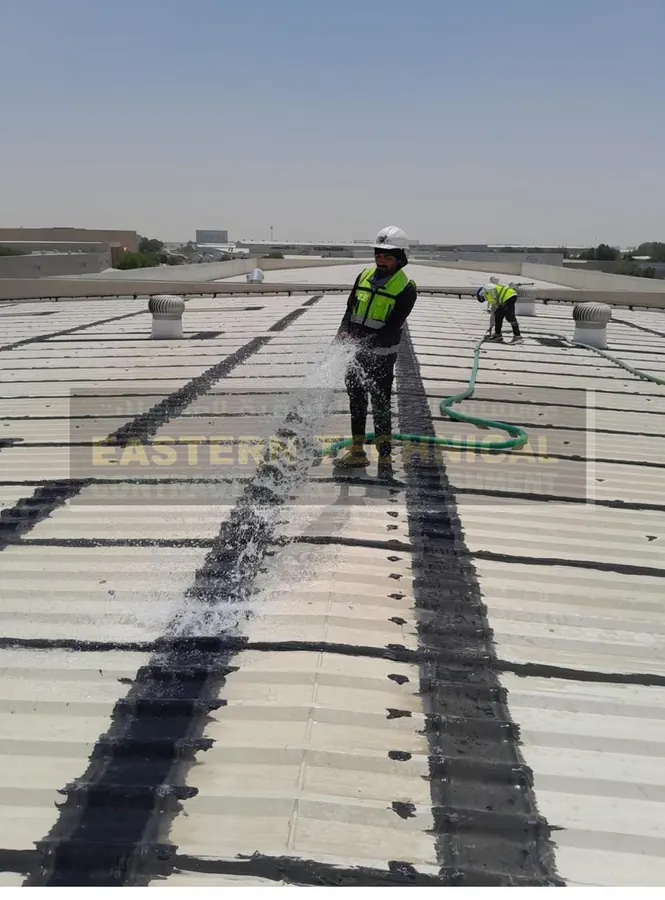
The right approach starts with the substrate. Metal roofs, single skin sheets, corrugated sheets, and insulated sandwich panels each require different preparation and attachment methods. The best performing details are usually built as a system – cleaned substrate, corrosion treatment where needed, primer if required, formed flashing, reinforced waterproof layer, and termination detail that controls water entry even when movement occurs.
EPDM flashing for irregular and high-movement details
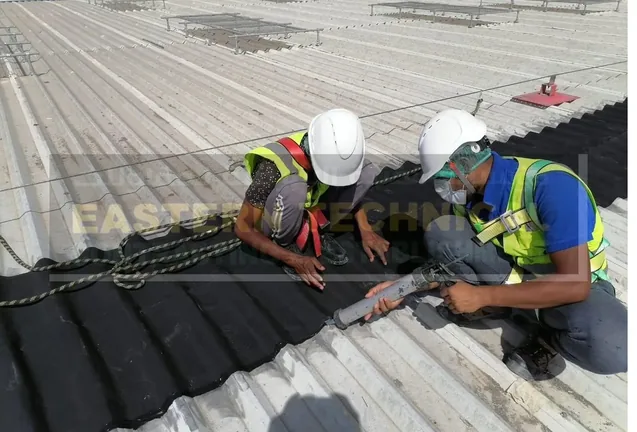
For many industrial applications, EPDM-based flashing systems are among the best ways to seal roof penetrations because they remain flexible under heat, UV, and long-term movement. This matters on metal roofs where expansion and contraction are constant. A rigid patch may look neat initially, but it often cracks at the edge or pulls away from the profile.
EPDM works especially well around pipes, ducts, curb upstands, drain points, and awkward transitions where the roof profile makes standard patching unreliable. When installed correctly, it forms a continuous waterproof barrier that can absorb movement rather than fighting it. On older roofs, this flexibility becomes even more valuable because the roof is already shifting, aging, and carrying past repairs.
That said, EPDM is not a magic shortcut. The substrate still has to be properly cleaned and stabilized. If the metal beneath is loose, heavily corroded, or contaminated with failing bitumen, dust, oil, or chalking coatings, adhesion will suffer. Good waterproofing starts with surface discipline.
Pre-formed boots for round penetrations
Where the penetration is a standard pipe or conduit, pre-formed pipe boots are often the most reliable option. They create a consistent shape around the penetration and reduce the installer dependency that comes with hand-cut patchwork. On metal roofs, the boot must match the roof profile and be sealed at the base with a compatible waterproofing method, not just fastened mechanically and caulked.
This is where many failures begin. A boot can be a strong solution, but only if the base is seated correctly over the roof profile, the fastening pattern is controlled, and the edge treatment is designed to resist ponding, wash-down, and thermal movement. If the pipe carries heat or vibration, those conditions also need to be considered.
Reinforced flashing at curbs, ducts, and grouped services
Large penetrations and grouped service entries need more than a surface patch. Duct penetrations, equipment curbs, smoke vents, and cable clusters usually need reinforced flashing with shaped corners, vertical terminations, and a waterproof tie-in to the main roof field. These are the details where rushed repairs fail fastest.
A reinforced system is stronger because it spreads stress across the detail rather than concentrating it at one seal line. It also gives better control at corners and transitions, which are frequent leak points. If the roof has corrugation or uneven profile changes, the flashing should be formed to suit the geometry instead of forcing a flat material to bridge voids.
Surface preparation decides whether the repair lasts
The quality of the seal is only as good as the surface below it. On industrial roofs, preparation usually includes removing failed sealants, treating rust, tightening or replacing defective fasteners, cleaning dust and contaminants, and drying the area fully before application. If moisture is trapped below the repair, the problem can continue underneath even when the top surface looks sealed.
On aging metal roofs, corrosion around penetrations is common. If rusted metal has lost thickness or structural grip, waterproofing alone will not solve the issue. The detail may need local metal replacement, support fabrication, or mechanical stabilization before any sealing system is installed. This is one reason experienced roof maintenance contractors approach leaks as building-envelope failures, not just product application tasks.
The wrong sealants create expensive repeat work
Not every sealant belongs on every roof. Some products harden too quickly in high-heat environments. Some lose adhesion on coated metal. Others are applied too thick, too thin, or over incompatible residues. A temporary stopgap may be acceptable during emergency response, but it should not be mistaken for a durable penetration detail.
This matters for procurement and maintenance teams because low-cost patching often turns into recurring callouts, damaged insulation, rust spread, and interior disruption. The cheaper repair on paper can become the most expensive option over a two- or three-year period. On active warehouses and factories, the cost of interruption often exceeds the repair cost itself.
Inspection should focus on movement, not just visible gaps
A penetration may appear sealed and still be close to failure. Good inspection looks at signs of stress – stretched flashing, split corners, open laps, loose terminations, fastener back-out, cracked mastics, corrosion bleed, and discoloration from trapped moisture. It also considers where water travels. The leak inside the building may not sit directly below the failed penetration detail.
On large industrial roofs, this is where a systematic inspection adds value. A detailed site review can identify whether the issue is isolated or part of a wider pattern across vents, skylights, drains, and service entries. ETCE KSA often sees buildings where one visible leak led to the discovery of multiple weak penetration details installed during different phases of expansion and maintenance.
When replacement is better than resealing
There are cases where resealing is the wrong decision. If a penetration was poorly designed from the start, if the support framing is moving excessively, or if corrosion has compromised the surrounding roof sheet, repeating the same type of patch will only delay failure. In those cases, modification of the penetration detail or local roof rehabilitation is the better path.
This is especially true on older warehouse and factory roofs where multiple contractors have added new services over time. Every new pipe, cable, or bracket changes the water path and increases risk if the flashing standard is inconsistent. A proper repair may involve re-detailing the area completely so future maintenance becomes simpler and more reliable.
Choosing the best sealing method for your roof
If the penetration is round, stable, and in good condition, a properly installed boot or EPDM pipe flashing is often the strongest option. If the detail is irregular, grouped, or subject to heavy movement, a custom reinforced EPDM flashing system usually performs better. If corrosion or loose sheeting is present, the repair should begin with substrate correction, not surface sealing.
For facility managers and project teams, the practical lesson is simple. Do not evaluate roof penetration sealing by product name alone. Evaluate it by substrate condition, roof profile, expected movement, UV exposure, water flow, and access for future maintenance. The best ways to seal roof penetrations are the methods that match the actual roof behavior, not the ones that are fastest to apply.
A well-executed penetration detail is quiet work. No callbacks, no staining, no rust trails, no drip buckets below. That is usually the standard worth paying for.
Related ETCE services
Need this checked on your own roof?
ETCE carries out industrial roof inspections, leak diagnosis, metal roof rehabilitation and EPDM waterproofing across Dammam, Al Khobar, Dhahran, Jubail, Riyadh and Jeddah.
Request a Roof Inspection WhatsApp UsMetal roof waterproofing across Saudi Arabia
ETCE is a metal roof waterproofing company in Saudi Arabia with its head office in Dammam. See our warehouse & factory roof waterproofing service or find your area: