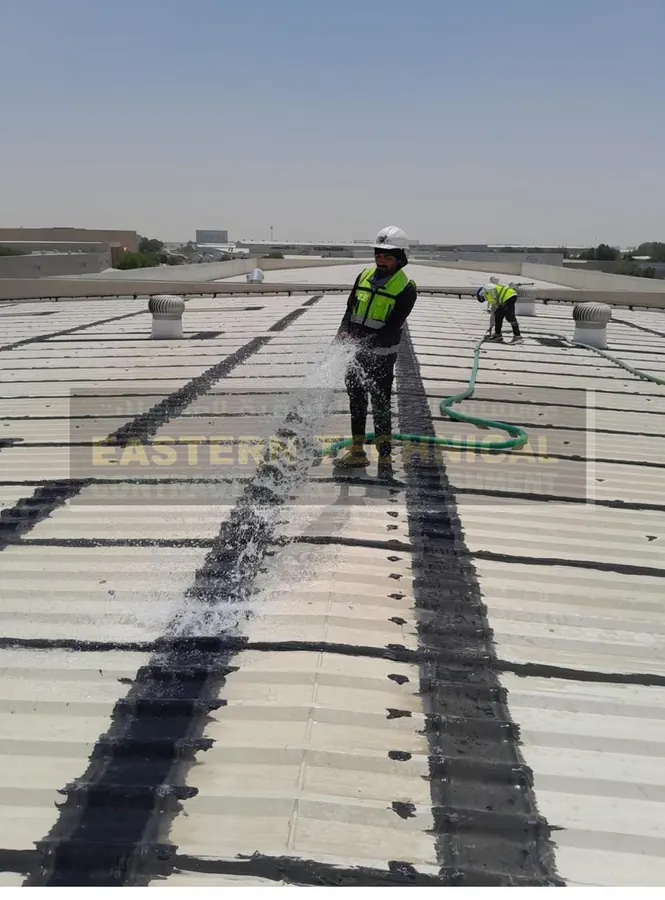
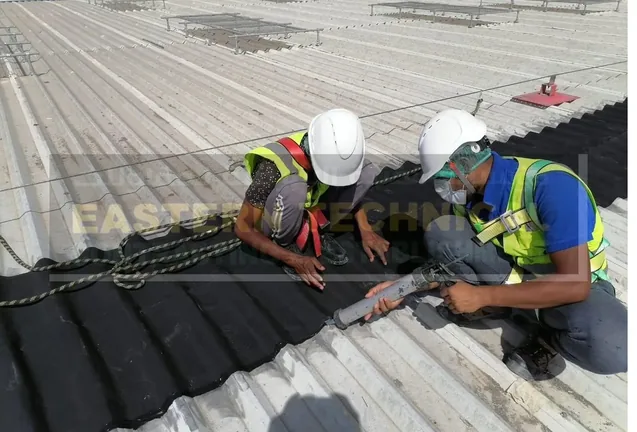
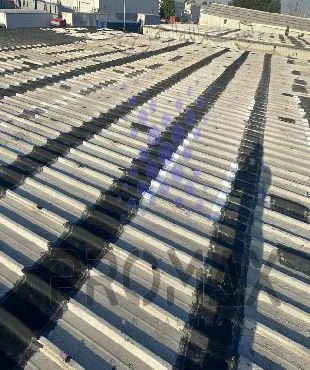
A metal roof rarely starts leaking across the whole sheet. It usually starts at the seam.
That is why facility teams asking how to waterproof metal roof seams are usually dealing with a very specific problem – recurring leaks at overlaps, failed fastener lines, capillary action at side laps, movement at expansion points, or corrosion around joints that were never properly treated in the first place. On industrial buildings, that small seam failure can quickly turn into insulation damage, rust spread, production disruption, and expensive reactive maintenance.
Why metal roof seams fail in the first place
Waterproofing a seam is not just about applying more sealant. If the seam is moving, contaminated, rusted through, or poorly detailed around penetrations, any surface treatment will have a short life.
Most seam failures come from a combination of age and movement. Metal expands in heat and contracts when temperatures drop. On large warehouse and factory roofs, that repeated movement puts constant stress on laps, screws, washers, clips, and old sealant lines. Add standing water, dust, UV exposure, and poor previous repairs, and the seam becomes the first weak point.
There is also a major difference between a cosmetic repair and a waterproofing system. A quick bead of sealant over a dirty joint may stop a leak briefly, but it does not create a durable bond. For industrial roofs, the goal is to build a system that tolerates movement, resists weathering, and bridges difficult leak points without breaking down after one season.
How to waterproof metal roof seams the right way
The right method depends on roof condition, profile type, seam design, slope, and whether the building is active during the work. A single-skin corrugated roof, a standing seam roof, and a sandwich panel roof do not behave the same way.
In most cases, proper seam waterproofing follows five technical stages: inspection, surface preparation, correction of damaged components, seam treatment, and final detailing around related leak points. Skipping any one of these is usually where repair quality drops.
Start with inspection, not product selection
Before choosing a sealant, tape, or membrane, the seam condition has to be checked closely. That means identifying whether the leak is actually coming from the visible joint or migrating from nearby fasteners, ridge details, skylights, gutters, penetrations, smoke vents, or drain points.
On industrial roofs, leak paths can be deceptive. Water may enter at one seam and appear several meters away inside the building. A proper inspection should look for lap separation, failed butyl lines, missing fasteners, loose fixings, corrosion at overlaps, damaged flashing, and signs of movement where two roof sections meet.
If the metal is structurally weak or perforated by rust, waterproofing alone is not enough. The damaged section may need plate replacement, reinforcement, or localized rehabilitation before any seam treatment is applied.
Surface preparation decides the life of the repair
This is the stage most failed repairs have in common – poor prep.
For a seam to be waterproofed correctly, the surface must be dry, clean, and stable. Dirt, chalking, loose rust, old cracked sealant, oil residue, and oxidation all interfere with adhesion. On older industrial roofs, contamination is often severe enough that simple wiping will not do the job.
Preparation may involve mechanical cleaning, rust removal, degreasing, drying, and priming depending on the substrate and system being used. If old sealant is partially bonded and partially loose, it should not be buried under a new coating and called repaired. It needs to be removed or properly treated so the new waterproofing layer bonds to the roof, not to a failing patch.
The same applies to wet insulation below the seam. If water has been entering for a long period, hidden moisture may continue affecting the roof assembly even after the visible leak is sealed. That is why industrial roof repair should be based on condition, not guesswork.
Choosing the right seam waterproofing method
There is no single answer for every roof. The best solution depends on whether the seam is simply open, actively moving, rusted, or tied into multiple leak-prone details.
Sealants work best for limited, well-defined repairs
High-quality roof sealants can be effective when the seam is still structurally sound and the repair area is relatively localized. But the sealant must be compatible with metal roofing, able to handle movement, and suitable for UV exposure.
For narrow gaps, overlap joints, and fastener-adjacent seam lines, a flexible sealant can restore waterproofing if the joint geometry is correct and the bond area is properly prepared. The trade-off is service life. Sealants alone are usually more vulnerable on large roofs with ongoing thermal movement, especially where previous repair layers already exist.
Seam tapes and reinforced systems add stability
For many industrial roofs, reinforced seam treatment is a stronger option than sealant alone. This typically combines a compatible primer or adhesive layer with a waterproof seam tape, reinforced strip, or elastomeric detail treatment that bridges the joint rather than just filling it.
This approach is especially useful where the seam opens slightly with movement or where water is repeatedly driven into side laps by wind. Reinforced systems distribute stress across a wider area and reduce the chance of cracking directly over the joint.
EPDM-based waterproofing is valuable on complex leak points
Where metal roof seams connect to penetrations, skylights, curbs, gutters, drains, or irregular details, EPDM-based waterproofing systems are often the more dependable option. These systems are particularly useful on aging warehouse and factory roofs because they conform well to difficult shapes and maintain flexibility under movement and weather exposure.
That matters in real operating conditions. A roof seam is rarely an isolated line across open sheet metal. It usually interacts with screws, terminations, junctions, and fabricated details that fail together. A more engineered EPDM repair can address the seam and the surrounding leak path as one system instead of treating each symptom separately.
Common mistakes when waterproofing metal roof seams
One common mistake is applying coating over active rust without stabilizing the substrate. Another is sealing over loose fasteners while leaving the sheet movement unresolved. A third is treating every leak as a seam leak when the actual failure is at a roof penetration or gutter edge.
There is also the issue of over-repair. Heavy patching materials can trap water, create ridges, or interfere with drainage if they are installed without care. On some roofs, too much build-up at the seam creates a new problem by forcing water to pond around the repair.
The wrong timing can also shorten repair life. Waterproofing should not be done when surfaces are wet, unstable, or excessively contaminated by dust and airborne debris. Adhesion problems often begin on the day of installation, even if the leak does not reappear until later.
When a seam repair is not enough
If leaks are appearing at multiple seam lines across an aging roof, repeated spot repairs may no longer be the most cost-effective route. At that stage, the issue is usually system-wide deterioration rather than one failed joint.
This is where a condition assessment becomes critical. The right answer may be a targeted rehabilitation program that includes seam waterproofing, fastener treatment, penetration detailing, gutter repair, and localized metal replacement. For warehouse and factory owners, that approach often delivers better service life than chasing one leak after another.
On active industrial sites, execution matters as much as material choice. Repair sequencing, access planning, weather control, and safe coordination around operations can determine whether the job solves the problem or creates downtime.
What facility managers should expect from a proper repair scope
A professional seam waterproofing scope should clearly define the leak points, substrate condition, preparation method, repair system, and detail treatment. It should also explain where localized repair ends and where broader roof rehabilitation may be recommended.
For industrial assets, a contractor should be able to inspect, diagnose, fabricate supporting metal details if needed, install the waterproofing system, and support future maintenance without pushing the owner to coordinate multiple trades. That is usually where repair quality improves – one accountable team handling the roof as a working system.
ETCE KSA approaches metal roof waterproofing from that practical site-based perspective, especially on warehouses, factories, and aging industrial buildings where seams fail alongside penetrations, gutters, and corroded roof details.
If you are deciding how to waterproof metal roof seams, think beyond the visible crack. The best repair is the one that matches the roof movement, corrects the surrounding weakness, and keeps the building operating without the same leak returning after the next storm.
Related ETCE services
Need this checked on your own roof?
ETCE carries out industrial roof inspections, leak diagnosis, metal roof rehabilitation and EPDM waterproofing across Dammam, Al Khobar, Dhahran, Jubail, Riyadh and Jeddah.
Request a Roof Inspection WhatsApp UsMetal roof waterproofing across Saudi Arabia
ETCE is a metal roof waterproofing company in Saudi Arabia with its head office in Dammam. See our warehouse & factory roof waterproofing service or find your area: