A corroded metal roof rarely fails all at once. It starts at fasteners, laps, gutters, cut edges, skylight curbs, and low points where water sits longer than it should. If you are looking at how to repair corroded roof sheets, the real job is not just covering rust – it is identifying how far the damage has traveled, whether the sheet still has structural value, and which repair method will actually hold up under heat, movement, and repeated weather exposure.
On industrial and commercial buildings, that distinction matters. A light surface corrosion issue can often be restored with cleaning, rust treatment, sealing, and a protective coating. But if the metal has thinned, perforated, or failed around fixings and overlaps, patchwork alone can turn into repeat maintenance, ongoing leaks, and larger replacement costs later.
How to Repair Corroded Roof Sheets: Start With the Right Assessment
Before any repair begins, inspect the roof systematically. Corrosion on roof sheets is often worse than it looks from ground level. What appears to be a small rust stain may actually trace back to a failed fastener line, trapped moisture under overlaps, degraded sealant, or galvanic reaction where incompatible metals meet.
Focus on high-risk areas first. Sheet laps, end laps, screw penetrations, ridge caps, roof penetrations, gutters, and valley sections usually deteriorate faster than open sheet surfaces. In warehouses and factories, corrosion is also common near HVAC supports, exhaust points, skylights, and zones exposed to chemical vapors or standing condensation.
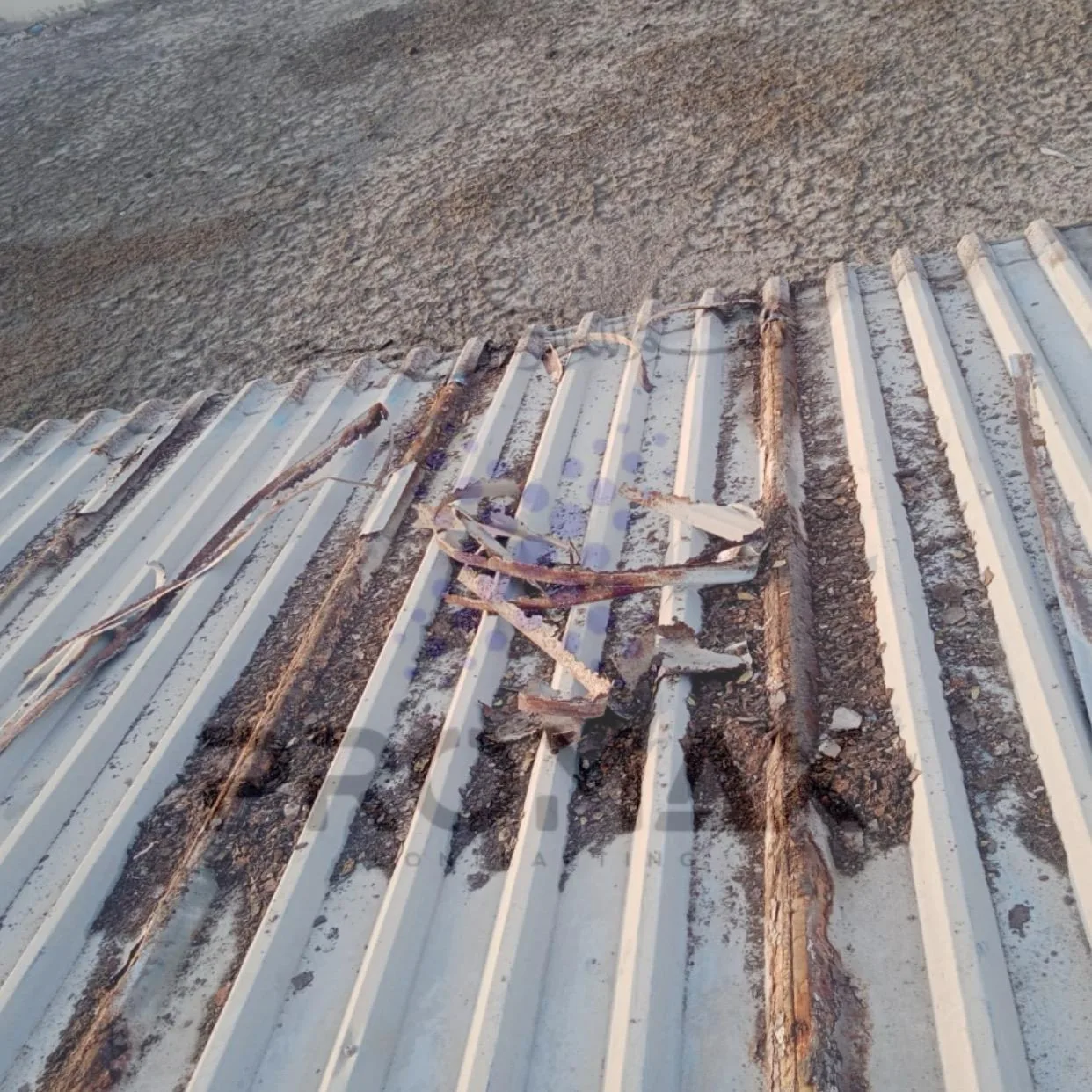
The key question is simple: is the corrosion cosmetic, moderate, or advanced? Cosmetic corrosion usually means surface rust with no metal loss. Moderate corrosion may involve pitting, coating breakdown, minor section loss, and leaking around fixings. Advanced corrosion means perforation, soft spots, distorted sheets, split laps, or widespread thinning. That last category usually pushes the repair strategy toward partial or full sheet replacement rather than restoration.
Safety and Access Come First
Metal roof repair is not a casual maintenance task. Corroded sheets can be fragile, especially around laps and old fastener lines. Walking directly on weakened sections can cause collapse, personal injury, or more roof damage.
Use proper access equipment, fall protection, and load distribution methods. On active industrial sites, isolate the work zone below and account for operations, equipment, and production lines under the repair area. If the roof has visible perforation, deflection, or unknown deck condition, treat it as a controlled repair environment, not a quick patch job.
Cleaning the Roof Before Repair
No durable repair starts on a dirty or loose surface. Dust, oxidation, old sealant residue, grease, biological growth, and flaking rust all interfere with adhesion.
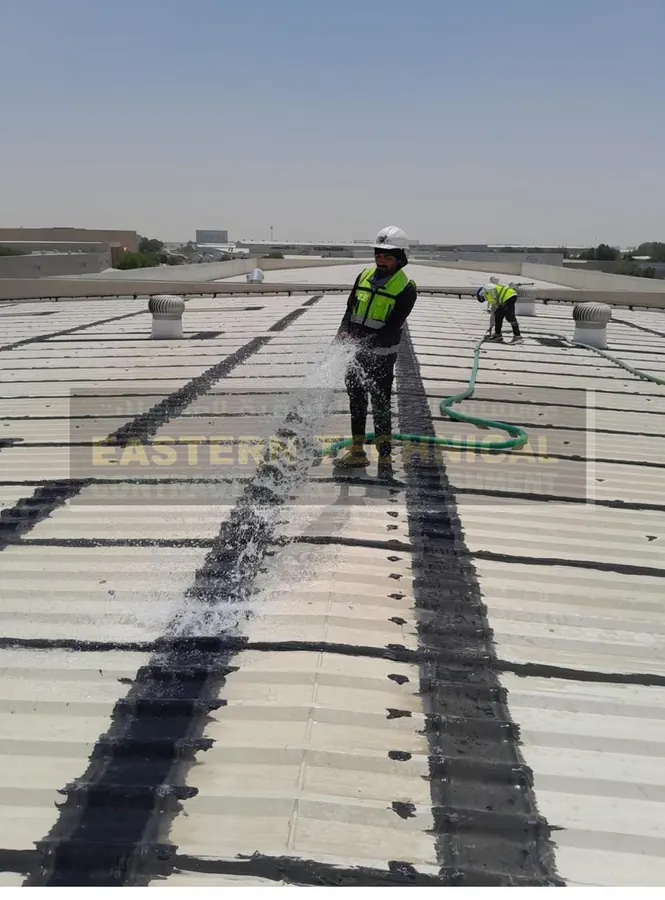
Begin by removing loose debris and washing the affected area. Mechanical cleaning may involve wire brushing, abrasive pads, or power tools suited to the sheet condition. The goal is to remove loose corrosion and failed coating without causing unnecessary metal loss. On lightly corroded sheets, careful surface preparation is often enough. On heavier corrosion, expect deeper cleaning and more selective judgment about whether the substrate is still sound.
If previous coatings are peeling, they need to be cut back to a firm edge. If old sealant is cracked or detached, remove it completely from the repair zone. Any patch or waterproofing layer placed over unstable material is likely to fail early.
Treating Rust and Stabilizing the Surface
Once the area is clean and dry, the exposed metal needs to be stabilized. On repairable sheets, this usually means applying a rust converter or metal primer designed for corroded steel surfaces. The exact system depends on the sheet type, the extent of oxidation, and the final repair method.
This is where many repairs go wrong. Teams often jump straight to sealant or paint without treating active corrosion underneath. That may improve appearance for a short period, but the corrosion process continues below the surface. On industrial roofs exposed to heat cycling and moisture, that shortcut rarely lasts.
A proper primer system improves adhesion and helps isolate the metal from future moisture exposure. But primer is not a fix by itself. It is part of the repair build-up, not the entire solution.
Sealing Fasteners, Laps, and Minor Corrosion Points
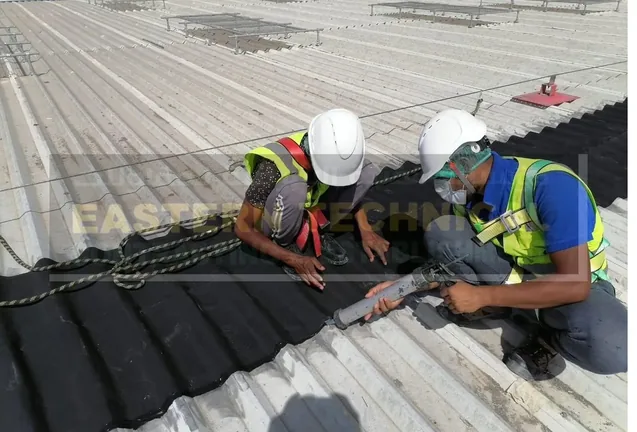
If the sheets are still structurally sound and the corrosion is concentrated around penetrations, screw heads, and overlaps, localized repair may be enough. Replace failed or rusted fasteners with compatible roofing fasteners of the right length and washer type. If the existing holes have elongated or the sheet around the fastener is weakened, upsizing the screw alone is not always enough. That area may need reinforcement or sheet replacement.
For laps and penetrations, use a sealant compatible with metal roofing movement and exterior exposure. Industrial roofs expand and contract significantly, especially in hot climates. A rigid seal may crack, while the wrong sealant can lose adhesion on weathered metal.
Where recurring leaks occur at difficult joints, a reinforced waterproofing detail often performs better than sealant alone. This is especially true around roof penetrations, upstands, skylight edges, and gutter connections where movement and water concentration are constant.
Patching Small Holes in Corroded Roof Sheets
Small perforations or isolated damaged spots can sometimes be patched if the surrounding sheet remains solid. The patch material must be compatible with the existing roof and large enough to extend beyond the damaged area into sound metal.
A proper patch is never just a blob of sealant over a hole. The damaged section should be cleaned, stabilized, and dried first. Then the repair area can be bridged using a reinforced waterproofing patch or a formed metal patch with a sealed perimeter, depending on the location and service conditions.
It depends on movement, water flow, and access. For a flat or low-slope zone that sees ponding, a reinforced waterproofing system may be more reliable than a rigid patch. On a profiled sheet where shape and drainage matter, a fabricated patch or localized sheet insert may be the better route. On aging warehouse roofs, EPDM-based detailing is often useful at leak-prone transitions because it tolerates movement well and can seal difficult geometries that fail repeatedly with standard mastics.
When Sheet Replacement Is the Smarter Repair
There is a point where repairing corrosion becomes false economy. If the sheet has lost thickness across a wide area, if corrosion is present on both top and underside, if laps are separating, or if multiple old patches already exist, replacement usually gives a more dependable result.
The same applies when corrosion has spread along purlin lines or fixing points. Even if you can stop a current leak, the sheet may no longer have the holding strength needed for long-term service. In that case, replacing selected roof sheets is often more efficient than repeated localized work.
On industrial sites, partial replacement can be staged to limit disruption. Damaged sheets, ridge components, gutters, and flashings can be fabricated and installed in sections while surrounding waterproofing details are upgraded at the same time. That kind of repair planning is usually more cost-effective than treating each leak event as a separate emergency.
Protective Coatings After Repair
After the metal is repaired and sealed, a protective coating system can extend service life significantly. This is especially valuable where the roof is generally salvageable but has widespread weathering and coating breakdown.
The coating must match the substrate and site conditions. Surface prep standards matter more than product claims. A good coating over poor prep will fail. A well-prepared roof with the right primer and topcoat system can gain years of additional performance, provided drainage, fasteners, and leak details are addressed first.
Do not use coating as a substitute for replacing failed metal. If holes, unstable laps, or advanced corrosion remain underneath, the coating becomes cosmetic rather than corrective.
What Causes Roof Sheets to Corrode Again
If you want the repair to last, correct the cause as well as the visible damage. Corrosion often returns because water is trapped at laps, gutters are blocked, incompatible metals are touching, fasteners are failing, or roof details allow chronic moisture entry.
In factories and logistics buildings, internal condensation can also be a major contributor. Leaks blamed on rain are sometimes partly driven by temperature differential and vapor buildup under the sheet. Coastal exposure, chemical atmosphere, and wind-driven dust can accelerate failure further.
This is why engineered roof rehabilitation tends to outperform one-off patching. The roof should be treated as a system – sheet condition, waterproofing details, drainage, penetrations, support condition, and movement behavior all affect the outcome.
A Practical Standard for Durable Repair
The best answer to how to repair corroded roof sheets is not always the cheapest one on day one. It is the method that matches the actual condition of the roof and reduces repeat failure. For one building, that may mean targeted rust treatment and sealing. For another, it may mean replacing sheets, rebuilding failed details, and adding a waterproofing system around penetrations and gutters.
Experienced industrial contractors approach this with inspection first, then repair design, then execution. That sequence avoids guesswork and prevents money being spent on repairs that only hide the problem. On large warehouses and factories, companies such as ETCE KSA typically handle this as a full roof maintenance scope rather than a single trade task, which is often the right approach when corrosion, leaks, and aging details are all connected.
If your roof sheets are already showing rust stains, fastener failure, or small perforations, the window for a clean repair is still open – but it does not stay open for long.
Related ETCE services
Need this checked on your own roof?
ETCE carries out industrial roof inspections, leak diagnosis, metal roof rehabilitation and EPDM waterproofing across Dammam, Al Khobar, Dhahran, Jubail, Riyadh and Jeddah.
Request a Roof Inspection WhatsApp UsMetal roof waterproofing across Saudi Arabia
ETCE is a metal roof waterproofing company in Saudi Arabia with its head office in Dammam. See our warehouse & factory roof waterproofing service or find your area: