A rusty roof rarely starts as a dramatic failure. It starts around a fastener, under old lap sealant, beside a roof penetration, or inside a gutter where water sits longer than it should. If you are responsible for a warehouse, factory, or commercial building, knowing how to repair roof rust damage early can save you from leaks, insulation damage, production disruption, and full-sheet replacement later.
On industrial metal roofs, rust is usually a symptom of a bigger problem, not just a surface defect. Standing water, failed coating systems, loose fasteners, incompatible repair materials, and movement at joints all create the conditions for corrosion. That is why a proper repair approach has to deal with both the visible rust and the reason it formed.
How to repair roof rust damage without missing the cause
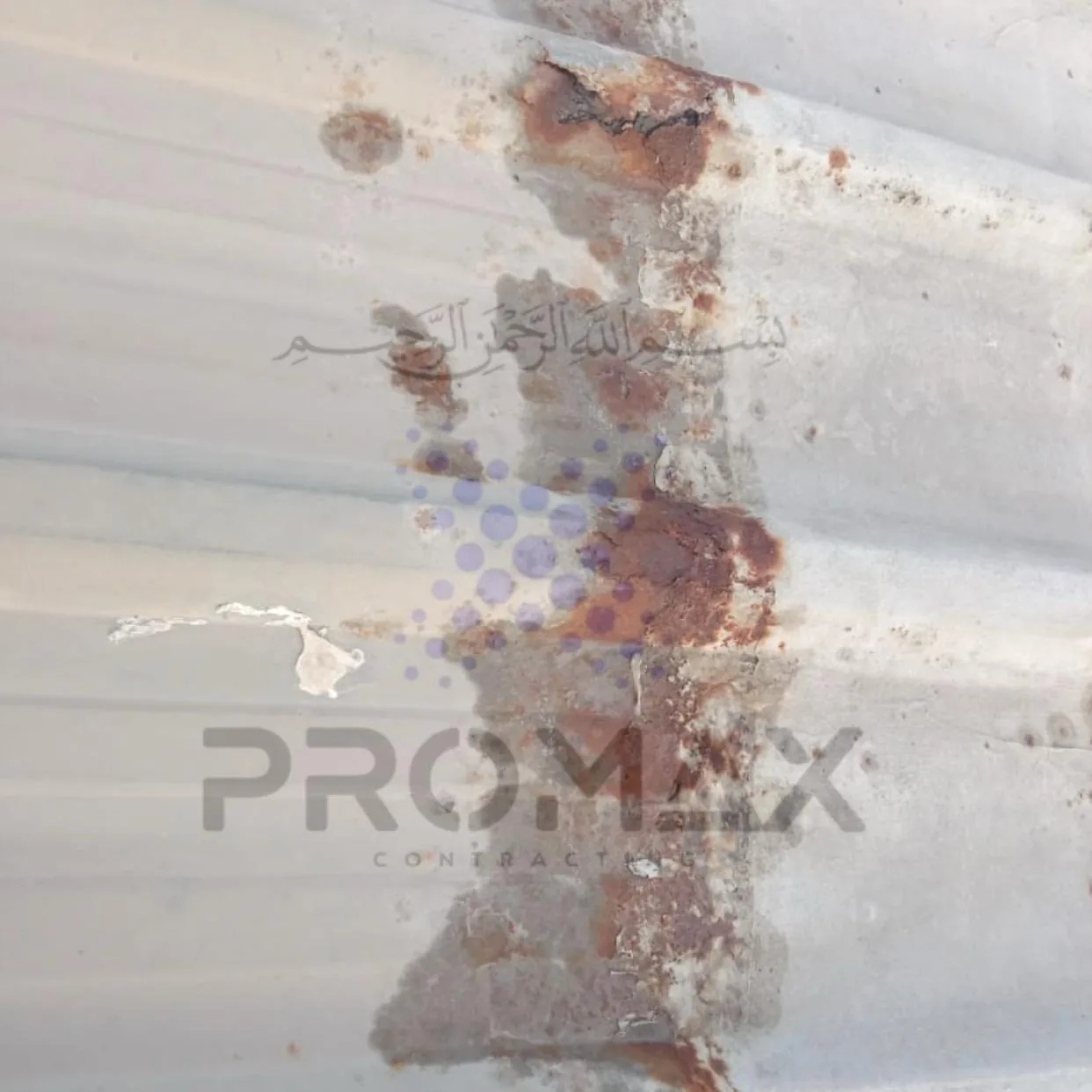
The first step is diagnosis. Before any grinding, coating, or patching begins, the roof needs to be checked for the actual corrosion pattern. Surface oxidation on exposed metal is one situation. Deep pitting around screws, rust at sheet laps, corrosion below rooftop units, and perforation near gutters are different situations and do not get the same repair.
On industrial sites, the most common mistake is treating all rust as cosmetic. It is not. If rust is limited to light surface staining and the metal thickness is still intact, localized treatment may be enough. If the roof sheet has lost section, is flaking, or has pinholes, the repair may need reinforcement or full replacement of the affected area. If corrosion is concentrated at details like skylights, smoke vents, curbs, or drain points, the repair should include waterproofing design, not just metal treatment.
A proper inspection usually checks roof sheets, panel laps, gutters, ridge lines, penetrations, flashings, support conditions, and drainage behavior. Moisture trapped under old sealants or under failed patches should also be considered. Rust often spreads farther than the visible stain line.
Start with preparation, not coating
If the roof is dirty, oily, chalking, or carrying loose corrosion, any repair product applied over it will have a short life. Surface preparation determines whether the system bonds or fails.
Loose rust needs to be removed by mechanical cleaning. Depending on the roof condition, that may mean wire brushing, abrasive cleaning, grinding, or power-tool cleaning. The goal is to remove unstable corrosion and expose sound metal without unnecessarily damaging the remaining sheet. Heavy-handed grinding can thin already weakened panels, so the method has to match the roof condition.
After cleaning, the area should be dry and free from dust, salts, and debris. This part matters more than many teams admit. On roofs exposed to sand, industrial dust, or chemical contaminants, poor cleaning leads to poor adhesion. If the roof is repaired during unsuitable weather or while moisture remains trapped in laps and fastener zones, rust can continue under the repair layer.
When rust converter helps and when it does not
Rust converters can be useful on light to moderate oxidation where full abrasive cleaning is not practical. They stabilize remaining corrosion and provide a base for compatible primers or coatings. But they are not a shortcut for badly deteriorated metal. If the sheet is perforated, delaminating, or structurally weak, a converter will not restore integrity.
This is where many patch jobs fail. A chemical treatment may improve appearance, but it does not rebuild metal that has already been lost.
Repair methods depend on the depth of damage
For light surface rust, the repair path is usually straightforward. Clean the surface thoroughly, treat residual oxidation where required, apply a corrosion-resistant primer, and then install a compatible protective top system. On industrial roofs, compatibility is critical. Primer, sealant, reinforcing layer, and finish coat must work together under heat, UV, and movement.
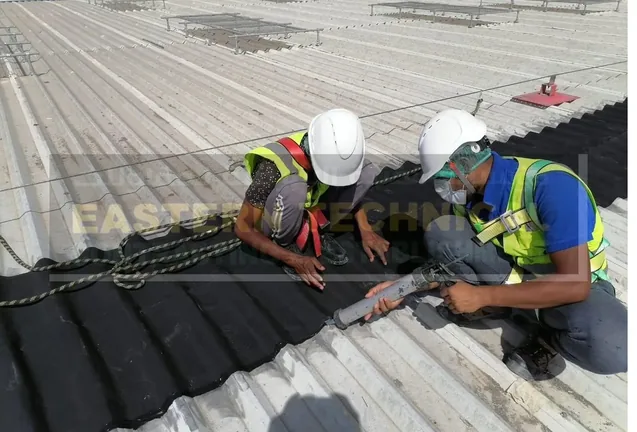
For moderate rust with localized pitting, the repair needs more than coating. Fasteners may need replacement if the heads have corroded or if washers have failed. Sheet laps may need resealing. Penetration details often need reinforced waterproofing because movement and water entry tend to repeat in those areas. A flexible waterproofing system can be more reliable than hard patching where thermal movement is high.
For advanced corrosion, cut-out and replacement is often the correct decision. If the metal is punctured, soft, or losing shape under foot traffic, trying to preserve it can create a false sense of security. In industrial facilities, that risk is not acceptable. The affected sheet, flashing, or gutter section should be replaced with matching or engineered-compatible material, then integrated into the surrounding waterproofing system.
Fasteners, laps, and penetrations are often the real failure points
Many roof leaks blamed on rust actually start with failed fasteners and open laps. Water enters, sits around the connection, and corrosion follows. The visible rust is then repaired, but the loose fixing or open joint remains. The leak comes back.
The same applies to penetrations. Pipes, ducts, equipment curbs, and skylight edges create interruption points in the roof skin. These areas move differently from the roof sheet and need flexible detailing. A rigid patch over a moving detail usually cracks. In these conditions, EPDM-based detailing systems are often a better long-term solution because they handle movement and maintain waterproofing at difficult transitions.
How to repair roof rust damage on industrial metal roofs
Industrial roofs require a more disciplined repair scope than small residential roofs. The roof area is larger, the details are more complex, and the consequence of failure is higher. A warehouse or factory roof repair has to be judged by service life, leak prevention, safety access, and downtime impact.
That means the repair plan should answer five questions clearly. Is the metal still structurally usable? Where is water entering or collecting? Which adjacent details are contributing to corrosion? What waterproofing system is compatible with the substrate? And can the repair be phased without disrupting operations below?
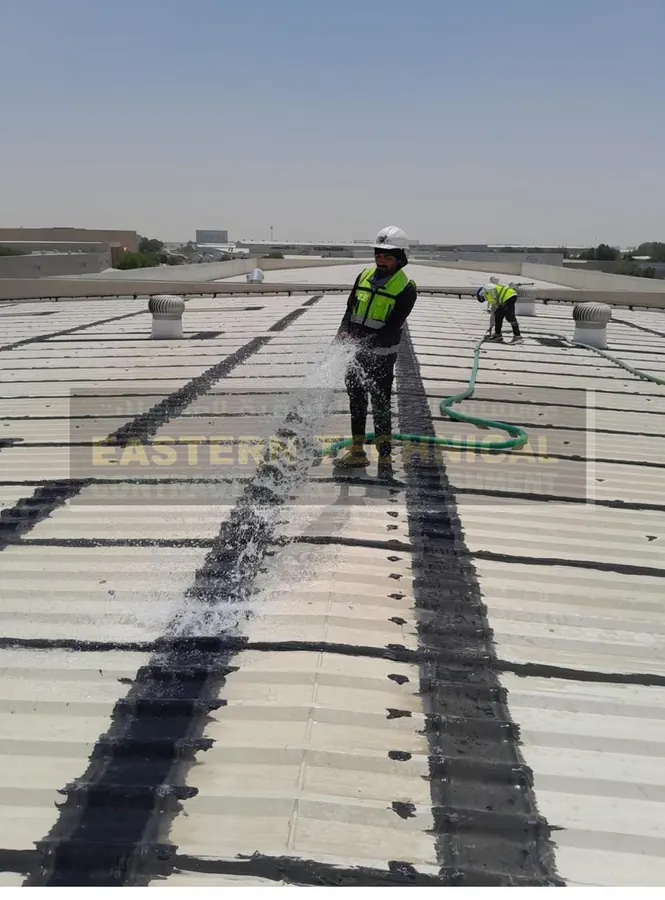
A practical repair sequence often includes condition assessment, rust removal, replacement of failed fasteners, local metal replacement where needed, treatment of cleaned metal, waterproof sealing of joints and penetrations, and final protection of repaired zones. On aging roofs, spot repair may need to be combined with broader rehabilitation in the most exposed areas, especially gutters and roof edges.
Coating alone is not rehabilitation
A fresh coating can improve appearance, but appearance is not performance. If there is trapped moisture, active lap movement, deep corrosion, or weak substrate, the coating becomes a temporary cover. This is one of the main trade-offs facility teams have to weigh. A lower-cost cosmetic repair may reduce immediate spend, but if it fails during the next rain cycle, the real cost is much higher.
On the other hand, not every rusted roof needs full replacement. Many metal roofs in industrial service can be restored effectively if intervention happens before widespread section loss. The decision depends on inspection findings, not assumptions.
Where repairs usually fail
Most repeat failures come from poor preparation, wrong material selection, or incomplete scope. Crews remove visible rust but ignore underside moisture. They seal a puncture but not the failed lap that caused it. They patch around a roof opening but leave corroded fixings in place. Or they use products that cannot tolerate roof movement and UV exposure.
Another common failure is ignoring drainage. If water continues to pond in the same area, rust will continue. Gutters, downpipes, outlet points, and roof slope conditions all affect corrosion. Repairs at the sheet level may not last if drainage defects are left unresolved.
On active industrial sites, access planning also matters. Uncontrolled foot traffic on weakened sheets can create new damage during repair. Safe access, sheet support awareness, and phased work sequencing are part of technical execution, not just site management.
When replacement is the better decision
There is a point where repair stops being economical. If corrosion is widespread across large roof sections, if multiple sheets are perforated, if structural supports are affected, or if previous patch layers have made diagnosis unreliable, replacement may be the smarter route.
That does not always mean replacing the full roof. Targeted replacement of roof zones, gutter runs, flashing assemblies, or badly deteriorated penetrations can restore serviceability while controlling cost. The right answer depends on the building’s age, operational sensitivity, and future maintenance plan.
For industrial property owners, the best results usually come from treating rust repair as part of a roof performance strategy. Inspection, metal repair, waterproofing, drainage correction, and after-repair monitoring should work as one scope, not as disconnected trades.
If you are facing recurring leaks or visible corrosion, the priority is not to hide the rust. It is to stop the roof from losing more life than it already has. Done properly, a rust repair should leave the area stronger, drier, and easier to maintain than before.
Related ETCE services
Need this checked on your own roof?
ETCE carries out industrial roof inspections, leak diagnosis, metal roof rehabilitation and EPDM waterproofing across Dammam, Al Khobar, Dhahran, Jubail, Riyadh and Jeddah.
Request a Roof Inspection WhatsApp UsMetal roof waterproofing across Saudi Arabia
ETCE is a metal roof waterproofing company in Saudi Arabia with its head office in Dammam. See our warehouse & factory roof waterproofing service or find your area: