A rust stain below a roof lap is rarely an isolated defect. On an active warehouse, corrosion often means water has already reached fasteners, sheet overlaps, purlins, insulation, or drainage details. Knowing how to restore corroded warehouse roofing starts with identifying the full path of water entry, then repairing the roof as a working system rather than applying a cosmetic coating over a failing sheet.
For warehouse and factory operators, the objective is clear: stop leakage, arrest further metal loss, protect production and stored goods, and extend service life without unnecessary shutdowns. The right scope depends on the condition of the roof sheets, supporting steel, drainage arrangement, existing waterproofing, and the building's exposure to heat, UV, sand, moisture, and chemical contaminants.
How to Restore Corroded Warehouse Roofing Safely
Roof restoration begins with an engineered site inspection. A competent assessment does more than identify visible red rust. It maps corrosion severity, active leak points, failed fasteners, loose flashings, damaged roof laps, clogged gutters, deteriorated sealant, and weak penetrations around ducts, skylights, smoke vents, and drain points.
The inspection should include both the roof surface and the underside of the roof where access is available. Internal staining, wet insulation, mold growth, sagging sheets, and rust around purlins can reveal problems that are not visible from above. Water may enter at one lap or penetration and travel a considerable distance before appearing inside the warehouse.
Documenting these findings in a detailed report allows the facility team to prioritize urgent structural or safety concerns before selecting the waterproofing system. It also prevents a common mistake: treating a leak at the visible drip point instead of repairing the actual entry point.
Classify the corrosion before choosing a repair
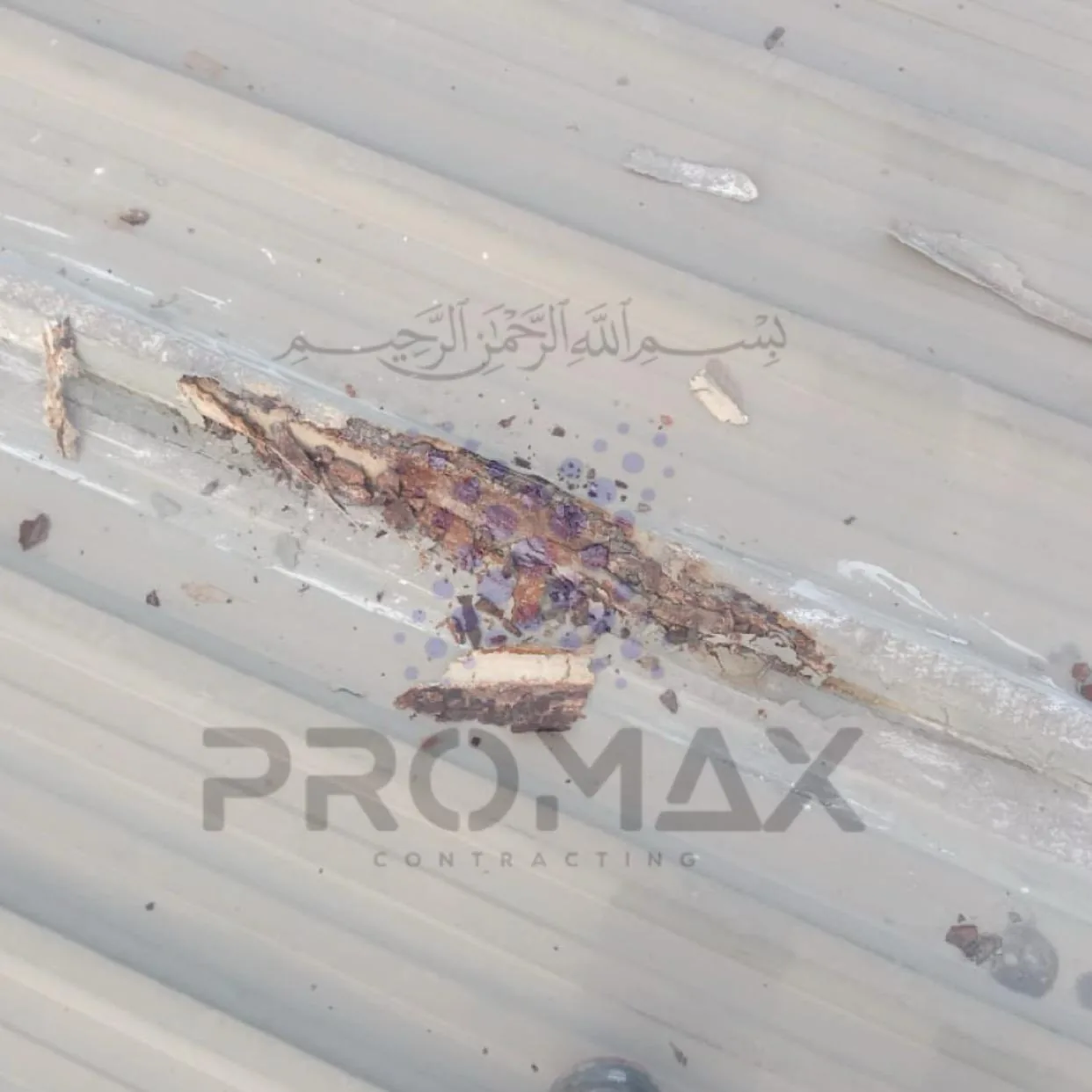
Light surface oxidation can often be restored. The metal remains sound, the corrosion has not perforated the sheet, and the protective coating can be renewed after proper cleaning and preparation. Moderate corrosion may include deeper pitting, failed fastener holes, weakened laps, or localized sheet thinning. This level normally requires mechanical repairs, fastener replacement, localized sheet replacement, and reinforced waterproofing.
Severe corrosion is different. If sheets have holes, edges are crumbling, roof laps have lost their integrity, or structural members show measurable section loss, a coating alone is not a repair. The affected sheets or steel components must be replaced or reinforced based on an engineering review. Attempting to bridge major deterioration with sealant creates a short-term patch and can conceal ongoing damage.
Remove the Cause, Not Just the Rust
Corrosion is usually driven by trapped moisture, failed drainage, condensation, coating breakdown, or incompatible repairs. In coastal and industrial environments, airborne salts and contaminants can accelerate the process. On large warehouse roofs, ponding water around gutters, low areas, and blocked drain paths is a frequent cause of repeat failure.
Before restoration work starts, crews should correct the conditions feeding the corrosion. Gutters and downpipes need cleaning and testing. Roof falls should be checked to confirm water is moving toward drains. Loose or improperly fixed sheets must be secured. Existing patch materials should be examined for cracks, separation, and trapped water beneath their edges.
Metal compatibility also matters. Using dissimilar metals without proper separation can create galvanic corrosion, particularly at fasteners, flashings, and fabricated repair pieces. Replacement components should be selected to suit the existing roof system and site conditions, with compatible washers, sealants, and protective coatings.
The Roof Restoration Sequence
A durable restoration follows a controlled sequence. The exact materials and curing times depend on the selected system, weather conditions, and roof substrate, but the process should not skip preparation.
1. Make the roof safe and stable
Access, fall protection, roof loading, and safe work zones must be planned before crews begin. Corroded sheets can lose their load-bearing capacity, especially near laps and fasteners. Workers should never assume an aged metal roof can safely support traffic without inspection.
Loose sheets, damaged fasteners, unstable flashings, and unsafe openings are addressed first. If internal operations must continue, the contractor should coordinate work sections, protect stock below, and maintain clear communication with the facility manager to minimize interruption.
2. Clean and prepare the metal surface
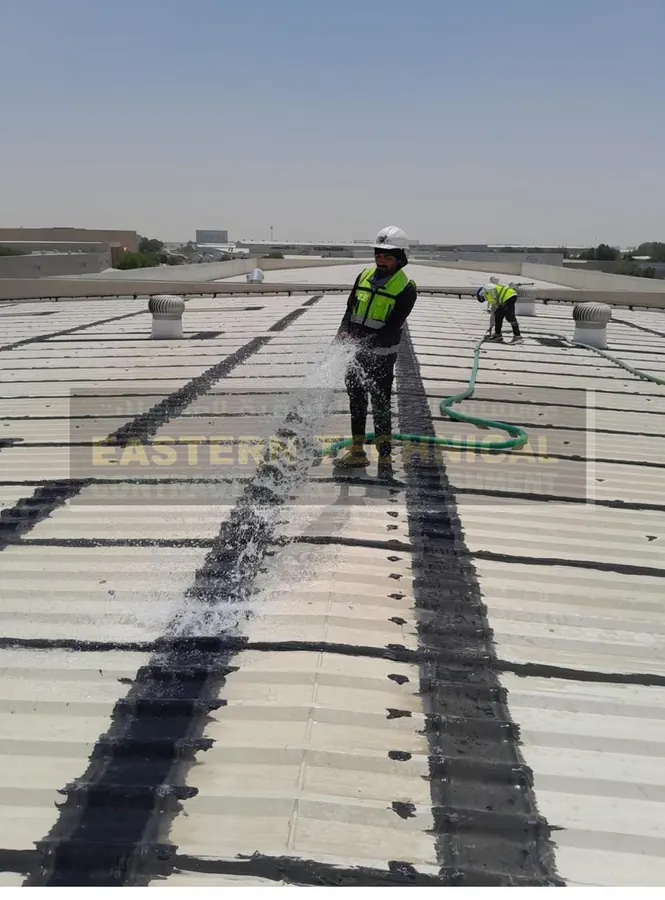
Dirt, sand, chalking coatings, grease, failed sealant, and loose corrosion must be removed. Preparation may involve pressure washing, hand or power-tool cleaning, mechanical abrasion, and localized rust treatment. The goal is to reach a clean, sound substrate that will accept the selected primer, coating, or membrane system.
Preparation standards should match the severity of corrosion and the proposed restoration method. A roof that appears clean but retains loose oxidation beneath a new coating will continue to deteriorate. Moisture must also be allowed to dry before application. Applying a waterproofing layer over damp, contaminated metal can trap moisture and compromise adhesion.
3. Repair sheets, laps, and fasteners
Perforated or severely thinned sheets should be replaced rather than coated. Where localized repairs are suitable, the repair area must extend beyond the visible rusted zone onto sound metal. Roof laps need particular attention because they expand and contract under high temperatures and are exposed to wind-driven rain.
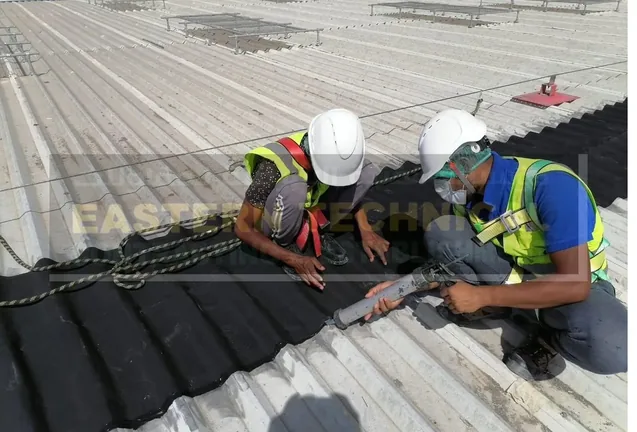
Old fasteners are commonly replaced with corrosion-resistant roof fasteners fitted with appropriate sealing washers. Oversized, elongated, or rusted-out fastener holes may require repair plates, new fixing locations, or sheet replacement. Flashings at parapets, ridges, wall junctions, and equipment curbs should be re-secured and sealed as part of the same work package.
Waterproof the Critical Details With EPDM
Once the roof is stable and prepared, waterproofing should focus on the points most likely to leak. These include roof laps, gutters, penetrations, skylight curbs, smoke vents, drain points, ridge details, and interfaces between new and existing materials.
EPDM rubberized waterproofing is particularly effective for complex industrial roof details because it remains flexible as metal sheets move through daily temperature cycles. On warehouses exposed to intense sun, the ability of the membrane to accommodate movement is as important as its water resistance. A rigid patch at a moving lap may crack or separate over time.
An EPDM system should be designed around the roof condition, not installed as a generic strip treatment. Detail widths, overlaps, primers, adhesives, edge termination, and reinforcement requirements must suit the substrate and expected movement. Gutters may require a different approach from corrugated sheets, while penetrations and irregular profiles often need carefully fabricated detail work.
For extensive corrosion, a full roof rehabilitation system may be more economical than repeated localized patching. This depends on the remaining sheet life, the number of leak points, the condition of supporting steel, and the operational cost of recurring repairs. A detailed inspection helps compare the cost of restoration against partial or full replacement on a realistic life-cycle basis.
Quality Control Determines Whether Repairs Last
Warehouse roofing work should be inspected throughout installation, not only after a leak test. Surface cleanliness, primer coverage, membrane adhesion, overlap dimensions, fastener installation, seam treatment, and edge termination all affect performance.
A practical quality-control process includes visual checks during each stage, verification of repaired drainage paths, and controlled water testing where appropriate. The roof should then be handed over with photographs, repair locations, material records, and maintenance recommendations. This documentation gives facility teams a clear reference for future inspections and helps avoid unnecessary damage when new equipment or services are installed.
In Dammam, Riyadh, and other demanding Saudi industrial environments, work timing also matters. Extreme surface temperatures, wind, dust, and humidity can affect cleaning, adhesion, and curing. A contractor should plan the work around site conditions rather than force application outside the material manufacturer's acceptable limits.
Build Maintenance Into the Restoration Plan
A restored roof still needs planned attention. Facility teams should inspect it after heavy rain, wind events, roof access by other trades, and any installation of new equipment. Routine checks should focus on drains, gutters, laps, flashings, penetrations, and signs of coating or membrane damage.
At least twice a year, remove debris from drainage paths and check for standing water. Promptly repair damaged fasteners, split sealant, or lifted detail membranes before water reaches the roof assembly. These small interventions cost far less than replacing wet insulation, corroded sheets, or damaged internal assets.
ETCE KSA approaches warehouse roof rehabilitation as an end-to-end site solution, from inspection and diagnosis through metal repair, EPDM waterproofing, fabrication, installation, and after-sales support. The best time to act is when corrosion is still localized and the roof can be restored on a planned schedule, not after leakage has disrupted warehouse operations.
Related ETCE services
Need this checked on your own roof?
ETCE carries out industrial roof inspections, leak diagnosis, metal roof rehabilitation and EPDM waterproofing across Dammam, Al Khobar, Dhahran, Jubail, Riyadh and Jeddah.
Request a Roof Inspection WhatsApp UsMetal roof waterproofing across Saudi Arabia
ETCE is a metal roof waterproofing company in Saudi Arabia with its head office in Dammam. See our warehouse & factory roof waterproofing service or find your area: