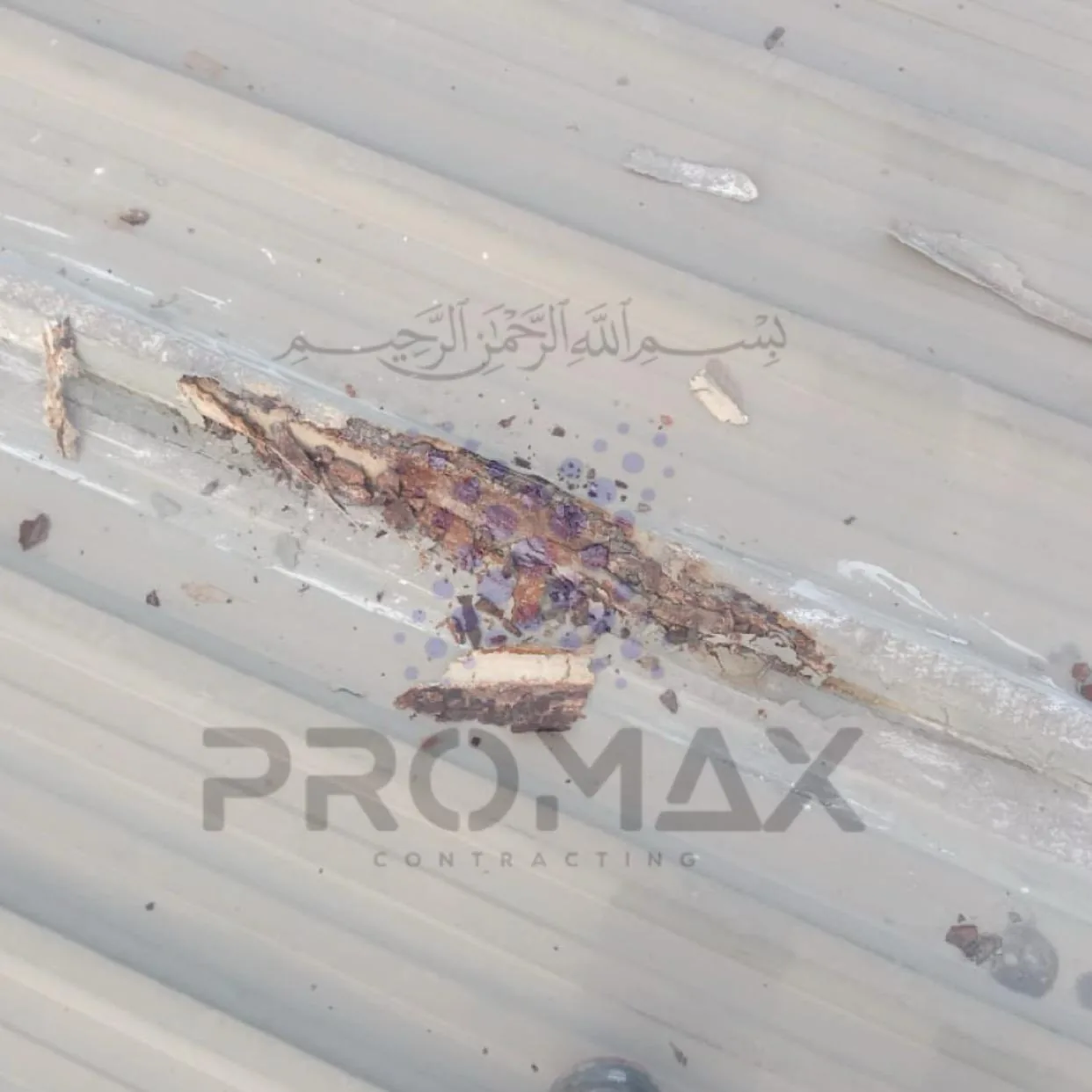
A metal roof rarely starts failing with a dramatic collapse. More often, it starts with a small orange stain near a fastener, a blistered coating along a lap joint, or light corrosion around a gutter edge that nobody treats as urgent. That is exactly why facility teams keep asking how to stop metal roof rust before it turns into roof leaks, sheet loss, insulation damage, or structural repair. In industrial buildings, rust is not a cosmetic issue. It is an active deterioration process that spreads faster once moisture, coating failure, and trapped contaminants get involved.
Why metal roof rust starts in the first place
Rust forms when bare steel is exposed to oxygen and moisture. On paper, that sounds simple. On an actual warehouse or factory roof, the causes are usually layered. The original protective coating may have worn down under UV exposure and heat. Fasteners may have loosened and opened small entry points for water. Ponding near gutters, penetrations, and low spots may keep sections wet longer than they should be. In coastal or heavy industrial environments, salt and airborne contaminants can accelerate corrosion.
Older roofs often develop rust at the same weak points over and over. End laps, side laps, roof screws, skylight curbs, vent penetrations, drain areas, and gutter connections usually fail first. Once water enters through one of these details, the underside of the sheet can corrode as well. That matters because a roof can look manageable from above while hidden damage is already expanding below the panel.
This is where many owners lose time and money. They treat visible rust as the whole problem when it is often just the symptom of coating failure, water entry, or poor drainage.
How to stop metal roof rust without wasting money
If the goal is long-term performance, the first step is diagnosis, not paint. Too many repair attempts fail because someone wire-brushed a rusty patch and rolled on a generic coating without checking whether the panel had perforation, wet insulation below, failed sealant lines, or active leaks at nearby details.
A proper assessment should identify how far corrosion has progressed, whether the metal has only surface oxidation or actual section loss, and whether the affected area is isolated or part of a broader roof failure pattern. On industrial roofs, this usually means checking panel laps, fastener lines, gutter conditions, penetrations, internal moisture entry, and any area where dirt or standing water collects.
If rust is still at the surface stage, it can often be stopped with cleaning, preparation, treatment, and a compatible protective system. If the metal is deeply pitted, delaminated, or perforated, repair coatings alone may not be enough. In those cases, sheet replacement, localized rehabilitation, or reinforced waterproofing treatment may be the smarter option.
Surface rust can be treated, but preparation decides the result
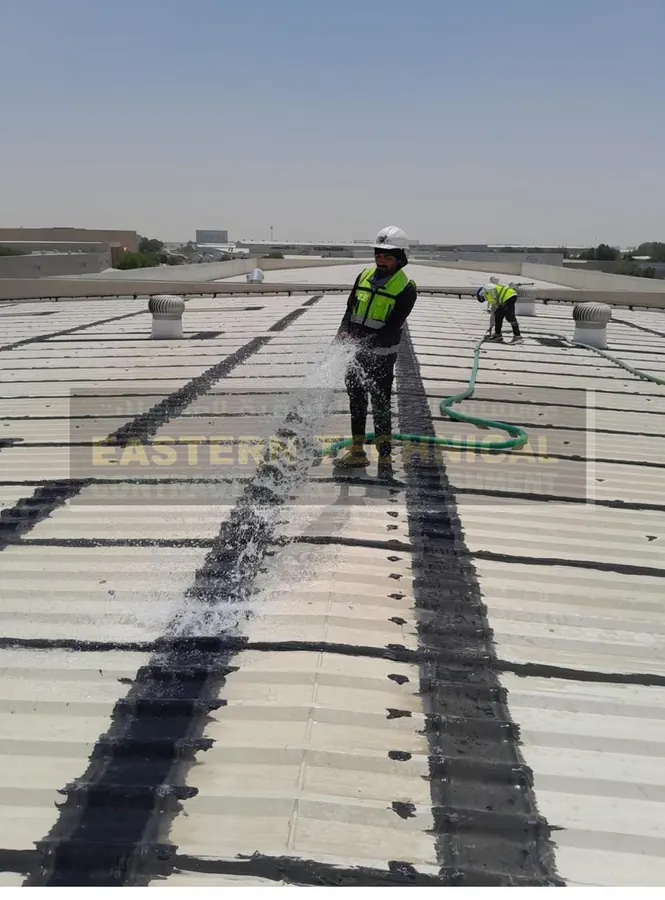
When rust has not eaten through the metal, the repair sequence matters more than the product label. Loose rust, dust, grease, and failing paint must be removed first. Depending on site conditions, that may involve hand tools, mechanical abrasion, or controlled surface preparation methods suitable for the roof profile and coating type.
After preparation, the exposed area usually needs a rust-inhibiting primer or conversion treatment designed for metal roofing applications. Then the repair should be sealed under a compatible topcoat or roof coating system that can handle UV exposure, expansion and contraction, and weathering. If joints, screws, or penetrations are involved, reinforcement and detail waterproofing may also be required. Skipping any of these steps usually leads to early failure.
When rust means replacement, not coating
There is a point where metal loss is too advanced for surface treatment to be reliable. If screws no longer hold properly, if panels are perforated, or if corrosion has compromised laps and supports, replacement becomes the safer and more economical choice. The same applies when rust is tied to chronic leakage under the sheets.
This is the trade-off many facility managers face. A coating repair is less disruptive in the short term, but if the substrate is already weakened, it can become repeat spending. A localized replacement paired with proper waterproofing may cost more upfront and save far more over the next maintenance cycle.
High-risk areas where rust keeps returning
Rust rarely develops evenly across a roof. It concentrates where water sits, where movement breaks sealants, or where metal details were poorly protected from the start.
Fasteners are one of the biggest problem areas. Exposed screws can loosen under thermal movement, and the washer can crack or flatten with age. That allows water to enter around the fixing point and attack both the fastener and the panel.
Roof penetrations are another major source of recurring corrosion. Pipes, ducts, vents, skylights, and support curbs all interrupt the sheet layout. If these details are not sealed and flashed correctly, moisture stays trapped around them. Over time, rust develops not just on the flat sheet but inside the joints where repairs are harder to see.
Gutters and drain points deserve special attention. They collect water, dirt, and debris, which means they stay wet longer than the surrounding roof. Once a gutter coating fails, corrosion can move quickly. The same goes for valley areas, internal channels, and low spots on large-span industrial roofs.
Coatings help, but only if the roof is detail-ready
A roof coating can be an effective part of how to stop metal roof rust, but only when the substrate has been prepared correctly and the failure points have been repaired first. Coatings are not a shortcut around bad details. They perform best when the roof has been cleaned, corroded sections stabilized or replaced, fasteners addressed, and all penetrations and joints properly treated.
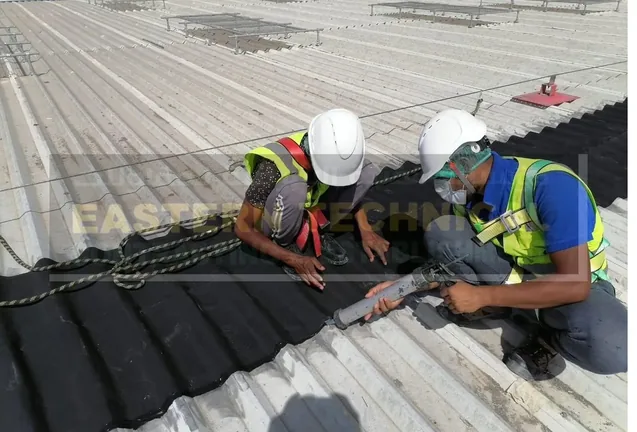
On aging industrial roofs, reinforced waterproofing systems are often more dependable than a simple paint-over approach. This is especially true around laps, gutters, skylights, smoke vents, drain points, and irregular penetrations where movement and water concentration are highest. In those locations, a flexible waterproofing layer can add protection that standard coating films alone may not provide.
That is one reason industrial roof specialists often recommend combining corrosion control with targeted waterproofing rather than treating rust as a standalone painting problem. ETCE KSA works this way on warehouse and factory roofs because stopping corrosion without controlling water entry rarely holds up for long.
Prevention is cheaper than rehabilitation
If a metal roof is still serviceable, routine maintenance will do more to prevent rust than any emergency patch. Inspections should focus on coating breakdown, loose fasteners, damaged flashings, ponding zones, blocked drainage, and early corrosion near high-risk details. The right interval depends on the building use, roof age, and exposure conditions, but industrial properties should not wait until leaks appear.
Cleaning also matters more than many owners expect. Dirt retention, wet debris, and chemical residues can keep metal surfaces damp and aggressive. A roof that sheds water properly lasts longer than one with the same material but poor housekeeping.
There is also a practical point about reactive repairs. If one section shows rust, nearby sections with similar exposure are often not far behind. Treating the obvious stain and ignoring the surrounding details usually leads to more call-backs.
What facility teams should ask before approving a repair
Before moving ahead, ask whether the rust is surface-level or structural, whether water is entering below the panel, whether the repair includes fasteners and joints, and whether the chosen system is compatible with the existing roof. Also ask how the repair will handle movement, UV, and standing water at problem points.
Those questions separate a temporary patch from a roof maintenance plan. The cheapest quote may cover only visible corrosion. A stronger scope addresses why that corrosion formed, what nearby details are failing, and how the repair will hold up under actual site conditions.
For warehouses, factories, and logistics buildings, that distinction is critical. Roof failure does not stay at roof level. It can disrupt stock, equipment, operations, and safety. The cost of stopping rust early is usually minor compared with the cost of waiting until the sheets, insulation, and internal assets are affected.
The most useful mindset is simple: treat rust as an engineering warning, not a paint defect. When a metal roof starts showing corrosion, act while the repair options are still broad, the downtime is still manageable, and the roof can still be brought back into reliable service.
Related ETCE services
Need this checked on your own roof?
ETCE carries out industrial roof inspections, leak diagnosis, metal roof rehabilitation and EPDM waterproofing across Dammam, Al Khobar, Dhahran, Jubail, Riyadh and Jeddah.
Request a Roof Inspection WhatsApp UsMetal roof waterproofing across Saudi Arabia
ETCE is a metal roof waterproofing company in Saudi Arabia with its head office in Dammam. See our warehouse & factory roof waterproofing service or find your area: