A warehouse roof rarely fails at one dramatic point. More often, water enters through a loosened fastener, an open side lap, a cracked seal around a pipe, or a gutter joint that overflows during the first heavy rain. Knowing how to stop metal roof leaks means finding the actual water path, not simply sealing the stain visible from inside the building.
For factories, logistics facilities, storage sheds, and other active industrial assets, a leak is more than a maintenance complaint. Water can damage stock, disrupt operations, corrode roof components, affect electrical services, and accelerate deterioration across an aging metal roof. The correct repair is a site-specific waterproofing system that addresses the roof sheet, joints, penetrations, drainage, and surrounding details as one connected assembly.
Start With Leak Diagnosis, Not Sealant
Applying sealant over a suspected leak point may provide a short-term result, but it often leaves the main failure untouched. On a sloped metal roof, water can travel beneath an overlap or along a purlin before dripping into the building several meters away. A ceiling stain is evidence of a problem, not reliable proof of its location.
A proper inspection begins from the roof exterior and follows the water route. The inspection team should review roof slopes, sheet laps, fastener lines, ridge and eave details, gutters, valleys, wall flashings, skylights, smoke vents, pipe penetrations, drain outlets, and previous repairs. Inside the facility, technicians should also identify damp insulation, corrosion marks, water trails, and points where the roof deck has deflected.
The inspection must account for local operating conditions. High heat and UV exposure can harden mastics and shrink inferior sealants. Sand accumulation can block drainage paths. Wind movement can work sheet laps and flashings loose over time. Where coastal moisture or industrial emissions are present, corrosion can develop around cuts, fasteners, and damaged protective coatings.
A detailed inspection report gives facility teams a clear distinction between urgent repairs and areas that require planned rehabilitation. This avoids spending repeatedly on isolated patches while the roof system continues to decline.
Identify the Failure Point Before Repairing It
Metal roofs leak at predictable details. The repair method must match the condition of that detail and the remaining service life of the roof.
Fasteners and Fixing Lines
Exposed fasteners are a common entry point on corrugated and single-skin sheet roofs. Their sealing washers can crack, flatten, or lose compression. Screws may back out because of thermal movement, vibration, or deterioration in the supporting member. Corrosion around the screw hole can enlarge the opening and prevent a new washer from sealing correctly.
Replacing failed fasteners with the correct size and type is often necessary, but it is not always sufficient. Where there is widespread movement or corrosion, the fixing line may need a reinforced waterproofing detail rather than a series of individual spot repairs.
Side Laps, End Laps, and Roof Sheet Joints
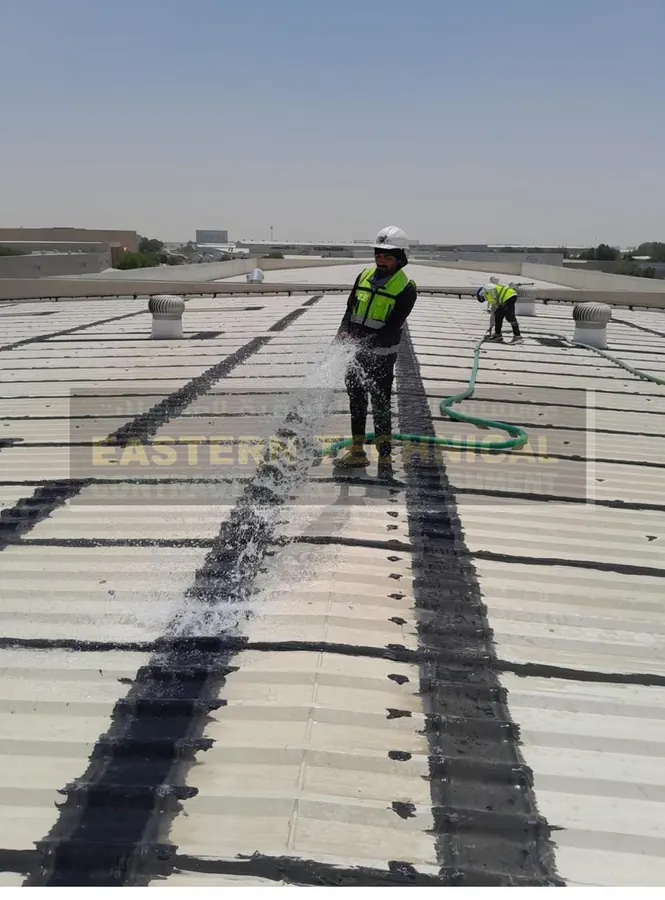
Overlapping sheets depend on correct overlap, continuous sealant, fastening, and drainage direction. When sealant breaks down or sheets move, capillary action can pull water beneath the lap. A repair should involve cleaning the surfaces, removing failed materials, addressing corrosion, restoring the joint geometry, and installing a compatible waterproofing treatment over the vulnerable area.
For long lap joints or recurring leak lines, EPDM-based waterproofing systems can provide a more durable bridge across movement-prone interfaces. The detail must be properly prepared and terminated so water cannot track beneath the membrane edges.
Penetrations, Skylights, and Smoke Vents
Every penetration interrupts the roof's drainage surface. Pipes, duct supports, cable routes, skylights, exhaust stacks, smoke vents, and mechanical curbs require flexible, fully sealed transitions. These areas fail when rigid filler is used on a moving roof, when flashing is poorly lapped, or when old sealant separates under sun exposure.
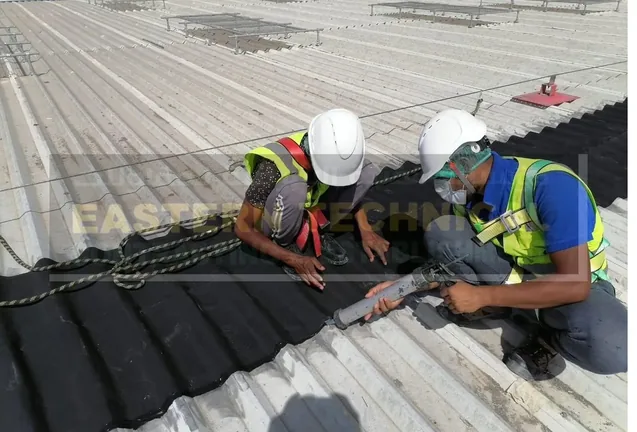
A durable repair uses compatible flashing and flexible EPDM detailing that can accommodate normal roof movement. The waterproofing should extend onto sound roof sheet around the penetration, with secure edge treatment and careful attention to the uphill side where water tends to collect.
Gutters, Valleys, and Drain Points
Not every roof leak starts through the roof sheet. Blocked gutters, undersized outlets, cracked gutter joints, and poorly drained valleys can cause water to back up under eaves, flashings, and panel laps. Standing water also increases corrosion risk and puts extra stress on aging joints.
Gutter repairs should include cleaning, fall correction where practical, sealing of joints and outlet connections, and treatment of corroded sections. If a roof regularly overflows during rain, the issue may be drainage capacity or layout, not merely a failed seal.
How to Stop Metal Roof Leaks With the Right System
The best repair depends on whether the roof has isolated damage, recurring failures at several details, or broad deterioration across the roof area.
For a single puncture or a small failed flashing, a localized repair can be appropriate. The area must be dry, clean, structurally sound, and free of loose rust before a compatible patch or EPDM waterproofing detail is installed. Simply covering dust, oxidized metal, or wet sealant creates a repair that may detach when temperatures rise.
For multiple failures along laps, fastener lines, gutters, or penetrations, a targeted rehabilitation approach is usually more cost-effective. This combines repairs to damaged components with continuous waterproofing at the roof's high-risk details. It reduces the number of separate weak points and gives maintenance teams a more manageable system to inspect.
When the metal roof has widespread corrosion, repeated patch history, or leaks across large areas, a broader roof rehabilitation plan should be evaluated. Full replacement can be justified where structural damage is extensive, but it is not automatically the best answer. If the roof structure and sheet profile remain serviceable, an engineered waterproofing solution can extend roof life while reducing disruption to warehouse or factory operations.
EPDM rubberized waterproofing is particularly useful for complex metal roof conditions because it remains flexible and can be formed around sheet profiles, joints, penetrations, gutters, skylights, and drain details. Material selection still matters. The system must be compatible with the existing roof substrate, expected movement, exposure conditions, and the required adhesion method.
Prepare the Roof Surface Properly
Most premature repair failures result from poor preparation rather than the waterproofing material itself. A reliable installation starts by removing loose rust, failed sealant, dirt, sand, oils, and unstable coatings. Damaged metal should be repaired or replaced where needed. Wet insulation or compromised underlying components must be investigated instead of concealed.
Technicians should check that the roof is dry before waterproofing work begins. Moisture trapped beneath a repair can cause adhesion failure, corrosion, and blistering. Weather planning is essential, particularly when work is being performed over active production areas or stored goods.
Preparation also includes safe access and work sequencing. On industrial buildings, roof traffic, fragile skylights, electrical equipment, lifting operations, and occupied areas below require controls before repair crews begin work. A good contractor plans the repair around site operations rather than treating the roof as an isolated surface.
Do Not Ignore Corrosion
Rust around fasteners, overlaps, cut edges, and gutters is not only cosmetic. It can reduce sheet thickness, weaken fixings, and create openings beneath otherwise intact sealant. If corrosion is limited, it can be cleaned, treated, and protected as part of the waterproofing work. If metal has perforated or lost strength, affected sections need replacement before a membrane or coating detail is applied.
This is where temporary patching becomes expensive. Covering a perforated sheet without addressing its condition may stop visible dripping briefly, but corrosion continues beneath the repair. The resulting failure is usually larger and harder to access later.
Build Maintenance Into the Repair Plan
A repaired roof needs scheduled inspection, especially after heavy rain, strong wind events, or maintenance work that adds new penetrations. Facility teams should inspect roof drainage and high-risk details at least twice a year, and more often where dust, sand, or operational activity creates frequent blockage or roof traffic.
The maintenance program should focus on keeping gutters and outlets clear, checking fasteners and lap joints, reviewing penetrations after mechanical changes, and documenting corrosion before it spreads. Roof access should be controlled so that contractors do not puncture sheets or disturb flashings while servicing equipment.
For larger facilities, maintain a roof map that records past leak locations, repair dates, materials used, and recurring conditions. This turns roof maintenance from reactive callouts into planned asset protection.
When to Call a Specialist
Immediate professional assessment is recommended when leaks appear at several locations, insulation is wet, corrosion is visible from inside the building, gutters overflow, or previous sealant repairs have failed repeatedly. These are signs that the problem may involve roof design details, drainage, or widespread material deterioration rather than one isolated opening.
ETCE KSA approaches metal roof leakage as an engineering and execution task: inspect the asset, identify water paths, prepare the substrate correctly, apply durable EPDM-based details where required, and support the repaired roof with practical maintenance. For facilities in Dammam, Riyadh, and across Saudi Arabia, a clear site report can prevent urgent leak repairs from becoming an avoidable roof replacement project.
The most useful next step is simple: inspect the roof before the next rain exposes the same weakness again. A small, verified repair at the right detail protects far more than the roof sheet above it.
Related ETCE services
Need this checked on your own roof?
ETCE carries out industrial roof inspections, leak diagnosis, metal roof rehabilitation and EPDM waterproofing across Dammam, Al Khobar, Dhahran, Jubail, Riyadh and Jeddah.
Request a Roof Inspection WhatsApp UsMetal roof waterproofing across Saudi Arabia
ETCE is a metal roof waterproofing company in Saudi Arabia with its head office in Dammam. See our warehouse & factory roof waterproofing service or find your area: