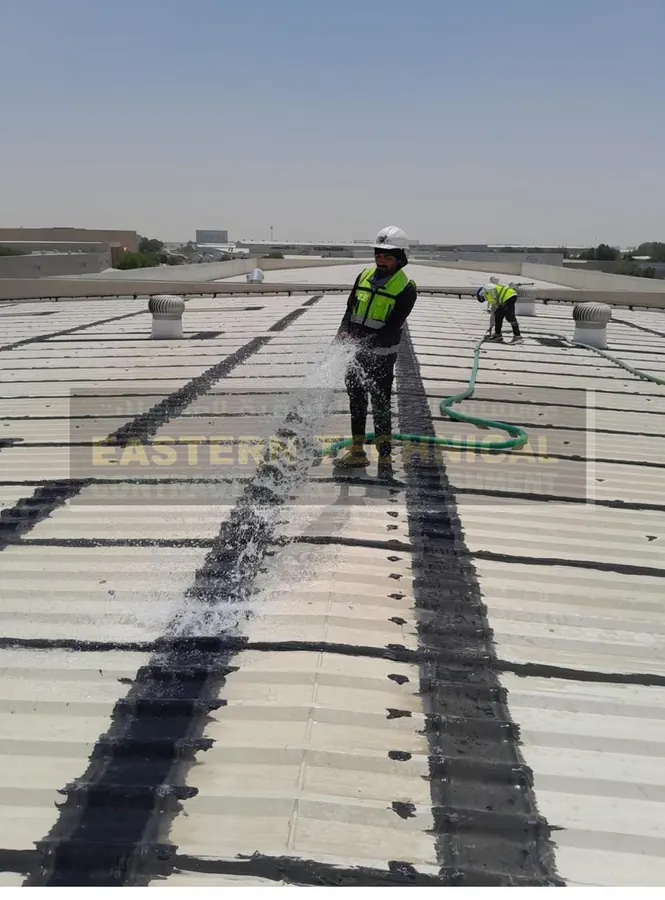
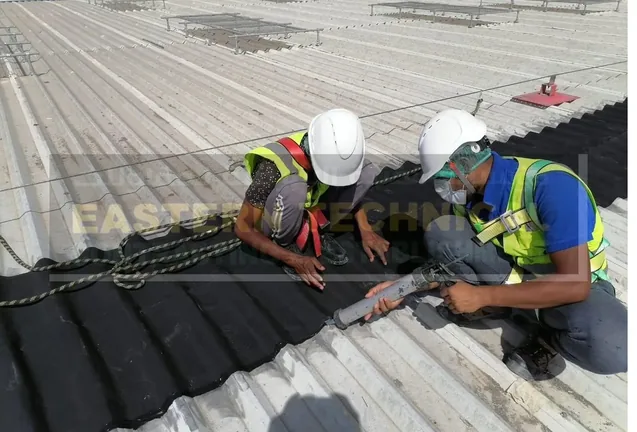
A roof usually does not fail all at once. It starts at the details – a loose fastener line, a split lap, rust forming around penetrations, ponding near drains, movement at gutter joints, or a skylight curb that was never sealed properly after earlier work. That is why an industrial roof audit review matters. For warehouses, factories, and logistics buildings, it is not a paperwork exercise. It is a technical inspection process that shows where water is entering, where corrosion is advancing, and what should be repaired now before the building starts paying for it in downtime, damaged stock, and recurring maintenance calls.
What an industrial roof audit review should actually deliver
A proper audit is more than a walkover and a few photographs. It should connect visible roof conditions to building risk. For an industrial facility, that means identifying not just where the leak appears inside, but how water is traveling across roof sheets, insulation joints, gutters, curbs, flashing terminations, and service penetrations before it shows up below.
This is especially important on aging metal roofs and sandwich panel systems, where the leak point and the interior drip point are often far apart. A good review isolates the source, the pattern of failure, and the likely rate of progression. It should also separate minor maintenance items from defects that can compromise structural elements, insulation performance, or safe roof access.
In practical terms, the output should include condition mapping, defect classification, likely causes, repair priorities, and a recommended scope. If the report cannot tell a facility team what to fix first, what can wait, and what system is most suitable for the roof type, it is incomplete.
Where industrial roofs usually fail first
The weak points are predictable, even if each site has its own history. On industrial buildings, leaks commonly begin at overlaps, fastener penetrations, ridge details, eave junctions, gutters, downpipe entries, roof-mounted equipment bases, and previous repair patches that have aged badly under heat and UV exposure.
Corrosion is another major factor. It does not only affect old roof sheets. It develops around cut edges, exposed fixings, wet insulation zones, and areas where debris traps moisture. Once corrosion advances under laps or around penetrations, surface patching alone may stop looking effective but fail quickly in service.
Movement also matters. Large-span roofs expand and contract daily. Any repair material or flashing detail that ignores that movement will crack, pull away, or open at the bond line. This is why industrial roof audits should review not just defects, but also whether the previous repair strategy was compatible with the roof's movement profile.
Why leak complaints often mislead maintenance teams
Most roof investigations start after occupants report drips, staining, or wet stock. That is useful, but it can also send teams to the wrong area. Water tracks along purlins, sheet ribs, insulation layers, cable routes, and internal liners. By the time it appears below, it may be several meters away from entry.
An experienced audit review works backward from the symptom to the probable entry path. That sounds basic, but it is where many maintenance budgets get wasted. Repeated local patching around an interior complaint rarely solves a system-wide failure pattern.
What should be included in the review process
An effective industrial roof audit review starts with roof type identification. Single skin sheet, corrugated metal, standing seam variants, sandwich panels, built-up details around vents, and mixed repaired areas all behave differently. The inspector needs to understand what system is actually in place, including layers added during previous maintenance cycles.
Next comes condition assessment. This includes sheet integrity, coating deterioration, fastener condition, washer aging, sealant failure, open laps, flashing continuity, gutter line condition, drain performance, curb and penetration detailing, and visible signs of trapped moisture or delamination. On industrial buildings, service penetrations deserve special attention because mechanical and electrical modifications often introduce leak points long after original construction.
The review should also consider access and safety conditions. A roof that cannot be safely accessed for maintenance will continue to deteriorate because routine work gets delayed. Walkway needs, fragile skylight zones, and unstable repair areas are not side notes. They affect whether the recommended scope can be executed properly.
Finally, the findings should be tied to action. Some roofs need targeted repairs. Others need rehabilitation with an engineered waterproofing approach across critical zones. In many cases, the correct decision is not full replacement, but neither is it simple resealing. The audit must show that difference clearly.
Industrial roof audit review for repair versus rehabilitation
This is where the review becomes commercially useful. Decision-makers do not just need defect lists. They need a basis for choosing between maintenance, sectional repair, and broader rehabilitation.
If failures are isolated and the roof sheets remain structurally sound, targeted intervention may be enough. That can include treating corrosion, replacing damaged fasteners, restoring flashing integrity, improving gutter details, and waterproofing penetrations and junctions.
If the roof has widespread leakage at multiple details, recurring movement-related opening, coating breakdown, and aging across many vulnerable points, then a broader rehabilitation plan usually makes more sense. On industrial assets, this often delivers better life-cycle value than repeated emergency callouts, especially when operations cannot tolerate recurring leaks.
EPDM-based waterproofing is often selected for difficult industrial roof details because it handles movement well and performs strongly around penetrations, gutters, drain points, skylights, smoke vents, and problem junctions. That said, material choice always depends on substrate condition, geometry, access, and the extent of corrosion. A credible review does not force one solution onto every roof. It identifies where a system is technically appropriate and where substrate repair must happen first.
What a strong report helps procurement and operations avoid
Without a serious audit, procurement teams often compare prices on scopes that are not equivalent. One contractor may price visible patching. Another may include detail treatment, corrosion prep, sheet replacement at failed zones, and waterproofing of all critical penetrations. On paper, both may look like leak repair. In practice, they are not the same job.
A detailed review reduces that confusion. It allows owners and consultants to compare methods, quantities, and risk more accurately. It also helps operations teams plan access windows, shutdown implications, and sequencing around live facility conditions.
Why industrial environments need a different level of roof inspection
Industrial roofs face harder service conditions than many commercial buildings. Heat, UV, dust loading, moisture cycles, vibration, and site modifications all accelerate failure. Warehouses and factories also have more operational sensitivity. A small roof leak above storage, production, electrical runs, or logistics zones can become a serious business issue very quickly.
That means the review has to be technical and practical at the same time. It should account for the roof as a working industrial asset, not as a generic building element. On active sites, the recommendation must be buildable. There is no value in specifying a perfect repair that cannot be executed safely, quickly, or without disrupting core operations.
This is where contractor experience matters. A team used to industrial roof work can spot the difference between cosmetic deterioration and failure that is about to accelerate. They also know which details typically re-open under harsh weather exposure and which repair approaches hold up over time.
In Saudi industrial conditions, that judgment is even more important. High heat, strong UV, wind-driven dust, and large thermal movement place constant stress on metal roof systems and all associated waterproofing details. ETCE KSA works in exactly these conditions, which is why audit findings need to be tied to real execution methods, not generic recommendations copied from low-stress climates.
When to schedule an audit instead of waiting for another leak
The best time is before the rainy period, after major tenant fit-outs, after rooftop service modifications, or when leak complaints start repeating in different areas. You should also schedule an audit if the roof is more than a few years into service and maintenance history is unclear, or if emergency repairs have been carried out by multiple parties over time.
Waiting for a major failure usually costs more than the inspection and planned corrective work. By the time water reaches stored goods, insulation, electrical systems, or suspended ceilings, the roof problem is no longer only a roof problem.
An industrial roof audit review is most valuable when it gives you control early – before corrosion spreads, before water paths multiply, and before a manageable defect turns into a capital replacement discussion. The smartest roof budgets are usually built from clear diagnosis, not repeated reaction. A roof tells you how it is aging if someone qualified is willing to read it carefully.
Related ETCE services
Need this checked on your own roof?
ETCE carries out industrial roof inspections, leak diagnosis, metal roof rehabilitation and EPDM waterproofing across Dammam, Al Khobar, Dhahran, Jubail, Riyadh and Jeddah.
Request a Roof Inspection WhatsApp UsMetal roof waterproofing across Saudi Arabia
ETCE is a metal roof waterproofing company in Saudi Arabia with its head office in Dammam. See our warehouse & factory roof waterproofing service or find your area: