A leaking metal roof rarely starts with a dramatic failure. More often, it starts with light surface oxidation around fasteners, panel laps, gutters, penetrations, or old repair points. Left alone, that corrosion spreads under paint, weakens sheet metal, opens leak paths, and turns a manageable repair into a structural problem. That is where an industrial rust treatment coating becomes a practical asset, not a cosmetic add-on.
For warehouses, factories, logistics buildings, and process facilities, rust treatment is not just about appearance. It protects the roof assembly, helps preserve waterproofing performance, reduces premature replacement, and supports safer long-term operation. But the right result depends on more than applying a coating over a rusty surface. On industrial roofs, success comes from correct diagnosis, surface preparation, detailing, coating selection, and follow-through at the actual failure points.
What an industrial rust treatment coating is really expected to do
In industrial applications, a rust treatment coating has to do three jobs at once. First, it must deal with existing corrosion by stabilizing or isolating it after proper preparation. Second, it must create a protective barrier against moisture, oxygen, salts, dirt retention, and atmospheric exposure. Third, it must work as part of the wider roof system, especially where leaks, thermal movement, and aging fasteners are already part of the problem.
This is why a coating-only mindset often fails. If the roof has open seams, loose screws, failed sealant, ponding around gutters, or corrosion at skylight curbs and penetrations, the coating cannot compensate for unresolved defects. Industrial buildings need a treatment approach, not just a material.
Where industrial rust treatment coating is most needed
On active industrial sites, corrosion usually concentrates in predictable areas. Fastener heads are common because protective finishes break down first at exposed fixing points. End laps and side laps are also vulnerable because trapped moisture, dust, and movement create a favorable environment for coating failure and rust growth.
Gutters, downpipe interfaces, edge flashings, roof penetrations, and transitions between old and new materials are also high-risk zones. On sandwich panels and single-skin metal sheets, once corrosion starts at joints or damaged edges, water can travel farther than many owners expect. By the time staining is visible inside, the roof may already have multiple compromised areas.
In Gulf-style industrial environments, high UV, heat cycling, airborne dust, and intermittent moisture create a harsh exposure profile. Even where rainfall is limited compared with other regions, condensation, washdowns, trapped dirt, and occasional storm events still drive corrosion. That is why early intervention matters.
The difference between surface rust and critical corrosion
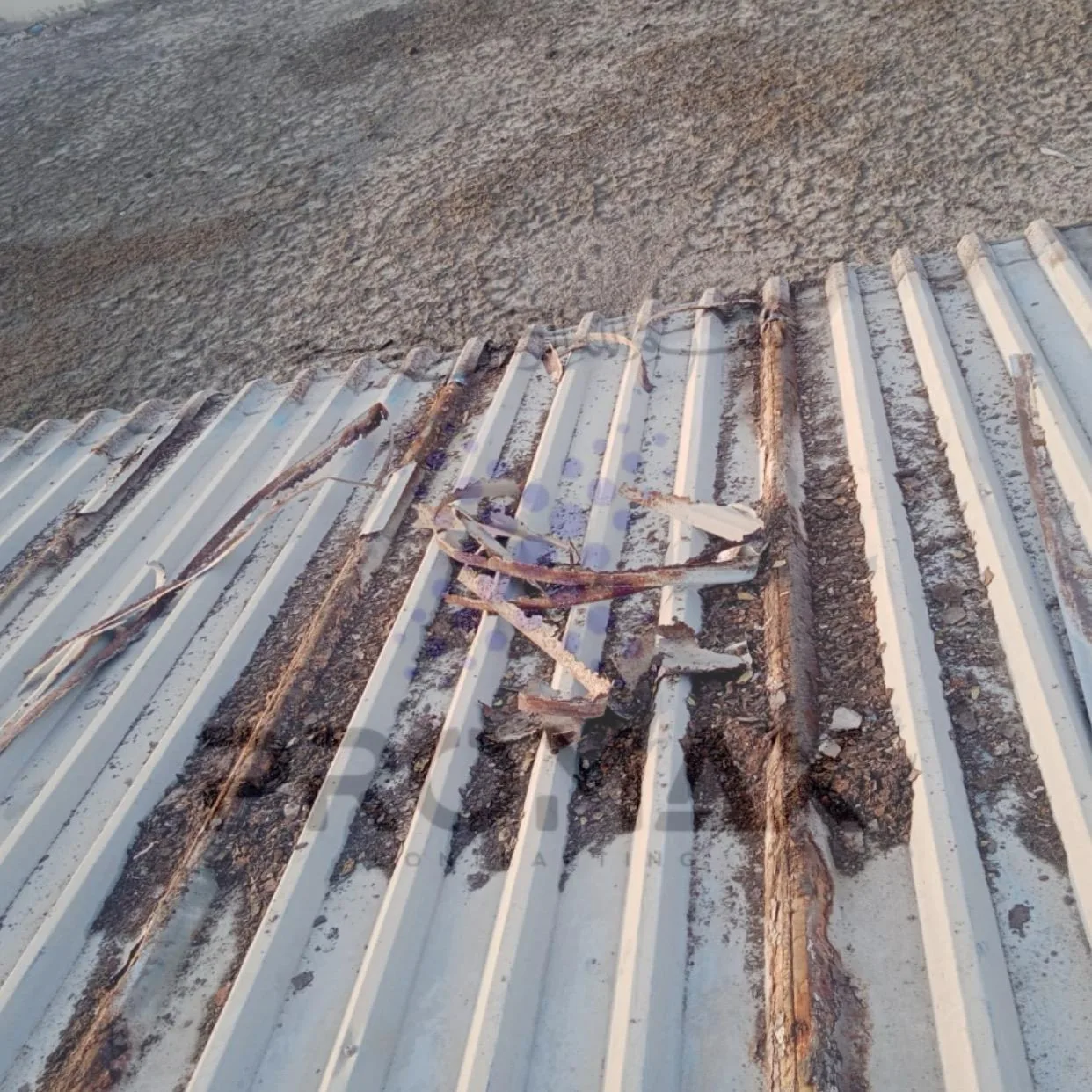
Not every rusted roof needs full replacement, but not every roof is a candidate for simple coating work either. Surface rust, where metal loss is limited and the substrate remains structurally sound, can often be treated effectively. In those cases, cleaning, mechanical preparation, spot treatment, priming, detailing, and topcoating can restore protection and extend service life.
Critical corrosion is different. If panels are perforated, laps are badly deteriorated, fastener zones are enlarged, or metal thickness has been materially reduced, coating alone will not deliver a reliable result. Damaged sections may need plate replacement, reinforcement, refastening, flashing rebuilds, or integration with waterproofing systems before coating begins.
This is one of the biggest mistakes in industrial maintenance planning. Teams sometimes try to save budget by coating over advanced deterioration, then end up paying twice when leaks return and metal repairs become unavoidable.
Why surface preparation decides the outcome
The performance of any industrial rust treatment coating depends heavily on preparation. This is not a minor step. It is the foundation of the system.
Industrial roofs collect chalking, dirt, old sealant residue, oils, oxidation, and embedded contaminants. Rust scales may appear light from a distance but can be poorly bonded underneath. If these layers remain in place, adhesion suffers and failure starts early, usually at the same weak points where corrosion began.
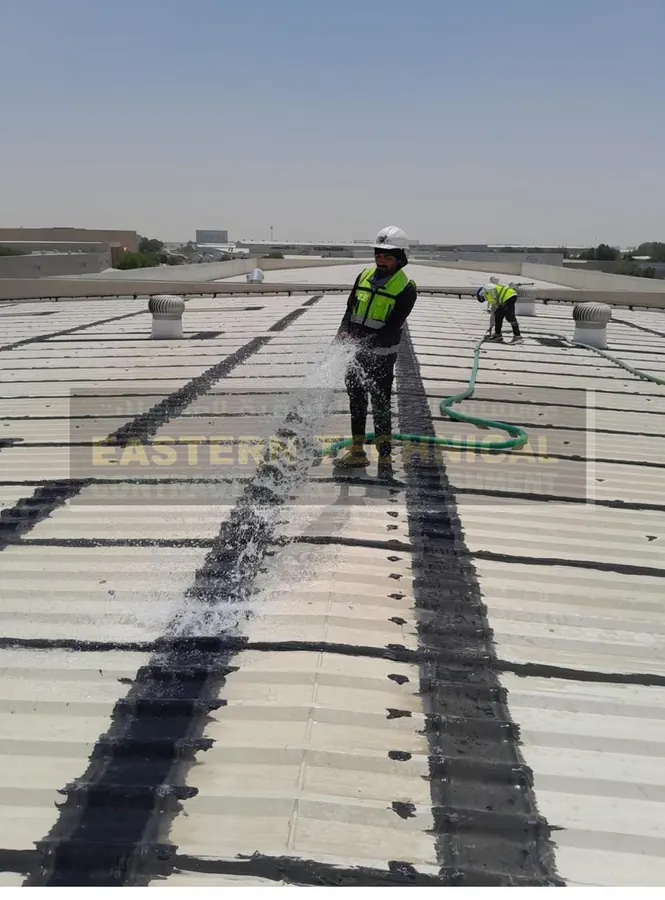
Preparation typically includes inspection, moisture assessment, cleaning, removal of loose rust, treatment of affected zones, and repair of incompatible or failed previous materials. Depending on roof condition, this may involve wire brushing, mechanical abrasion, pressure cleaning, solvent cleaning in localized areas, and replacement of unsound components. The goal is not to create a perfect laboratory surface. The goal is to create a sound, dry, stable substrate that can actually hold the treatment and coating system.
Choosing the right coating system for industrial roofs
There is no single industrial rust treatment coating that fits every roof. Selection depends on the substrate, corrosion stage, exposure conditions, leak history, and whether the coating is being used as a corrosion-control layer only or as part of a broader waterproofing rehabilitation strategy.
For some roofs, a rust-converting or rust-inhibitive primer followed by a compatible protective topcoat is the right path. For others, especially aging metal roofs with multiple leak points, a more engineered system is needed, combining corrosion treatment with seam reinforcement, fastener encapsulation, flashing repairs, and elastomeric or EPDM-compatible waterproofing layers in critical areas.
This is where trade-offs matter. A lower-cost coating may improve appearance and provide short-term protection, but if the building is exposed to high thermal movement, difficult penetrations, and recurring ponding, that lower-cost option may not hold up. A more complete system costs more upfront, but it can cut disruption, repeat repairs, and emergency maintenance later.
Industrial rust treatment coating is not separate from leak control
Facility teams often treat rust and leakage as two separate scopes. On metal roofs, they are usually part of the same failure cycle. Water intrusion accelerates corrosion, and corrosion opens more pathways for water. If you address only one side of that cycle, performance remains limited.
That is why treatment planning should look at penetrations, gutters, skylights, ridge details, drain points, and roof-mounted equipment supports at the same time. The most reliable projects combine rust treatment with targeted waterproofing measures, especially around movement joints and complicated leak-prone details.
For industrial buildings with aging roof assets, this integrated approach is usually more efficient than repeated patch repairs. It reduces callbacks, helps standardize maintenance planning, and gives owners a clearer picture of remaining roof life.
What decision-makers should ask before approving the work
Before moving ahead, owners and facility managers should ask practical questions. Has the contractor distinguished surface corrosion from structural deterioration? Are failed fasteners, laps, and penetrations included in the scope, or only the visible rusted areas? What level of preparation is planned? Are the primer and topcoat compatible with the existing roof and with any waterproofing materials already in place?
They should also ask about sequencing. Industrial roofs cannot always be shut down for ideal access. Active facilities need planning around weather windows, production schedules, safety controls, and roof traffic. A technically correct specification can still underperform if execution on a live site is weak.
A contractor with hands-on industrial roof experience will usually spot the issues that generic painting crews miss. That includes hidden moisture paths, movement-related cracking, edge detail failure, and corrosion patterns linked to poor drainage or trapped debris.
When treatment makes financial sense
Replacement is sometimes necessary, but many industrial roofs still have recoverable service life if corrosion is addressed early and properly. An industrial rust treatment coating can make strong financial sense when the roof is fundamentally sound, the corrosion is manageable, and the owner wants to extend asset life without the cost and disruption of a full roof replacement.
It is especially valuable for large roof areas where localized deterioration is driving most of the risk. In those cases, a focused rehabilitation program can stabilize the roof, improve waterproofing reliability, and buy time for phased capital planning.
The key is realism. If the roof has widespread perforation, failed insulation, severe structural loss, or chronic drainage defects, coating may serve only as a temporary measure. Good contractors say that clearly at the inspection stage, because long-term trust matters more than short-term scope.
Execution is what separates a durable repair from a short-lived one
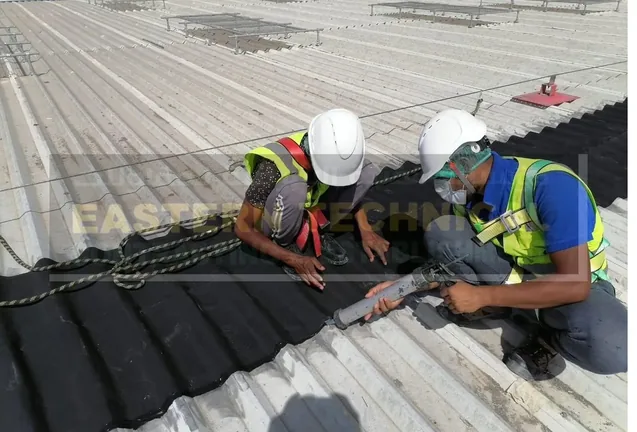
On paper, many coating systems sound similar. On site, the difference comes down to inspection quality, repair detailing, crew discipline, and material compatibility. Industrial roof rehabilitation is rarely about one product. It is about how corrosion treatment, waterproofing, sealing, sheet repair, and access planning work together under actual site conditions.
That is why many owners prefer a single industrial partner that can inspect, diagnose, fabricate repairs, treat corrosion, waterproof difficult points, and stay involved after handover. ETCE KSA works in that contractor model because industrial clients do not need theory. They need roof systems that hold up under heat, dust, movement, and daily operations.
If your metal roof is showing early rust, the best time to act is before the corrosion reaches the stage where replacement becomes the only option. A well-planned treatment program does more than improve the surface. It protects the building, preserves uptime, and gives you back control over a roof that may have been quietly deteriorating for years.
Related ETCE services
Need this checked on your own roof?
ETCE carries out industrial roof inspections, leak diagnosis, metal roof rehabilitation and EPDM waterproofing across Dammam, Al Khobar, Dhahran, Jubail, Riyadh and Jeddah.
Request a Roof Inspection WhatsApp UsMetal roof waterproofing across Saudi Arabia
ETCE is a metal roof waterproofing company in Saudi Arabia with its head office in Dammam. See our warehouse & factory roof waterproofing service or find your area: