A roof leak above a warehouse aisle, production area, or storage rack is rarely just a roofing issue. Water can travel along purlins, insulation, fasteners, and service penetrations before it becomes visible inside the building. Effective metal roof waterproofing starts by locating the true entry point, correcting failed details, and installing a system that can perform under heat, movement, and standing water.
For commercial and industrial facilities, temporary patching often creates a repeat maintenance cycle. A proper waterproofing scope should address the roof as a complete assembly: metal sheets, overlap joints, screws, flashings, gutters, ridge details, skylights, penetrations, and corroded sections. The goal is not only to stop the active leak, but to protect the roof structure and extend the useful life of the facility.
Why Metal Roofs Develop Leaks
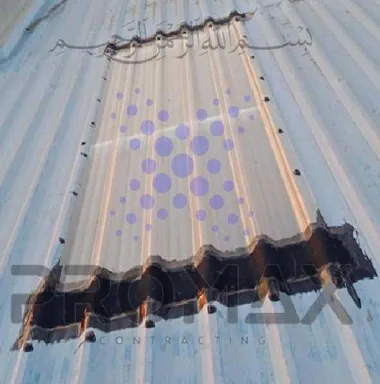
Metal roofing is durable, but it is not maintenance-free. In high-temperature environments, roof sheets expand during the day and contract as temperatures fall. Over time, this movement can loosen fasteners, open lap joints, crack old sealants, and stress flashing connections. A small opening around a screw can admit water repeatedly, especially during wind-driven rain.
Corrosion is another major cause of failure. When protective coatings break down, rust can spread around sheet laps, cut edges, gutters, and fixing points. Corroded metal loses thickness and may develop pinholes that are difficult to identify from inside the building. If water has already reached purlins or supporting steel, the repair scope may need to include rust treatment, steel assessment, and replacement of damaged components.
Drainage conditions matter as much as the roof sheet itself. Blocked gutters, undersized outlets, poor slopes, and damaged valley areas allow water to remain on the roof longer than intended. Standing water increases pressure on weak laps and sealant joints. It can also accelerate coating failure and corrosion around fasteners.
Metal Roof Waterproofing Begins With Inspection
Applying a membrane without a detailed inspection may cover the symptom while leaving the cause in place. Before selecting a waterproofing system, the contractor should assess roof condition from the exterior and interior wherever access is available. Ceiling stains alone do not identify the leak source, since water can move a considerable distance beneath metal sheets or insulation.
A practical inspection reviews the condition of sheet overlaps, exposed screws, ridge caps, flashings, gutters, downpipes, skylight edges, wall junctions, expansion details, and pipe penetrations. The team should also identify loose sheets, damaged sealant, corrosion, unsupported areas, and locations where water ponds after rainfall or cleaning.
The findings determine whether the roof needs localized repair, a partial rehabilitation, or full membrane coverage. A roof with isolated failed screws and sound coating may only require targeted treatment. A roof with widespread joint failure, recurring leakage, and surface corrosion usually benefits from a continuous waterproofing system rather than hundreds of separate patches.
Check the Structural Condition First
Waterproofing cannot compensate for severely deteriorated steel or unstable roof sheets. Where corrosion has weakened purlins, brackets, or sheet supports, these elements must be evaluated and repaired before membrane installation. The same applies to loose or distorted roof panels. A durable system requires a stable, properly prepared substrate.
This is especially relevant for older warehouses and sheds where leakage has continued for several seasons. Early intervention can prevent a roof rehabilitation project from becoming a larger structural repair program.
Selecting the Right Waterproofing System
There is no single treatment suitable for every metal roof. The correct solution depends on roof geometry, level of corrosion, existing coating condition, drainage, movement, access requirements, and the expected service life. The waterproofing material must also be compatible with the roof surface and the details being sealed.
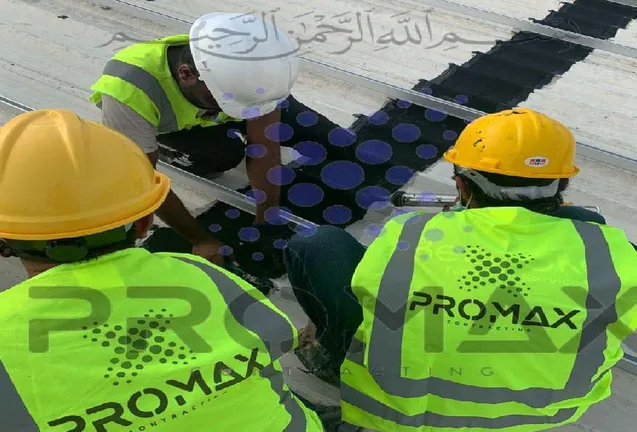
EPDM-based waterproofing systems are widely used for demanding roof applications because they provide flexible, continuous coverage and can accommodate normal thermal movement. When properly detailed at seams, edges, upstands, and penetrations, an EPDM membrane creates a reliable barrier over vulnerable roof areas. It is particularly useful where a facility needs broad coverage rather than repetitive spot repairs.
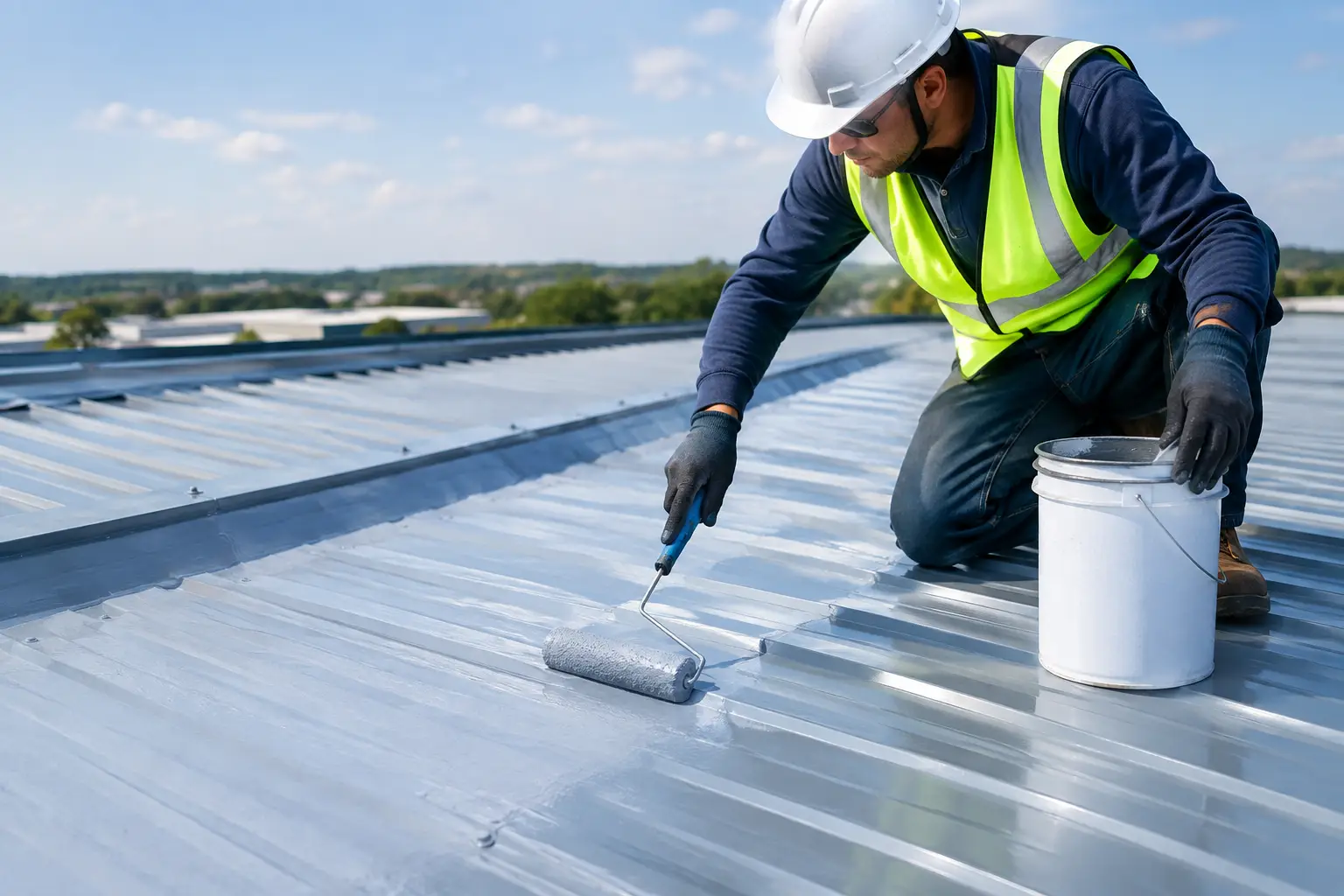
Liquid-applied systems can also be appropriate for complex details, local repairs, or roofs with numerous penetrations and irregular shapes. Their performance depends heavily on surface preparation, dry application conditions, correct film thickness, and reinforcement at movement-prone areas. A liquid coating applied over loose rust, contaminated sheets, or failed fasteners will not deliver a lasting result.
Mechanical repairs remain part of many waterproofing projects. These may include replacing damaged screws with suitable fasteners and washers, treating rusted areas, securing loose sheets, renewing flashing, repairing gutters, and sealing pipe penetrations before the primary membrane is installed. The system is only as strong as its weakest detail.
Critical Details That Cannot Be Ignored
Most metal roof leaks occur at transitions, not across the middle of an intact sheet. This is why detailed workmanship is more valuable than simply selecting a premium material. A complete scope should give special attention to the following areas:
- Fasteners and screw washers that have deteriorated, loosened, or pulled through the sheet.
- Side laps and end laps where original sealant has dried, split, or lost adhesion.
- Ridge caps, parapet connections, wall flashings, and roof edge terminations.
- Skylight frames and curb details, which often move differently from adjacent metal sheets.
- Pipe penetrations, cable routes, supports, and equipment bases that interrupt the roof surface.
- Gutters and valleys where blocked drainage creates prolonged water exposure.
Each of these details needs preparation and treatment suited to its condition. For example, a skylight perimeter may require cleaning, removal of failed sealant, reinforcement, and flexible waterproofing at the frame junction. A corroded gutter may require repair or replacement before adjoining roof details are sealed. Treating only the visible crack does not solve the underlying drainage or movement issue.
Surface Preparation Determines System Life
A waterproofing membrane needs a clean, dry, stable surface. Preparation typically includes removing dust, loose coatings, failed sealants, rust flakes, oil, and debris from roof sheets and gutters. Corroded sections should be mechanically prepared and treated using a suitable anti-corrosion process before any waterproofing layer is applied.
Moisture trapped beneath a coating or membrane can lead to poor adhesion and premature failure. This is why roof works should be scheduled around suitable weather conditions and why the substrate must be checked before installation. On operational facilities, the contractor should also plan access, material handling, safety lines, and work zones to minimize disruption below the roof.
Quality control should continue through installation. Seams must be properly joined, terminations securely fixed, and detail areas reinforced as required. After completion, a final inspection should confirm drainage paths are clear and that no unsealed transitions remain.
When Repair Is Better Than Replacement
A leaking metal roof does not automatically need replacement. If the roof sheets remain structurally sound and corrosion is limited, professional metal roof waterproofing can provide a cost-effective way to extend service life. It can reduce disruption to warehouse operations and avoid the expense of removing a full roof assembly.
Replacement becomes more appropriate when metal sheets are extensively perforated, supports are compromised, roof geometry has failed, or repeated repairs have left too many weak points. In some cases, the most practical approach is selective sheet replacement combined with a waterproofing system across the remaining roof. The decision should follow inspection findings, not assumptions based on the first visible leak.
For facilities in Dubai, Abu Dhabi, Sharjah, and across the UAE, heat exposure and sudden heavy rainfall make preventative maintenance particularly valuable. Scheduled roof checks before the rainy season can identify loose fasteners, blocked gutters, damaged flashing, and early corrosion while repairs are still manageable.
Plan for Maintenance After Installation
Waterproofing is a long-term protection measure, but roofs still need periodic attention. Gutters should be cleared, roof penetrations checked after new services are installed, and areas around equipment supports inspected for movement or damage. Any puncture or failed termination should be repaired promptly before water reaches the roof assembly.
Promax Contracting approaches roof rehabilitation as an inspection-led repair process, combining membrane application with the related mechanical, corrosion, flashing, and drainage work that keeps the system effective. This approach helps facility teams avoid fragmented repairs from multiple vendors and creates clearer accountability for the completed roof scope.
The best time to investigate a metal roof is before the next leak reaches inventory, equipment, or occupied space. A focused site inspection can turn an uncertain maintenance problem into a defined repair plan with the right materials, details, and access strategy.
Related ETCE services
Need this checked on your own roof?
ETCE carries out industrial roof inspections, leak diagnosis, metal roof rehabilitation and EPDM waterproofing across Dammam, Al Khobar, Dhahran, Jubail, Riyadh and Jeddah.
Request a Roof Inspection WhatsApp Us