A leak above a loading bay is rarely just a leak. In a warehouse or factory, water can damage stock, interrupt dispatch, corrode steel supports, stain insulated panels, and create safety concerns during active operations. Effective waterproofing Dubai projects begin by identifying how water enters the building, not by applying a surface coating over the visible stain.
Dubai’s combination of extreme heat, UV exposure, wind-driven rain, airborne dust, and humid coastal conditions puts unusual pressure on roofs and external metal surfaces. A repair that looks acceptable after installation can fail quickly if the substrate, drainage path, fasteners, joints, and penetrations were not properly assessed. For facility managers, the priority is a system that performs under site conditions and can be maintained without repeated operational disruption.
Why Industrial Roof Leaks Need a Technical Response
Industrial buildings often have large roof spans, multiple service penetrations, skylights, gutters, expansion joints, and interfaces between old and new construction. Each detail can become a water entry point. The challenge is that water may travel beneath roof sheets, insulation, flashings, or membranes before it becomes visible inside the facility.
This is why treating the wet patch alone is not a reliable repair method. The actual failure may be several meters away at a failed screw washer, an open lap joint, a cracked pipe flashing, blocked gutter, loose ridge cap, or deteriorated sealant around a skylight. A proper inspection traces the water path from roof level to the internal symptom.
Heat also changes the behavior of roofing materials. Metal sheets expand and contract, sealants lose elasticity, and poorly installed membranes can pull away at edges or penetrations. When rain arrives after a long hot period, these weakened details are exposed immediately. The right waterproofing approach must allow for movement while maintaining a continuous barrier against water.
Waterproofing Dubai Starts With Site Inspection
A site inspection should establish the roof type, existing repair history, age of the materials, drainage arrangement, corrosion condition, and areas of active leakage. It should also consider whether the facility can remain operational during the work. For a busy warehouse, repair sequencing matters as much as the selected material.
The inspection should distinguish between isolated defects and system-wide deterioration. A few damaged fasteners or a localized split may justify targeted repair. However, if the roof has widespread corrosion, recurring seam failures, brittle sealant, or multiple leakage zones, patching one location at a time usually increases lifetime cost. In that case, a larger rehabilitation scope is often the more controlled and cost-effective decision.
A practical assessment also checks the roof after rainfall where possible, or uses controlled water testing on suspect details. This is especially useful around skylights, pipe penetrations, roof-to-wall junctions, gutters, and overlapping metal sheets. Visual inspection alone can miss concealed gaps that only open when water is driven by wind.
Details That Commonly Fail First
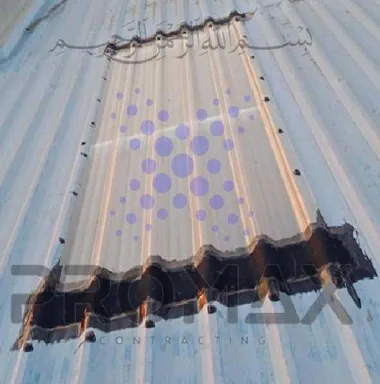
Fasteners are a frequent source of leakage on metal roofs. Screw heads and washers deteriorate under UV exposure, while loose fasteners create small openings that allow water beneath the sheet. Replacing failed screws and treating surrounding areas is often necessary before any membrane or coating work begins.
Gutters require equal attention. A gutter with poor slope, corrosion holes, separated joints, or persistent blockage can overflow beneath roof edges and behind cladding. In many industrial facilities, gutter replacement or fabrication is part of the waterproofing scope because drainage failure will defeat an otherwise sound roof treatment.
Pipe penetrations and service supports are another high-risk area. Different materials move at different rates in heat, so rigid sealing around a penetration can crack. Flexible, properly detailed flashing systems are preferable where movement is expected. The same principle applies to skylight perimeters and roof expansion joints.
Selecting the Right Waterproofing System
There is no single material that suits every roof. The correct system depends on the substrate, roof geometry, existing condition, expected movement, exposure level, access requirements, and budget horizon. A low-cost repair may be suitable for a limited defect, but it is not automatically the best solution for a building expected to operate for many more years.
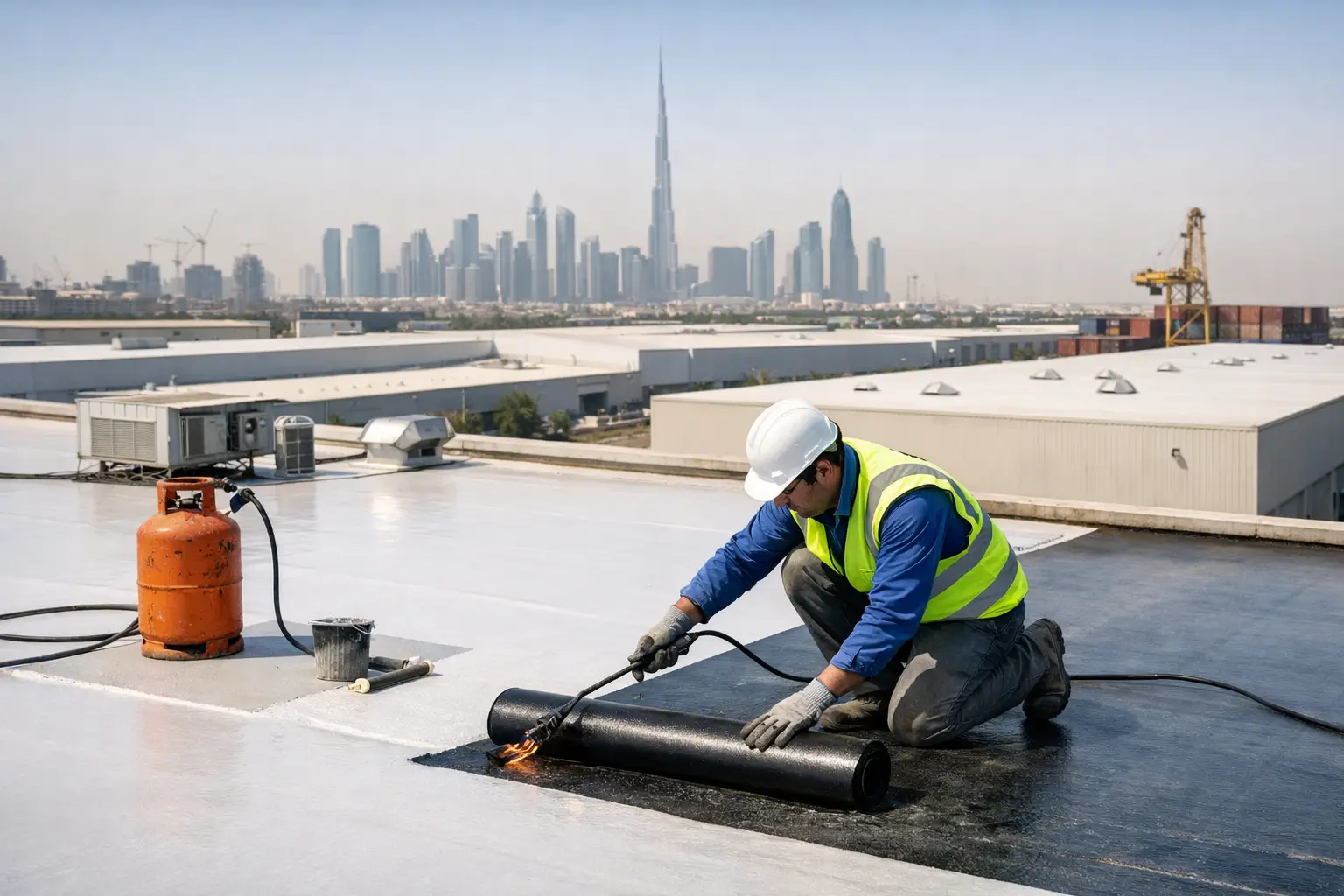
EPDM-based waterproofing systems are widely valued for their flexibility and weather resistance. When correctly installed over a prepared substrate, they can provide continuous coverage across complex roof areas and accommodate thermal movement better than many rigid treatments. Their performance, however, depends on clean preparation, compatible adhesives or fixing methods, properly formed seams, and secure edge detailing.
For metal roofs, preparation is critical. Loose rust, failed sealant, damaged fasteners, and weak sheet sections need attention before waterproofing application. If corrosion has reduced the integrity of a roof sheet or purlin, covering it with a membrane does not restore its structural capacity. The structural issue must be assessed and repaired first.
Concrete roofs have different requirements. Cracks, construction joints, parapet connections, drain outlets, and surface falls must be examined closely. Standing water can shorten the service life of some systems and exposes installation defects quickly. Where drainage is inadequate, waterproofing should be considered alongside corrective drainage measures rather than as an isolated surface treatment.
Preparation Determines the Service Life
Most premature waterproofing failures can be traced to inadequate preparation or weak detailing. Dusty surfaces, trapped moisture, loose coatings, untreated corrosion, and incompatible previous materials interfere with adhesion. In industrial environments, the roof may also carry residues from exhaust, dust, maintenance traffic, or old repairs that must be removed before installation.
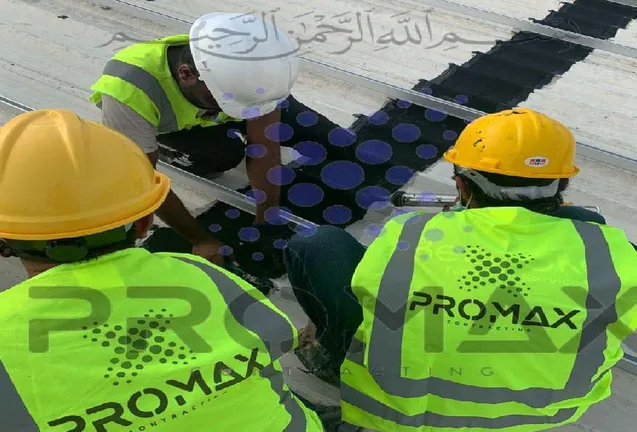
Preparation normally includes cleaning, drying, mechanical treatment of corroded metal, replacement of failed fasteners, sealing of joints, and repair of damaged sheets or flashings. The work should then move from vulnerable details to full-area coverage. Penetrations, corners, overlaps, gutters, and terminations should be completed with the same care as the open roof field.
Quality control should be visible during execution. Facility teams should expect clear identification of repair areas, material handling procedures, coverage checks, and final water-tightness testing where appropriate. This is particularly valuable on large facilities where a missed detail can leave an entire section exposed.
Plan Repairs Around Operations and Weather
Waterproofing work does not have to stop a facility, but it does require coordination. Access routes, loading zones, internal protection, safety controls, and work hours should be agreed before mobilization. If roof sheets or skylights are being repaired, the contractor must prevent debris or water from entering occupied areas below.
Weather planning matters in the UAE. Surface temperature can affect material handling, cure times, and installation quality. Crews should avoid applying systems to unsuitable surfaces, including areas with moisture, excessive contamination, or conditions outside the manufacturer’s requirements. Speed is valuable during an active leak, but rushing substrate preparation creates another repair cycle.
For urgent cases, temporary containment may be necessary while the permanent scope is prepared. This could involve localized sealing, protective covers, or controlled drainage measures. A temporary response is useful when stock or equipment is at immediate risk, but it should not be presented as a long-term replacement for a properly engineered repair.
Maintenance Protects the Investment
A waterproofed roof still needs routine inspection. Seasonal checks can identify loose fasteners, damaged flashings, clogged gutters, sealant deterioration, and new service penetrations before they become internal leaks. Roof access should be controlled because careless maintenance activity can puncture membranes or dislodge protective details.
Keeping records of repair locations, inspection dates, and recurring problem areas helps facility managers make better decisions. If leakage repeatedly appears around the same gutter line or skylight row, the building may need a design correction rather than another isolated patch. This approach reduces reactive maintenance and provides a clearer basis for budgeting.
Promax Contracting approaches roof rehabilitation as a full site problem: inspection, diagnosis, material selection, fabrication support where required, installation, and after-sales response. For warehouses, factories, storage facilities, and commercial buildings, that scope helps prevent the gap between a quick repair and a durable result.
Before the next rainfall exposes a weak joint or failing gutter, schedule a detailed roof inspection. Finding one open seam at the right time is far less disruptive than managing damaged inventory, emergency callouts, and an unplanned shutdown.
Related ETCE services
Need this checked on your own roof?
ETCE carries out industrial roof inspections, leak diagnosis, metal roof rehabilitation and EPDM waterproofing across Dammam, Al Khobar, Dhahran, Jubail, Riyadh and Jeddah.
Request a Roof Inspection WhatsApp Us