A roof drain leak rarely stays at the drain. Water can travel beneath metal sheets, insulation, flashings, and internal liners before it becomes visible inside a warehouse. This roof drain leakage repair guide helps facility teams identify the real failure point, select a repair that suits the roof system, and avoid repeated shutdowns caused by temporary patchwork.
For industrial buildings, a drain point is a high-risk detail. It combines drainage flow, roof movement, sheet laps, sealants, penetrations, and often corrosion in one small area. When that detail fails, water can damage stored materials, interrupt operations, accelerate rust, and weaken adjacent roof components.
Start With the Source, Not the Water Stain
The ceiling stain below a drain is evidence, not necessarily the location of failure. On a metal roof, water may enter at a cracked drain flange, then track along a purlin, sheet overlap, or insulation layer before dropping into the building several meters away.
A proper inspection begins on the roof. The team should check the drain bowl or outlet, surrounding roof sheets, gutter connection, flashing termination, fasteners, sealant joints, and any previous repair materials. The underside of the roof should also be inspected where accessible for wet insulation, corrosion, staining, and damaged liner sheets.
The first goal is to establish whether the leak is caused by blocked drainage, failed waterproofing, defective sheet detailing, or a combination of these conditions. Treating all drain leaks as a sealant problem is one of the most common reasons repairs fail early.
Separate Drainage Problems From Waterproofing Failures
A drain may appear to leak when the primary issue is standing water. Blocked outlets, undersized drain points, collapsed downpipes, and debris-filled gutters can force water above the intended drainage level. This exposes laps, fasteners, and flashings that were never designed for prolonged ponding.
If water clears quickly and leakage still occurs, the problem is more likely at the waterproofing detail. Common signs include split sealant around the flange, loose mechanical fasteners, a separated membrane edge, rusted metal at the drain opening, or cracks where a rigid repair material has been stretched by roof movement.
Both issues may exist at the same time. A durable repair must restore drainage capacity and make the drain detail watertight under real operating conditions.
Common Roof Drain Failure Points
Industrial roofs experience intense heat, UV exposure, wind-driven rain, sand accumulation, and daily expansion and contraction. Drain details are especially vulnerable because different materials meet at one point and move at different rates.
The most frequent failure points include:
- Cracked, dried, or poorly bonded sealant around the drain flange
- Corroded sheet metal, gutter steel, or drain bowls beneath old repairs
- Loose fasteners and enlarged holes around roof sheet laps
- Blocked drain outlets, downpipes, or gutter channels that cause ponding
- Damaged EPDM or membrane terminations at the drain edge
- Inadequate slope that directs water toward, but not into, the drain
- Previous patches applied over dirt, moisture, rust, or unstable sealant
The condition of the drain flange matters greatly. If the metal below it has corroded or become thin, applying another layer of sealant only covers the damage. The repair may look complete for a short period, then split as the weakened metal continues to deteriorate.
How to Diagnose a Drain Leak Correctly
A controlled inspection produces better results than visual checks alone. The roof must be dry enough to assess the condition of seams and coatings, but testing should simulate how water reaches the drain during rainfall.
First, remove debris from the gutter and drain opening. Leaves, sand, packaging fragments, and accumulated dust can hide corrosion and prevent proper water flow. After cleaning, inspect the metal around the drain for pinholes, soft areas, failed overlaps, and old patch edges that have lifted.
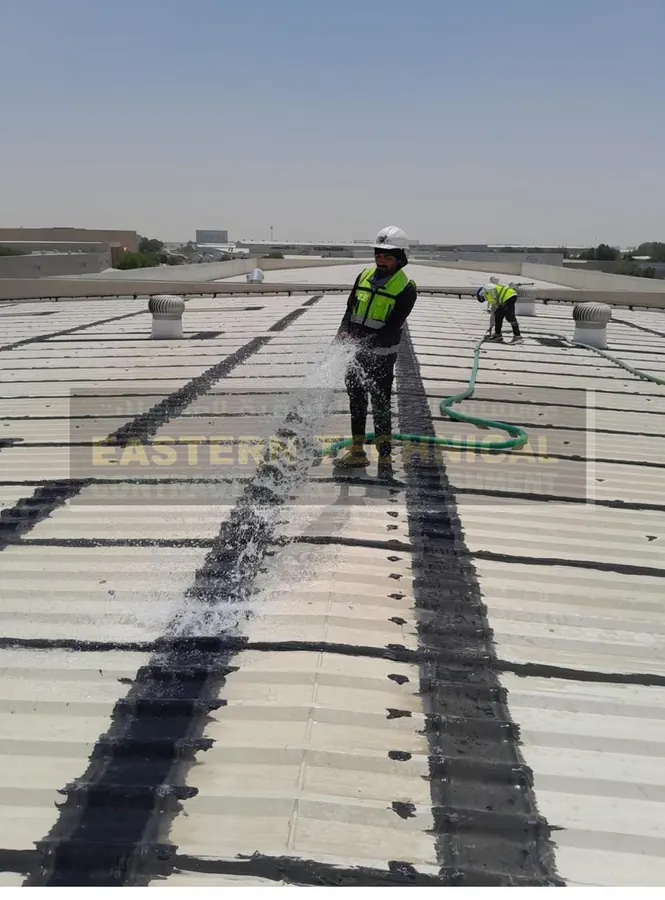
A targeted water test can then isolate the fault. Start below the suspected area and introduce water gradually, working toward the drain. Flooding the entire roof immediately makes it difficult to identify the entry point. During testing, a second technician should monitor the interior and document where moisture appears.
For complex warehouses, moisture scanning and detailed roof condition reporting may be needed. This is particularly valuable where insulation has absorbed water or where the roof has undergone multiple repairs over many years. Hidden moisture can continue corroding the roof structure even after the visible drip has stopped.
Roof Drain Leakage Repair Guide: Choosing the Right Method
The repair method should match the roof type, drain design, extent of corrosion, expected water load, and condition of surrounding sheets. There is no single repair material that suits every industrial roof drain.
Localized EPDM Waterproofing Repair
EPDM-based waterproofing is often suitable for drain points, gutters, penetrations, and difficult junctions on industrial metal roofs. Its flexibility allows it to accommodate thermal movement better than rigid repair compounds when properly detailed and terminated.
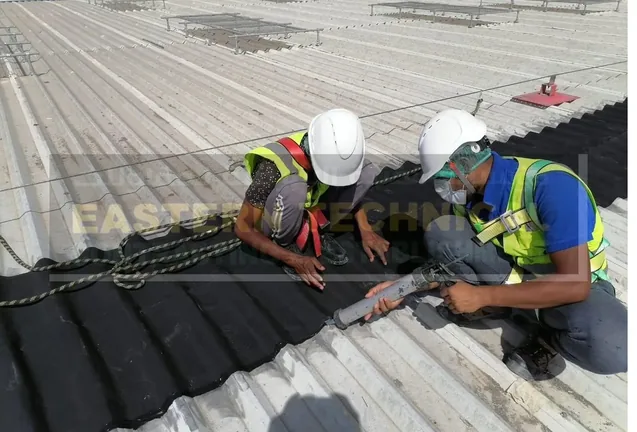
The repair area must be cleaned thoroughly. Loose rust, failed coatings, unstable sealant, dust, and moisture need to be removed before the waterproofing system is installed. Depending on the roof condition, corroded sections may require treatment, reinforcement, or replacement before the EPDM detail is applied.
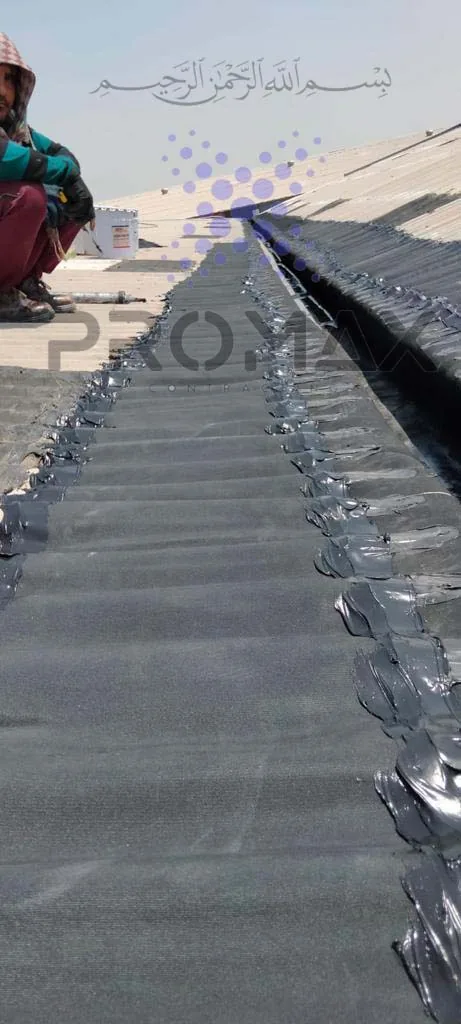
The membrane should extend beyond the visibly damaged area onto sound, prepared substrate. Edges and terminations require particular attention. A membrane can be high quality and still fail if its perimeter is not bonded, sealed, and mechanically secured where required by the roof configuration.
Drain Flange, Gutter, or Outlet Replacement
Replacement is the better option when the drain outlet is cracked, heavily rusted, poorly sized, or installed with insufficient fall. This work may involve fabricating a new drain box, outlet, or gutter section and integrating it into the existing roof drainage layout.
Replacement has a higher initial cost than surface repair, but it can prevent repeated interventions where the original component has reached the end of its service life. For warehouses with valuable stock or continuous operations, this is often the more economical decision over time.
Metal Sheet and Flashing Repairs
If the leak originates from sheet laps or flashings near the drain, the repair may include replacing localized roof sheets, refastening loose areas, installing new closures, and rebuilding the waterproofing transition into the drain point.
This work must consider roof movement. Rigid patches across multiple corrugated sheet profiles can crack if they do not follow the roof geometry. The repair detail should conform to the profile and direct water toward the drain without creating a raised edge that traps debris.
Execution Controls That Prevent Repeat Leaks
The quality of installation is as important as the selected material. Industrial drain repairs should be completed under controlled site conditions, with the roof surface properly prepared and weather conditions monitored. Installing waterproofing over damp substrates or during active rainfall creates a high risk of poor adhesion and trapped moisture.
Before handover, the contractor should conduct a water-flow test and inspect the finished detail for open edges, blocked outlets, low spots, and incomplete terminations. Photographs and a clear repair report help facility teams track the condition of the roof and plan future maintenance.
Safety is also part of the work scope. Drain repairs are often located near roof edges, gutters, skylights, and fragile sheet areas. A competent team will manage access, fall protection, material handling, and protection of ongoing warehouse activities below.
When a Local Repair Is Not Enough
A local drain repair is appropriate when the damage is isolated and the surrounding roof remains sound. It is not the right answer when multiple drain points are leaking, corrosion has spread under sheet laps, or widespread ponding is visible across the roof.
In these cases, the facility may need a broader roof rehabilitation plan. That can include drainage modifications, replacement of deteriorated metal sections, upgraded gutter details, and an EPDM waterproofing system across recurring leak zones. The correct scope depends on inspection findings, building use, roof age, and the cost of operational disruption.
For facilities in Dammam, Riyadh, and other high-heat locations across Saudi Arabia, drain repairs should also account for UV exposure and thermal cycling. Materials that perform acceptably during a short rainy period may fail after months of heat if they are not designed for the roof environment.
Maintenance After the Repair
A repaired drain needs routine attention. Inspect it before the rainy season and after major storms, especially on warehouses exposed to dust and sand accumulation. Clear debris from gutters and outlets, check for standing water, and look for lifted edges, cracking sealant, rust stains, or changes in water flow.
ETCE KSA approaches roof drain leaks as an engineered maintenance issue, not a quick sealing job. A detailed site inspection can determine whether the drain needs cleaning, waterproofing, fabrication work, component replacement, or a wider rehabilitation scope.
The most useful next step is to inspect the drain while the problem is still localized. A small leak at a roof outlet is far easier to control before it becomes wet insulation, corroded roof steel, damaged inventory, and an unplanned interruption to operations.
Related ETCE services
Need this checked on your own roof?
ETCE carries out industrial roof inspections, leak diagnosis, metal roof rehabilitation and EPDM waterproofing across Dammam, Al Khobar, Dhahran, Jubail, Riyadh and Jeddah.
Request a Roof Inspection WhatsApp UsMetal roof waterproofing across Saudi Arabia
ETCE is a metal roof waterproofing company in Saudi Arabia with its head office in Dammam. See our warehouse & factory roof waterproofing service or find your area: